
 Worksheets
Anatomy Final
Total questions: 116
Worksheet time: 1hrs 9mins
Name
Class
Date
1.
What plane divides into front (anterior) and back (posterior) halves?
a)
Dorsal/Posterior Plane
b)
Frontal/Coronal Plane
c)
Midsagittal/Median Plane
d)
Anterior/Ventral Plane
2.
Body parts which are away from the midline are called
a)
medial
b)
lateral
c)
proximal
d)
distal
3.
Medial is the term used to refer to something towards the midline
a)
True
b)
False
4.
What is the term used to refer to the front of the body?
a)
cranial
b)
anterior/ventral
c)
posterior/dorsal
d)
proximal
5.
What are the body parts located above another body part called
a)
superior
b)
inferior
c)
proximal
d)
distal
6.
The knee is proximal to the foot
a)
True
b)
False
7.

Divides body into top and bottom portions (superior-head; inferior-feat)
a)
Medial Plane
b)
Sagittal
c)
Proximal
d)
Transverse Plane
8.

Body is standing straight, facing forward, upper limbs at side and palms facing forward.
*right and left refer to "right" and "left" of the body in position.
*right and left refer to "right" and "left" of the body in position.
a)
Sagittal
b)
Anatomical Position
c)
Anterior Position
d)
Anatomical Plane
9.
bending a joint so the angle between the bones is decreased
a)
hyperextension
b)
flexion
c)
extension
d)
eversion
10.
straightening a joint so the angle between the bones is increased
a)
extension
b)
flexion
c)
hyperextension
d)
inversion
11.
flexing the foot at the ankle, bending foot upward
a)
flexion
b)
dorsiflexion
c)
retraction
d)
inversion
12.
extending the foot at the ankle, bending the foot downward
a)
plantar flexion
b)
dorsiflexion
c)
hyperextension
d)
elevation
13.
excessive extension of the parts of a joint, beyond anatomical position
a)
dorsiflexion
b)
inversion
c)
hyperextension
d)
supination
14.
moving a part away from the midline
a)
abduction
b)
adduction
c)
inversion
d)
pronation
15.
moving a part towards the midline
a)
abduction
b)
adduction
c)
eversion
d)
inversion
16.
turning the hand so the palm is down
a)
pronation
b)
protraction
c)
supination
d)
retraction
17.
turning the hand so the palm is up
a)
pronation
b)
supination
c)
adduction
d)
abduction
18.
The head is ______ to the chest.
a)
superior
b)
dorsal
c)
inferior
d)
ventral
19.

Which body cavity is labeled A
a)
Cranial
b)
Spinal
c)
Thoracic
d)
Abdominal
20.

Which abdominal quadrant is labeled 3
a)
Right Upper Quadrant
b)
Right Lower Quadrant
c)
Left Upper Quadrant
d)
Left Lower Quadrant
21.

What position is this
a)
Supine
b)
Prone
c)
Anatoical Position
d)
Sit Up
22.
The heel of the foot is
a)
digital
b)
calcaneal
c)
plantar
d)
pedal
23.
The armpit is
a)
acromial
b)
antecubial
c)
antebrachial
d)
axillary
24.
The ear is
a)
oral
b)
otic
c)
orbital
d)
nasal
25.
The forehead is
a)
mental
b)
orbital
c)
frontal
d)
cephalic
26.
The mouth is
a)
oral
b)
orbital
c)
nasal
d)
mental
27.
The back is
a)
sacrum
b)
lumbar
c)
dorsum
d)
gluteal
28.
The neck
a)
cervical
b)
mental
c)
cephalic
d)
nasal
29.
The whole foot is referred to as
a)
tarsal
b)
hallux
c)
pedal
d)
plantar
30.
One single layer of cells
a)
squamous
b)
simple
c)
stratified
d)
cuboidal
31.
Many layers of cells
a)
stratified
b)
simple
c)
cuboidal
d)
squamous
32.
Group of cells with the same specialized purpose
a)
organ
b)
transitional
c)
tissue
d)
cells
33.
group of cells that appear to be in layers
a)
squamous
b)
stratified
c)
pseudostratified
d)
cuboidal
34.
tissue whose cells change form; they are able to stretch and then return to original shape; found in the bladder
a)
simple
b)
squamous
c)
transitional
d)
pseudostratified
35.
Tissue type that moves body parts by contracting
a)
Epithelial
b)
connective
c)
muscle
d)
nervous
36.
Tissue that transmits and integrates messages
a)
Epithelial
b)
Connective
c)
Nervous
d)
Muscular
37.
The biology of tissues is called
a)
anatomy
b)
cytology
c)
histology
d)
physiology
38.
The most widespread and abundant tissue in the human body
a)
epithelial
b)
connective
c)
muscular
d)
nervous
39.
The tissue types that serves as a lining or covering:
a)
epithelial
b)
muscle
c)
connective
d)
nervous
40.
Fat cells
a)
adipose
b)
areolar
c)
reticular
d)
nervous
41.
which type of connective tissue cushions the bones at the joints?
a)
Areolar connective tissue
b)
Dense connective tissue
c)
Hyaline cartilage
d)
Reticular Connective Tissue
42.
Which connective tissue is represented by tendons and ligaments?
a)
areolar connective tissue
b)
dense connective tissue
c)
hyaline cartilage
d)
reticular connective tissue
43.
which connective tissue is represented by your skeleton?
a)
dense connective tissue
b)
hyaline cartilage
c)
osseous tissue
d)
reticular connective tissue
44.
which epithelial tissue makes up the skin and other places exposed to friction?
a)
simple squamous
b)
stratified squamous
c)
pseudostratified ciliated columnar
d)
transitional
45.
how is epithelial tissue classified?
a)
# of layers
b)
shape of cells
c)
composition of the matrix
d)
# of layers and the shape of the cells
46.
which connective tissue is avascular?
a)
Bone
b)
Cartilage
c)
Dense
d)
Loose
47.
The bottommost layer of skin that is primarily made up of adipose tissue.
a)
hypodermis
b)
dermis
c)
nasodermis
d)
epidermis
48.
Which layer of skin contains blood vessels, glands, hair follicles, and nerves embedded within it?
a)
dermis
b)
epidermis
c)
nasodermis
d)
hypodermis
49.
All of the following are functions of the skin except
a)
pumps blood
b)
temperature regulation
c)
excretion
d)
protection
50.

What is another name for the hypodermis?
a)
epidermis
b)
subcutaneous layer
c)
stratum basale
51.

What are the three regions of skin ?
a)
dermis, hypodermis, muscle
b)
hypodermis, keratin, dermis
c)
epidermis, dermis, hypodermis
d)
none of the above
52.
A major function of skin is protection from:
a)
Abrasion
b)
UV light
c)
Entry of microorganisms
d)
All of the above
53.
Which of the following is NOT part of the integumentary system?
a)
Skin
b)
Cartilage
c)
Nails
d)
Hair
54.
Which is not an accessory organ of the skin?
a)
hair
b)
nails
c)
sebaceous glands
d)
melanin
55.
Which of the following appendages of the skin is responsible for acne?
a)
Sweat glands
b)
Oil glands
c)
Hair
d)
Nails
56.
Which of the following is an acronym for the self-monitoring of moles?
a)
RACE
b)
PASS
c)
FAST
d)
ABCDE
57.
Your skin
a)
mucous membrane
b)
serous membrane
c)
cutaneous membrane
d)
synovial membrane
58.
Pigment that ranges in color from yellow to brown to black; produced by cells called melanocytes
a)
melanin
b)
keratin
c)
dermis
59.
Membrane that is composed of soft areolar connective tissue & contains no epithelial cells at all. Line capsules surrounding joints.
a)
synovial
b)
peritoneum
c)
pleura
d)
pericardium
60.
proteins, found in tissues such as hair, nails, and epidermis of the skin
a)
synovial fluid
b)
subcutaneous tissue
c)
keratin
d)
sweat
61.
Gland that releases their secretions to the skin surface via ducts. Sebaceous and sweat glands
a)
sebum
b)
eccrine gland
c)
apocrine gland
d)
exocrine gland
62.
Oil glands that are found all over the skin, except on the palms and soles of the feet; ducts usually empty into a hair follicle
a)
exocrine glands
b)
sebaceous glands
c)
sebum
d)
sweat glands
63.
product of sebaceous glands, mixture of oily substances, helps keep the skin soft & moist
a)
sebum
b)
matrix
c)
sweat
d)
basal
64.
largely confined to the axillary and genital areas; ducts empty into hair follicles, begin to function during puberty.
a)
eccrine glands
b)
apocrine glands
c)
sebaceous glands
d)
sebum gland
65.
The part of hair that projects from the surface of the scalp or skin is called
a)
shaft
b)
follicle
c)
cuticle
d)
root
66.
"Goosebumps" are caused by contractions of the
a)
synovial membrane
b)
arrector pili muscle
c)
apocrine glands
d)
eccrine glands
67.
Nails are composed of
a)
carotene
b)
keratin
c)
sebum
d)
melanin
68.
Which vitamin is synthesized by the skin?
a)
A
b)
E
c)
K
d)
D
69.
Which of the following abnormal skin colors results from liver disorders?
a)
bruising
b)
palor
c)
juandice
d)
cyanosis
70.
Osteo means?
a)
Bone
b)
Bone tissue
c)
skin
d)
tissue
71.
Make new bone and help repair damage.
a)
Osteoblast
b)
Osteoclast
c)
Osteocytes
d)
Osetoblank
72.
Osteocytes
a)
Make new bone and help repair damage
b)
Mature bone cell.
c)
They grow within the bone to aid in flexibility.
d)
Break down bone and help to sculpt and shape it.
73.
The outside of the bone is called the
________________________
________________________
a)
periosteum
b)
cancellous
c)
marrow
d)
compact
74.
The soft inside part of the bone that stores triglycerides is
called__________________ .
called__________________ .
a)
periosteum
b)
spongy
c)
marrow
d)
cancellous
75.
attaches muscle to bone
a)
tendon
b)
ligament
76.
attaches bone to bone
a)
tendon
b)
ligament
77.
how many bones are in the human body?
a)
200
b)
206
c)
205
d)
204
78.
our hip joint would be considered which type of joint?
a)
hinge
b)
ball and socket
c)
ball
d)
fixed
79.
many bones form from what?
a)
bones
b)
bone tissue
c)
Cartilage
d)
skin tissue
80.
adduction means ?
a)
Move toward the body
b)
Move away from the body
c)
All joints straight
d)
Joints bent
81.
skull, vertebral column, and thorax
a)
axial skeleton
b)
appendicular skeleton
c)
skeleton
d)
bones
82.
long, short, irregular are all ?
a)
types of bone
b)
functions of the bone
c)
bones
d)
types of bone tissue
83.
which one of these IS a function of the skeletal system
a)
vitamin D production
b)
fat storage
c)
movement
84.
A joint that can fully move is a
a)
hyaline cartilage
b)
fixed joint
c)
cranium
d)
synovial joint
85.
Which of these joints are synovial joints?
a)
A) pivot
b)
B) gliding
c)
C) A, b and D
d)
D) ball and socket
86.

a)
Humerus
b)
Ulna
c)
Radius
d)
Clavicle
87.

a)
metacarpals
b)
metatarsals
c)
tarsals
d)
carpals
88.

a)
pelvis
b)
tibia
c)
sternum
d)
sacrum
89.

a)
metacarpals
b)
metatarsals
c)
carpals
d)
tarsals
90.
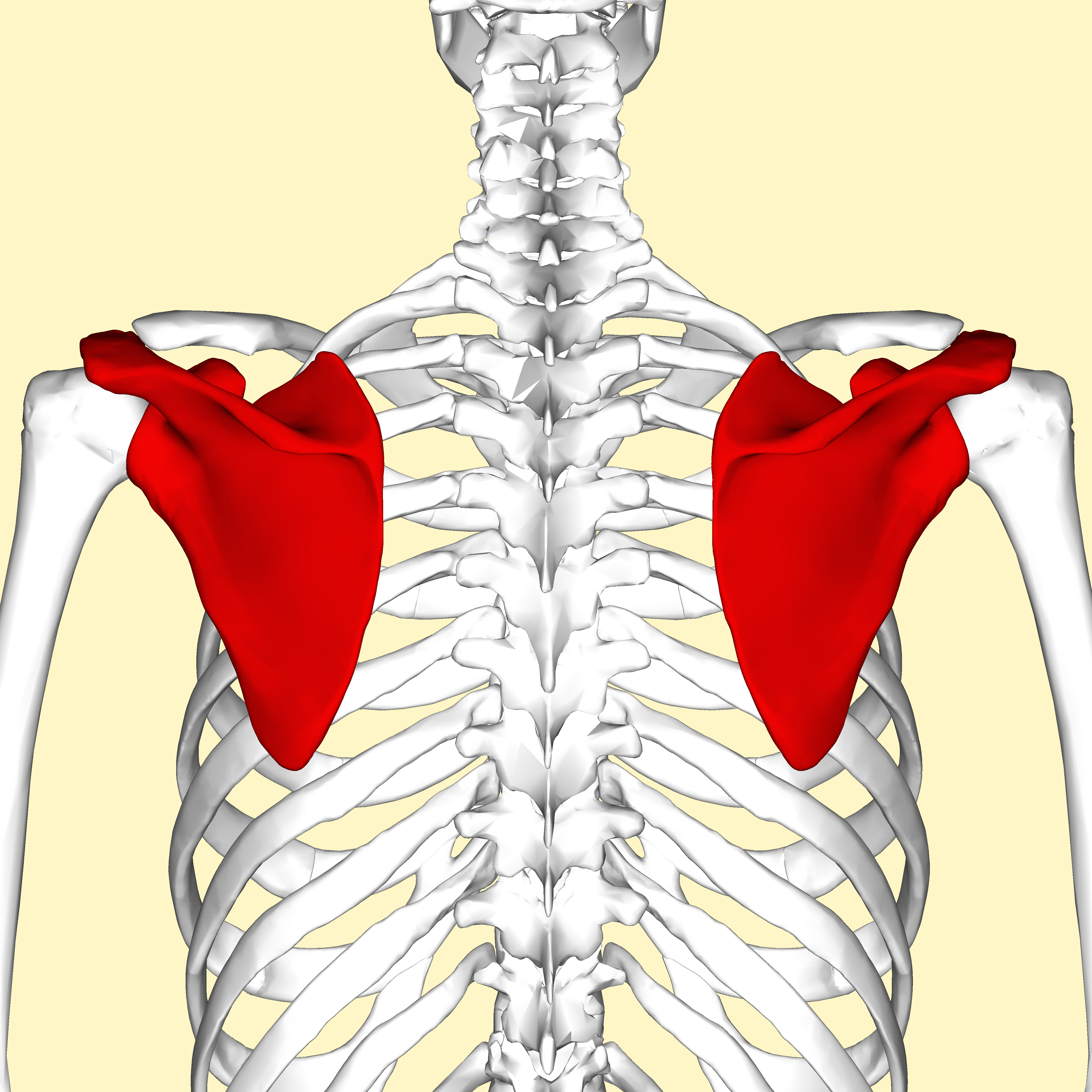
What bones is represented in the picture?
a)
Clavicle
b)
Scapula
c)
Sternum
d)
Carpals
91.

This bone is located on the thumb side of the forearm
a)
ulna
b)
radius
c)
humerus
d)
patella
92.

This bone is on the pinky side of your forearm
a)
Ulna
b)
Radius
c)
Humerus
d)
Pelvis
93.

Also known as the shin bone
a)
Femur
b)
Tibia
c)
Fibula
d)
Metatarsals
94.

a)
cervical vertebrae
b)
thoracic vertebrae
c)
lumbar vertebrae
d)
sacrum
95.

a)
cranium
b)
ribs
c)
mandible
d)
vertebrae
96.

a)
tibia
b)
femur
c)
fibula
d)
pelvis
97.

What is the name if the top of the vertebral column?
a)
Thoracic Spine
b)
Sacruum
c)
Cocyxx
d)
Cervical Spine
98.

What is another name for the kneecap?
a)
Patella
b)
Tibia
c)
Fibia
99.
immovable joint
a)
skull
b)
spinal column
c)
hip
d)
shoulder
100.
Diarthrosis joint
a)
hip
b)
skull
c)
spinal column
101.
Joints are also called
a)
annotations
b)
articulations
c)
affectations
d)
affiliations
102.
Types of fibrous joints include
a)
synarthrotic, amphiarthrotic, and diarthrotic
b)
syndesmosis, suture, and gomphosis
c)
synchondrosis, symphysis, and synovial
d)
pivot, condylar, and ellipsoidal
103.
Classifying joints as synarthrotic, amphiarthrotic, or diarthrotic represents
a)
location in the body
b)
the composition of the joint
c)
the number of bones that joint affects
d)
degree of movement possible at the joint
104.
Cartilagenous joints are connected by
a)
synovial fluid
b)
fibrous connective tissue.
c)
hyaline cartilage or fibrocartilage
d)
a joint capsule
105.
Fluid-filled sacs containing synovial fluid are called
a)
bursae
b)
menisci
c)
ligaments
d)
tendons
106.
The elbows, knees and phalanges are examples of this type of joint
a)
ball and socket
b)
condyloid
c)
gliding
d)
hinge
107.
Carpals and tarsals (flat bones) are examples of this type of joint
a)
condyloid
b)
gliding
c)
hinge
d)
saddle
108.
This type of joint allows the first two vertebrate to rotate as in shaking your head no
a)
condyloid
b)
gliding
c)
pivot
d)
saddle
109.

Where would you expect to find a saddle joint?
a)
Thumb
b)
Toes
c)
Elbow
d)
Hip
110.
A __________ occurs when a joint comes apart and stays apart with the bone ends no longer in contact.
a)
fracture
b)
sprain
c)
dislocation
d)
strain
111.
Simple and compound are two types of fractures.
a)
True
b)
False
c)
Maybe
d)
Idk
112.

Name this joint
a)
gliding
b)
saddle
c)
ball and socket
d)
condyloid
113.

Name this joint
a)
pivot
b)
saddle
c)
gliding
d)
hinge
114.

Name this cartilaginous joint
a)
gomphosis
b)
symphysis
c)
hinge
d)
saddle
115.

The skull is an example of what type of joint?
a)
Cartilaginous
b)
Synovial
c)
Fibrous
116.

Name this joint
a)
gliding
b)
saddle
c)
hinge
d)
ball and socket
100 %

