
Font size
 Worksheets
OnRamps Bio-Biomolecules
Total questions: 67
Worksheet time: 47mins
4. Which biomolecules transport oxygen and other substances and also form part of most organelles?
Lipids
Carbohydrates
Proteins
Nucleic Acids
6. The monomer of carbohydrates is known as _______.
Amino Acid
Fatty Acid
Nucleotide
Saccharide
Which of the following is a term that refers to the building blocks of all cells?
Macromolecules
Micromolecules
Molecules
DNA
Which form of glucose is stored in the human liver and muscle?
Cellulose
Glycogen
Lipids
Starch
Lipids are insoluble in water because lipid molecules are _________?
hydophilic
hydrophobic
neutral
Which of the following term refers to the combination of two types of monosaccharides?
Monosaccharide
Disaccharide
Polysaccharide
Which of the following is a term that refers to an energy source obtained from plants?
Cellulose
Glycogen
Lipids
Starch
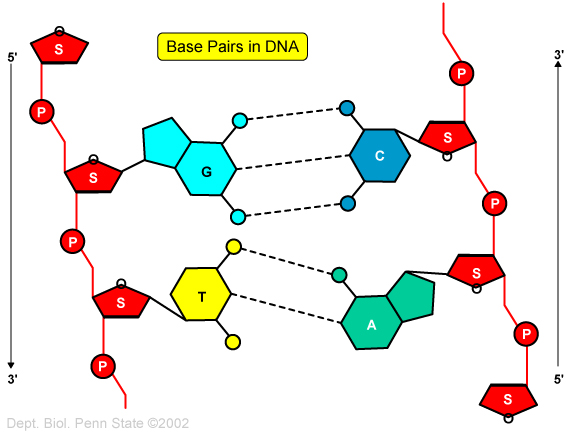
Which of the following is found on RNA but not DNA?
Deoxyribose
Uracil
Phosphate
Adenine
What is the Shape of DNA
Spring
Double Helix
Single Helix
A twist knot thing
What are monosaccharides?
double sugar
single sugar
protein
nucleic acid
What type of biomolecule is glucose?
monosaccharide
disaccharide
polysaccharide
What type of biomolecule is fructose?
monosaccharide
disaccharide
polysaccharide
What type of biomolecule is maltose?
monosaccharide
disaccharide
polysaccharide
What type of biomolecule is sucrose?
monosaccharide
disaccharide
polysaccharide
How many types of biomolecules are there in the body?
1
2
3
4

The carbon, hydrogen, and oxygen atoms from sugar molecules in the cracker you ate were rearranged in your body during digestion.
True
False

carbohydrate

amino acid

nucleotide

ATP (adenosine triphosphate)

triglyceride
Match the following monomers with their biomolecule

nucleic acids

proteins

carbohydrates

lipids (fats)
Most common elements in living things include:
carbon
oxygen
nitrogen
hydrogen

What best describes the picture?
How water is formed
Chemical formula for how water is formed
Elements found in water
Elements and compounds

Why is carbon the basis of most molecules?
it has four valence electrons and can bond with four other elements
it can form several structures
it can form single, double, and triple bonds
it always bonds with oxygen needed for life
Why does it take longer for your body to break down complex carbohydrates than simple carbohydrates?
simple carbohydrates can be broken down quickly and absorbed by the body
complex carbohydrates are made up of longer chains of molecules and broken down more slowly
complex carbohydrates are often rich in cellulose which is not broken down by our digestive system
it doesn't take long to break down complex carbohydrates, just sayin
LINEAR CHAINS OF AMINO ACIDS ARE LINKED BY
HYDROGEN BOND
PHOSPHODIESTER BOND
GLYCOSIDIC BOND
PEPTIDE BOND
WHICH OF FOLLOWING ARE MADE UP OF CELLULOSE
PLANT CELL WALL
PLANT PULP
COTTON FIBRE
ALL OF THE ABOVE
STRUCTURE OF DEOXYRIBOSE SUGAR


STRUCTURE OF RIBOSE SUGAR


ESTER BONDS FORMS IN
PROTEINS
LIPIDS
NUCLEIC ACIDS
CARBOHYDRATES
WHAT DOES THE FORMATION OF PEPTIDE BOND ELIMINATE
O2
CO2
H2O
NH2
PEPTIDE BOND FORMS BY
BINDING OF INDIVIDUAL MONOSACCHARIDE
CARBOXY GROUP OF ONE AMINO ACID REACTS WITH AMINO GROUP OF NEXT AMINO ACID
3-"C" OF ONE SUGAR OF NUCLEOTIDE LINKS TO 5-"C" OF SUGAR OF SUCCEEDING NUCLEOTIDE
NONE OF THE ABOVE
GLYCOSIDIC BOND IS FORMED BY
HYDRATION
CARBOXYLATION
DEHYDRATION
PRECIPITATION
Amino Acids are the monomers of __________.
Nucleic Acids
Proteins
Carbohydrates
Lipids
The monomer of carbohydrates are known as _______.
Amino Acid
Fatty Acid
Nucleotide
Saccharide
Glycerol and fatty acids are the monomers of _________.
Lipids
Carbohydrates
Proteins
Nucleic Acids
The monomers of Nucleic Acids are known as _________.
Amino Acid
Fatty Acid
Nucleotide
Saccharide
The four most common elements found in biomolecules are __________.
Sulfur, Phosphorus, Carbon, Oxygen
Carbon, Oxygen, Nitrogen, Hydrogen
Sulfur, Nitrogen, Carbon, Iron
Carbon, Nitrogen, Hydrogen, Sulfur
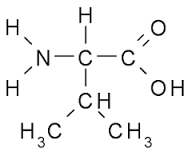
Which biomolecule sometimes contains sulfur?
Carbs
Lipids
Proteins
Nucleic Acids

The molecule presented is an example of a _____
Nucleic Acid
Carb
Lipid
Protein

The molecule presented is an example of a _____
Nucleic Acid
Carb
Lipid
Protein

The molecule presented is an example of a _____
Nucleic Acid
Carb
Lipid
Protein

The molecule presented is an example of a _____
Nucleotide
Monosaccharide
Amino Acid
Polysaccharide

Which of the following best describes the polarity of the R-group?
Unpolar
Nonpolar
Expolar
Polar

Which best describes the middle fatty acid chain in the structure?
Saturated
Unsaturated
Equal
Neutral
A __________ consists of many monomers bonded together.
monomer
hydrocarbon
peptide
polymer
Which biomolecule includes fats, oils, waxes, and steroids (cholesterol); insoluble in water; provides energy storage, insulation, part of cell membrane, and hormones

The human body is capable of digesting the complex polymer starch into simpler subunits. This digestive process requires the presence of water and the enzyme amylase in order to break down starch into maltose. This is depicted below. Which of the following statements best describes the digestion of starch into maltose?
This is a hydrolysis reaction that requires water to break down a complex polymer into simpler subunits.
This is a dehydration synthesis reaction that produces water when forming a complex polymer from simpler subunits.
This is a dehydration synthesis reaction that requires water to form a complex polymer from simpler subunits.
This is a hydrolysis reaction that forms water by breaking down a complex polymer into simpler subunits.

In the reaction below, two glucose monomers combine to form the dimer maltose. Which of the following best explains the process of this reaction?
To form a covalent bond, the monomers underwent a hydrolysis reaction.
An ionic bond forms through dehydration synthesis, which combines the two glucose monomers and forms the maltose dimer.
Water is added to the reaction to promote the formation of a covalent bond between the glucose monomers.
A covalent bond forms through dehydration synthesis, which results in the formation of maltose and water.

Which of the following statements is/are true with regard to a polymer of 6 glucose molecules?
I. The chemical formula is C36H72O36
II. The chemical formula is C36H62O31
III. The monomers of glucose were joined via hydrolysis
IV. The monomers of glucose were joined via dehydration synthesis
I only
II only
IV only
I and III only
II and IV only

Based the information provided, which of the following statements best describes why starch and cellulose provide different functions in plants?
The differences in the assembly and organization of the monomers of these two polymers result in different chemical properties.
Since starch and cellulose are composed of identical monomers, the cellular environment where they are located controls their function.
The monomers of cellulose are connected by covalent bonds, making it idea for structural support.
The monomers of starch are connected by ionic bonds, making it ideal for energy storage for plants.
Which polysaccharide is used by plants to store glucose?
glycogen
cellulose
starch
chitin
What is the polysaccharide used by animals to store glucose?
glycogen
fructose
starch
cellulose



