
Font size
 Worksheets
A&P Midterm Review
Total questions: 65
Worksheet time: 16hrs 15mins
Which of the following body parts is not found within the axial body region?
Brain
Elbow
Neck
Spinal cord
In humans, which anatomical term is synonymous with ventral?
medial
posterior
dorsal
anterior
Which anatomical term best completes the following sentence: “The fingers are __________ to the elbow”?
proximal
superficial
distal
deep
Your hair follicles are _______ to your brain.
superficial
inferior
lateral
proximal
Which body plane divides the body into equal left and right halves?
frontal
midsagittal
cranial
transverse
Which of the following body parts is the most “lateral”?
nose
belly button
wrist
hip
The plane that divides the body into anterior and posterior parts is called the _________.
midsagittal plane
frontal plane
delta plane
transverse plane

Which of the following is an accurate description of the patient's pain?
Anterior and posterior pain to the lateral side of the left leg that extends proximately
Only posterior pain to the lateral side of the left leg that extends proximately
Anterior and posterior pain to the medial side of the left leg that extends proximately
Anterior and posterior pain to the lateral side of the left leg that extends distally

Which of the following accurately describes the patient's pain?
Anterior pain in the right pelvic region radiating distally
toward the right, medial knee region.
Posterior pain in the left pelvic region radiating proximately
toward the left, lateral knee region.
Anterior pain in the left pelvic region radiating distally
toward the left, medial knee region.
Anterior pain in the left pelvic region radiating proximately
toward the left, lateral knee region.
The shoulder is medial to the chest
true
false
It describes the middle or direction toward the middle of the body.
Medial
Lateral
Anterior
Superior

This plane divides the body into superior and inferior parts.
coronal plane
frontal plane
transverse plane
sagittal plane

Which plane would make a slice right between your eyes dividing you into equal left and right halves?
transverse
sagittal
midsagittal
frontal


What layer of the skin contains sweat glands?
Dermis
Epidermis
Hypodermis
Subcutaneous

What layer is represented by letter B?
Stratum Corneum
Dermis
Stratum Lucidum
Epidermis
These are the connective tissues that connects bones to muscles.
CARTILAGES
TENDONS
LIGAMENTS
BONES
These interacts with the skeletal system by attaching bone to bone.
CARTILAGES
TENDONS
LIGAMENTS
BONES
Which is TRUE about the difference between osteoarthritis and rheumatoid arthritis?
Osteoarthritis arises when the cartilage between two joints is worn down. Rheumatoid arthritis, on the other hand, is an autoimmune and inflammatory disease that causes the body’s immune system to attack healthy cells mistakenly.
Osteoarthritis is an autoimmune and inflammatory disease that causes the body’s immune system to attack healthy cells mistakenly. Rheumatoid arthritis occurs when the cartilage between two joints is worn down. Rheumatoid arthritis, on the other hand, .
Osteoarthritis happens when too much uric acid in the body causing crystals build up in the joints and surrounding tissues in the body leading to intense pain. Rheumatoid arthritis
is characterized by the inflammation of the bursa.
Osteoarthritis arises when the bone breaks but there is no puncture or open wound in the skin. Rheumatoid arthritis is one in which the bone breaks through the skin; it may then recede back into the wound and not be visible through the skin.
Also called degenerative joint disease or degenerative arthritis, is chronic
inflammation of bones and joints due to degenerative changes in the cartilage related to overuse.
Dislocation
Osteoporosis
Gouty arthritis (gout)
Osteoarthritis
A decrease in bone density due to loss of calcium.
Osteoarthritis
Sprain
Osteoporosis
Dislocation
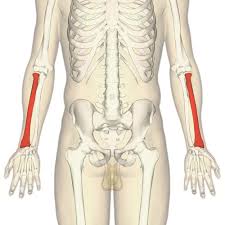
Which bone is highlighted
humerus
radius
ulna
femur
fibula
_____ ribs are attached directly to the sternum
false
secondary
floating
true
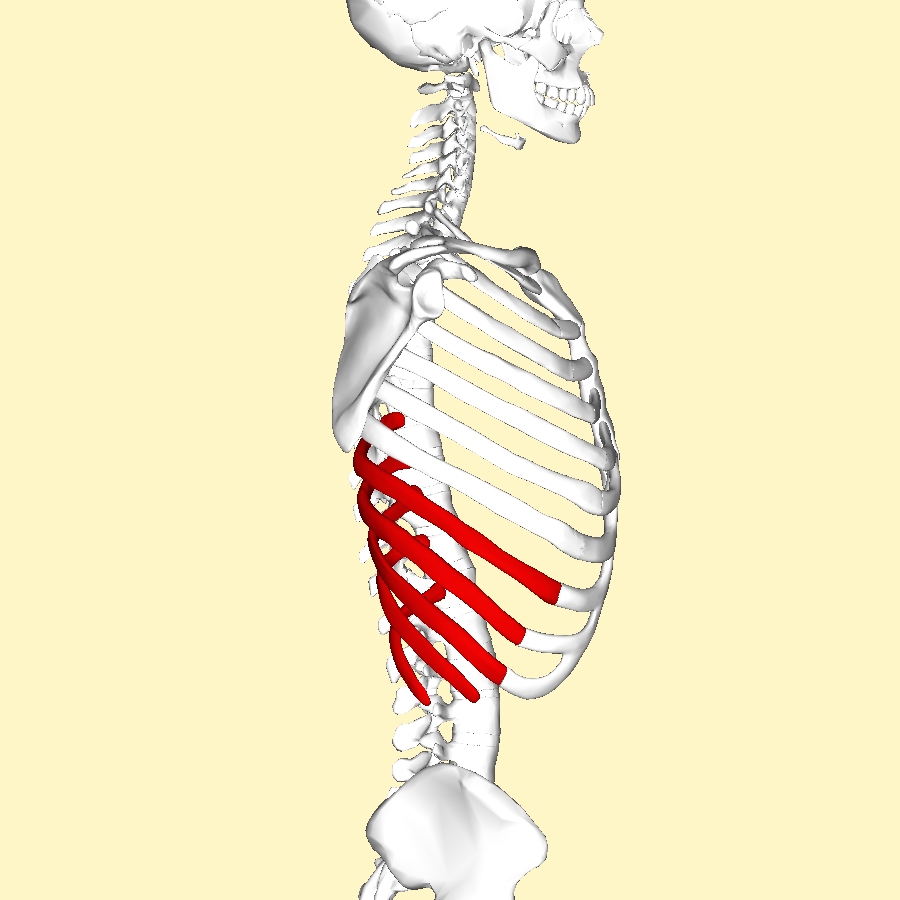
Ribs 8-10 that are connected, via cartilage, to rib pair 7, and are thus indirectly connected to the sternum, are known as
true ribs
false ribs
floating ribs
suprasternal ribs

What bone is highlighted?
Radius
Ulna
Humerus
Carpals
65 year old male has ridden his bike over heavy, mountainous terrain for over 30 years. He has noted increasing knee and hip pain in both legs. The doctor took Xrays and noted that there was significant breakdown of cartilage between the joints and his bones were rubbing together. The doctor diagnosed the man with _______________________.
Myalgia
Rheumatoid arthritis
Osteoarthritis
Osteoporosis
72 year old Betty was told by her doctor that she has low bone mass and structural deterioration of bone tissue. Her bones look like they have a bunch of space or pores in them. The doctor explained that the patient has ____________________ and is more likely to fracture than someone else her age without this disease.
Osteoporosis
Osteoblastoma
Osteocytoma
Osteogenesis imperfecta
What might happen if an older person didn't get enough calcium?
She'd be at greater risk for broken bones
She might lose her taste buds at a rapid rate
She might develop trouble hearing
She might develop wrinkles
What are functions of the muscular system? Choose two.
protection
movement
support
digestion
Muscles that you can control are called _____ muscles.
voluntary
involuntary
Which of the following is not a voluntary muscle?
bicep (arm)
tricep (arm)
hamstring (leg)
heart
Your stomach and intestines are made of _____ muscle.
skeletal
cardiac
smooth
_____ muscle is only found in your heart.
Skeletal
Cardiac
Smooth
Which of the following occur when ATP binds to the myosin head?
Myosin head change to low energy configuration
Myosin head undergoes power stroke
Myosin head detach from actin
Myosin head forms cross bridge
Ca2+ will be released from the sarcoplasmic reticulum when
impulse reaches neuromuscular junction
impulse transmitted along T tubule
ATP binds to sarcoplasmic reticulum
acetyl choline binds to ligand gated ion channels
Ca2+ released by sarcoplasmic reticulum will bind to
Actin
Troponin
Myosin
Tropomyosin
____________ attaches to actin to form the cross bridge.
Troponin
Tropomyosin
Myosin
Calcium
What is the name of the neurotransmitter released at a neuromuscular junction?
Calcium
Acetylcholine
Dopamine
Troponin

Aerobic is exercise?
With oxygen
Without oxygen

Anaerobic is exercise?
With oxygen
Without oxygen

Low intensity exercises are?
Aerobic
Anaerobic
Which of the following is an Aerobic exercise?
Sprinting
HIIT
Sleeping
Walking/Light Jog

What is muscular endurance?
The ability to use your muscles when working out
The ability to use your muscles to lift heavy objects
Ability to use your muscles for an extended period of time without getting tired
The ability to prevent health issues
What is muscular strength?
Ability to use your muscles a long time without getting tired.
Ability to lift a heavy weight or exert a lot of force
Ability to move your joints through a wide range of motion
Ability of the heart and lungs to work together efficiently
What does the acronym FITT stand for?
Frequency, Intensity, Time, Type
Fitness, Intensity, Time, Type
Frequency, Intensity, Training, Type
Intensity is:
The number of training sessions each week
How hard you train
How long you train for
Which method of training you use
Type is:
The number of training sessions each week
How hard you train
How long you train for
Which method of training you use
Frequency is:
The number of training sessions each week
How hard you train
How long you train for
Which method of training you use
Muscle organ is covered by ________, the fascicle is covered by __________, and the muscle fiber is covered by the ________.
Endomysium, perimysium, epimysium
Epimysium, endomysium, perimysium
Perimysium, endomysium, epimysium
Epimysium, perimysium, endomysium
Muscle fibers are arranged in bundles called:
fascicles
sarcomeres
vesicles
motor units
_________ carries the impulse/action potential "deep" into the muscle fibers.
T-Tubules
Synapses
Sarcoplasm
Neurotransmitters
Which gland is responsible for cooling off runners during exercise?
apocrine
sebaceous
eccrine
carotid
Which of the following is NOT a sign of aging in the integumentary system?
Loss of adipose tissue
More sensitive nerve endings
Loss of elasticity and collagen fibers
Decreased function in blood vessels
You are getting ready to ask your crush to prom and start sweating. Which gland is responsible for this?
Eccrine
Sebaceous
Melanin
Apocrine

