
NEW
Font size
 Worksheets
Unit 1 How Is the World Organized? Review
Total questions: 65
Worksheet time: 50mins

The positively charged particle in an atom.
Proton
Neutron
Electron
Nucleus
The center of an atom where its neutrons and protons are is called the _____________.
nucleus
electron cloud
center

The following subatomic particles are in the nucleus.
Protons and nucleus.
Protons and neutrons.
Protons and electrons
Neutrons and electrons


The atomic mass is the
number of protons and neutrons inside the nucleus
number or electrons or protons
number of protons, neutrons and electrons

The smallest particle of matter
Element
Compound
Atom
Chemical
Which of the following is a compound?
Si
CO2
Cl
He
Ti
A substance that is formed as the result of a chemical reaction is a __________________
Product
Reactant
Starters
Enders
What is the BEST definition of a chemical reaction?
A change in matter that produces one or more NEW substances
When two things combine and EXPLODE.
In the equation 2Mg+O2 → 2MgO which are the reactants?
When new chemical bonds form, energy ____________.
is taken into the system.
is released from the system.
stays the same in the system.
Which objective lens should you start on to locate an image?
medium power
low power
high power
Which cell organelle stores DNA?
Cell wall
Cell membrane
Vacuole
Nucleus
Which of the following is the correct order of organization in living things from most basic (simple) to most complex?
Cells> Tissues> Orgnism> Organ System> Organ
Cells> Tissues> Organ> Organ System> Organism
Tissues> Cells> Organ> Organ System> Organism
Organism> Cells> Tissues> Organ> Organ System
These are a GROUP OF CELLS with similar structure and function, along with extracellular substances located between cells.
ORGAN SYSTEM
ORGAN
TISSUES
ORGANISM

Which of the following is NOT one of the 4 tissue types?
epithelial
avascular
connective
nerve
What organ system responds to internal and external stimuli?
nervous
Lymphatic
Integumentary
Urinary
Reproductive
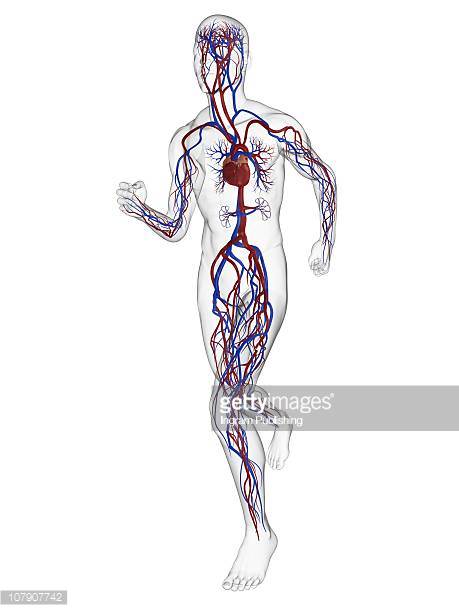
What is the main organ of the circulatory system?
small intestine
bone
lungs
heart
What 2 systems: Allows for movement
Muscular and Skeletal
Endocrine and Skeletal
Nervous and Circulatory
Integumentary and Reproductive
Olympic sprinters undergo increased heart and breathing rates while competing. Which of the following best describes the interactions among systems of a sprinter?
Respiratory system is working to obtain more oxygen, while the circulatory system works to transport the oxygen to the muscles.
The digestive system takes in more glucose, while the excretory system removes waste.
The endocrine system transports ATP to the nervous system
Excretory system removes waste from the digestive system to reduce weight so the sprinter can run faster
Population size is limited by
Food
Water
Human activities
All of these are true

What is the number of individuals that can be supported by the environment?
Carrying capacity
Population density
Dispersion patterns
Symbiosis

What is a population ?
Disturbance has removed vegetation but left soil intact.
The natural birth, growth and development of ecosystem.
All organisms of a species that live in the same area.
A community of interacting organisms and their environment.
Which of the following are all biotic?
Temperature, Light, Rain, Gravity, Heat
Water, Fish, Insects, Lily Plants
Dogs, Meat, Cats, Catnip
Lion, Pride Rock, Warthog, Meerkat
Which definition best fits the term community?
A group or organisms of the same species that live in the same area and interact with one another.
A group of many populations (of different species) that live and interact with one another
A group of populations of many different species that live and interact with both one another and all of the abiotic factors in their environment.
A set of different ecosystems that acer connected by similar geographic features and share the same or similar climate.
Anywhere on earth that life exists.
Which definition best fits the term ecosystem?
A group or organisms of the same species that live in the same area and interact with one another.
A group of many populations (of different species) that live and interact with one another
A group of populations of many different species that live and interact with both one another and all of the abiotic factors in their environment.
A set of different ecosystems that acer connected by similar geographic features and share the same or similar climate.
Anywhere on earth that life exists.


The original source of energy for a food web is...
plants
sun
producers
decomposers

Arrows in a food web represent...
eating
sunlight
energy
matter
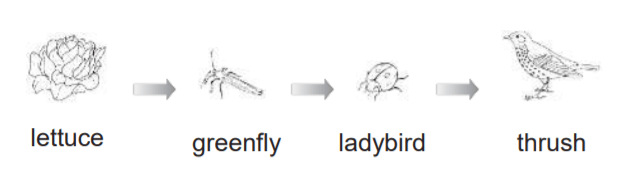
Who is the producer?
lettuce
greenfly
ladybird
thrush

An animal that hunts other animals for food is a ___________
herbivore
predator
prey
omnivore

An organism that gets energy from eating other organisms is a ______________
producer
consumer
decomposer

Does the graph represent an exponential growth or logistic growth?
Exponential Growth
Logistic Grwoth

Two organisms that are so similar they can interbreed in nature and produce fertile offspring.
biotic factor
herbivore
ecosystem
species
Ostriches and gazelles are two animals that live in Africa. They graze for food near each other because they help each other spot predators. The gazelle has excellent eyesight, but poor hearing, and the ostrich has excellent hearing, but poor eyesight. These two animals will alert one another when danger is near. Which term best describes this relationship?
Predation
Commensalism
Mutualism
Parasitism


Deciduous Forest

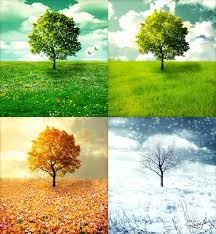
Deciduous Forest
Deciduous Forest
When water vapor is cooled and forms droplets of liquid water
Condensation
Evaporation
Transpiration
Runoff

________________ is movement of water past the soil going deep into the groundwater.
Evaporation
Transpiration
Percolation
Sublimation
__________________ is the process by which moisture is carried through plants from roots to small pores on the underside of leaves, where it changes to vapor and is released to the atmosphere. It is essentially evaporation of water from plant leaves.
Transpiration
Percolation
Infiltration
Plant Uptake
The zone of the Earth that includes all living things
biosphere
ecosystem
community
cell
Out of the options below, which level is the LARGEST?
organelle
tissue
molecule
cell
Out of the options below, which level is the SMALLEST?
population
ecosystem
community
biosphere
Out of the options below, which level is the LARGEST?
ecosystem
organism
community
molecule

