
 Worksheets
Unit 2 Test Prep
Total questions: 90
Worksheet time: 2hrs 15mins


The earth receives heat energy from the sun by _______________, which is the transfer of energy as electromagnetic waves.

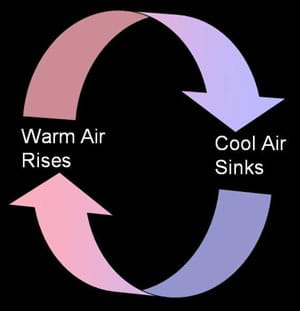
Near the ceiling of a room the air is warmer. The warm air rises because of
conduction
convection
radiation

In heat transfer, heat always flows from the _______________ substance to the _______________ substance.
Hotter to colder
Colder to hotter
Hotter to hotter
Colder to colder

When you use a microwave, what is the main way that heat is transferred?
Convection
Conduction
Radiation
insulation.

An iron is placed on your clothes to smooth out the wrinkles. The iron transfers heat to your clothes through
conduction
convection
radiation

You get sunburned due to __________ from the sun.
conduction
convection
radiation

Near the ceiling of a room the air is warmer. The warm air rises because of
conduction
convection
radiation

The heat from a lamp allows a lizard to remain warm. This is an example of which type of heat transfer?
radiation
conduction
convection
insulation

Energy transfer during which hot fluid rises and cold fluid sinks, creating a cycle, is called...
Heat
Convection
Radiation
Conduction

Which Earth's surface heats quicker, sand or water?
Water
Sand
N/A
N/A

Heating food in a microwave oven.
Conduction
Convection
Radiation

The butter on top of the pancake melted.
Conduction
Convection
Radiation

Air conditioner cooling the hot room.
Conduction
Convection
Radiation

Adding hot water to your cold bath water.
Conduction
Convection
Radiation

Ironing a wrinkled shirt.
Conduction
Convection
Radiation

Laying under the sun to get tan.
Conduction
Convection
Radiation

An ice cube melts when you hold it in your hand.
Conduction
Convection
Radiation

You feel hot after reading for a long time under a lamp.
Conduction
Convection
Radiation

Hair gets hot when a hair straightener is used on it.
Conduction
Convection
Radiation

A bowl of soup cools.
Conduction
Convection
Radiation

What is energy?
the ability to do work
the movement of electrons
UPS global services


What type of energy is shown in the picture?
Mechanical
Electric
Chemical
Heat

What is kinetic energy?
energy in the form of electricity
movement energy
energy you can see
energy caused by vibrations
1) For a flashlight to turn on, chemical energy from the batteries changes to electrical energy that flows to the lightbulb. The lightbulb changes electrical energy into light energy. What is this an example of?
energy transformation
energy exchange
energy being created
energy being destroyed
2) Fill in the blanks using the available answer choices. A child hitting a drum creates vibrations that produce____________.
sound energy
electrical energy
6) Thermal energy is
the internal energy of an object due to the kinetic energy of its particles
the external energy of an object due to its potential energy
the internal energy of an object due to the stored energy of its particles
the external energy of an object due to its exposure to the Sun
8) Which statement is true?
A lamp changes heat energy to electrical energy
A lamp changes light energy to electrical energy.
A lamp changes electrical energy to light and heat energy.
You cannot change energy from one form to another.
10) Frank placed a metal spoon in a glass bowl of hot soup. He then went back to get crackers. When he touched the spoon he was surprised to find that it was hot. Frank knew that the spoon was not hot when he put it in the soup. Which sentence best explains how this happened?
The radiation from the microwave bounced onto the spoon.
Spoons begin heating up when they are placed into liquids.
Thermal energy is transferred from the soup to the spoon.
Heat is created when metals and glasses combine with one another.

What type of energy makes a water wheel turn?
Electrical
Mechanical
Sound
Thermal

When the power went out, a family lit a candle so they could find their way in the dark.
What form of energy is the candle being used for in this situation?
Sound
Thermal
Light
Electrical
Which image shows an object that uses thermal energy to operate?


What form of energy do all activities shown use?
Mechanical
Electrical
Sound
Light
A student uses a computer to complete their homework. Which device uses the same source of energy as the computer?
A microwave using sound energy
A guitar using mechanical energy
A teapot using thermal energy
A television using electrical energy
Which object requires only mechanical energy to perform its main function?


A student uses a set of headphones to listen to music. Which of these objects uses the same source of energy as the headphones?
A flute using wind energy
A piano using mechanical energy
A keyboard using electrical energy
A teapot using thermal energy

A blender uses electrical energy and produces--
light and mechanical energy.
mechanical and sound energy.
thermal and light energy.
electrical energy.
When a bat searches for prey at night, it makes sounds as it flies, and it uses the sounds' echoes to find its prey. When the bat flies and listens to echoes to locate prey, it is using--
thermal energy and light energy
sound energy and thermal energy
mechanical energy and sound energy
light energy and mechanical energy
Energy you can see is called:
light energy
thermal energy
mechanical energy
Energy that is produced when something moves back and forth (vibrates) is called:
mechanical energy
thermal energy
light energy
sound energy
The total potential and kinetic energy of an object is called:
mechanical energy
electrical energy
thermal energy
sound energy
Energy that comes from electric currents is called:
light energy
electrical energy
sound energy
The amount of heat in an object is called
chemical energy
thermal energy
mechanical energy
sound energy
The sun uses/produces which of the following types of energy?
light
mechanical energy
heat
sound energy
A tablet uses all of the following types of energy EXCEPT:
light energy
mechanical energy
electrical energy
sound energy
T or F: Energy can change from one form to another.
True
False
The amount of energy something has because of its position is called:
kinetic energy
potential energy
T or F: Wind and water turbines cannot turn kinetic energy into electrical energy.
True
False
What is the BEST example of a conductor of thermal energy?
A wooden block
A wool oven mitt
A plastic mug
A metal pan
Mittens help keep your hands warm in winter because
they are colorful
they are fuzzy
they are conductors
they are insulators
___________ conductors are materials allow that allow heat to pass through it easily.
Heat
Light
Water
Fire
Electrical conductors are materials that allow ___________ to flow
through them easily.
battery
electric current
fire
heat
Electrical insulator _____ allow electric current to flow through them.
does not
does
Which of the following is an example of conductor?
Wire
Rubber band
Glass
Dry paper
When you are doing work you are exerting...
Push
Pull
Energy
Power
The energy stored in an object is its _______ Energy
kinetic
Potential
Transformed
Joule
Distance (Height) and Mass determine the amount of ______ Energy in an object.
Potential
Kinetic
Thermal
Nuclear
An object falling from 50 m will have ______ potential than an object falling from 40 m.
greater
less
equal
lower
If you have 2 objects with different masses fall from the same height, which one has more potential energy?
smallest
flattest
larger
rounder
The amount of kinetic energy in an object is determined by...
Mass and Speed
Speed and height
Mass and Height
Speed and Velocity
An objects potential energy will increase with...
Mass and Velocity
Mass and Height
Mass and Speed
Speed and time
The faster an object moves the greater its ____________ energy.
Kinetic
Potential
Electrical
Solar

Which number shows kinetic energy at its maximum?
three
two
four
five

