
 Worksheets
STEHN Test Review NHS
Total questions: 60
Worksheet time: 32mins
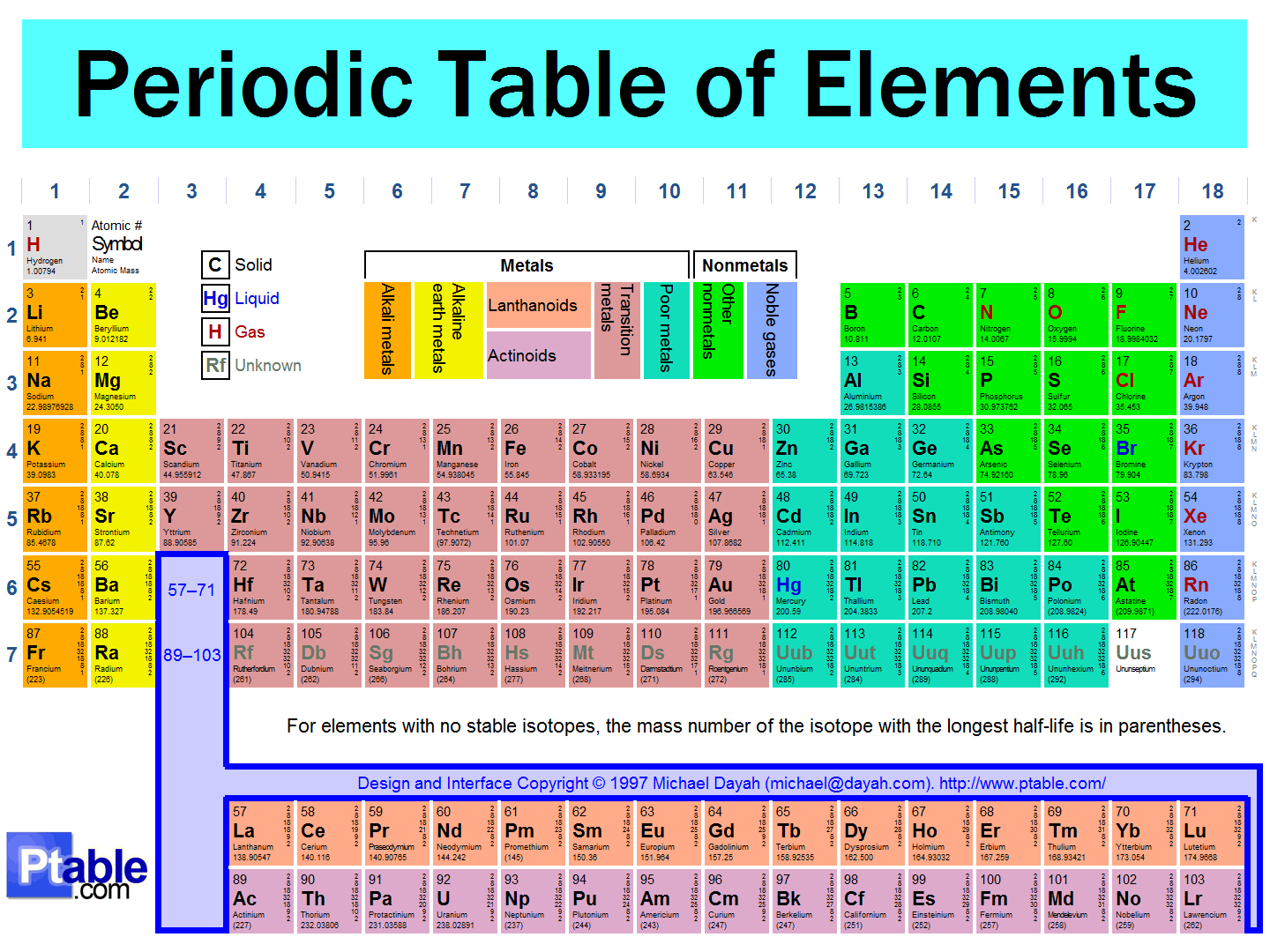

______________ refers to the way a metal can be hammered or rolled into thin sheets.
Luster
Malleable
Metalloids
Solid
This group of elements have properties that are opposite those of metals. ______________________
luster
nonmetals
metalloids
metals
This group of elements sit along a stair step line on the periodic table and have properties of both metals and nonmetals. _________________________
luster
metals
nonmetals
metalloids
Copper is a common metal. Which of the following properties does this metal most likely have?
High conductivity, high malleability, and low luster
Low conductivity, low malleability, and low luster
High conductivity, high malleability, and high luster
Low conductivity, high malleability, and high luster



What does the C represent?
atomic mass
atomic number
element name
chemical symbol

What does the 6 represent?
atomic mass
atomic number
element name
chemical symbol

What does 12.011 represent?
atomic mass
atomic number
element name
chemical symbol
The Modern Periodic Table of Elements is arranged by
atomic mass
atomic number
valence electrons
number of isotopes
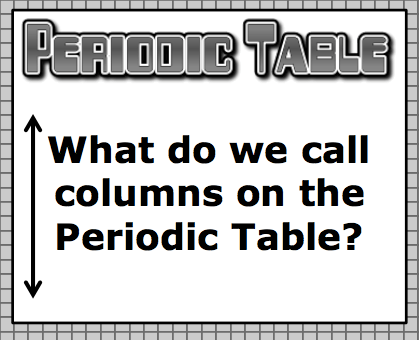
The vertical (up and down) columns in the Periodic Table are called
groups
towers
periods
atomic numbers
Which of the following are physical properties of metal?
Luster
Conductivity
Malleability
Ductility
Which of the following could be properties of nonmetals?
Poor electrical conductivity
Poor thermal conductivity
Dullness
Brittleness
These two elements have similar chemical properties to Barium (Ba).
Ca and Ra, because they are in the same group.
Cs and La, because they are in the same period number.
Ca and Y, because they are 90 degree angle.

Atomic number of ANY element tells you all of the below:
1. Atomic number 2. Number of Electrons 3. # of Protons
False
True
No
Toothpaste
Which of the 3 atomic items determines the charge of the atom?
Gallium
Proton
Electron
Neutron
If i count all the electrons in a diagram, i know it atomic number. I can see what element it is on the periodic table
True
Electrons tell you the atomic number
False
Electrons don't tell you anything
Its just a theory
A diagram?
The bottom number, is the mass number. You can subtract the top # from the bottom number and it gives you the number of neutrons
False
Electrons
True
Charge
What part of the atom give the atom its mass?
Protons
Protons and neutrons
Electrons
Neutrons
What part of the atom make it REACTIVE?
Neutrons
Inner Electrons
Valence Electrons
Protons
Tin (Sn) is a very soft metal. Which statement describes atoms of tin?
Has 5 valance electrons
Has 68 Electrons
Has 50 Protons
Has 119 Neutrons
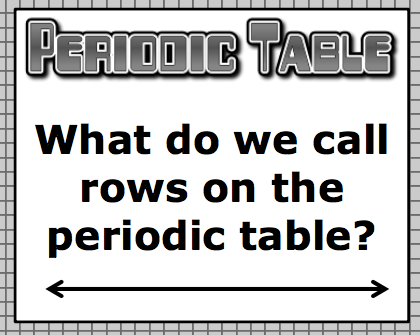
The rows are called PERIODS. They also show the:
Energy Levels
Melting Points
Boiling Points
Nothing
ALL noble gases in the last column (Group) have the Valence shell filled with 8 electrons
Green
False
True
Blue
In a BOHR model of an atom, the the first ring has 2 MAX electrons
True
False
Green
Blue

Which element is this?
Nickel
Neon
Sodium
Nitrogen

Name this element.
Neon
Magnesium
Sodium
Manganese
Name this element.
Neon
Magnesium
Sodium
Manganese
Name this element.
Neon
Magnesium
Sodium
Manganese

What is the atomic number of this atom?
2
4
6
8

What is this element?
Beryllium (atomic #4)
Boron (atomic #5)
Carbon (atomic #6)
Nitrogen (atomic #7)

How many valence electrons?
2
3
4
5
Atoms of the same element that have different number of neutrons are called?
molecules
ions
protons
isotopes
Two different isotopes of an element have different _________
numbers of neutrons
numbers of protons
atomic numbers
nothing is different about them

Halogens have how many valence electrons? ( outer shell)?
2
1
8
7
An ion is an atom that has an electrical charge.
true
false
Electrons have a positive charge.
true
false
Atoms have a total charge of zero if the number of protons and the number of electrons are equal.
true
false
If the atom as more electrons, it is left with a negative charge.
true
false
If the atom has more protons, it is left with a negative charge.
true
false
We use the sign "+" next to the atom's symbol to show that the ion has a positive charge.
true
false
We use the "-" sign next to the atom's symbol to show that the ion has a negative charge.
true
false
When an atom gains a valence electron, it becomes a(n) _____________ ion.
positive
negative
neutral
When an atom loses a valence electron, it becomes a(n) _____________ ion.
positive
negative
neutral


What is the Lewis dot structure for a neutral atom of bromine (35Br)?
The element symbol Br with 7 dots around it.
The element symbol Br with 8 dots around it.
The element symbol Br with 5 dots around it.
The element symbol Br with 35 dots around it.
What is the Lewis dot structure for a neutral atom of sodium (11Na)?
The element symbol Na with 11 dots around it.
The element symbol Na with 8 dots around it.
The element symbol Na with 1 dot around it.
The symbol Na with 2 dots around it.
What is the Lewis dot structure for a neutral atom of carbon (6C)?
The element symbol C with 5 dots around it.
The element symbol C with 4 dots around it.
The element symbol C with 2 dots around it.
The element symbol C with 8 dots around it.

