
 Worksheets
Review
Total questions: 83
Worksheet time: 1hrs 17mins
source of light
sun
glass

What is this object?


What is the best description of an opaque material?
no light passes through the material
some light passes through the material
all light passes through the material
What is the best description of a transparent material?
no light passes through the material
some light passes through the material
all light passes through the material
What is the best description of a translucent material?
no light passes through the material
some light passes through the material
all light passes through the material

What type of object is shown in the picture?
opaque
transparent
translucent
When a light ray bounces off a rough surface, it reflects all over the place
Diffraction
Reverberation
Scattering
Transmission
When this occurs, light rays pass from one transparent medium to another transparent medium.
Absorbtion
Transmission
Relfection
Refraction

Which of these provides the best explanation for why the pencil appears broken?
The pencil absorbs the light rays that hit it.
Water reflects light rays away from the pencil.
Light rays are bent by the water in the glass.
The surface of the water reflects the light rays.
Light travels in straight lines until reflected by another object. Which illustration best shows the light being reflected?


When a light ray strikes a smooth, flat surface, what is the relationship between the angle of incidence and the angle of reflection?
They are equal.
The angle of incidence is twice that of the angle of reflection.
The angle of reflection is twice that of the angle of incidence.
They combine to add up to 180o.

In this diagram, which is the angle of incidence?
Angle A
Angle B
Angle C
Angle D
Objects that generate their own light are called:
luminous objects.
illuminated objects.
non-luminous objects.
reflective objects.

What makes it possible to see an object when looking through a periscope?
It contains mirrors that reflect the object.
It magnifies small objects so they can be seen.
It bends the light rays passing through it.
It separates the light into different colors.
Which will make the darkest shadow?
Sheet of thin tissue paper.
glass window
wooden chopping board
plastic bottle
When an object moves closer to a light source, its shadow...
Gets smaller
Gets bigger
Changes shape
Stays the same size

The longer the distance between the light source and the object, the ........................... the size of the shadow form on the screen.
larger
smaller
not change

Which part of the eye is this?
Retina
Lens
Pupil
Cornea

What part of the eye is this?
Retina
Lens
Iris
Cornea

Which part of the eye is this?
Retina
Lens
Vitreous Humor
Optic Nerve

Which part of the eye is this?
Retina
Iris
Vitreous Humor
Cornea

What part of the eye is this?
Iris
Lens
Retina
Pupil

What part of the eye is this?
Retina
Optic Nerve
Vitreous Humor
Pupil
Which part of the eye is a transparent cover where light first enters?
Lens
Retina
Pupil
Cornea
Which part of the eye is the place where an image is inverted?
Cornea
Iris
Retina
Vitreous Humor
Which part of the eye is an opening that controls the amount of light that enters?
Cornea
Retina
Pupil
Optic Nerve
Which part of the eye is a transparent sphere where light refracts for the 2nd time?
Lens
Cornea
Iris
Pupil

Which part of the eye is this?
Optic Nerve
Lens
Cornea
Retina
What is the gel-like substance that helps to maintain the round shape of the eye?
Cornea
Pupil
Iris
Vitreous Humor
What is the muscle that controls the size of the pupil?
Cornea
Retina
Iris
Optic Nerve
Which part of the eye contains cones and rods?
Cornea
Iris
Retina
Vitreous Humor

The diagram shows one of the common vision defect in human eyes. Name the defect.
Long-sightedness
Short-sightedness

Short sightedness is caused by ..... (Please choose 2 correct answers)
Eye lens too thick
Eye lens too thin
Eye ball too short
Eye ball too long

People with short- sightedness will see ..... (Please choose 2 correct answers)
near object clearly.
near object blurry.
distant object blurry.
distant object clearly.

Which type of lens is used for the spectacles shown?
Concave lens
Convex lens
Cylindrical lens
None of the above

Which vision defect is related to the diagram?
Short-sightedness
Long-sightnedness
Astigmatism
Normal vision
Blind vision

One of the common vision defect in human eyes is long-sightedness. This is because the image is formed ........ the retina.
behind
in front of
on the retina

Long sightedness is caused by ..... (Please choose 2 correct answers)
Eye lens too thick
Eye lens too thin
Eye ball too short
Eye ball too long

People with long- sightedness will see ..... (Please choose 2 correct answers)
near object clearly.
near object blurry.
distant object blurry.
distant object clearly.

This eye defect can be corrected with which type of lense?


How does light behave when hitting this shirt?
Yellow is absorbed; all other colors are reflected.
Yellow is reflected; all other colors are absorbed.
All colors are absorbed, but yellow is refracted.
Yellow is scattered and all other colors are absorbed.
Find the weight of a 20g object
~200N
~20g
~0.2N
~0.02kg
What is the weight of a 456g object?
~456g
~0.456kg
~4.56N
~456N
You have a ball with a weight of 76N. What is the mass of the ball?
~76N
~76kg
~7.6kg
~7.6N
What statement is true?
Mass never changes. Weight does.
Weight never changes. Mass does.
Both mass and weight change because they are affected by gravity.
Neither mass nor weight change. They are always the same.
Find the weight of a 5kg rock on Mercury with a gravitational pull of 3.59m/s/s.
5kg
17.95N
1.39N
0.718N
Find the mass of a 5kg rock on Mercury with a gravitational pull of 3.59m/s/s.
5kg
17.95N
1.39N
0.718N
What is the SI/Metric unit used to measure force?
pounds
grams
newtons
friction

Before you take off for the moon, 25 kg of sliver was loaded into your ship. At is surface the moon has 1/6 gravitational pull. When you reach the moon, what will the silvers mass be?
o kg
4 1/6 kg
25 kg
150 kg
What is the metric unit used to measure the gravitational pull of an object?
mass
weight
gram
Newton
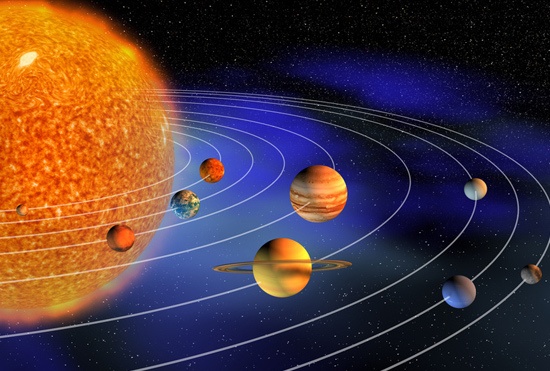
Why do all of the planets orbit the sun rather than Earth?
the sun has more mass
the sun is a star
the Earth is heavier
the sun is in the middle of the milky way
The unit that goes with mass.
Centimeter
Liter
Inch
Gram

