wayground logo

Free Printable Worksheets

Font size

S
M
L
XL
Worksheets

Chemistry 1st Qtr Review

Total questions: 48

Worksheet time: 59mins

Name
Class
Date
1.

Subatomic particles with a negative charge

a)

Electrons

b)

Neutrons

c)

Protons

d)

Quarks

2.
Subatomic particles with a positive charge
a)
neutrons
b)
atomic mass
c)
protons
d)
isotopes
3.

protons + neutrons = ?

a)

Electrons

b)
Atomic Number
c)

Mass Number

d)

Ions

4.
Subatomic particles that are neutral in charge
a)
Neutrons
b)
Protons
c)
Nucleus 
d)
Electrons
5.

Atoms of the same element with a different number of neutrons

a)

ions

b)

alloys

c)

isotopes

d)

compounds

6.

A charged atom is an

a)

ion

b)

isotope

c)

electron

d)

neutron

7.
Where electrons are likely to be found as they travel around the nucleus
a)
Nucleus
b)
Electron Cloud
c)
Within a Proton
d)
Within a Neutron
8.
A tiny but very dense, positively charged portion of the atom that holds most of the atomic mass
a)
Electron Shells
b)
Orbitals
c)
Electron Cloud
d)
Nucleus
9.
Arrangement of elements organized by atomic number
a)
Electron Cloud 
b)
Periodic Table 
c)
Electron Configuration
d)
None of these
10.

Calculation used to find the number of neutrons in an atom

a)

Mass Number- Atomic Number

b)

Atomic Number - Mass Number

c)

Mass Number - Electrons

d)

protons = electrons = neutrons

11.
How many protons does an aluminium atom have? (Use the image to help you)
a)
27
b)
14
c)
40
d)
13
12.
How many neutrons does a sodium atom have? (Use the image to help you)
a)
23
b)
11
c)
12
d)
34
13.
Atoms of the same element must always have the same number of _________
a)
electrons
b)
neutrons
c)
isotopes
d)
protons
14.
The _________ of an element equals the number of protons in an atom of that element
a)
mass number
b)
atomic weight
c)
atomic number
d)
isotopes
15.
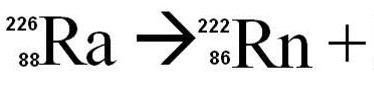
What particle completes this reaction?
a)
alpha particle
b)
beta particle
c)
gamma particle
d)
neutron
16.
Complete the nuclear equation and determine the type of decay that is occurring in this reaction. 
a)
alpha
b)
beta
c)
gamma
d)
none
17.
Solve this equation for alpha decay.
22688Ra = ___ + 42He
a)
22286Rn
b)
22689Ac
c)
22484Po
d)
22588Ra
18.
Solve this equation for beta decay.
6027Co = ___ + 0-1e
a)
5625Mn
b)
6028Ni
c)
5823V
d)
5927Co
19.
If we start off with element 5024X after an alpha decay we get another element Y that looks like
a)
5022Y
b)
4622Y
c)
4820Y
d)
5426Y
20.

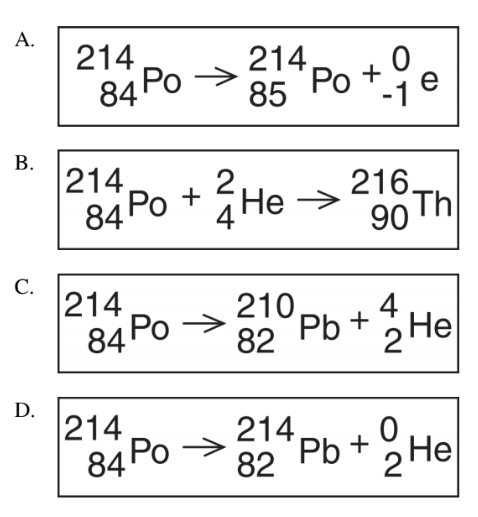
Which equation correctly represents the alpha decay of polonium-214?

a)

A

b)

B

c)

C

d)

D

21.
a)

alpha particle

b)

beta particle

c)

neutron

d)

proton

22.
If we start off with element 5024X after an alpha decay we get another element Y that looks like
a)
5022Y
b)
4622Y
c)
4820Y
d)
5426Y
23.
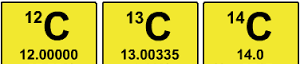
What do these isotopes of carbon all have in common?
a)

number of neutrons & mass number

b)

atomic number and number of neutrons

c)

atomic number and number of electrons

d)

number of protons, atomic number, and mass number

24.
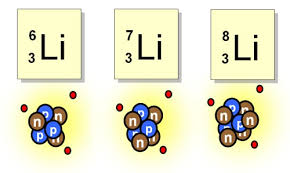
How many neutrons does the isotope of lithium have?
a)
8
b)
3
c)
4
d)
5
25.
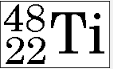
How many protons does this isotope of titanium have?
a)
48
b)
22
c)
26
d)
70
26.
In a correctly written symbol what would be located in the "A" position?
a)
number of neutrons
b)
atomic number
c)
number of electrons 
d)
mass number
27.
which atom has  4 neutrons?
a)
Li-6
b)
Li-7
c)
Li-8
d)
they have the same # of neutrons
28.
Carbon has an atomic number of 6 and an atomic mass of 12. Which elements are considered isotopes of carbon?
a)
Carbon-12
b)
Carbon-13
c)
Carbon-14
d)
Both Carbon-13 and Carbon-14
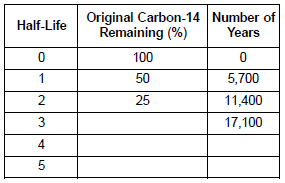
29.

After 22,800 years, approximately what percentage of the original carbon-14 remains?

a)

15%

b)

12.5%

c)

6.25%

d)

3.125%

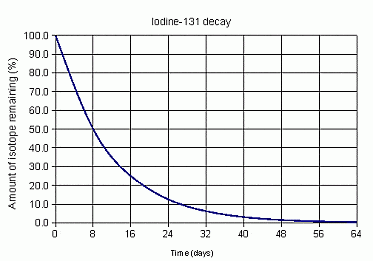
30.
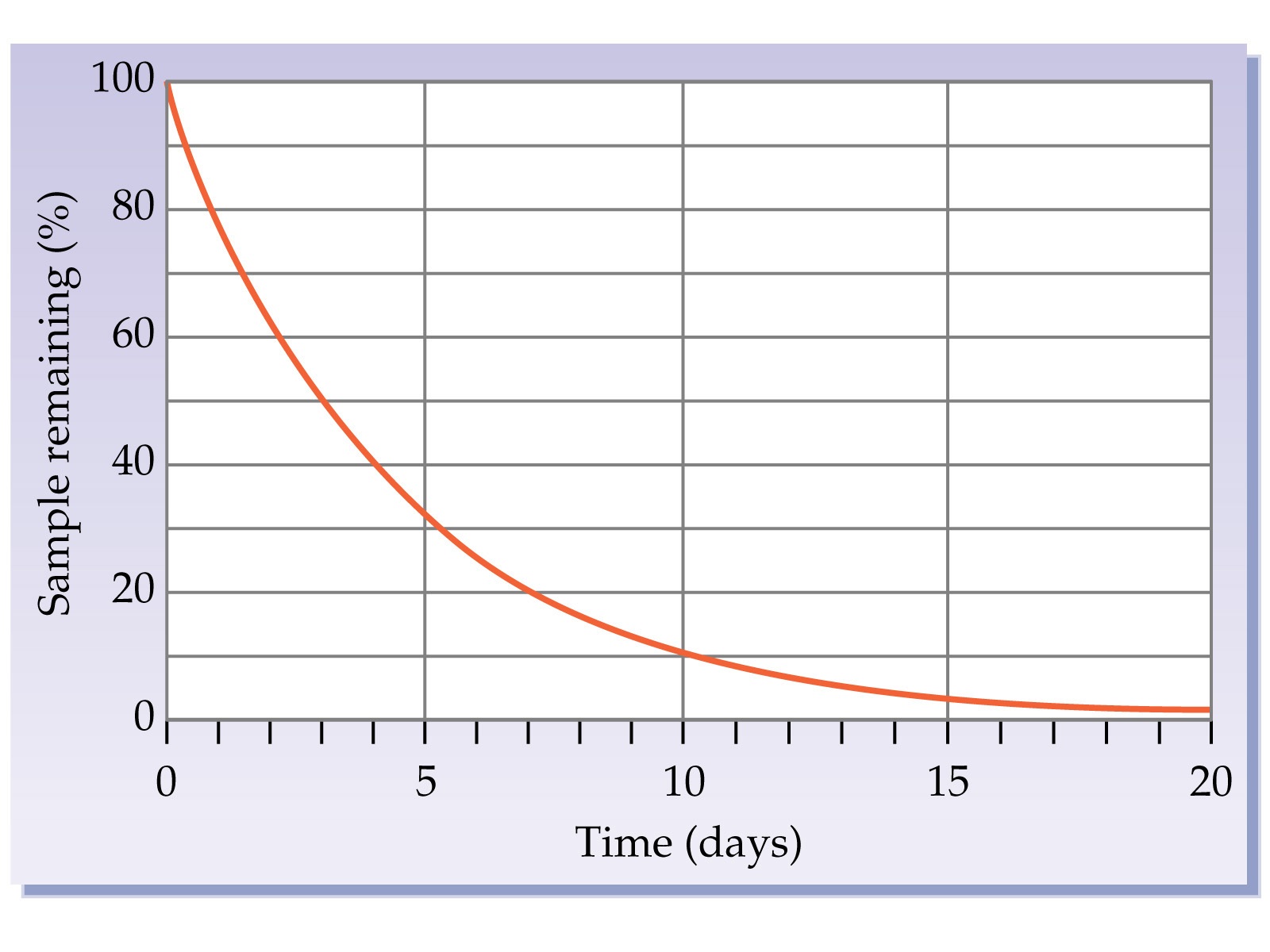
What is the half-life of iodine-131?
a)
32 days
b)
8 days
c)
16 days
d)
24 days
31.

The % of the parent isotope remaining after 1 Half Life.

a)

50%

b)

25%

c)

12.5%

d)

6.25%

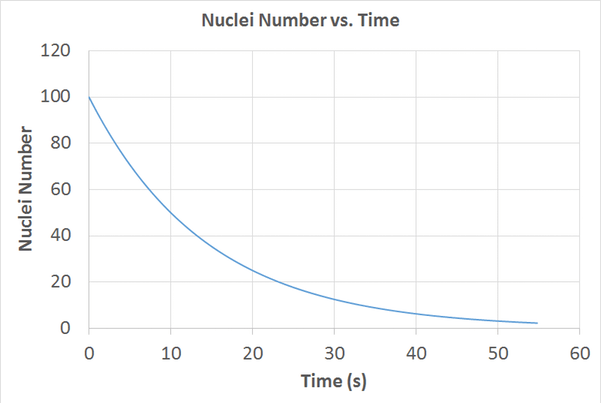
32.

What is the Half life of this isotope?

a)

5 seconds

b)

10 seconds

c)

15 seconds

d)

20 seconds

33.

What is the Half Life of this isotope?

a)

3 days

b)

5 days

c)

8 days

d)

10 days

34.
What is Half-life?
a)
The amount of time it takes for some of the nuclei in a sample of the isotope to decay
b)
The amount of time it takes for half the electrons in a sample of the isotope to decay
c)
The amount of time it takes for half the nuclei in a sample of the isotope to decay
d)
the amount of time it takes to double the nuclei in a sample of the isotope to decay
35.

Why do some elements have half-lives?

a)

their proton to neutron ratio causes them to be un-stable

b)

half of their protons are absorbed by another atom

c)

they do not have neutrons in their nucleus

36.

After the third half-life, how much of the sample is left?

a)

1/2

b)

1/3

c)

1/16

d)

1/8

37.

Half life (in radioactivity) is the amount of time it takes for half of a radioactive sample to

a)

split.

b)

combine.

c)

decay.

d)

become parent material.

38.
What is the light that you can see called?
a)
observatory
b)
wavelength
c)
visible light
39.
Which model of the atom said that electrons circle the nucleus in orbits of a fixed radius?
a)
Bohr model
b)
Quantum mechanical model
c)
Not true of either model
d)
Both Bohr and Quantum mechanical model
40.
Who was the first person to study atomic theory?
a)
Dalton
b)
Democritus
c)
Chadwick
d)
Miller
41.
Who proposed that the atom consists mostly of empty space?
a)
Bohr
b)
Dalton
c)
Rutherford
d)
Chadwick
42.

What are two facts about Democritus's?

a)

Greek philosopher

b)

Created the atomic theory

c)

Used the cathode ray tube in his discovery

d)

Believed that the universe was made of tiny "uncuttable" particles

e)

Discovered that the atom is mostly empty space

43.
the smallest particle of an element that retains the chemical properties of that element
a)
ion
b)
isotope
c)
atom
d)
element
44.

Which element is this?

a)

Nickel

b)

Neon

c)

Sodium

d)

Nitrogen

45.

Name this element.

a)

Argon

b)

Chlorine

c)

Aluminum

d)

Boron

46.

What is the atomic number of this atom?

a)

2

b)

4

c)

6

d)

8

47.

How many valence electrons?

a)

2

b)

3

c)

4

d)

5

48.

What is a valence electron?

a)

Electrons in the first energy shell

b)

Electrons in the second energy shell

c)

Electrons in the outer shell

d)

Total number of electrons