
 Worksheets
Earth-Moon-Sun System
Total questions: 70
Worksheet time: 40mins
What is the source of heat and light (RADIANT ENERGY) in our Solar System?
the North star
the moon
the sun
Earth
About how long does it take the moon to orbit the Earth?
~ 29 days
~15 days
~1 day
It doesn't.
We experience seasons on Earth because
The Earth is tilted at 23.5 degrees causing the sun to heat Earth with direct rays in the summer and indirect rays in the winter.
We rotate around the sun once per year.
We are closer to the sun during warmer months and further from the sun in colder months.
The Earth is tilted at 23.5 degrees.
Patterns are predictable. Patterns in our Earth, Sun and Moon system include... (select all that apply)
Moon phases
Sunrise and sunset
Seasonal changes
Meteor showers

Shown here is an eclipse. Is it a solar eclipse or lunar eclipse?
(a)

Shown here is an eclipse. Is it a solar eclipse or lunar eclipse?
(a)
A solar or lunar eclipse don't occur every lunar cycle because all three celestial bodies (the Sun, Earth and Moon) have to
move closer together
rotate clockwise
rotate counterclockwise
align
During which season will the North Pole receive 24 hours of darkness?
Summer
Fall
Winter
All of the above

At location A, what season are people in the Northern Hemisphere experiencing?
Fall
Summer
Spring
Winter

The model shown represents a _____ eclipse
solar
lunar

The model shown represents a _____ eclipse.
solar
lunar
The gravitational pull from the moon and sun causes
moon phases
eclipses
tides
When the northern hemisphere is tilted away from the sun, it is
Winter
Summer
Fall
Spring
Which is most likely caused by the tilt of Earth on its axis as it revolves around the sun?
lunar eclipse
phases of the moon
two high tides and two low tides each day
opposite seasons in the Northern and Southern Hemispheres
Different angles of the moon's lit surface as the moon revolves around Earth cause
cycles.
moon phases.
eclipses.
tides.
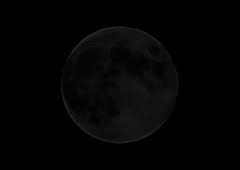
Why are people on Earth unable to see the moon during the new moon phase?
The lit side of the moon is not facing Earth.
The sunlight is being reflected off the moon.
The location of Earth is between the moon and the sun.
The tilt of Earth is causing the moon to be blocked by the sun.
During the summer solstice,
the Northern Hemisphere receives most sunlight; longest day of year.
the sun is directly above the equator.
Northern Hemisphere receives less sunlight; shortest day of year.
sunlight doesn't change.
Moon phases happen every month. Which statement explains why we see the moon changing from night to night.
The Earth revolves around the moon.
The Sun revolves around the Earth.
The moon revolves around the Earth.
The moon stays in place as the sun moves.

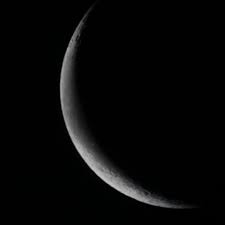
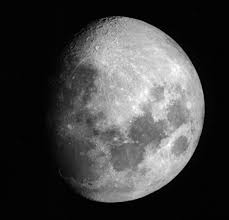
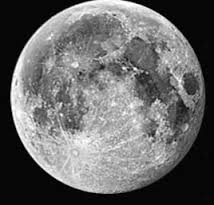
What phase is this?
Waning gibbous
Full
Last quarter
Waxing crescent
What does "waning" mean?
Staying the same
Having one side illuminated
Getting bigger and brighter
Getting smaller and darker

What is the Moon?
A celestial body that revolves around a planet
A curved path followed by a satellite as it revolves around an object
The luminous star around which Earth and other planets revolve; is composed mainly of hydrogen and helium

What is an Axis?
An obscuring of the light from a celestial body by the passage of an object between the celestial body and the observer or between the celestial body and its source of illumination
A phenomenon or process that involves multiple steps and repeats itself
The imaginary line through Earth that extends from the North Pole to the South Pole and is the center of Earth’s rotation

The earth's axis is tilted (a) degrees off center.
What would seasons be like if Earth's axis were straight up and down and not tilted?

Which location has the greatest number of hours of daylight?
A
B
C
D
E

In the diagram below, the Northern hemisphere would be in what season at position A?
Fall or Autumn
Spring
Winter
Summer


The bulge of water on the side of Earth facing the moon produces
high tides
low tides
no tides
neap tides
How often do neap tides occur?
twice per month
once per month
twice a year
twice per day
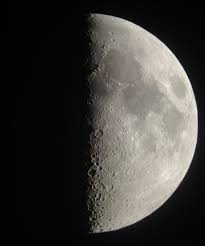


The Moon most likely formed from an impact of a Mars-size object with early Earth.
True
False
How long is the lunar cycle (moon phases)?
27 days
Who was the first American to step onto the surface of the moon?
Buzz Aldrin
Neil Armstrong
Alan Shepard
Scott Kelly

What is the age of the moon?
38.5 billion years old
4.53 billion years old
235.6 billion years old
273.66 billion years old
The Moons orbital plane is inclined by how many degrees with respect to the Earths orbital plane?
5 degrees ***
15 degrees
25 degrees
12 degrees
The Moons diameter is around 3,468 km (2,155 miles) in diameter. It is:
about ¼ the size of Earth
about 1/10th the size of Earth
about 1/5th the size of Earth
about 1/3 the size of Earth
When a stellar object is closest to another stellar object it is known as.....
perigee
apogee
On the Moon, lava channels are called
Rilles
coronae
planitia
mare
The moons gravity is
1/6 of Earths gravity
1/4 of Earths gravity
1/2 of Earths gravity
1/10 of Earths gravity
Which side of the Moon has more craters
near side
far side
both sides have the same amount of craters
there are no craters on the moon
What was the name of the vehicle that transported Armstrong and Aldrin to the moon's surface?
The Tiger
The Eagle
The Scorpion
The Raven
The mission that was the first to land on the moon was called....
Surveyor 1
Luna 22
Pioneer 2
Apollo 13
Apollo 11
The commander of the mission was the first to make a footprint on the lunar soil. His famous quote was...
"One small step for man, one leap for mankind"
*** "That's one small step for man, one giant leap for mankind" ***
"One small leap for man, one big leap for mankind"
"That's a small step for man and a giant leap for humankind"
What term below is defined as mountainous regions of the Moon?
ejecta
maria
highland
rille
What term below is defined as the dark, smooth plains of the Moon?
maria
highland
ray
regolith
What term below is defined as structures that resemble valleys?
regolith
crater
ray
rille
What term below is defined as loose, ground up rock on the surface of the Moon?
rille
regolith
ray
maria


We do NOT have a lunar eclipse each month because...
The tilt of the moon's orbit is at 5 degrees
The moon is too small
The moon's orbital distance changes
All choices

