
 Worksheets
PMA #2 Review
Total questions: 50
Worksheet time: 41mins
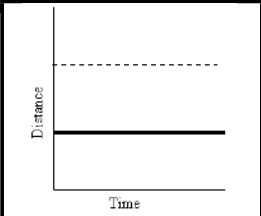
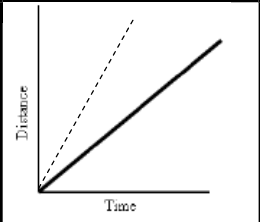
In which of the following graphs below are both runners moving at the same speed?


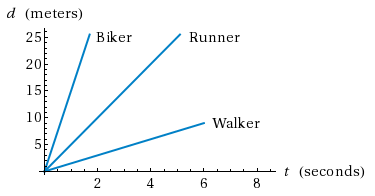
Which person moved the fastest in 3 seconds?
biker
runner
walker
they are all moving equally

What is happening at E?
Stationary
Accelerating
Steady speed; moving away from the starting position
Steady speed; returning to the starting position
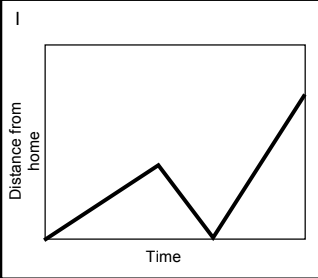
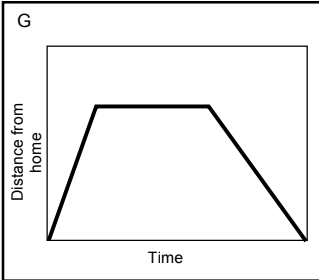
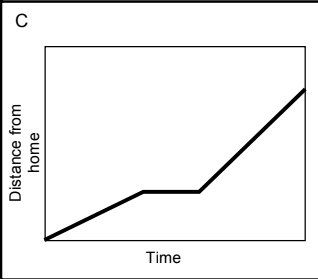
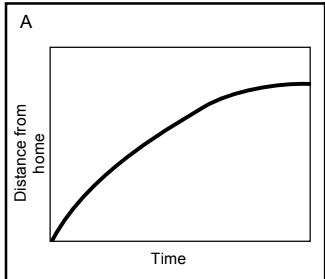
Susie went to the store, when she got there she realized that she forgot her wallet and returned home.
Which graph matches this motion?

What is the geosphere?
all the air and gases on the planet
all the frozen water on the Earth
the non-living soil, rocks, and minerals of the Earth
the rivers, lakes, and oceans of the Earth

What is the biosphere?
all the air and gases on the planet
made up of living things
the non-living soil, rocks, and minerals of the Earth
the rivers, lakes, and oceans of the Earth

What is the hydrosphere?
all the air and gases on the planet
made up of living things
the non-living soil, rocks, and minerals of the Earth
the rivers, lakes, and oceans of the Earth

What is the atmosphere?
all the air and gases on the planet
made up of living things
the non-living soil, rocks, and minerals of the Earth
the rivers, lakes, and oceans of the Earth
Which sphere contains icebergs and glaciers
Atmosphere
Cryosphere
Biosphere
Geosphere
You hold a bowl of hot soup that warms your hands; this is
A. Radiation
B. Conduction
C. Convection
D. Conviction

Which layer of the atmosphere protects Earth from meteoroids?
mesosphere
troposphere
ionosphere
stratosphere
Why is the ozone layer vital to life on Earth?
Planes fly in the ozone layer
It is made up of oxygen (O2)
It shields the Earth from ultraviolet (UV) rays from the sun
It causes clouds to be created
In which of the layers of Earth's atmosphere is the ozone layer found?
Troposphere
Stratosphere
Mesosphere
Exosphere
How does the temperature of the air change as you go higher in the troposphere?
It decreases.
It fluctuates.
It increases.
It stays constant.
What form of heat transfer is responsible for global winds and ocean currents?
Conduction
Convection
Radiation
Absorption

Mary stands in a swimming pool and notices that the water around her feet is a lot cooler than the water near the surface. Which process causes this difference in temperature?
convection
evaporation
radiation
conduction
Which statement correctly defines wind?
The movement of air from areas of low pressure to areas of high pressure
The movement of air to a colder area in the atmosphere.
The movement of air from areas of high pressure to areas of low pressure.
The movement of air pushed around and bouncing off Earth's surface.
What causes differences in air pressure?
Equal heating of the Earth by the sun
Equal cooling of the earth when the sun goes down
Unequal heating of the earth by the sun
Which of the following winds occurs when cool air blows from the land to the ocean?
Trade Winds
Land Breeze
Sea Breeze
Westerlies
____________ are fast moving currents of air that move from west to east in the Northern hemisphere.
trade winds
westerlies
easterlies
jet streams
What is the difference between weather and climate?
Weather is predictable
Climate is unpredictable
Weather is unpredictable and changes everyday
Climate unpredictable and changes everyday
The climate refers to the tempeture a place has over a long period of time.
True
False
Rain, sleet, snow, and hail are all types of
evaporation
condensation
precipitation
transpiration
The amount of water vapor in the air is called
high pressure
low pressure
air mass
humidity
The average annual precipitation in many places in Florida is greater than that of most other places in the United States. Why does Florida have so much rain?
The average elevation of Florida is lower that of most of the country.
Florida has more dense vegetation than most of the country so it gets more rain.
Nearby warm ocean waters cause high levels of water vapor in the air.
Florida is closer to the equator than most of the country so it gets more rain.
In which way are Gulf Stream and jet stream similar?
Both are ocean currents that flow in certain direction
Both bring dry weather to the US
Both are air currents that flow in certain direction
Both affect local weather in the US

Weather is?
Weather measured over a long period of time.
The Average pattern of weather for a particular region.
pattern of ocean currents due to water temperature
What is happening outside in the atmosphere RIGHT NOW.

What impact does the Gulf Stream have on the climate of the east coast of the US?
The cold water from the Gulf Stream current cools the land.
The warm water from the Gulf Stream current warms the land.
The cold water from the Gulf Stream current decreases inland wind speeds.
The warm water from the Gulf Stream current increases inland wind speeds.
What causes wind?
differences in air pressure & temperature
differences in gravity
difference in oxygen
differences in the thermosphere
The movement of deep, cold, nutrient filled water to the surface of the ocean is..
Ocean Current
Upwelling
Deep Currents
Surface Currents


Deep ocean currents are caused by…?
Differences in salinity
Differences in temperature
Differences in temperature and salinity
None of these
How is heat transferred around the Earth’s oceans?
Cold ocean currents push warm water away from the poles
Warm ocean water, heated by the sun, moves away from the equator to the poles
Wind pushes warm ocean currents around, but have no effect on cold currents
Rain, snow, and sleet are all examples of…
Precipitation
Condensation
Transpiration
Evaporation

How do Sea breezes affect cities on the coast?
They bring in warm sea breezes that increases the temperature in the city
They bring in cool sea breezes that decrease the temperature in the city
What is the order of the layers of the atmosphere, starting with the layer closest to Earth's surface?
Stratosphere, Troposphere, Exosphere, Mesosphere, Thermosphere
Troposphere, Stratosphere, Mesosphere, Thermosphere, Exosphere
Troposphere, Stratosphere, Mesosphere, Exosphere, Thermosphere
Troposphere, Stratosphere, Thermosphere, Exosphere, Mesosphere
Which of these describes the greenhouse effect?
The process of the atmosphere keeping the Earth's surface dense
The process of the atmosphere trapping the sun's radiation, and making the Earth warm
The process of the atmosphere keep us from floating into space
The process of the atmosphere reflecting all of the Sun's heat back into space
Which area has the most precipitation?
The north pole, because the temperature is colder there is more snow
The equator, because warmer temperatures cause more evaporation, leading to more clouds and rain
The south pole, because colder temperatures cause more evaporation, leading to more snow
The equator, because global winds push rain south

Which of these statements is true about climate and ocean currents
San Diego has a warmer climate because it is near the jet stream
Charlotte has a warmer climate because it is closer to the jet stream
Charlotte has a colder climate because it is near the Gulf Stream current
San Diego has a colder climate because it is near the California current


What will most likely result when the jet stream moves south of North
Carolina?
North Carolina will experience tropical weather conditions.
North Carolina will experience hot, dry weather.
North Carolina will experience mild weather.
North Carolina will experience cold weather.

What kind of weather would you expect at the place marked "X" on the weather map?
warm and wet
cold and wet
cold and sunny
cold and clear

