
 Worksheets
Classification, Properties, Changes, Conservation Unit Test Rev.
Total questions: 80
Worksheet time: 1hrs 3mins
A student mixes yellow powder with water. Which observation would prove a CHEMICAL change occurred?
The powder DISSOLVED in the water
The water turned the COLOR yellow
The bag's TEMPERATURE changed
The STATE OF MATTER changed
Which of the following options provides evidence of a CHEMICAL change?
Wood is burned releasing ash and smoke
Rocks separate when soil is sifted
Water turns to ice when you put it in the freezer
Salt dissolves in water
Which of the following examples provides evidence of a PHYSICAL change?
Wood is burned and releases ash and smoke
Iron rusts over time
When mixed, baking soda and vinegar form gas bubbles
A piece of paper changes shape when you rip it up

A white tablet is dropped into water. The water becomes cloudy and bubbles are produced. What type of change has occurred?
Physical change
Chemical change
No change
Which observations prove a chemical change has occurred?
Dissolving and expected color change
Mixing and dissolving
State of matter change and boiling water bubbles
Unexpected color change and temperature change
When mixing milk and vinegar, a white, chunky, solid substance is formed. What has occurred?
Physical change: state of matter
Chemical change: production of a solid
Physical change: freezing
Chemical change: rust
When iron is exposed to air over a long period of time, it forms rust. This is an example of what?
A new substance forming
Color change: no new substance
Shape change: no new substance
Burning: a new substance
A physical change...
Changes the physical properties of an object, but does not create a new substance.
Creates a new substance and cannot be undone.
A chemical change...
Changes the physical properties of an object, but does not create a new substance.
Creates a new substance and cannot be undone.

Is this an example of a physical or chemical change?
Physical
Chemical

Is this an example of a physical or chemical change?
Physical
Chemical

Is this an example of a physical or chemical change?
Physical
Chemical

Is this an example of a physical or chemical change?
Physical
Chemical

Is this an example of a physical or chemical change?
Physical
Chemical

Is this an example of a physical or chemical change?
Physical
Chemical

Is this an example of a physical or chemical change?
Physical
Chemical

Melting a chocolate bar is a...
Physical change
Chemical change
Which of the following is NOT an example of a physical change?
Crumpling paper
Sharpening a pencil
Clothes shrinking in the dryer
Milk turning sour
A change in which NEW substances are formed.
Chemical change
Physical change
Which of the following is NOT an example of chemical change?
Milk turning sour
Burning wood
Breaking a pencil
Metal turning rusty
The following statements describe a physical property EXCEPT one.
Ice melts when heated
Aluminum is a silver-colored metal
The density of water is 1g/cm3
An iron bar rusts
In identifying a sample of a pure substance, which may be its chemical property?
Its mass is 26.87 g
It melts when heated
It burns in air
It is a good heat conductor
A classification of matter that is made up on only 1 type of particle is called
a heterogeneous mixture
a pure substance
a homogeneous mixture
a blender
Blood is a fluid found in the bodies of humans and other animals. It can be physically separated into plasma, red blood cells and white blood cells. Blood is a ___________________
pure substance
mixture
A marshmallow is toasted over a campfire is;
Physical Change
Chemical Change
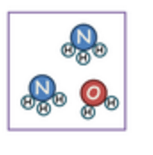
Aluminium foil is an example of a.....
Which of the following is a chemical property?
Melting point
Ductility
Colour
Flammability
Which of the following is a chemical property?
Melting point
Ductility
Colour
Flammability

homogeneous mixture
heterogeneous mixture

Which one of the following does not have an indicator for chemical change?
Two clear liquids form precipitate after mixing
The milk smells when you leave it out of the refrigerator
Fireworks explode with different shapes and colors
Prepare a cold Kool-Aid in a hot summer day.
(OH)2
Mg + __HCl ---> MgCl2 + H2
Balance this equation: _Zn + _O2 --> _ZnO
1, 1, 2
2, 1, 2
1, 1, 1
2 ,2, 2
Al + O2 → 2Al2O3
Which side of the yield sign are the reactants found?
to the left
to the right
in the middle
Which side of the arrow are the products found?
to the left
to the right
in the middle
How many water molecules do you need to balance the equation: __H20 --> 2H2 + O2?
1
2
3
0
Al + O2 --> 2Al2O3
2C2H2 + 5O2 --> 4CO2 + 2H2O
NaHCO3 --> Na2CO3 + H2O + CO2
Balance the following equation:
___ Mg+ ___ O2→___ MgO
1, 1, 3
2, 1, 2
1, 2, 1
2, 2, 2
How many oxygen atoms are in the products for the chemical reaction below?
4Fe + 3O2 → 2Fe2O3
2
3
5
6
The Law of Conservation of Mass says that matter can neither be __________ or __________.
created; destroyed
recycled; renewed
subtracted; added
joined; separated
According to the Law of Conservation of Mass, what happens to the wood and oxygen when it is burned?
The wood disappears.
It stays the same chemically.
The atoms in the wood and oxygen rearrange and form smoke and ash.
Nothing.
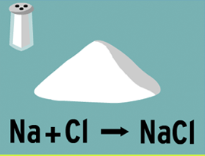
When sodium and chlorine combine to form sodium chloride, sodium chloride is the:
Originator
Reactant
Product
Produce
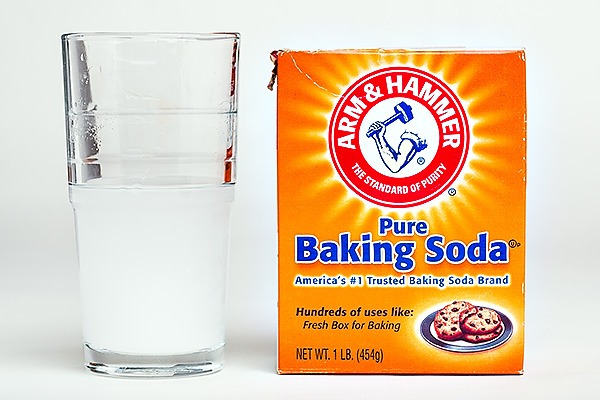

Which of the models of a chemical reaction best represents the Law of Conservation of Mass?
A
B
C
D

Which of the models of a chemical reaction best represents the Law of Conservation of Mass?
A
B
C
D

Which of the models of a chemical reaction best represents the Law of Conservation of Mass?
A
B
C
D
A student heated a 10 gram sample of a chemical in an open container. A chemical reaction occurred, and the mass of the sample was measured again. The mass of the sample was found to be less than before the reaction. Which of the following best explains the decrease in mass of the sample?
The heat caused the chemical to become less dense.
The reaction gave off more heat than was added.
Some of the lighter particles were destroyed.
Some of the particles escaped as a gas formed.
A student dissolved 25 grams of salt into 1,000 grams of water. What should the mass of the saltwater mixture be?
975 grams
1,000 grams
1,025 grams
2,500 grams
A student measures the mass of an iron nail to be 25 grams. The student heats the nail over a bunsen burner and measures the mass of the nail afterwards. The mass of the nail is found to be greater after burning. Which of the following best explains the increase in mass of the nail?
The heat caused the compound to become more dense.
The reaction gave off less heat than was added.
Some of the heavier particles multiplied inside the nail.
Extra particles from the air were added to the nail during burning.

