
 Worksheets
Quarter 1 Benchmark
Total questions: 55
Worksheet time: 28mins

What are gases in Earth’s atmosphere that trap heat called?
Fossil fuels
Greenhouse gases
Greenhouse effect
Radiation
What is a warming of Earth’s surface and the air above it called?
Climate
Greenhouse gases
Radiation
Greenhouse effect
What is condensation?
A process that moves water from the oceans to the atmosphere
A process that transports water from plants to clouds
Water vapor rising into the atmosphere, cooling, and changing into a liquid form
Returning water to the soil
What is the movement of particles (gas, air, water) from one place to another by thermal energy?
Convection
Conduction
Thermal energy
Wind
Particles bumping into each other or touching using thermal energy are called what?
Convection
Conduction
Thermal energy
Atmosphere
What is precipitation?
A process that moves water from the oceans to the atmosphere
A process that transports water from plants to clouds
Water vapor rising into the atmosphere, cooling, and changing into a liquid form
Returning water to the soil

What is the energy source that drives the water cycle?
The moon
The heat from our home in the winter all around the world
The sun
The heat generated soley from the core of the earth
Which atmosphere layer protects living things from the Sun's UV radiation?
Troposphere
Mesosphere
Thermosphere
Stratosphere
Which atmosphere layer blends in with outer space?
Troposphere
Mesosphere
Exosphere
Thermosphere
In which atmosphere layer does weather occur?
Exosphere
Troposphere
Mesosphere
Stratosphere
Generally, as altitude increases, what happens to air pressure?
It increases.
It decreases.
It stays the same.
It changes within each atmosphere layer.
Which atmosphere layer contains the Ozone Layer?
Stratosphere
Troposphere
Mesosphere
Exosphere
Condensation occurs when water vapor
cools down
heats up
A continental air mass form over the.....
Ocean
Land
Atmosphere
Under Water
A maritime airmass form over the.....
Ocean
Land
Atmosphere
Under Water
I am a large body of air that has the same temperature/humidity in a given area. What am I?
Air Mass
Front
Climate
Weather
Type of air mass: cold and dry
Continental polar
Continental arctic
Maritime polar
Maritime Tropical
Type of air mass: Cool and moist
Continental Polar
Maritime Polar
Continental Tropical
Maritime Tropical
Type of air mass: hot and very dry
Continental tropical
Continental polar
Maritime polar
Maritime tropical
Type of air mass: warm with abundant moisture
Maritime polar
Maritime Tropical
Continental Polar
Continental Tropical
When air masses collide is called what?
Air Mass
Front
Weather
Climate
Type of front: two cold air masses collide and forces warm air up.
Cold
Warm
Occluded
Stationary
Type of front: when warm air overtakes cold air
Warm
Cold
Occluded
Stationary
Type of front: Cold air overtakes warm air
Cold
Warm
Occluded
Stationary
Type of front: two air masses collide but neither is being overtaken
Warm
Cold
Occluded
Stationary
What fuels a hurricane's strength?
Wind
Warm Water
Sunlight
Cold Water
What are two of the five factors hurricanes need to form?
Warm water (above 80 degrees)
Near the Poles
High Pressure
Low Pressure

What is the first step in the birth of a tornado?
dark sky
thunderstorm
high wind
rain
Which tool is used to measure wind speed?
Wind Vane
Thermometer
Anemometer
Barometer
Satellite

Which tool is used to take the picture below?
Wind Vane
Thermometer
Anemometer
Barometer
Satellite
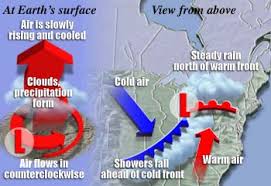

What type of front is moving through North Carolina?
Warm
Cold
Occluded
Stationary
The skies in Houston are...
Cloudy
Clear
Partly Cloudy
Which weather instrument measures air pressure?
Barometer
Thermometer
Anemometer
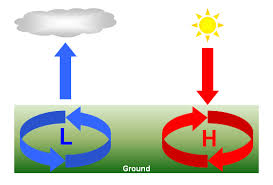
What causes differences in air pressure?
Equal heating of the Earth
Equal cooling of the earth
Uneuqal heating of the earth
What causes wind?
differences in air pressure
differences in gravity
differences in the thermosphere
difference in oxygen
What are winds that blow over short distances?
Local Winds
Global Winds
Which of the following winds occurs when cool air blows from the land to the ocean?
Trade Winds
Land Breeze
Sea Breeze
Westerlies
Which of the following winds occurs when cool air blows from the ocean to the land?
Trade Winds
Land Breeze
Sea Breeze
Westerlies

The greenhouse effect is a natural process
true
false
Which could increase average global temperatures?
increased use of fossil fuels
decrease carbon dioxide emissions
decrease rate of deforestation
increase in wetland acreage
Which of these is an example of a greenhouse gas?
Nitrogen
Argon
Water Vapor
Oxygen
What causes wind?
large fans
uneven gravitational forces
uneven levels of oxygen
uneven heating of the Earth's surface
When winds travel, they are curved. What causes this to happen?
Coriolis Effect
Convection Currents
Polar Easterlies
Trade Winds
A sling psychrometer measures _______.
relative humidity
temperature
air pressure
wind speed
Tornadoes are most likely to be produced from which type of cloud?
cirrus
stratus
cumulous
cumulonimbus
These types of clouds look feathery. They are associated with fair weather. They often indicate that rain or snow will fall within several hours.
stratus clouds
cirrus clouds
cumulous clouds
cumulonimbus clouds
These types of clouds are fluffy and white with flat bottoms. They usually indicate fair weather.
stratus clouds
cirrus clouds
cumulus clouds
cumulonimbus clouds
The wind vane is a long rod that has four letter arrows attached to it. The letters N, S, E, and W are used. This stands for north, south, east, and west.
True
False

What type of front does this symbol indicate?
Warm Front
Cold Front
Stationary Front
Occluded Front
What type of weather does a warm front bring?
Rain and warmer temps
Thunderstorms and colder temps

