
 Worksheets
AP Biology Unit 3 Review
Total questions: 64
Worksheet time: 39mins
What type of macromolecule is an enzyme?
a protein
a lipid
a nucleic acid
a carbohydrate
Which of the following is NOT a part of photosynthesis?
Calvin cycle
Light reactions
Light independent reactions
Krebs cycle
Where do the light reactions take place?
Cytosol
Thylakoid membrane
Stroma
Mitochondrial matrix
What is the input for the light reactions?
Light energy
ATP
NADPH
H2O
What is the output for the light reactions?
Light energy
ATP
NADPH
H2O
Where does the Calvin cycle take place?
Cytosol
Thylakoid membrane
Stroma
Mitochondrial matrix
What is the input for the Calvin cycle?
CO2
H2O
NADPH
ATP
G3P
What is the output for the Calvin cycle?
CO2
H2O
NADPH
ATP
G3P
How many CO2 molecules are needed to make 1 G3P?
1
2
3
6
How many turns of the Calvin cycle are required for 1 G3P to be synthesized?
1
2
3
6
How many NADPHs are required for the Calvin cycle?
2
3
6
9
How many ATPs are required for the Calvin cycle?
2
3
6
9
Which of the following describes the pathway of electrons in the light reactions?
O2 → PS II →
PS I → NADH
O2 → PS II →
PS I → NADPH
O2 → PS I →
PS II → NADPH
O2 → PS I →
PS II → NADH
What is the function of an enzyme?
To speed up a chemical reaction
To provide additional energy
To inhibit a cellular process
To increase absorption of a molecule
Which of the following would NOT denature an enzyme?
HIGH temperature
LOW pH
HIGH pH
LOW temperature
What happens to the reaction rate if an enzyme is denatured or nonfunctional?
No change in the reaction rate
Increase in reaction rate
Decrease in reaction rate
Decrease then increase in reaction rate
Which of the following is NOT a way that enzymes speed up chemical reactions?
Strain bonds in the structure
Orient reacting molecules
Provide favorable environment
Increase required energy of activation
An enzyme can make an endergonic reaction into an exergonic reaction.
True
False
Which of the following is a way to overcome competitive inhibition of an enzyme?
Increase product concentration
Increase substrate concentration
Decrease enzyme concentration
Decrease environmental temperature
Where does a substrate bind to an enzyme?
Active site
Allosteric site
How does a noncompetitive inhibitor decrease reaction rates?
Binds to the active site
Binds to the allosteric site
Increases the free energy
Increases the substrate concentration
Which of the following is NOT a step in cellular respiration?
Glycolysis
Krebs Cycle
Oxidative Phosphorylation
Calvin Cycle
Where does glycolysis take place?
Cytosol
Mitochondrial matrix
Mitochondrial cristae
Stroma
Thylakoid membrane
What is the input of glycolysis?
Glucose
Pyruvate
NADH
G3P
What is the output of glycolysis?
Glucose
2 pyruvate
2 NADH
2 ATP
2 FADH2
What is the main function of glycolysis?
To complete the breakdown of glucose
To generate a proton gradient and synthesize ATP
To split a glucose molecule in half and synthesize NADH
Where does the Krebs Cycle take place?
Cytosol
Mitochondrial matrix
Mitochondrial cristae
Stroma
Thylakoid membrane
What is the input of the Krebs Cycle?
Pyruvate
Acetyl CoA
Glucose
NADH
What is the output of the Krebs Cycle (one turn)?
3 NADH
1 FADH2
1 ATP
2 CO2
Acetyl CoA
What is the main function of the Krebs Cycle?
To complete the breakdown of glucose
To generate a proton gradient and synthesize ATP
To split a glucose molecule in half and synthesize NADH
Where does oxidative phosphorylation take place?
Cytosol
Mitochondrial matrix
Mitochondrial cristae
Stroma
Thylakoid membrane
What is the input of oxidative phosphorylation?
NADH
FADH2
Pyruvate
Glucose
ATP
What is the output of oxidative phosphorylation?
ATP
NADH
FADH2
Glucose
What does the term optimum mean for enzyme temperature?
The lowest temperature at which the enzyme works
The temperature which gives the highest enzyme activity
The temperature which gives the lowest enzyme activity
The highest temperature before denaturing occurs
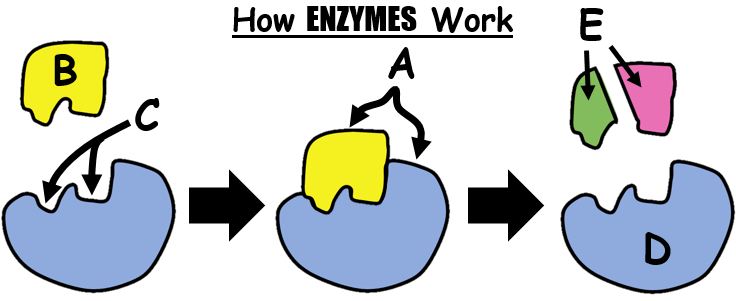
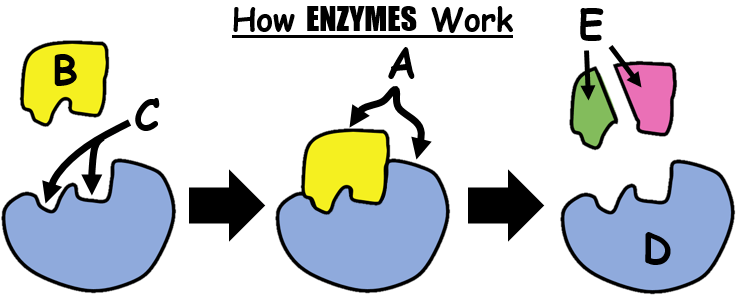
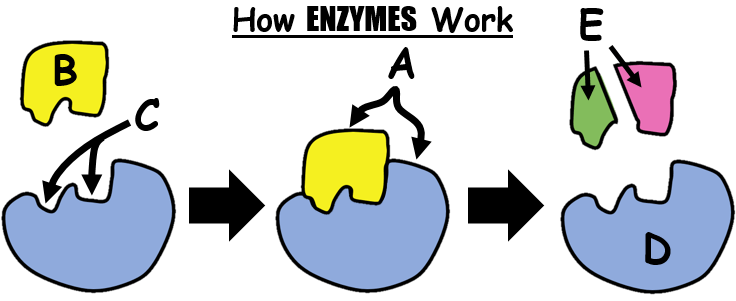
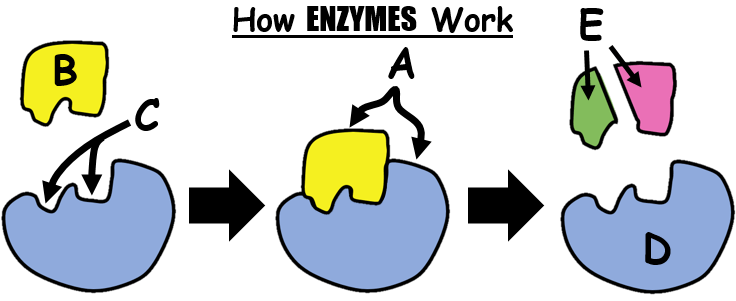
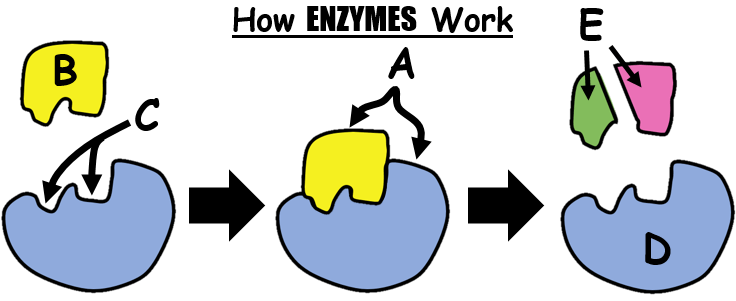
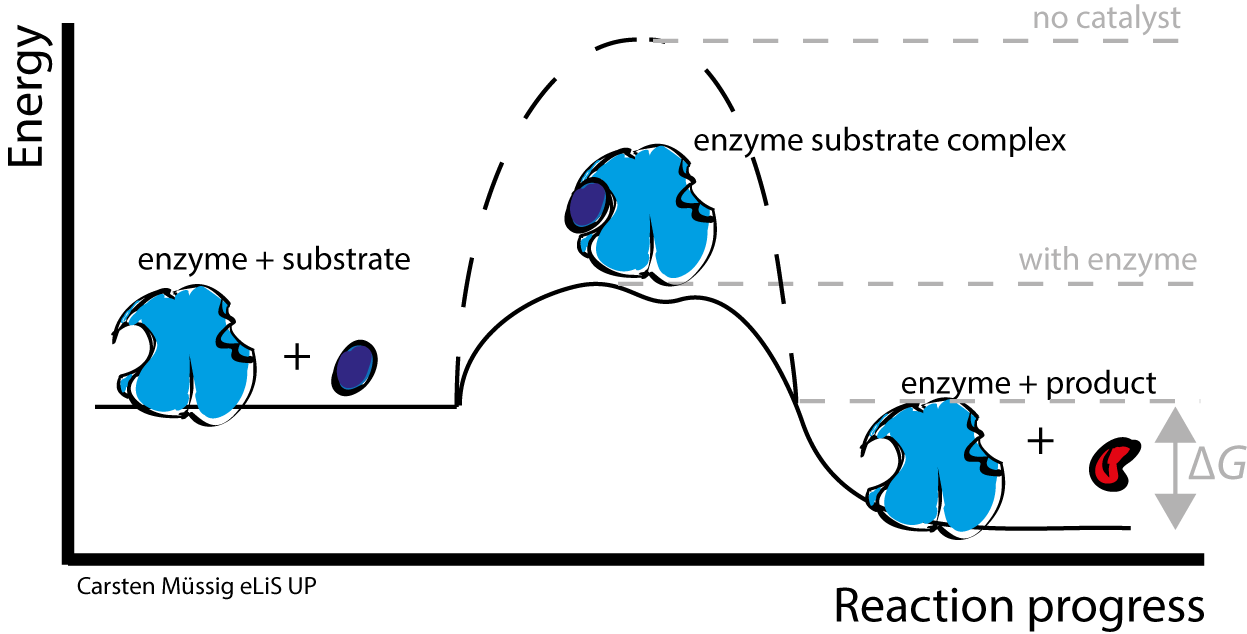
What happens when enzymes are heated to a high temperature?
The enzymes die.
The shape of the enzyme are changed and it denatures
The enzymes' amino acid sequence changes.
The enzymes remain the same
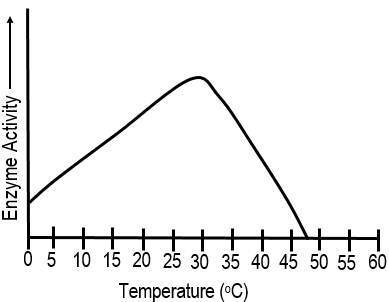
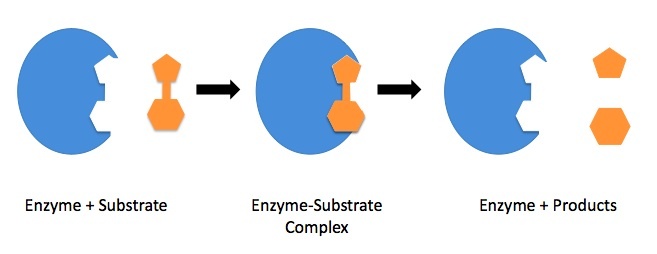
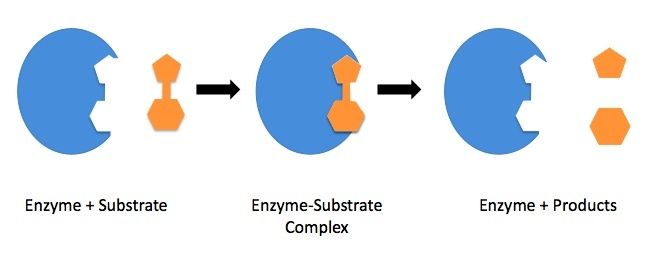
A receptor site that a molecule can bind to that changes the shape of the active site is called a(n):
Allosteric Site
Active Site
Activation site
Reactant site
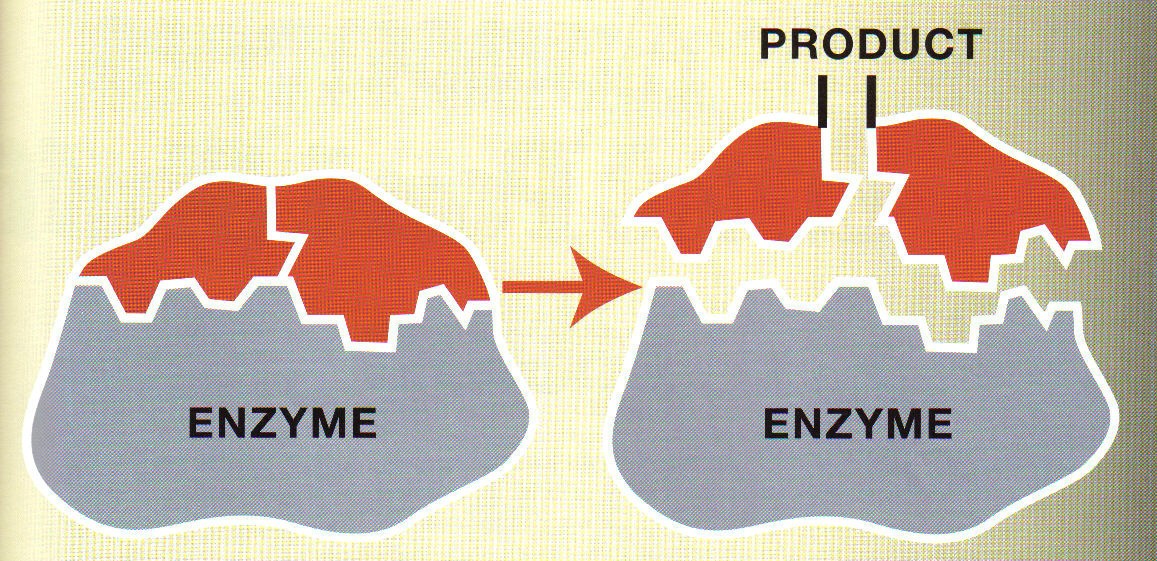
Molecules that bind to enzymes and enhance an enzyme's ability are called:
CoFactors
Competitive Inhibitors
Allosteric Inhibitors
You are carrying out an experiment with an enzyme from the human small intestine. If the enzyme in solution is saturated with substrate, the most effective way to obtain a product more quickly is to
Add more enzyme
Add more substrate
Increase the concentration of the enzyme solution
Heat the enzyme solution above 38 °C
Which of the following can be used to determine the rate of an enzyme-catalyzed reaction?
The rate of substrate formed
The decrease in temperature in the system
The rate of enzyme used up
The rate of substrate used up
Glucose is broken down into pyruvic acid during which process
Which molecule isn't a high energy hydrogen carrier?

What are the reactants (taken into) of cellular respiration? (Mark all of them!)
oxygen
glucose
carbon dioxide
water
energy
Each glucose (6C) produces how many pyruvic acid (3C) molecules?
5
2
3
4
Which of the following do at least one stage of cellular respiration
plants
animals
bacteria
fungi
What happens to the carbon atoms in glucose during cellular respiration?
They are exhaled as CO2
They disappear
They are broken down and dissolve
They stay in the mitochondria forever

