
NEW
Font size
 Worksheets
5TH BIOLOGY TERM 1 2022-2023
Total questions: 60
Worksheet time: 40mins
In what plant cell organelle does photosynthesis occur?
Chloroplasts
Mitochondria
Nucleus
Cell Wall
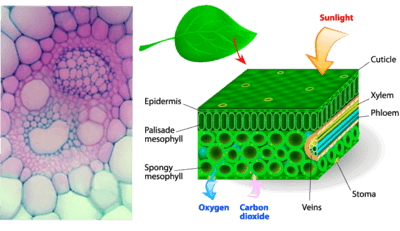
Recall that the movement of food in the phloem is called.
Translocation
Transpiration stream
Evaporation
Respiration
How is sugar transported in the plant?
though diffusion which requires energy
through active transport which requires energy
though diffusion which does not require energy
though active transport which does not require energy
The phloem is made up of sieve tube plates and companion cells. The companion cells
has pores to allow sugar to be transported in a continuous flow
provides energy for the transport of glucose
gives company to the phloem
connects xylem to phloem

Recall the main function of a xylem cell.
To transport nutrients (mainly sucrose) to different parts of a plant.
To make energy for the plant via photosynthesis.
To transport carbon dioxide to the leaves for photosynthessis.
To transport water to different parts of plant.

Recall what is dissolved in the water in the xylem.
Glucose
Amino acids
Mineral ions
Starch

Recall what the pathway of water from roots to leaves is called.
Respiration
Translocation
Transpiration stream
Evaporation
Which of the following vessels has thin muscle wall and a large lumen?
Vein
Artery
Capillary
Aorta

What type of blood vessel is shown in figure number 2?
vein
artery
capilary
aorta
Arteries, except for the pulmonary artery, carry
*2015 Q30
deoxygenated blood away from the heart under high pressure
deoxygenated blood away from the heart under low pressure
oxygenated blood away from the heart under high pressure
oxygenated blood away from the heart under low pressure
Coronary heart disease can be caused by all of the following factors except
fatty deposits on the inner surface of the heart
formation of blood clot in an artery
a diet rich in saturated fats
a stressful lifestyle

Figure below shows the components of blood. What is letter Z represent?
plasma
white blood cell
red blood cell
platelets

Identify the blood vessel labelled B.
Aorta
Pulmonary artery
Pulmonary vein
Vena cava

What is the function of the blood vessel labelled D?
To transport blood from the heart to the lungs
To transport blood from the heart to the rest of the body.
To transport blood from the rest of the body to the heart.
To transport blood from the lungs to the heart.

Structure of the red blood cell is special, it lack of nucleus. this condition provide ... .
more space for hemoglobin
more space for cytoplasm
less space for hemoglobin
less space for cytoplasm
Breakdown of excessive amino acids takes place in
kidneys
liver
heart
urinary bladder
The muscular tubes which take the urine from the kidneys to the bladder are
urinary bladder
urethra
ureters
wide, narrow
narrow, wide

Which of the following is NOT filtered out of the blood in the kidneys?
Blood cells
Amino acids
Urea
Glucose

What is the tissue region labelled B called?
pelvis
cortex
medulla
capsule
Which is the correct sequence that shows the flow of tubular fluid passing through the nephron: (a) glomerulus (b) distal convoluted tubule (c) loop of Henle (d) collecting duct (e) proximal convoluted tubule
a, b, c, d, e
c, d, b, a, e
a, e, c, b, d
a, e, d, b, c
The advantage of excreting nitrogenous wastes as urea rather than as ammonia is that________.
urea can be removed as a semi-solid paste
urea is less toxic than ammonia
urea does not affect the osmotic gradient
less nitrogen is removed from the body
Urine is a solution of ............... and other substances in water.
acids
bile
amino acid
urea

What is the main function of the excretory system?
to collect and eliminate waste products from the body
to strengthen skeletal muscles
to separate nutrients and waste from the food
to bring oxygen to body cells and eliminate carbon dioxide
What is the term for the process by which organisms maintain their internal stability?
Proteostasis
Homeostasis
stabilization
interostasis
….................... are the structural and functional units of kidneys.
Neurons
Nephrons
Bowman's capsule
Cortex

The correct labeling is:
A- Kidneys
B- Ureters
C- Urinary bladder
D- Urethra
A- Ureters
B- Kidneys
C- Urinary bladder
D- Urethra
A- Ureters
B- Urinary bladder
C- Kidneys
D- Urethra
A- Ureters
B- Urinary bladder
C- Urethra
D- Kidneys
How are ligaments different from tendons?
Ligaments connect muscle to muscle, tendons connect bone to bone
Ligaments connect bone to bone, tendons connect muscle to muscle
Ligaments connect bone to bone, tendons connect bone to muscle
Ligaments connect bone to muscle, tendons connect bone to bone
What is the job of synovial fluid?
Provide structure & support
Provide cushioning & flexibility
Conduct nerve impulses
Provide lubricant
Your shoulder is an example of which type of joint?
Condylar
Hinge
Pivot
Ball & Socket

Scapula
Carpals
Femur
Humerus

trapezoid
scapula
shoulder joint
Sacrum

tibia
radial
fibula
ulna

manubrium
sternum
xiphoid process
body

metatarsals
tarsal
carpals
metacarpals

ischium
sacrum
illeum
pubis
A segment of DNA that codes for a trait
gene
centromere
chromosome
chromatid
A version or variation of a gene
trait
gene
allele
DNA
The alleles that an organism has/inherits are its
genotype
phenotype
chromosome
recessive
The observable expression of a trait is its
phenotype
genotype
chromosome
allele

Hair color and eye color are examples of a person's....
recessive traits
dominant alleles
genotype
phenotype

The passing of traits from parents to offspring is known as....
hierarchy
heredity
traits
genetics

What are the structures in this image called?
chromosomes
centromere
sister chromatids
chromatin
The shape of DNA is known as a
Double Helix
Double Axel
Double Arch
Double Pyramid
Double Hexagon
DNA stands for
Deoxyribonucleic Acid
Denitrogenous Acid
Deribonucleic Acid
Duteriousnucleic Acid
Dirigiblenucleic Acid
DNA is found in the
Cell Membrane
Vacuoles
Ribosomes
Golgi Apparatus
Nucleus
A tool used to predict the probability of offspring inheriting certain traits is called a ...
karyotype
Punnett Square
Genotype: TT
homozygous dominant
homozygous recessive
heterozygous dominant
Genotype: Aa
homozygous dominant
homozygous recessive
heterozygous dominant

Cross 2 heterozygous tall pea plants. Tall (T) is dominant to short (t). What fraction of the offspring do you predict will be tall?
1/4
2/4
3/4
4/4
Which statement below describes DOMINANT alleles?
expressed when at least one is present
only expressed when 2 are present

In the problem shown, what must the genotype of the missing parent be?
BB
Bb
bb

In humans, freckles (F) on the skin are dominant to no freckles (f). If a heterozygous parent and a recessive parent conceive, what is the chances of having a child with NO FRECKLES?
0%
50%
100%
Having freckles is a dominant trait in humans. A girl has freckles, but her brother does not. What do we know for certain about the parents?
both parents have at least one recessive allele
both parents are heterozygous for freckles
one of the parents does not have freckles
Which statement below describes RECESSIVE alleles?
expressed when at least one is present
only expressed when 2 are present
Genotype: rr
homozygous dominant
homozygous recessive
heterozygous dominant

In guinea pigs, the allele for rough coat (R) is dominant over the allele for smooth coat (r). A homozygous dominant guinea pig and a homozygous recessive guinea pig are mated.
What would be the phenotype of the offspring?
100% rough coat
100% smooth coat

