
 Worksheets
Year 10 ECONOMICS REVISION
Total questions: 97
Worksheet time: 55mins

Economics can be defined as the study of
how to spend the family income efficiently
how to find minimum cost of production
the interpretation of scarce resources and data
how scarce resources can be used efficiently.

Economics is a social science because it
deals with an aspect of human behaviour
provides people with the commodities they want
deals with limited resources which have alternative uses
deals with the production of goods for present and future consumption
Economics is the study of how to
choose between alternative, given limited resources
regulate the money that is in circulation in a country
be prudent in the use of available resources
improve standard of living of the society at large.

The definition of Economics as the science which studies human behaviour as a relationship between ends and scarce means which have alternative uses was given by
Adam Smith
David Ricardo
Lionel Robbins
Robert Giffen.
Economics is the study of human behaviour as it relates to the
efficient allocation of resources
operation of companies
organize production at the lowest cost
decide under what circumstances the government should intervene in the economy.
The concept of economic efficiency primarily implies
obtaining the maximum output from available resources at the lowest possible cost
conserving our problem resources
equity in the distribution of the nation’s wealth
producing without waste.
The study of Economics enables the individual to
be miserly in the spending of his money
derive maximum satisfaction from the money he spends
determine the right market to visit
avoid the purchase of luxurious item
Economics as a field of study is a
pure science
political science
social science
physical science
Which of the following is not an activity in economics?
attending a town’s meeting
a visit to the stadium
payment of school fee
arresting a petty thief.
Economics is regarded as a science because
its issues can be easily verified by reference to facts
it adopts scientific method in making its analysis
its issues are relevant for national development
its subject matter studies human behaviour.
Economics is regarded as a science because
its issues can be easily verified by reference to facts
it adopts scientific method in making its analysis
its issues are relevant for national development
its subject matter studies human behaviour.

The study of Economics as a study of mankind in the ordinary business of life was given by
Adam Smith
Alfred Marshall
David Ricardo
Lionel Robbins
The following are example of economic goods except
bottled water
household utensils
air
shelter
The study of Economics becomes necessary because of the
large population size of the world
scarcity of resources
opportunity cost of goods and services
need to satisfy every desire of man.
The main concern of economists is to (a) allocate scarce resources to satisfy human wants (b) satisfy all human wants (c) redistribute income between the rich and the poor
allocate scarce resources to satisfy human wants
satisfy all human wants
redistribute income between the rich and the poor
The three economic units in any system are
trade, industry and banking
workers, consumers and shareholders
household, firms and governments
companies, industry and plants.
Like other social scientists, economists usually do not perform _____________ experiments (a) field (b) market (c) laboratory (d) none of the above.
field
market
laboratory
none of the above.
All of these are various opportunity opened to an Economics graduate except
marketing
finance
medical practitioner
Insurance
The validity of economic laws can be tested by applying them to _____________
real life situations
fictional situation
financial situation
scientific situations
The following are basic concept of Economics except __________
Wants
Needs
Choice
Opportunity cost.
The opportunity cost of a worker going to the university is
tuition fees and books
boarding and lodging
the wages given up to attend university
transportation and entertainment
Scale of preference is important for the following reasons except in
satisfying wants
making rational choices
making optional allocation of resources
using scarce resources efficiently.
The action of government to forgo road construction in order to provide more health facilities denotes
sound economic decision
opportunity cost
government policy
scale of preference.
Human wants are
limited
scarce
unlimited
in grades
The difference between money cost and the real cost of any item is that
real cost is the alternative forgone while money cost is the actual amount paid for buying the item
the real cost is the opportunity cost, while the money cost is the marginal cost.
money cost is the opportunity cost, while the real cost is the actual cost in monetary term
money cost is always greater than real cost.
Choice is necessitated by
demand and supply
cost of production
production possibility curve
scarcity of resources
Economic activities are undertaken to solve the problem of
consumption
opportunity cost
production
scarcity
A list of consumers’ want arranged in order of priority is known as
a budget
an opportunity cost
a scale of preference
choice
The ₦150 which Olu would have used to purchase a textbook was used to buy a T-shirt. This implies that
Olu’s real cost is ₦150
Olu’s opportunity cost is the T-shirt he bought
Olu’s opportunity cost is the textbook
Olu’s money cost is also the real cost.
Opportunity cost helps in the efficient and effective ………… to the most important needs.
allocation of unlimited want
allocation of sufficient resources
allocation of scarce resources
use of resources

A firm can take decision on whether to use …………
capital- or labour-intensive method
labour or technological method
arithmetic and geometric method
none of the above.
Scarce resources are judiciously used in order to avoid ……….
spending
expenditure
wastage
full employment.
Choice is necessary because resources
are available
can be found everywhere
are constant
are scarce
The rational consumer tends to do all the following except ………
buying more at a high price than at a low price
buying more at a low price than at a high price
aiming at utility maximization
reacting to price rate
Choice involves opportunity cost because
a good give different utilities
available resources are inadequate
there are many good to select from
not all goods have the same price
Tobi’s scale of preference reveals that she prefers banana to pawpaw, pawpaw to orange and orange to banana. Tobi’s preference is therefore
inconsistent
consistent
transitive
rational
Scarcity in economies generally refers to
period of existing supply of resources
monopolization of existing supply of resources
nationalization of sources of raw materials
none of the above.
Bisi needs a book costing ₦10 and a hat costing ₦10. If Bisi buys the book instead of the hat, the opportunity cost of his choice is the
cost of the book
cost of the hat
book
hat.
Scale of preference refers to
consumers preference for luxurious goods
the household monthly income
list of goods and services in order of priority
budget preparation without paying due regard of priority.
Economics problems arise in all societies because
resources are mismanaged by leaders
there is no proper planning
resources are not in adequate supply
the services of the economists are not employed.
In a market economy, the problem of what goods to produce is solved primarily by
directive of the government
the pattern of consumers’ spending
producers of consumer goods
people producing what they want.
In a socialist economy, prices of commodities are determined by
forces of demand and supply
producers of the commodities
the central planning authority
consumers who are sovereign.

A basic economic problem of any society is
high level of illiteracy
irregular power supply
population growth
resource allocation.

In a centrally planned economy, what to produce is
determined by the force of demand and supply
driven by profit motive
determined by consumers
the responsibility of state’s bureaucrats

All economic system must decide what to produce because
resources are not available
consumers want maximum satisfaction
resources are limited in supply
producers want maximum profit.

Which of the following problems arises where there are more than one technically possible methods of production?
where to produce
for whom to produce
how to produce
what to produce.

The concept of opportunity cost is also referred to as
social cost
real cost
fixed cost
variable cost.
The basic economic problems of the society include
what to produce, how to produce and for whom to produce
how to produce and sell
scarcity, when to produce and where to produce
scarcity, for whom to produce and how to produce.

Equitable distribution of income means
fair and just distribution
increase in gap between poor and rich
increase in money
abundant resources.
An arrangement of data in rows and columns is referred to as a
graph
bar chart
pie chart
table
What are the resources called that are needed to produce a good or service?
Goods and services.
Needs and wants.
Factors of production.
All of the above.
What are the resources called that are needed to produce a good or service?
Goods and services.
Needs and wants.
Factors of production.
All of the above.

Which one of the four factors of production does the picture show?
Natural Resources
Labor
Capital
Entrepreneur
Labor refers to...
people with all their efforts and abilities
individuals who start a new business or bring a product to market.
the tools, equipment, and factories used in production of goods and services.
The "gifts of nature" or natural resources not created by human effort.
Land includes...
The "gifts of nature" or natural resources not created by human effort.
the tools, equipment, and factories used in production of goods and services
people with all their efforts and abilities
individuals who start a new business or bring a product to market.

Which one of the four factors of production does the image show?
Entrepreneur
Capital
Natural Resources
Labor

Which one of the four factors of production does the picture show?
Labor
Natural Resources
Capital
Entrepreneur
The internet, computers, factories, and Technology are all...
Capital Goods
Human Capital
Natural Resources
Entrepreneurship
WHAT ARE THE 4 FACTORS OF PRODUCTION?
Land, Capital, Need & Want
Land, Labor, Capital, Entrepreneurs
Water, Air, Food & Shelter
Land, Capital, Good & Service
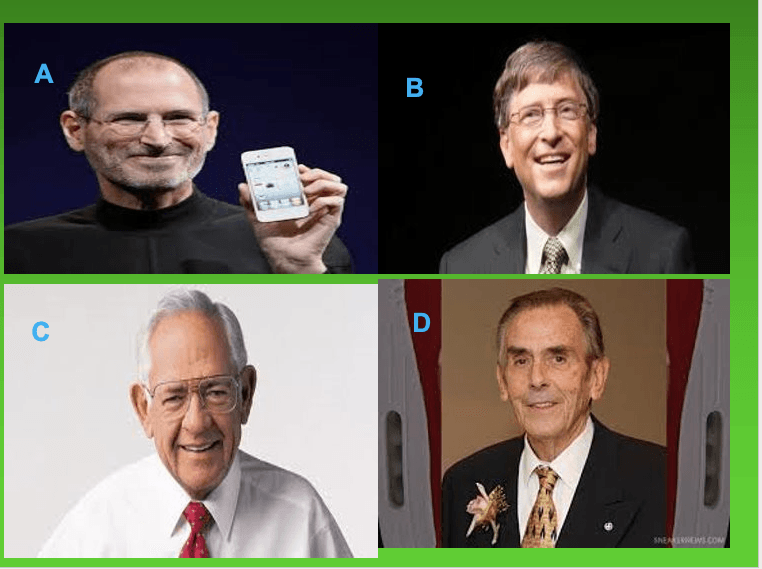
Steve Jobs the founder of Apple is holding up an I-phone. What is another name for someone who starts a business?
capital
entrepreneur
land
labor
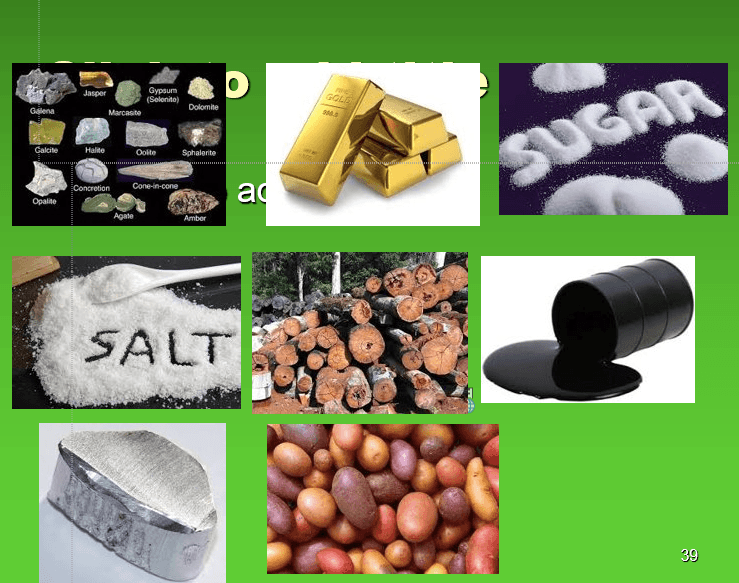
Which factor of production is this?
capital
entrepreneur
land
labor

Iron Ore
Land
Labor
Physical capital
Human capital
Entrepreneuership

12,10,10,10,13,12,11,13,10
2, 57, 38, 42, 6
what you give up when you make a choice
Which one of these definitions best describe 'Opportunity Costs'?
The cost of making one decision over another.
The cost for the opportunity to buy anything you want.
The opportunity that will cost you loads of money.
Which of the following is not included in the study
of economics?
Scarce resources
Choice
What people should buy
Opportunity cost
According to the meaning of opportunity cost, what
is sacrificed when a decision is taken?
An identical alternative
Any alternative
The least valuable alternative
The next best alternative
A new dam is built in Turkey to provide hydroelectric
power and a water supply. What is the opportunity
cost to the economy of building the dam?
The cost to households and businesses of
consuming the water supply
The benefits foregone from other uses of the money used to pay for the dam
The cost to consumers of using hydroelectric
power
The money used to pay for the construction and
running of the dam
In the study of economics, resources are also
known as:
Workers and machines
Raw materials
Factors of production
Profits
Production can be defined as:
Any activity that turns raw materials into
finished goods
Any activity that makes and sells goods
and services
Any activity that is designed to satisfy wants
Any activity that makes a profit
The basic economic problem faced by all
economies is:
Rising prices
Unemployment
Scarcity of resources
Low economic growth
Which of these is NOT an example of a need?
Water
Food
Cell phone
Shelter
Tom was shopping for a car. He has looked at a Ford, Honda, Toyota, and Dodge. After a lot of debate, he narrowed it down to either the Ford or the Honda. He selected the Ford, because he liked the interior a little better. What was his opportunity cost?
Ford
Honda
Toyota
Dodge
To control the amount of something that people are allowed to have, especially when there is not enough is known as _____________.
opportunity cost
rationing
spending
needs
What happens every time we make a decision?
We win!
We incur an opportunity cost
We incur an opportunity loss
We incur an opportunity cost of multiple other options
Which of the below is not scarce resource?
Oil
Sea water
Natural gas
Gold

Goods and services that are not necessary for survival
Needs
Goods
Service
Wants
Which of the following is related to the question of “what to produce”?
A. ABC Car Manufacturing Company decides to cut price.
B. Winnie Beauty Salon offers frequent customers a special discount for hair treatment.
C. Producers keep on exploring new methods to cut production cost.
Happy Shoe Company conducts a survey on customers’ preferences for their products.
Which of the following is NOT related to the basic economic problem of “what to produce”?
A. the quantity of T-shirts a garment factory produces
B. the types of workers a garment factory employs
C. the types of T-shirts a garment factory produces
D. the types of trousers a garment factory produces
The “how to produce” problem is illustrated when the government decides to
A. provide more free dental services to the public.
B. construct more roads.
C. upgrade the computer system used for collecting tax.
D. build more public housing estates.
Which of the following is related to the question of “how to produce”?
Many companies have more than one product line
Good sculptures are usually hand-made.
A restaurant offers discounts to holders of certain credit cards.
A. A singer has reserved some seats at her concert for some of her friends.
Which of the following involves the question of “for whom to produce”?
A. A film distributor invites only reporters to a special screening of its new film.
B. LW, a luxury brand, uses special materials to produce handbags.
C. Companies tend to produce more of the products that are popular.
D. None of the above.
n the 1990s, many factories in Hong Kong moved to the Mainland for the lower rent and wages. The movement of factories is related to the basic economic problem of __________________.
“how to produce”
“what to produce”
“for whom to produce”
“where to produce
Which of the following are NOT examples of "basic economic problems"?
Where to produce
How to produce
Why to produce
What to produce

What activity did campers enjoy the least?
horseback riding
camp fire
crafts
canoeing

Which ice cream is the most popular among the students?
vanilla
strawberry
blueberry
chocolate


Which is the correct bar chart for this data table?


In ascending order, which of the following is correct in term of quantity?
bear < fox < lion < elephant
bear < elephant < fox < lion
elephant < bear < lion < fox

Choose the correct bar chart for this data table.


The bar graph shows the results when a die was thrown a number of times. How many sixes were thrown?
2
3
5
6

