NEW
Font size
 Worksheets
Cell Membrane / Transport
Total questions: 65
Worksheet time: 38mins
a solution with a higher solute concentration on the outside of the cell and a lower solute concentration on the inside of the cell. Water will move out of the cell causing the cell to shrink and shrivel.
Hypertonic Solution
Hypotonic Solution
solution with lower solute concentration on outside of cell and higher solute concentration on inside of cell. Water will into the cell causing the cell to swell and eventually burst
Hypertonic Solution
Hypotonic Solution
a solution that has the SAME solute concentration on the outside and inside of the cell. There will be NO NET MOVEMENT of water into or out of the cell. Cell size will stay the SAME.
ISOTONIC
HYPOTONIC
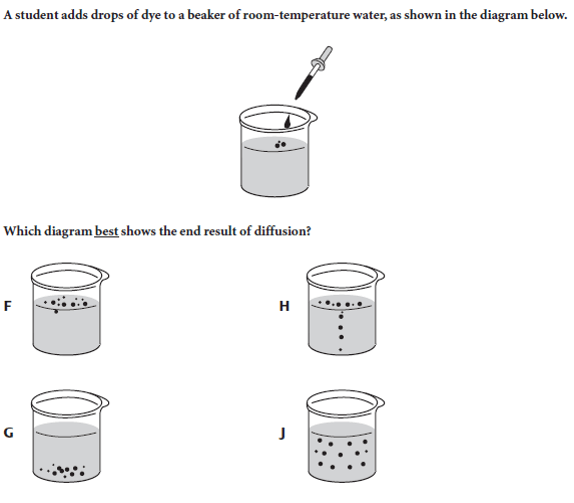
the movement of molecules LIKE OXYGEN OR HYDROGEN from areas of higher concentration to areas of lower concentration.
DIFFUSION
OSMOSIS
molecules LIKE GLUCOSE AND SALT diffuse across the cell membrane with help from membrane PROTEINS, such as channel and carrier proteins.
FACILITATED DIFFUSION
OSMOSIS
type of membrane transport that does NOT require energy to move substances across cell membranes. This includes diffusion, osmosis, and facilitated diffusion.
PASSIVE TRANSPORT
ACTIVE TRANSPORT
a kind of cellular transport where substances move against a concentration gradient. This type of transport REQUIRES ENERGY from the cell. This includes endocytosis and exocytosis.
PASSIVE TRANSPORT
ACTIVE TRANSPORT
process that occurs when a cell moves large materials OUTSIDE of the cell through secretory vesicles. This type of transport is active and requires energy.
ENDOCYTOSIS
EXOCYTOSIS
a process by which cells absorb or take in external materials by engulfing it (taking in) with the cell membrane. Examples of this is pinocytosis and phagocytosis.
ENDOCYTOSIS
EXOCYTOSIS
a process by which the cell takes in the fluids along with dissolved small molecules. Pre-fix means to drink.
PINOCYTOSIS
PHAGOCYTOSIS
process by which a phagocyte (a type of white blood cell) surrounds and destroys foreign substances (such as bacteria) and removes dead cells.
PINOCYTOSIS
PHAGOCYTOSIS
the MOVEMENT OF WATER molecules from a solution with a high concentration of water molecules to a solution with a lower concentration of water molecules
OSMOSIS
DIFFUSION
a type of transport protein, acts like a pore in the membrane that lets water molecules or small ions through quickly
CHANNEL PROTEIN
PHOSPHOLIPID
a two-layered arrangement of phosphate and lipid molecules that form a cell membrane.
PHOSPHOLIPID BILAYER
CELL WALL
the cell membranes' ability to differentiate between different types of molecules, only allowing some molecules through while blocking others.
SELECTIVELY PERMEABLE
OSMOSIS

This image is a model of-
Flagella
Nucleus
Endoplasmic Reticulum
Cell Membrane
The function of the plasma membrane is....
Vesicle with enzymes to digest waste
Regulate what is transported into and out of the cell
Package materials
Make proteins
What does "bilayer" mean?
one layer
two layers
virus
antibiotic
Most of the cell membrane is made of...
Nucleic acids
Proteins
Lipids
Carbohydrates
What forms the channels and pumps in the phospholipid bilayer?
proteins
hydrophilic heads
lipids
carbohydrates

Hydrophobic region of the cell membrane?
E
B
C
A

Hydrophilic portion of cell membrane?
D
C
B
A
A ______________ is composed of a phosphate and glycerol head and 2 fatty acid chain tails.
cholesterol
glycoprotein
phospholipid
glucose
___________ allow cells to recognize each other and act like ID tags.
Carbohydrates
Proteins
Phospholipids
Cholesterol
___________ strengthens and stabilizes the cell membrane.
Carbohydrates
Proteins
Phospholipids
Cholesterol
Something is ___________ ____________ when some molecules can cross the membrane while others cannot.
made of carbohydrates
Selectively (or Semi) Permeable
made of enzymes
isotonic

The _________ of the phospholipids in a cell membrane face inward towards each other because they are ___________.
heads, hydrophobic
heads, hydrophilic
tails, hydrophobic
tails, hydrophilic
The _________ of the phospholipids in a cell membrane face outward because they are ___________.
heads, hydrophobic
heads, hydrophilic
tails, hydrophobic
tails, hydrophilic

Diffusion & Facilitated Diffusion are both __________ transport.
Passive
Active
Easy
Free
Passive Transport is the movement of particles across the membrane from an area of [ ___ ] to an area of [ ___ ]
high to low
low to high
low to low
high to high
Passive Transport uses ____ energy
no
a lot of
a little bit of
some

The passage of a substance from an area of high concentration to an area of low concentration
Active Transport
Diffusion
Vesicular Transport
Exocytosis

The energy molecule that powers some modes of transport
ADP
ATP
AGP
ABP
Water moves into the cell causing the cell to expand:
isotonic
hypertonic
hypotonic
Small nonpolar molecules (oxygen and carbon dioxide) can pass directly through the cell membrane:
simple diffusion
facilitated diffusion
osmosis
Water moves out of the cell causing it to shrink in size:
isotonic
hypertonic
hypotonic
Movement of water through the cell membrane is equal:
isotonic
hypertonic
hypotonic
Type of membrane transport that does NOT require energy:
endocytosis
osmosis
exocytosis
pinocytosis
A state that exists when the concentration of a substance is the same throughout a space:
equilibrium
concentration gradient
diffusion
hypertonic
This molecule powers the sodium-potassium pump.
ATP
ADP
sodium
potassium
Energy from ATP changes the carrier protein's _______ to move molecules in and out of the cell.
charge
temperature
shape
position
Which is true of the sodium-potassium pump?
It moves potassium into the cell and sodium out of the cell.
It moves sodium into the cell and potassium out of the cell.
It moves both sodium and potassium into the cell.
It moves both sodium and potassium out of the cell.
How many sodium ions are moved by the sodium potassium pump?
How many potassium ions are moved by the sodium potassium pump?
four sodium ions,
two potassium ions
two sodium ions,
four potassium ions
three sodium ions,
two potassium ions
one sodium ion,
four potassium ions
The active transport of ions across the membrane causes an _______________ gradient to build up across the cell membrane.
concentration
electrical
protein
carrier
This is the electrical potential energy that is caused by a separation of opposite charges.
voltage
ATP
concentration gradient
active transport
The voltage across a membrane is called___________________.
membrane potential
the sodium-potassium pump
ATP
electrochemical gradient

The cell shrunk in size, which means it was placed in a ____ solution.
Isotonic
Hypertonic
Hypotonic

The cell expanded in size to the point of lysing (bursting), which means it was placed in a ____ solution.
Isotonic
Hypertonic
Hypotonic

Some cells move large particles out of the cell through the process of:
Protein Synthesis
Endocytosis
Exocytosis
Cytoplasmic Streaming


In passive transport, substances move across the cell membrane ________ the concentration gradient
AGAINST
ALONG
WITH
BETWEEN