
 Worksheets
Science 9 Chemistry Topics 7/8
Total questions: 56
Worksheet time: 33mins
When two or more substances undergo a rearrangement of their atoms to form new substances.
Chemical Change
Physical Change
Combustion
Corrosion
The process by which one or more substances change to produce one or more different substances
Chemical Process
Reactant
Chemical Reaction
6CO2+ 6H2O → C6H12O6 + 6O2
The carbon atoms are balanced with ____ on each side of the reaction.
1
6
2
Determined whether the following equation is balanced or unbalanced. Ag + O2 ---> 2Ag2O
Balanced
Unbalanced
Determine whether the following equations is balanced or unbalanced. H4 + O2 ---> 2H2O
Balanced
Unbalanced
Determine whether the following equation is balanced or unbalanced. 2Fe + 3Cl2 ---> FeCl3
Balanced
Unbalanced
In order for an equation to be balanced, there must be ...
an equal amount of atoms on both sides
a greater mass on the product side
a greater mass on the reactant side
elements with the same atomic # on both sides


The smallest amount of energy needed for a chemical reaction to begin is called its _______.
activation energy
excess reactant
endothermicity
limiting reactant
Substances that are used to help speed up a reaction (without actually becoming a part of it) are called _______.
limiting reactants
inhibitors
precipitates
catalysts
Evidence of an endothermic reaction is that it:
gets hot
gets cold
gives off sounds
gives off light

B represents
Potential Energy of Products
Potential Energy of Reactants
Change in Enthalpy
Activation Energy
A represents
Potential Energy of Products
Potential Energy of Reactants
Change in Enthalpy
Activation Energy
D represents
Potential Energy of Products
Potential Energy of Reactants
Change in Enthalpy
Activation Energy

Which component of collision theory is represented in the image?
Correct orientation of molecules
molecules collide with sufficient energy
Products become reactants
Molecules form an activated complex

Is the following reaction endothermic or exothermic
endothermic
exothermic

which factor that affect reaction rate is represented?
Temperature
Catalyst
Surface Area
Concentration
Indicate whether each of the following will: Increase / Decrease / have No effect on the rate of reaction.
Decrease Reactant Concentration
Increase
Decrease
No Effect

Which energy diagram line represents the catalyzed reaction?
The black line
The red line
It can not be determined
_____________ concentration of reactants by adding solute; ______________ concentration of reactants by adding solvent.
Increase; Increase
Decrease; Decrease
Increase; Decrease
Decrease; Increase
What are the two necessary conditions in order for a chemical reaction to occur? (You may select more than 1 answer)
Reactants must have a higher potential energy than products
Particles must collide in the correct orientation.
Particles must collide in the presence of a catalyst.
Particles must have sufficient energy to overcome the activation energy.
What do you call the minimum amount of energy required for a chemical reaction to occur?
Potential energy
Kinetic energy
Activation energy
Chemical energy
Which of the following would slow down a reaction?
Putting it in an ice bath
Putting it in a hot bath
Increasing the pressure
Increasing the concentration
5.0 g of catalyst was added to speed up the reaction. How much catalyst was left at the end of the reaction?
more than 5.0 g
exactly 5.0 g
less than 5.0 g
cannot be determined
Why does coating with paint slow down the rusting of iron?
The paint is an "anti-catalyst", causing opposite reaction to occur
The paint cools down iron to slow down the reaction.
The paint stops O2 from reacting with iron, decreasing the concentration of O2
The paint decreases the surface area of iron, slowing down the rusting
Energy is released when bonds are: (you must choose all the correct answers)
Broken
Formed
Heated
Cooled
In an endothermic reaction, heat is ...
taken in
given out
Increasing the pressure of a reaction vessel will.....
Increase the reaction rate
Decrease the reaction rate
Decreasing the pressure of a reaction vessel will.....
Increase the reaction rate
Decrease the reaction rate
Agitating a reaction vessel will increase the reaction rate because we are....
Increasing collisions
Decreasing collisions
removing energy
interfering
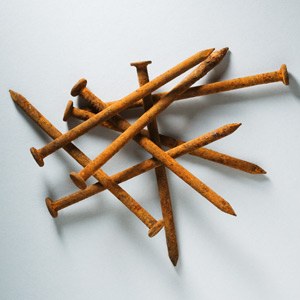
Rusting is a special term, given to the corrosion metal is... .
Gold
Platinum
Iron
Silver
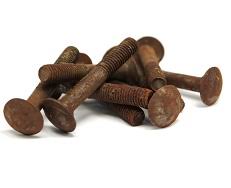
What are the two conditions that caused iron to rust ?
Air and Oxygen
Oxygen and Water
Water and Carbon dioxide
Carbon dioxide and Air
Which of the following metals is not corroded by the environment
boiling
melting

What conditions are required for rusting?
water only
oxygen only
water and oxygen
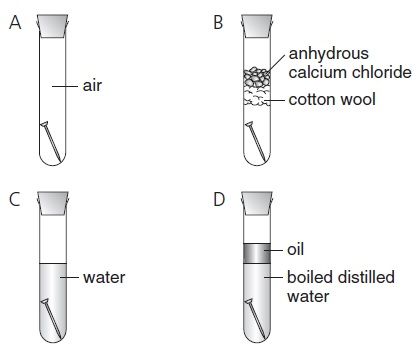
Which diagram shows the most favourable conditions for rust to appear on the nail?
A
B
C
D
Protection of iron by coating of zinc is called (a)
Adding a colourful outer layer to keep off H2O and O2
Painting
Greasing
Dry coating
Chroming
Adding lubricating outer layer to keep off H2O and O2 off moving parts
Painting
Greasing
Dry coating
Chroming
Adding a powder layer to keep off H2O and O2
Painting
Greasing
Dry coating
Chroming
Electroplating a shiny metal to create a barrier to keep off H2O and O2
Painting
Greasing
Dry coating
Chroming
Adding some metal that will corrode faster than our structure in order to have it corrode first
Sacrificial anode
Greasing
Dry coating
Chroming
Hydrocarbon is made of what two elements?
Carbon monoxide
Hydrogen
Carbon
Oxygen
Calx
What is Combustion?
reaction between substance (fuel, wood, paper clothes etc) and oxygen that releases Carbon dioxide and Water, with lots of energy.
reaction between substance (fuel, wood, paper clothes etc) and carbon dioxide that releases oxygen and Water, with lots of energy.
reaction between substance (fuel, wood, paper clothes etc) and water that releases Carbon dioxide and oxygen with lots of energy.
Carbon dioxide is what we breathe out

