
 Worksheets
Electromagnetic Waves and Light
Total questions: 40
Worksheet time: 31mins
To calculate the frequency of an electromagnetic wave, you need to know the speed of the wave and its
wavelength
refraction
intensity
amplitude
Infrared rays have a shorter wavelength than
Ultraviolet ray
X-rays
gamma rays
radio waves
The full range of frequencies of electromagnetic radiation is called
visible light
the electromagnetic spectrum
radio waves
invisible radiation
The visible light spectrum ranges between
radio waves and X-rays
infrared rays and ultraviolet rays
television waves and infrared rays
ultraviolet rays and gamma rays
Select the correct order of waves on the EMS from low to high energy
Radio wave, Microwave, Infrared, Visible, Ultraviolet, X-ray, Gamma
Visible, Microwave, Infrared, Ultraviolet, X-ray, Gamma, Radio wave
Gamma, X-ray, Ultraviolet, Visible, Infrared, Microwave, Radio wave
Microwave, Radio wave, Visible, Infrared, Ultraviolet, X-ray, Gamma
Which electromagnetic wave can you see?
Gamma ray
Microwave ray
Visible light
X-ray
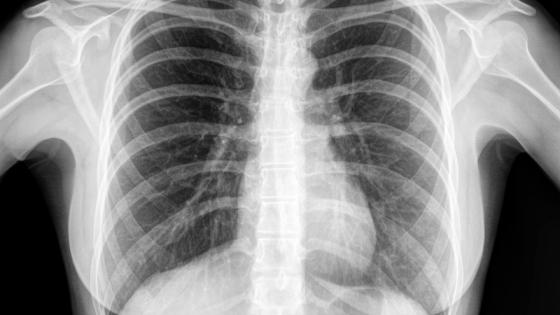
Which one of these images is an X - Ray?


This type of EM radiation is used to send mobile phone signals & in GPS?
infrared
visible light
ultraviolet
microwaves
What type of EM radiation is used in military night vision goggles?
radio wave
microwave
infrared
light
What type of EM radiation plays an important role in wireless communication?
ultraviolet
visible light
infrared
microwave
What type of EM radiation is utilized in treating cancer, using its high energy to destroy the cells in a tumour?
gamma ray
x-ray
visible light
microwave

What does the picture below illustrate?
Visible Light Spectrum
Electromagnetic Spectrum
Frequency Indicator
Color Line


What would you call this?
Reflection
Diffraction
Refraction
Friction
Reflection occurs when a wave
bends due to a change in speed
hits a surface and bounces back
passes through an opening
bends around a barrier
Light waves and sound waves are similar in that...
They are both longitudinal waves
They are both transverse waves
They both transmit energy
They both can travel through space.
A wave has a velocity of 45 m/s and a frequency of 20 Hz. What is the wave's wavelength? (Hint v = f * ƛ)
2.25 m
0.44 m
2.25 m/s
2.25 Hz

When light waves move from passing through air to passing through a glass lens when happens to them?
They slow down and change direction
They speed up and change direction
They maintain the same speed and change direction
They maintain their same speed and direction
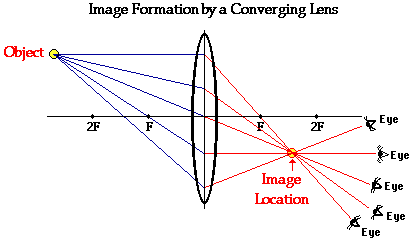

Which ray diagram shows a real image?


None of the above
Which lens represents the path light takes through a diverging lens?


A physics student places an object 6.0 cm from a converging lens of focal length 9.0 cm. What is the magnitude of the magnification of the image produced?
0.6
2.0
3.6
3.0
1.5

The above lens is a type of ___.
diverging lens
converging lens
divergent lens
convergent lens

What type of lens is used in the shown instrument?
concave lens
convex lens
reflection lens
reduction lens

White light appears white or transparent, but it is actually
made up of several different colors.
True
False

What is "F" stand for?
Focal point
Crest point
Wavelength point
What is "f" stand for?
Focal point
Focal length
Wavelength
What lens is in the picture?
Divergent lens
Prism
Convergent lens

What lens is in the picture?
Divergent lens
Prism
Convergent lens

