wayground logo

Free Printable Worksheets

Font size

S
M
L
XL
Worksheets

Intermolecular Forces

Total questions: 63

Worksheet time: 38mins

Name
Class
Date
1.
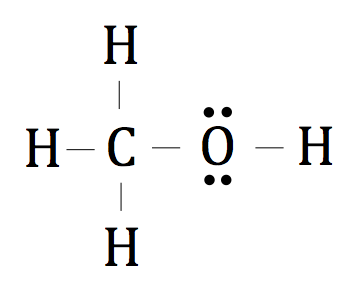
What is the MOLECULAR geometry of the central oxygen?
a)
Linear
b)
Trigonal Planar
c)
Bent
d)
Tetrahedral
2.
What is the best explanation of VSEPR theory?
a)
It explains the shapes that electrons make around atoms when they repel
b)
It explains how many electrons fit into an element's valent shell
c)
It explains why electrons pair up
d)
It explains why electrons repel each other
3.
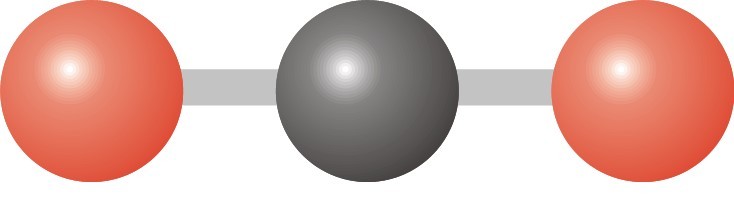
Which molecule would have this molecular geometry?
a)
BF3
b)
CH4
c)
PCl5
d)
CO2
4.

The atoms in a molecule of water adopt what kind of molecular geometry?

a)

Linear

b)

Tetrahedral

c)

Bent

d)

Trigonal planar

5.
 A lone pair is defined as
a)
A pair of bonding electrons
b)
One non-bonding electron
c)
A pair of non-bonding electrons
d)
A pair of electrons on the central atom
6.
What molecular shape is the structure shown here? (BCl3)
a)
linear
b)
trigonal planar
c)
tetrahedral
d)
trigonal pyramidal
7.
*
a)
trigonal pyramid
b)
linear
c)
bent
d)
angular
8.

The geometry of a molecule with 4 bonded pairs of electrons and 0 lone pairs of electrons, AB4

a)

Tetrahedral

b)

Trigonal Planar

c)

Bent

d)

Trigonal Pyramidal

e)

Linear

9.

What is molecular shape for this shape?

a)

Tetrahedral

b)

Trigonal planar

c)

Trigonal bipyramidal

d)

Trigonal pyramidal

10.
 A lone pair is defined as
a)
A pair of bonding electrons
b)
One non-bonding electron
c)
A pair of non-bonding electrons
d)
A pair of electrons on the central atom
11.
Which of the following shapes has an unshared pairs of electrons on the central atom? 
a)
Bipyramidal
b)
Bent
c)
Trigonal Planar
d)
Tetrahedral
12.

What molecular geometry would PH3 have?

a)

Trigonal Pyramidal

b)

Trigonal Bipyramidal

c)

Bent

d)

Linear

13.

How many lone pairs of electrons are on the P atom in PF3?

a)
1
b)
2
c)
3
d)
0
14.
According to VSEPR, molecules adjust their shapes to keep which of the following as far away as possible?
a)
Pairs of valence electrons
b)
Inner shell electrons
c)
Mobile Electrons
d)
Electrons closest to the nucleus
15.
What elements generally make a covalent bond?
a)
metal and nonmetal
b)
2 nonmetals
c)
metal
d)
none of the above
16.
In chemical compounds, covalent bonds form when
a)
the electronegativity difference between two atoms is very large.
b)
electrons are completely transferred between two metals.
c)
pairs of electrons are shared between two nonmetal atoms.
d)
two nonmetal atoms are attracted to each other by opposite charges.
17.
Predict the bond that will form between Be and F.
a)
Ionic
b)
Covalent
18.
Predict the bond that will form between Se and Cl
a)
Ionic
b)
Covalent
19.
What is the MOLECULAR geometry of the central oxygen?
a)
Linear
b)
Trigonal Planar
c)
Bent
d)
Tetrahedral
20.
How many electrons are shared in a triple bond?
a)
6
b)
3
c)
6 pairs
d)
5
21.
Will this molecule be polar or nonpolar? PH3
a)
polar
b)
nonpolar
22.

The acronym VSEPR stand for

a)

very strong electron pair repulsion.

b)

varied symmetry electrostatic proton reaction.

c)

venomous snakes enjoy pink ribbons.

d)

valence shell electron pair repulsion.

23.

VSEPR theory is used to predict

a)

the number of unshared pairs of electrons in a Lewis structure.

b)

the number of multiple bonds in a Lewis structure.

c)

the three-dimensional geometry of a molecule.

d)

the three-dimensional crystal lattice structure of ionic compounds.

24.

Molecules such as boron trichloride that have three bonded atoms and no unshared pairs have what shape?

a)

trigonal planar

b)

trigonal pyramidal

c)

trigonal bipyramidal

d)

tetrahedral

25.
What is the VSEPR theory used to predict?
a)
Bond Strength
b)
Polarity
c)
Molecular Shape
d)
Electronegativity
26.

Ethanol is...

a)

polar

b)

nonpolar

27.

Butane is...

a)

polar

b)

nonpolar

28.

CF4 is...

a)

polar

b)

nonpolar

29.

What is the BOND and MOLECULE polarity of SiI4

a)

Bond: Polar

Molecule: Polar

b)

Bond: Polar

Molecule: Nonpolar

c)

Bond: Nonpolar

Molecule: Nonpolar

d)

Bond: Nonpolar

Molecule: Polar

30.

What is the BOND and MOLECULE polarity of H2O

a)

Bond: Polar

Molecule: Polar

b)

Bond: Polar

Molecule: Nonpolar

c)

Bond: Nonpolar

Molecule: Nonpolar

d)

Bond: Nonpolar

Molecule: Polar

31.

Electronegativity _______ across a period and ______ down a group.

a)

increases, increases

b)

increases, decreases

c)

decreases, increases

d)

decreases, decreases

32.

Which of these atoms is the most electronegative?

a)

Bromine

b)

Fluorine

c)

Hydrogen

d)

Potassium

33.

The electrons in a polar covalent molecule are shared...

a)

Evenly

b)

Unevenly

c)

Electrons are not shared

d)

None of the Above

34.

In a nonpolar covalent bond, the electrons gather around...

a)

The atom with the Greatest Electronegativity

b)

The atom with the Lowest Electronegativity

c)

Each atom Equally

d)

None of the Above

35.

Is the following molecule polar or non-polar?

a)

polar

b)

non-polar

36.

Partial charges like the ones shown here are called:

a)

dipoles

b)

deltas

c)

ions

d)

magnetic poles

37.

In this Lewis structure, the symbol above F means...

a)

electrons are being transferred to Fluorine

b)

electrons are less attracted to F than H

c)

electrons are more attracted to F than H

d)

Fluorine has formed an anion

38.
A bond with a partially negative end and a partially positive end is:
a)
ionic
b)
polar
c)
non-polar
d)
isometric
39.

Identify the strongest IMF exist in CH4

a)

dipole-dipole forces

b)

london forces

c)

ion-dipole forces

d)

hydrogen bonding

40.

Identify the strongest IMF exist in NH3

a)

london dispersion forces

b)

ion-dipole forces

c)

dipole-dipole forces

d)

hydrogen bonding

41.

Identify the strongest IMF exist in HBr

a)

london dispersion forces

b)

hydrogen bonding

c)

dipole-dipole forces

d)

ion-dipole forces

42.

To form a hydrogen bonding, Hydrogen needs to attract to the highly electronegative elements such us _____, _____, and ____

a)

chlorine, fluorine, and oxygen

b)

fluorine, oxygen, and sulfur

c)

fluorine, bromine, and oxygen

d)

fluorine, oxygen, and nitrogen

43.

Forces that holds atoms together within the molecule

a)

intermolecular forces

b)

intramolecular forces

44.

Hydrogen bonding is a special case of __________.

a)

london dispersion

b)

ion-dipole

c)

dipole-dipole

45.
Does HCl have hydrogen bonding?
a)
yes
b)
no
46.
All molecules have London forces between them, but dipole-dipole and hydrogen bonding are so much stronger that when they are present we can ignore London forces.  Which of these has ONLY London forces?
a)
I2
b)
NH3
c)
OCl2
d)
SH2
47.

The weaker the intermolecular forces of a substance the _____________ the boiling point

a)

higher

b)

lower

48.
What state of matter consists of tightly packed atoms?
a)
Solid
b)
liquid
c)
gas
d)
plasma
49.
Liquid has a definite ___________, but a variable _____________.
a)
shape, volume
b)
mass, area
c)
smell, taste
d)
volume, shape
50.
Which of the following states of matter has the most kinetic energy?
a)
solid
b)
liquid
c)
gas
51.
Which of the following states of matter has the lowest kinetic energy? 
a)
solid
b)
liquid 
c)
gas
52.
To make a solid become a liquid, you must increase its________________.
a)
mass
b)
density
c)
kinetic energy
d)
potential energy
53.
Gas particles move around at __________ speeds. 
a)
low
b)
slow
c)
high
d)
unknown
54.
Adding thermal energy to matter casues its particles to _________________.
a)
move slower
b)
move faster
c)
melt
d)
feeze
55.
Which state of matter has particles that are loosely connected, and move freely past each other? 
a)
solid
b)
liquid
c)
gas
d)
plasm
56.

Anything that has mass and takes up space.

a)

Matter

b)

Atom

c)

Pure Substance

d)

Element

57.

Which phase of matter has no definite shape or volume?

a)

Solid

b)

Liquid

c)

Gas

d)

All of the above

58.
In which state does matter completely fill its closed container?
a)
Gas
b)
Liquid
c)
Solid
d)
Ice
59.

Order the following intermolecular forces from strongest to weakest

a)

Hydrogen Bonds

b)

Dipole-Dipole

c)

London Dispersion

1)
2)
3)
60.

Order the following intermolecular forces from weakest to strongest

a)

London Dispersion Forces

b)

Dipole-Dipole

c)

Hydrogen Bonds

1)
2)
3)
61.

London Dispersion Forces are the result of

a)

Permanent Dipoles

b)

Temporary dipoles

c)

No Dipoles

d)

Hydrogen bonds

62.

Dipole-Dipole interactions occur between both nonpolar and polar molecules

a)

True

b)

False

63.

Which of the following elements does NOT form hydrogen bonds?

a)

Oxygen

b)

Fluorine

c)

Carbon

d)

Nitrogen