
 Worksheets
work energy power
Total questions: 114
Worksheet time: 2hrs 27mins
Suppose that you apply a 100 Newton horizontal force to a box on the floor, which pushes the box 10 meters. How much work do you do on the box?
100 J
1 J
1000J
10000J
1 kJ
What are the units for Work?
Joules (J) or Newton (N)
Joules (J) or Newton.meters (N.m)
Pascal (P) or Newton (N)
Pascal (P) or Joules (J)
A force of 1500 N is applied during the drive off from a sprint start. The centre of mass moves a distance 0.4 m. What work is done?
1200 J
1500 J
3750 J
600 J
A long jumper with a mass of 60 kg approaches the take-off board with a velocity of 11m.s-1. What is their linear kinetic energy?
3630 J
1047.2 J
1045.4 J
3330 J
You push a crate with a force of 100 N for 5 meters. How much work did you do?
500 J
100 J
50 J
5 J
How much power does it take to lift 30.0 kg 10.0 m high in 5.00 s?
40
60
30
300

How much gravitational potential energy does a 100kg (220lb.) skydiver have if they jump from 4000 meters?
3920000 J
294 J
180000 J
1225 J

A 6kg cat misjudges a jump and falls 5 meters. How much gravitational potential energy does the cat have? (The cat is fine by the way.)
294 J
180000 J
1225 J
3920000 J

A 50kg person is running at 7m/s (about 16 mph). How much kinetic energy do they have?
1225 J
180000 J
294 J
3920000 J
The unit of work is
watt
hertz
joule
pascal
Which requires more WORK – a person WALKING up stairs OR a person RUNNING up stairs?
walking
running
they require equal work
no work is required for either because the movement is vertical
As speed increases, kinetic energy
Increases
Decreases
Stays the same
Increase then decrease

The kid at the top of the roller coaster car pictured here has
100% Potential Energy
0% Kinetic Energy
75% Potential Energy
25% Kinetic Energy
50% Potential Energy
50% Kinetic Energy
0% Potential Energy
100% Kinetic Energy

Elastic Potential
Gravitational Potential
What is energy?
Force
The ability to do work
Electricity
The ability to transform work
How much work is done against gravity lifting a 2 kg-sack of groceries a distance of 2.5 meters?
24.4N
5N
19.6N
49N
A machine exerts a force of 300 N to push a box 30.0 m horizontally in 3.00 s. Calculate the power of the machine.
27000 W
100 W
10 W
3000 W

Which object has the most amount of work done on it?
W
X
Y
Z
Which does not illustrate kinetic energy?
It is expressed in Joule.
It depends upon the objects’ mass and speed.
It is the energy an object possesses due to its motion.
It depends upon the objects’ mass and objects’ height.
Which statement illustrates work done?
A weightlifter holds a barbell above her head.
A teacher applies a force to a wall and becomes exhausted.
A rolling marble hits a note card and moves it across a table.
A waiter carries a tray full of meals across a dining room at a constant speed.
A weightlifter holds a 100 kg barbell above her head. Is work done?
Yes because there is a force applied to the barbell and the force causes a displacement of the barbell.
Yes because there is an upward force applied to the barbell and the barbell moves vertically.
No because no displacement occurred.
No because there is no force applied.
The SI unit of energy is?
The equation for POTENTIAL ENERGY is
PE = mass x gravity x height
PE = gravity x weight
PE = height / work
PE = work / time
The equation for KINETIC ENERGY is
KE = mass x gravity
KE = 1/2 height x speed
KE = mass2
KE = 1/2 mass x speed2
________________ is the rate at which work is done.
Power
Work
Time
Energy
The unit of power (aka Joule per second)
Joule
Minute
Watt
Pound


What is the unit for energy?
joule
newton
watt
m/s/s

Which of the following is NOT a representation of the correct units for energy?
J
N∙m
kg∙m2/s2
W

Mechanical energy is the sum of an object’s kinetic energy and any potential energies.
True
False
What are two things required for work to be done? Check all that apply.
Force
Distance
Constant Speed
Momentum
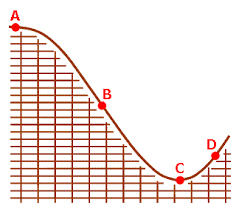
At which point on the roller coaster is the kinetic energy at its maximum?
A
B
C
D

As a pendulum swings from its highest to lowest position, what happens to its kinetic and potential energy?
The PE and KE increase and decrease together
The PE decreases while the KE increases
Impossible to know without knowing the mass
The KE decreases while the PE increases
Two balls, a bowling ball and a baseball, are both traveling with a velocity of 10 m/s. Which ball has the greater kinetic energy?
The bowling ball
The baseball
They have the same
Neither has kinetic energy
A water balloon is launched off a building. Where in its trajectory does it have the most kinetic energy?
As soon as it is released
At the peak of its trajectory
Just before it hits the ground
Once it comes to rest on the ground
A roller coaster whose average speed is 32 m/s is at the top of a 72m hill and weighs 966N. At the top of the hill the coaster car has ___________________ energy.
only kinetic energy
only potential energy
mostly kinetic energy
both kinetic and potential energy
How could you increase the gravitational potential energy of an object without changing its mass and gravity?
Make the object larger
Lower the object towards the ground
Raise the object farther off the ground
Allow the object to roll on the ground
A train begins a journey from a station and travels 60 km in a time of 20 minutes.
What is the average speed of the train?
A. 3.0 m/s
B. 5.0 m/s
C. 50 m/s
D. 60 m/s
A
B
C
D
What is the potential energy of a 3kg ball that is on the ground?
0 J
3 J
9.8 J
29.4 J
Which statement illustrates work done?
A weightlifter holds a barbell above her head.
A teacher applies a force to a wall and becomes exhausted.
A rolling marble hits a note card and moves it across a table.
A waiter carries a tray full of meals across a dining room at a constant speed.

What is the energy possessed by the cart?
potential energy
kinetic energy
mostly potential
mostly kinetic
Which of the following is defined as an energy transfer?
kinetic energy
work
potential energy
chemical energy

A ball is dropped from a table-top. Air resistance may be ignored
A
B
C
D

A
B
C
D

A
B
C
D

A
B
C
D

A
B
C
D
The force of gravity is dependent on an object's ________.
mass
volume
temperature
speed
Newton's second law states that greater the mass the more _________ will be needed to move the object.
power
force
distance
speed
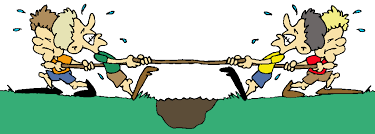

James weighs 200 N and sits 1 m from the pivot. Jane weighs 100 N. How far from the pivot must Jane be to balance the beam?
0.5 m
1 m
2 m
4 m
A roller coaster whose average speed is 32 m/s is at the top of a 72m hill and weighs 966N. At the top of the hill the coaster car has ___________________ energy.
only kinetic energy
only potential energy
mostly kinetic energy
both kinetic and potential energy
What is the potential energy of a 3kg ball that is on the ground?
0 J
3 J
9.8 J
29.4 J
Which statement does not illustrate power?
A farmer plowing the rice field all day.
A Siberian husky pulling a sled all day.
A principal sitting on a chair while observing several classes all day.
A teacher encoding his power point presentation in his laptop all day.
Who has the most power?
Ms Calhoun who encodes her observation tools using 12000J of work in 20 minutes.
Ms Dieck who studies his 5 lessons for the next classes in 15 minutes.
Mr Clarkston who used 50N force to inoculate mushrooms at a speed of 2m/s.
Mr Roy who watches her learners while taking their quiz in 30 minutes.
A 100 N force is applied to move an object a horizontal distance of 5 meters at constant speed in 10 seconds. How much power is done?
50J
50W
500J
500W
Which statement illustrates work done?
A weightlifter holds a barbell above her head.
A teacher applies a force to a wall and becomes exhausted.
A rolling marble hits a note card and moves it across a table.
A waiter carries a tray full of meals across a dining room at a constant speed.
A weightlifter holds a 100 kg barbell above her head. Is work done?
Yes because there is a force applied to the barbell and the force causes a displacement of the barbell.
Yes because there is an upward force applied to the barbell and the barbell moves vertically.
No because no displacement occurred.
No because there is no force applied.
What is the energy possessed by the cart?
potential energy
kinetic energy
mostly potential
mostly kinetic

If the mass of the cart is 15kg, how much is the potential energy of the cart?
0J
1.2J
6J
58.8J

If the mass of the cart is 8.12kg, what is the kinetic energy of the cart?
0J
1.2J
6J
58.8J
If the mass of the cart is 8.12kg, what is the kinetic energy of the cart?
0J
1.2J
6J
58.8J

How will you describe the energy at Point A?
mostly potential energy
mostly kinetic energy
losing PE, gaining KE
losing KE, gaining PE

What is the total mechanical energy of the object?
100J
75J
50J
25J
A 735kg empty roller coaster is at its starting point whose distance from the ground is 150m. After a while, it moves at point B whose distance from the ground is 120m. What is the kinetic energy of the coaster at point B?
1,080,450J
864,360J
216,090J
0J
The product of the net force on an object and the distance through which the object is moved
joule
power
work
energy
The unit for work (aka Newton-meter)
Watt
Power
Work
Joule
________________ is the rate at which work is done.
Power
Work
Time
Energy
The unit of power (aka Joule per second)
Joule
Minute
Watt
Pound
The property of an object or system that allows it to do work is ________________.
Work
Energy
Power
Distance
This theorem states, "Whenever work is done, energy changes.
Work-Energy Theorem
Paul-Newman Theorem
Action-Reaction Theorem
Study-Now Theorem
Energy cannot be ________ or ___________.
big/small
left/right
created/destroyed
made/transferred
Energy can be transformed from one form into another, but the total amount of energy never changes.
Work-energy theorem
Law of conservation of energy
Newton's second law of motion
King's theorem of energy
What does conservation of energy mean?
Total energy increases
Total energy decreases
Total energy stays the same
If the marble had 6.9 J of (potential) energy at the top of the hill and 5.4 J of (kinetic) energy at the bottom of the hill, was energy conserved and why?
Yes because the total energy stayed the same
Yes because the total energy changed
No because the total energy stayed the same
No because the total energy changed
If the 1.2 kg basketball rolls at 3 m/s, what is it's kinetic energy?
2.7
5.4
3.6
9
The marble had 5.4 J of kinetic energy and then hit the stationary basketball. The basketball started rolling and the marble stopped rolling. The rolling basketball now has 5.4 J of kinetic energy. Was energy conserved and why?
Yes because the total energy stayed the same
Yes because the total energy changed
No because the total energy stayed the same
No because the total energy changed

Suppose a cart has a kinetic energy of 0.5 J. If you add enough mass to double the mass and make the cart go three times as fast, its kinetic energy is now ---.
6 J
3 J
18 J
9 J

Two equal mass marbles are at the top of a ramp. One marble falls to the ground off the back while the other rolls down the ramp. What is true about the marbles when they reach the ground?
The marble that rolled down the ramp is moving faster than the marble that fell.
The marble that fell down the back of the ramp is moving faster than the marble that rolled.
The marble that rolled down the ramp is not moving when it reaches the ground.
The two marbles are moving with the same speed.

The roller coaster car has a mass of 500 kg. It is pulled from position 1 to 2 (30 m) by a motor. At the top of the ride the vertical distance top to bottom is 20 m. The motor pulls the car with a 4000 N force. Calculate the work done getting the car to the top of the ride.
100 000J
120 000J
800 000J
90 000J
On a force versus change in position graph, the area under the curve is a representation of:
force
position
KE
PE
Work
An 80 N rope tension force is used to slowly pull a wagon 50 m up a hill. Calculate the work done by the rope if it pulls parallel to the hill
-4000 J
4000 J
A weight-lifter raises a 2000N weight through a vertical height of 2.0m in 0.80s. What useful power does he develop in doing this?
800 W
700W
4000W
5000W

