wayground logo

Free Printable Worksheets

NEW

Font size

S
M
L
XL
Worksheets

Physical Science - 1st Final Chemistry

Total questions: 68

Worksheet time: 3hrs 24mins

Name
Class
Date
1.

What has happened to a substance if it starts at point B and goes to point C?

a)

Nothing

b)

It melted

c)

It evaporated

d)

It got warmer

2.

Condensation is the name of what phase change?

a)

Solid to Liquid

b)

Gas to Liquid

c)

Liquid to Solid

d)

Gas to Solid

3.

What is the mass of the Chlorine gas?

2NaCl + F2 ➜ 2NaF + Cl2

5.4g + 3.2g = 4.9g + ____g

a)

5.2

b)

8.6

c)

3.7

d)

2.9

4.

What would the freezing point of this substance be?

a)

0o

b)

70o

c)

140o

d)

97o

5.

In the equation for burning magnesium (2Mg + O2 -> 2MgO) what are the products?

a)

2Mg

b)

O2

c)

2Mg + O2

d)

2MgO

6.

In what state of matter are the atoms moving the slowest?

a)

Solid

b)

Liquid

c)

Gas

d)

Plasma

7.

List the states of matter in order from most densely packed particles to least densely packed

a)

Solid, Liquid, Gas

b)

Liquid, Gas, Solid

c)

Gas, Liquid, Solid

d)

Solid, Gas, Liquid

8.

If you start with 6 carbon atoms in glucose how many will there be after the reaction?

a)

1

b)

12

c)

6

d)

0

9.

Does this equation balanced? MgCl2 + KOH → MgOH2 + KCl

a)

Yes, it has an equal number of atoms in the reactants and products.

b)

Yes, the same types of atoms are present in both the reactants and products.

c)

No, there are different molecules in the reactants and products

d)

No, the amount of each type of atom is not the same in the reactants and the products.

10.

What element is Cl

a)

Chlorine

b)

Cleaner

c)

Cleaon

d)

Sodium

11.

What is the symbol for Hydrogen?

a)

Hy

b)

He

c)

H

d)

N

12.

What is plastic made of?

a)

Petroleum (crude oil)

b)

Trees

c)

Coal

d)

Fungus

13.

What is the mass of the Chlorine gas?

2NaCl + F2 ➜ 2NaF + Cl2

5.4g + 3.2g = 4.9g + ____g

a)

5.2

b)

8.6

c)

3.7

d)

2.9

14.

In the equation for burning magnesium (2Mg + O2 -> 2MgO) what are the products?

a)

2Mg

b)

O2

c)

2Mg + O2

d)

2MgO

15.

In what state of matter are the atoms moving the slowest?

a)

Solid

b)

Liquid

c)

Gas

d)

Plasma

16.

How does adding heat affect liquid water?

a)

it becomes a solid

b)

its molecules move faster

c)

new substances form

d)

a color change is produced

17.

What is the symbol for Hydrogen?

a)

Hy

b)

He

c)

H

d)

N

18.
What is a positivly charge atom called?
a)
cation
b)
anion
19.

What is a negatively charged atom called?

a)

Anion

b)

Cation

c)

Ion

20.

What is a valence electron?

a)

an electron that is found in the outermost shell of an atom.

b)

an electron found in the innermost shell of an atom.

c)

an electron found in the middle shell.

21.

What are the reactants in the chemical equation pictured?

a)

CH4 and CO2

b)

CH4 and O2

c)

CO2 and H2O

d)

O2 and H2O

22.
What does the Law of Conservation of Mass state?
a)
Matter cannot be gained or lost in a chemical reaction.
b)
Matter can only be lost in a chemical reaction.
c)
Matter can only be gained in a chemical reaction.
d)
Matter can be gained and lost in a chemical reaction. 
23.

How many valence electron does Beryllium have?

a)

1

b)

2

c)

0

d)

4

24.

Which subatomic particle has NO CHARGE?

a)

Protons

b)

Neutrons

c)

Electrons

d)

Nucleus

25.

Which subatomic particle has a POSITIVE charge?

a)

Protons

b)

Neutrons

c)

Electrons

d)

Nucleus

26.

Which subatomic particle has a NEGATIVE charge?

a)

Protons

b)

Neutrons

c)

Electrons

d)

Nucleus

27.

Which subatomic particle tells you the identity of the Element?

a)

Protons

b)

Neutrons

c)

Electrons

d)

Nucleus

28.

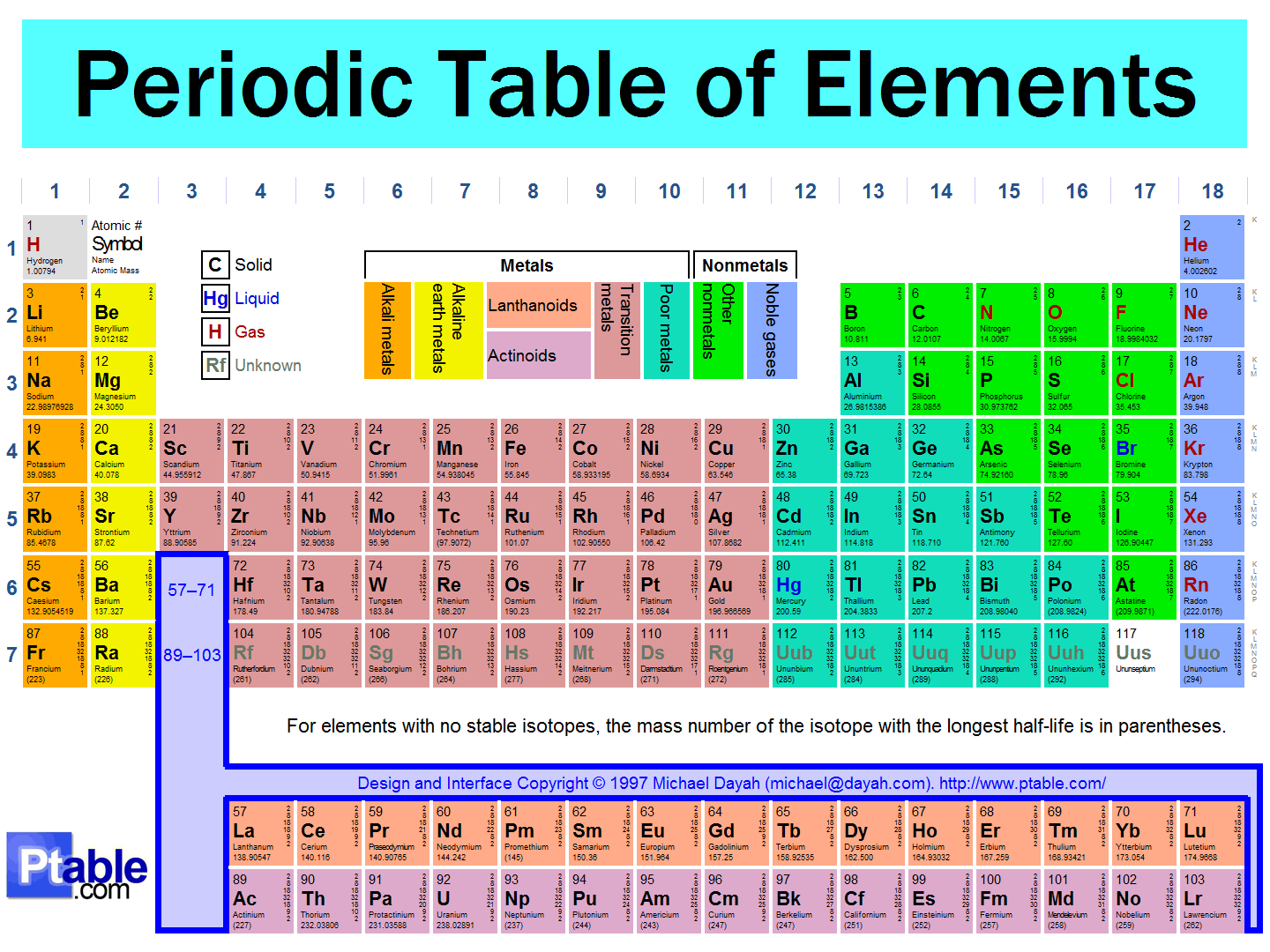
What is the name for this group of elements?

a)

Alkali

b)

Halogens

c)

Noble Gases

d)

Alkali-Earth

29.

Anything that has mass and takes up space.

a)

atom

b)

colloid

c)

compound

d)

matter

30.
This could be the dot diagram of
a)

Mg, group 2.

b)

Cl, group 7A.

c)

C, group 4A.

d)

O, group 6A

31.
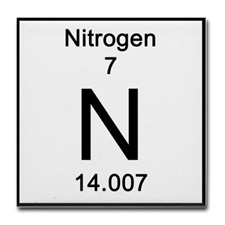
What is the number of protons that the element in this image contain?
a)
14
b)
7
c)
15
d)
18
32.
What two types of measurements make up DENSITY
a)
Mass and Volume
b)
Temperature and Mass
c)
Grams and Centimeters
d)
Volume and Weight
33.
The easiest way to tell if a change is physical or chemical is to ask yourself?
a)
Did it break?
b)
Did it change color?
c)
Did it create a new substance?
d)
Did it look cool?
34.
Balanced or Unbalanced?
a)
Balanced
b)
Unbalanced
35.
What does the nucleus of an atom contain?
a)
Electrons and neutrons
b)
Protons and neutrons
c)
Neutrinos and positrons
d)
DNA and RN
36.
The horizontal row on the periodic table is called a
a)
group
b)
family
c)
period
d)
atomic number
37.
The atoms along the staircase are called 
a)
metals
b)
nonmetals
c)
metalloids
d)
noble gases
38.

Ions form because atoms either gain or lose

a)

electrons

b)

protons

c)

neutrons

d)

quarks

39.

The most reactive metals are in which group?

a)

The Alkali Metals

b)

The Alkaline Earth Metals

c)

The Boron Group

d)

The Transition Metals

40.
In an exothermic reaction, heat is ...
a)
taken in
b)
given out
41.

In an endothermic reaction, heat is ...

a)

taken in

b)

given out

42.
In what type of bond are electrons gained or lost?  This happens between a metal and a non-metal?
a)
ionic
b)
covalent
c)
subatomic
43.
In this type of bond electrons are shared by two non-metals
a)
ionic
b)
covalent
c)
subatomic
44.
The SI unit for temperature is __?__.
a)
degree fahrenheit  (° F)
b)
degree celsius  (° C)
c)
kelvin  (K)
d)
degree centigrade  (°C)
45.
What charge does a proton have?
a)
positive
b)
negative
c)
no charge
d)
neutral
46.
Where are protons located in the atom?
a)
orbitals
b)
nucleus
c)
rings
d)
positive
47.
If an atom loses an electron, does the atom become more positive or more negative?
a)
more positive
b)
more negative
c)
both
d)
neither
48.
Group 1 elements, except for hydrogen, they are reactive and usually exist as compounds with other elements.
a)
alkaline earth metal
b)
halogen
c)
alkali metal
d)
representative element
49.
A highly reactive group 17 element.
a)
halogen
b)
metalloid
c)
noble gas
d)
alkali metal
50.
An extremely unreactive group 18 element.
a)
halogen
b)
alkali metal
c)
noble gas
d)
alkaline earth metal
51.
Elements that are generally gases or dull brittle solids that are poor conductors of heat and electricity.
a)
noble gas
b)
halogen
c)
nonmetal
d)
metalloids
52.
Covalent compounds
a)
Share electrons
b)
transfer electrons
c)
contain a sea of electrons
d)
conduct electricity
53.

Predict the bond that will form between Be and F.

a)

Ionic

b)

Covalent

c)

Metallic

d)

Covalent Network

54.
How many valence electrons in this structure?
a)
6
b)
5
c)
4
d)
7
55.
What is the correct formula for Sodium Oxide?
a)
NaO
b)
NaO2
c)
Na2O
d)
Na2O2
56.
a substance formed when two or more elements are chemically bonded together
a)
Element Soup
b)
Pure Element
c)
Ion
d)
Compound
57.
In order to convert to Kelvin, you add ______ to the Celsius measurement.
a)
372
b)
273
c)
237
d)
732
58.

How many valence electron does Beryllium have?

a)

1

b)

2

c)

0

d)

4

59.

Which Element has 21 protons?

a)

Carbon

b)

Zinc

c)

Titanium

d)

Scandium

60.

What are isotopes?

a)

different element with the same number of electrons

b)

same element with a different number of electrons

c)

same element with a different number of neutrons

d)

different element with the same number of neutrons

61.

Anything that has mass and takes up space.

a)

atom

b)

colloid

c)

compound

d)

matter

62.
In a liquid, the molecules have a definite shape and a definite volume
a)
True 
b)
False
63.
Mixing salt and water 
a)
Chemical Change 
b)
Physical Change 
64.
What is the number of protons that the element in this image contain?
a)
14
b)
7
c)
15
d)
18
65.
What is the atomic mass of "F"
a)
9
b)
18
c)
17
d)
19
66.
the central region of an atom where its neutrons and protons are is its 
a)
nucleus 
b)
electron cloud
c)
core 
d)
center 
67.

What is the molecular geometry of this boron trifluoride (BF3)?

a)

linear

b)

bent

c)

trigonal planar

d)

tetrahedral

68.
Electronegativity is...
a)
how good an atom is at attracting electrons
b)
the ability of an atom to lose electrons
c)
the energy required to remove an electron from a specific atom
d)
how easy it is to make friends.