wayground logo

Free Printable Worksheets

NEW

Font size

S
M
L
XL
Worksheets

Biology Exam Review Unit 0/1 22

Total questions: 55

Worksheet time: 1hrs 6mins

Name
Class
Date
1.

In the graph, what is the population of deer at the carrying capacity of the environment?

a)

3

b)

7

c)

70

d)

40

2.
What is the carrying capacity of the following graph?
a)
1000
b)
8000
c)
800
d)
600
3.

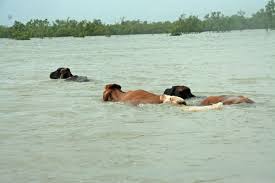
Excessive amounts of rain caused a flood in the southwest United States that resulted in substantial amounts of deaths in the rabbit population. This flood is an example of a density _____________ limiting factor.

a)

Independent

b)

Dependent

4.

What will happen if all of the frogs in a population die?

a)

The frogs' predators will decrease and the frogs' prey will increase

b)

The frogs' predators will increase and the frogs' prey will decrease

c)

We better all pray because there isn't anymore frogs.
5.
Food, water, sunlight, shelter, and space are resources that are  __________.
a)
limiting factors
b)
wet
c)
messy
d)
found in rocks
6.

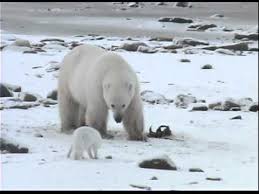
Two arctic fox are fighting with a polar bear for a sea lion carcass. One fox distracts the bear while the other eats. What type of limiting factor is the polar bear?

a)

Density-Dependent Limiting Factor

b)

Density-Independent Limiting Factors

7.

When resources are not available a population will _____________ in size.

a)

Increase

b)

Decrease

c)

Stay the same

8.

Temperature

a)

Biotic (living)

b)

Abiotic (non-Living)

9.

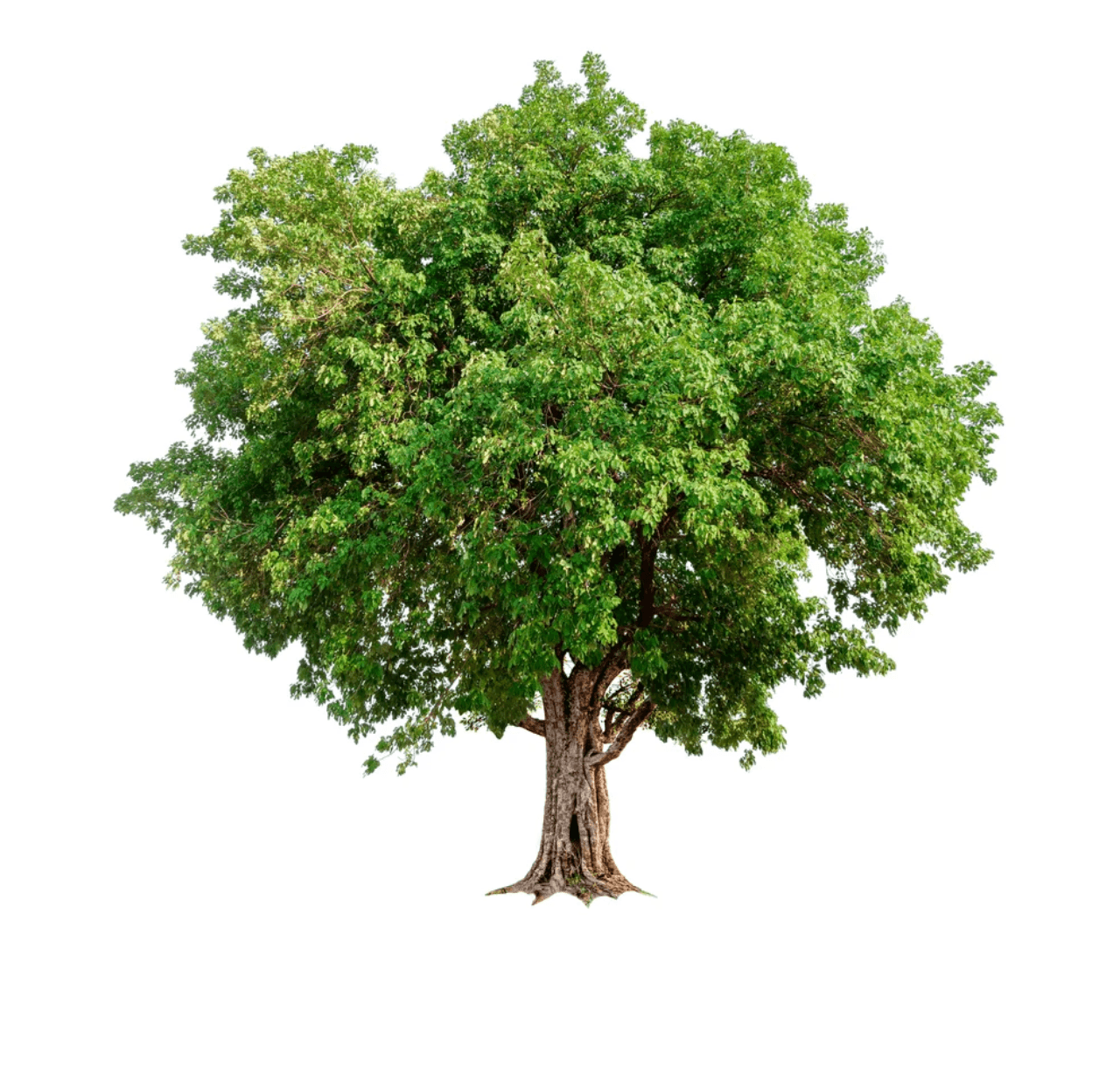
Tree

a)

Biotic (living)

b)

Abiotic (non-living)

10.

If there is 200,000 joules of energy available at the producer level, how much energy is available at the secondary consumer level?

a)

None

b)

200

c)

2,000

d)

20,000

11.

If there is 1,200 joules of energy available at the producer level, how much energy will be in the tertiary consumer level?

a)

12

b)

120

c)

1.2

d)

1,190

12.
What is the source of energy for food chains/food webs?
a)
the sun (even if not pictured)
b)
Producers
c)
Fertilizer
d)
JOHN CENA!
13.
How much energy is passed on to each trophic level in an energy pyramid?
a)
10%
b)
90%
c)
50%
d)
80%
14.
Which organisms have the most available energy in an energy pyramid?
a)
Producer
b)
Consumer
c)
Decomposer
d)
Scavenger
15.
Which organisms in the diagram have the largest total energy to give to other organisms?
a)
Cattails and Marsh Grass
b)
Hawks and Snakes
c)
Crickets and Grasshoppers
d)
Shrews and Frogs
16.

How is energy transferred in an energy pyramid?

a)

10% to the level above, 90% lost as heat

b)

90% to the level above, 10% lost as heat

c)

100% to the level above, 90% lost as heat

d)

90% to the level above, 90% lost as heat

17.

this consumer eats only producers

a)

producer

b)

carnivore

c)

omnivore

d)

herbivore

18.

biotic means

a)

non living

b)

living

c)

dead

d)

zombies are attacking!!!!

19.

The third trophic level where the animals eat herbivores.

a)

Abiotic Factor

b)

Biotic Factor

c)

Secondary Consumer

d)

Secondary Producer

20.

_________ succession occurs in an area with no soil.

a)

Primary

b)

Secondary

21.

__________ succession occurs in an area where soil is already present.

a)

Primary

b)

Secondary

22.

The first organisms that appear in an ecological community.

a)
primary succession 
b)
secondary succession
c)

pioneer species

23.

A stable ecosystem that has reached equilibrium (balance).

a)
ecological succession 
b)
climax community
c)
secondary succession
24.
The picture shows what type of succession?
a)
primary
b)
secondary
25.

How do lichens (moss-like plants) contribute to primary succession?

a)

Lichens decompose organic matter from animals and plants.

b)

Lichens begin to break down rock to form soil.

26.
What is the order of succession shown in this figure?
a)
A, B, C, D
b)
B, A, D, C
c)
C, D, A, B
d)
D, A, B, C
27.

What best describes the term succession?

a)

gradual changes over time to create or restore and ecosystem

b)

forest with the tallest trees

c)

the rate species produce offspring

28.
Which of the following resources is collected by the panels on the roof of his home?
a)
air
b)
water
c)
wind
d)
sunlight
29.
 Which of the following are renewable sources of energy?
a)
coal and natural gas
b)
oil and electricity
c)
sunlight and petroleum
d)
wind and water
30.

Wind, hydropower, and solar are examples of __________.

a)

fossil fuels

b)

non-renewable energy sources

c)

limited resources

d)

renewable energy sources

31.
A claim is ______________________________.
a)
a kind of shellfish often used in chowder. 
b)
a fact.
c)
a statement or conclusion that answers the original question or problem
d)
a bad thing to make about something.
32.
Evidence is ___________________
a)
A statement or conclusion that answers a question
b)
Scientific data that supports the claim
c)
A justification that connects the claim to the evidence
d)
Not vital when using an argument
33.
Reasoning is __________________.
a)
A statement of conclusion that answers the original question/problem
b)
Scientific data that supports the claim
c)
A justification that connects the evidence to the claim
d)
Empirical Evidence
34.
Air is matter. We found that the weight of the ball increases by .5lbs each time we pumped more air into it. This shows that air has weight, one of the characteristics of matter.
Which sentence is the claim?
a)
Air is matter.
b)
We found that the weight of the ball increases by .5lbs each time we pumped more air into it.
c)
This shows that air has weight, one of the characteristics of matter.
35.
Air is matter. We found that the weight of the ball increases by .5lbs each time we pumped more air into it. This shows that air has weight, one of the characteristics of matter.
Which sentence is the evidence?
a)
Air is matter.
b)
We found that the weight of the ball increases by .5lbs each time we pumped more air into it.
c)
This shows that air has weight, one of the characteristics of matter.
36.
When you are using your 5 senses to gather facts and information, you are...
a)
Making observations
b)
Making evidence
c)
Making science
37.
Has specific data, numbers, values, or qualitative descriptions. 
a)
Claim
b)
Evidence 
c)
Reasoning
d)
All
38.

Fruits, fish, and livestock are all examples of what type of ecosystem service?

a)

Economic

b)

Provisioning

c)

Regulating

d)

Cultural

39.

Music, art, and architecture born from interactions with nature are all examples of what type of ecosystem service?

a)

Provisioning

b)

Regulating

c)

Cultural

d)

Supporting

40.

Bacteria decomposing waste is an example of what type of ecosystem service?

a)

economic

b)

regulating

c)

provisioning

d)

supporting

41.
What term describes the variety of different organisms found in an ecosystem?
a)
population
b)
biodiversity
c)
ecosystem services
42.
The most effective way to protect biodiversity is through...
a)
habitat fragmentation
b)
habitat destruction
c)
habitat preservation
43.
2 factors which increase population size
a)
Birth Rate, Immigration
b)
Death Rate, Immigration
c)
Birth Rate, Emigration
d)
Death Rate, Emigration
44.
What type of population change does this graph represent
a)
Exponential Growth
b)
Massive Die-off
c)
Linear Growth
d)
Decrease in Birth-Rate
45.

Organisms of the same species living in the same area

a)

Community

b)

Population

c)

Habitat

d)

Ecosystem

46.

Jacob is going out to his grandparents farm. On the farm is a stream that he likes to fish at. When he is fishing he sees many different species of fish as well as maple and oak trees and dragonflies. What Jacob is seeing is an example of what level of organization?

a)

organism

b)

population

c)

community

d)

ecosystem

47.

Abby is walking to school with her best friend Jaylyn. They talk about the ash trees, grass, weeds, ants, and people. They also notice how cold it is, and the puffy clouds out. What level of organization are they discussing?

a)

community

b)

ecosystem

c)

biome

d)

biosphere

48.
What are the ecological levels of organization from smallest to the largest?
a)
organism, population, community, ecosystem, biome, biosphere
b)
organism, community, population, ecosystem, biome, biosphere
c)
organism, population, community, biome, ecosystem, ecosphere.
d)
organism, community, population, biome, ecosystem, ecosphere
49.
Based on the graph shown, what is the effect of removing a keystone species from an ecosystem?
a)
biodiversity goes up
b)
biodiversity goes down
c)
biodiversity stays about the same
d)
not enough information to tell
50.
Based on the graph shown, how can you tell sea otters are a keystone species?
a)
as the sea otter population decreases, biodiversity increases
b)
as sea otter population increases, biodiversity increases
c)
changes in the sea otter population have little effect on biodiversity 
d)
the sea otter population dereases due to the presence of urchins
51.
What does the graph tell you about biodiversity between 1600 and 1959?
a)
biodiversity has increased
b)
biodiversity has decreased
c)
biodiversity has remained about the same
d)
not enough information to tell
52.
A relationship that describe a close interaction between two different species is known as what?
a)
Biodiversity
b)
Symbiosis
c)
Predation
d)
Emigration
53.
This is known as a relationship in which one organism benefits, while the other is unaffected.
a)
Parasitism
b)
Mutualism
c)
Immigration
d)
Commensalism
54.

Remoras are fish that generally latch on to sharks and eat leftovers of food from the shark. This is an example of which type of ecological relationship?

a)

Mutualism

b)

Commensalism

c)

Parasitism

d)

Competition

55.

Cordyceps are a type of a fungi that hijack insects muscular and nervous systems, eventually leading to the death of the insect. What type of relationship is this?

a)

Commensalism

b)

Predator/Prey

c)

Parasitism

d)

Competition