wayground logo

Free Printable Worksheets

Font size

S
M
L
XL
Worksheets

S1 review

Total questions: 89

Worksheet time: 22hrs 15mins
Name
Class
Date
1.

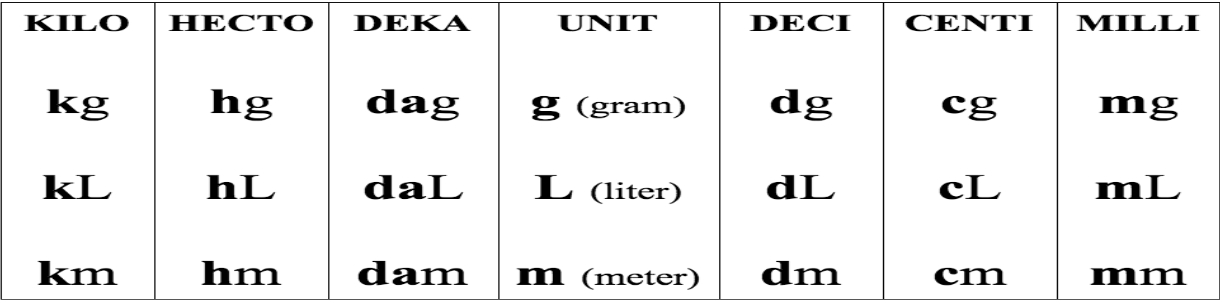
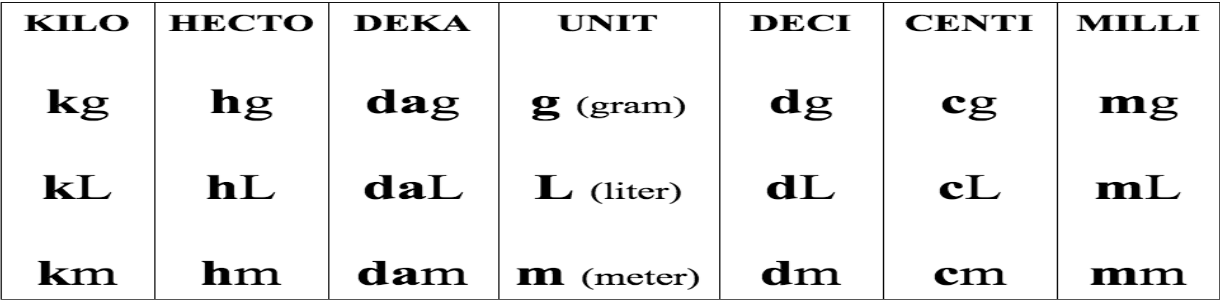
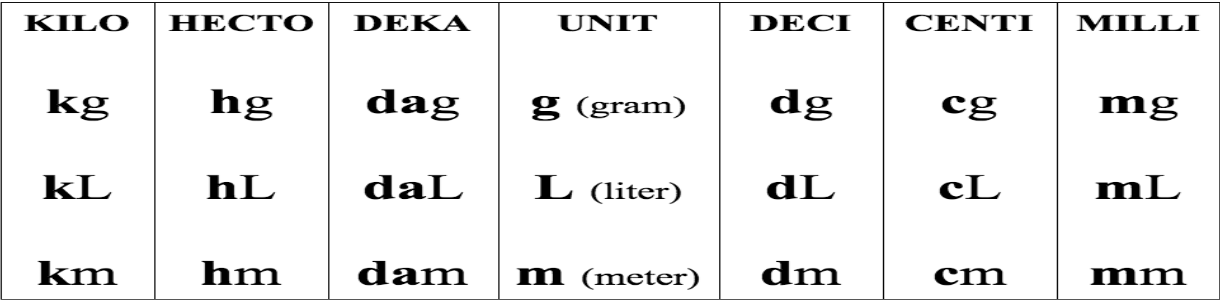
425,000 mL = ___ L

a)

425

b)

42.5

c)

4,250

d)

4.25

e)

42,500

2.

0.000238 m = ___ cm

a)

0.0238

b)

0.238

c)

2.38

d)

0.00238

e)

0.000238

3.

6.81 cm = ___ m

a)

0.0681

b)

0.681

c)

0.00681

d)

0.000681

e)

6.81

4.

How would you write 0.0005 in scientific notation?

a)

50 x 10-5

b)

5 x 10⁻⁴

c)

5 x 10³

d)

.5 x 103

5.
Which of the following is correct scientific notation?
a)
20.35 x 10⁴
b)
.2035 x 104
c)
2035 4
d)
2.035 x10⁴
6.

Convert this number into scientific notation: 950,000

a)

9.5 x 10⁵

b)

9.5 x 10⁻⁹

c)

9.5 x 10²

d)

None of the above

7.
How many significant figures does the following number have?
0.00345
a)
6
b)
5
c)
3
d)
Ambiguous: 3,4,5, or 6
8.
How many significant figures does the following number have: 0.00204
a)
6
b)
4
c)
3
d)
2
9.

How many significant figures does the following number have?1.2500 x 10310^3  

a)
5
b)
3
c)

Ambiguous: 3 or 5

d)

7

10.
How many significant figures does the following number have: 100.00210
a)
7
b)
8
c)
10
d)
Ambiguous: 7 or 8
11.

I have two objects with the same volume but different masses. Which object will be more dense?

a)

The object with less weight.

b)

The object with more weight.

c)

The object with more mass.

d)

The object with less mass.

12.

A brick sinks in water while a wooden block of the same size floats. This is because the brick has a

a)

lower volume than the wooden block

b)

lower density than the wooden block

c)

higher volume than the wooden block

d)

higher density than the wooden block

13.

Which box has a higher density?

a)

Box A

b)

Box B

c)

cannot be determined

d)

they are the same

14.
What is the volume of Object X?
a)
10.0 cm3
b)
15.0 cm3
c)
20.0 cm3
d)
25.0 cm3
15.
What is the volume of 150 grams of lead if it has a density of 11.3 g/cm3?
a)
13.3 g
b)
13.3 cm3
c)
.075 g
d)
1695 cm3
16.
A mechanical pencil has the density of 3.000 g/cm3.  The volume of the pencil is 15.8 cubic centimeters.  What is the mass of the pencil?
a)
47.4 g
b)
50 g
c)
0.190  g
d)
5.27 g
17.
What is the phase change of a solid to a liquid?
a)
freezing
b)
melting
c)
boiling
d)
condensation
18.
5. What is it called when a solid turns directly into a gas?
a)
Sublimation
b)
Condensation
c)
Liquid
19.
The phase change from water vapor to liquid water is known as...
a)
evaporation
b)
precipitation
c)
condensation
d)
sublimation
20.

What letter on the diagram represents the substance only in the gas phase?

a)

A

b)

B

c)

C

d)

D

21.

What letter on the diagram represents the triple point?

a)

A

b)

B

c)

C

d)

D

22.

What would the state of this substance be at 0.5 ATM of pressure at a 100 degrees Celsius?

a)

Solid

b)

Liquid

c)

Gas

d)

Michigan

23.

What happens along the AC line?

a)

Melting/Freezing

b)

Boiling/Condensing

c)

Boiling/melting

d)

freezing/condensing

24.

The critical point is found at point.....

a)

A

b)

B

c)

C

d)

D

25.

The nucleus of an atom contains which subatomic particles?

a)

protons and electrons

b)

protons and neutrons

c)

electrons and neutrons

d)

protons, electrons, and neutrons

26.

Which subatomic particle is counted to determine the type of element the atom represents?

a)

proton

b)

neutron

c)

electron

d)

boron

27.
The atomic number is equal to _.
a)
the number of protons and electrons
b)
the number of neutrons only
c)
the total number of protons and neutrons
d)
the number of protons neutrons and electrons
28.
Adding or subtracting neutrons (charge = 0, mass = 1) makes the element change into an...
a)
ion
b)
mixture
c)
isotope
d)
neutral atom
29.
An atom becomes _________ when it gains electrons.
a)
Positive
b)
Negative
c)
Neutral
d)
Invinsible
30.
An atom that has gained or lost electrons is called ...
a)
a winner
b)
an isotope
c)
an ion
d)
a loser
31.
How many electrons does Cu4+ have?
a)
29
b)
33
c)
25
d)
30
32.
How many electrons does S2- have?
a)
16
b)
18
c)
14
d)
12
33.
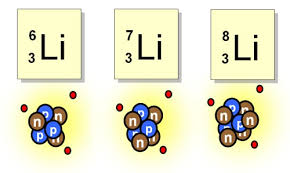
How many neutrons does the isotope of lithium have?
a)
8
b)
3
c)
4
d)
5
34.
which atom has  4 neutrons?
a)
Li-6
b)
Li-7
c)
Li-8
d)
they have the same # of neutrons
35.
Four isotopes of lead include lead-204, lead-206, lead-207, and lead-208.  The average atomic mass of lead is 207.2.  Which isotope of lead is likely to be the most abundant.
a)
204
b)
206
c)
207
d)
208
36.

76 protons and 114 neutrons

a)

Osmium-114

b)

Osmium-76

c)

Osmium-190

d)

Osmium-190.23

37.

On a wave, the distance between crest to crest is called?

a)

amplitude

b)

wavelength

c)

frequency

d)

trough

38.

Calculate the wavelength of blue light emitted by a mercury lamp with a frequency of 6.88 x 10¹⁴ Hz.

a)

3.44 x 10⁻⁶m

b)

4.36 x 10⁻⁷m

c)

3.0 x 10⁸ m

d)

633 m

39.

The unit of measure for frequency is?

a)

Seconds

b)

Meters

c)

Hertz

d)

Liters

40.

The symbol for a frequency of a wave is?

a)

Hertz

b)

v

c)

lambda

d)

meters/second

41.

Calculate the wavelength of the yellow light emitted by the street light, if the frequency of the radiation is 5.10x10¹⁴Hz.

a)

5.12 x 10⁻⁷m

b)

5.88 x 10⁻⁷ m

c)

4.20 x 10¹⁴m

d)

3.0 x 10⁸m

42.

A wave with a large wavelength will have a ______ frequency and _____ energy

a)

high, low

b)

high, high

c)

low, high

d)

low, low

43.
How many valence electrons?
a)
2
b)
3
c)
5
d)
10
44.

The innermost energy level has a maximum of how many electrons?

a)

1

b)

2

c)

6

d)

8

45.

Which Bohr model represents Neon?

a)
b)
c)
d)
46.

What is this element?

a)

Beryllium (atomic #4)

b)

Boron (atomic #5)

c)

Carbon (atomic #6)

d)

Nitrogen (atomic #7)

47.
What atom matches this electron configuration?
1s22s22p63s23p64s23d10
a)
Zinc
b)
Copper
c)
Nickel
d)
Germanium
48.
What electron configuration matches an oxygen atom?
a)
1s22s22p63s2, 3p64s23d104p5
b)
1s22s22p4
c)
1s22s22p6
d)
1s22s22p63s23p64s23d1
49.
How many electrons can the d sublevel hold?
a)
14
b)
10
c)
2
d)
6
50.

Electrons fill energy levels and sublevels _____ in energy first.

a)

lower

b)

higher

51.
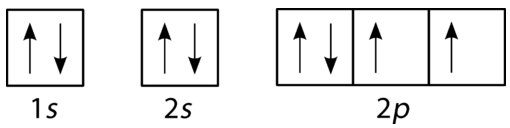
This orbital diagram represents:  
a)
C
b)
B
c)
N
d)
O
52.
What is incorrect about this orbital diagram?
a)
Both arrows in the 2p box should be pointing up
b)
There is nothing incorrect with this diagram
c)
In the there should only be 1 orbital in the first 2p box and one in the 2nd 2p box
d)
All the arrows should be pointing up.
53.
What is the noble gas configuration for beryllium?
a)
[He]1s2
b)
[He]2s2
c)
[Li]2s1
d)
[Li]2s2
54.

Which shows the correct orbital diagram for Cobalt?

a)
b)
c)
d)
55.
As you move down the periodic table atoms get bigger.  This is because ____________.
a)
The atoms have more mass.
b)
The atoms have more protons.
c)
The atoms have more energy levels
d)
The atoms have more nuetrons
56.
Ionization energy is...
a)
the energy required to add an electron to a specific atom
b)
how much energy it takes to remove an electron from an atom
c)
the energy required to shield the outer electrons from the nucleus
d)
a measure of the ability of an atom to attract electrons
57.
Which of the following will have a lower ionization energy than Scandium (Sc)?
a)
Helium (He)
b)
Titanium (Ti)
c)
Calcium (Ca)
d)
Magnesium (Mg)
58.
Electronegativity is...
a)
how good an atom is at attracting electrons
b)
the ability of an atom to lose electrons
c)
the energy required to remove an electron from a specific atom
d)
how easy it is to make friends. 
59.
Atoms that have a high electronegativity, _______________.
a)
give up their electrons more easily.
b)
hold on to their electrons more tightly.
c)
have more electron shells.
60.
According to the octet rule most elements need _______ valence electrons.
a)
2
b)
8
c)
6
d)
18
61.
Which of the following is the correct Lewis dot structure for the molecule fluorine (F2)?
a)
A
b)
B
c)
C
d)
D
62.
How many electrons can be used in the Lewis Structure for : NO3 -
a)
23
b)
20
c)
18
d)
24
63.

Which of the following is a valid Lewis structure for hydrogen cyanide, HCN?

a)
b)
c)
d)
64.

Which Lewis Dot Model drawing correctly shows an O2 molecule?

a)
b)
c)
d)
65.

Determine the molecular geometry of the given structure.

a)

Trigonal Pyramidal

b)

Trigonal Bipyramidal

c)

Trigonal Planar

d)

Tetrahedral

66.
*
a)
trigonal pyramid
b)
linear
c)
bent
d)
angular
67.
*
a)
linear
b)
trigonal planar
c)
trigonal pyramid
d)
bent of angular
68.

The electrons in a polar covalent molecule are shared...

a)

Evenly

b)

Unevenly

c)

Electrons are not shared

d)

None of the Above

69.

The electrons in an ionic molecule are shared...

a)

Evenly

b)

Unevenly

c)

Electrons are not shared

d)

None of the Above

70.

In a polar covalent bond, the electrons gather around...

a)

The atom with the Greatest Electronegativity

b)

The atom with the Lowest Electronegativity

c)

Each atom Equally

d)

None of the Above

71.

Partial charges are present in which type of bond?

a)

Ionic

b)

Nonpolar Covalent

c)

Polar Covalent

d)

Both Polar Covalent and Ionic

72.

What is the name of CaCl2?

a)

Carbon Dichloride

b)

Calcium Dichloride

c)

Calcium (II) Chloride

d)

Calcium Chloride

73.

What is the Formula of Sodium Oxide? (MAKE SURE TO PAY ATTENTION TO SUBSCRIPTS)

a)

NaO

b)

Na2O

c)

NaO2

d)

SO

74.

What is the name for ZnO?

a)

Zinc Oxide

b)

Zinc (I) Oxide

c)

Zinc (II) Oxide

75.

What is the formula of Copper (III) Nitride?

a)

CoN

b)

Co3N

c)

CuN

d)

Cu3N

76.

What is the name of CaCO3?

a)

Calcium Carboxide

b)

Calcium Carbon Oxide

c)

Calcium Carbonate

77.

Name C2F4

a)

Carbon Fluoride

b)

Dicarbon Quadfluoride

c)

Dicarbon Tetrafluoride

d)

Carbon Tetrafluoride

e)

Carbon Quadfluoride

78.

Ionic or Covalent?

HF

a)

Covalent

b)

Ionic

c)

Neither

79.

Ionic or Covalent

BaO

a)

Ionic

b)

Covalent

80.
What is the formula for sodium nitrate?
a)
Na3(NO)
b)
Na(NO)
c)
Na3(NO3)
d)
Na(NO3)
81.
What is the mole used for? 
a)
To measure the amount of grams in a substance
b)
To measure the amount of atoms or molecules in a substance
c)
To measure the amount of energy in a substance
d)
To measure the amount of bonding in a substance 
82.
What is the molar mass NaCl?
a)
58 grams
b)
22.95 grams
c)
162 grams
d)
6.02 x 10²³
83.
How many molecules are in 2.5 mol of NaCl?
a)
1.51x10²³
b)
146
c)
4.15
d)
1.51x1024
84.
What are the units for molar mass?
a)
grams
b)
amu
c)
grams/mole
d)
liters
85.
What is the mass of 0.89 mol of CaCl2?
a)
111 grams
b)
0.008 grams
c)
98.9 grams
d)
none of the choices
86.
Which would have more atoms?
a)
1 mole of Li
b)
1 mole of Au
c)
1 mole of Si
d)
None, all are equal
87.

Calculate the number of atoms in 3.25 moles of lithium.

a)

1.96 x 1024

b)

2.015

c)

1.85 x 10²³

d)

5.40 x 10⁻²⁴

88.

The mass % of H in methane (CH4) is:

a)

75%

b)

92%

c)

25%

d)

4%

e)

6%

89.
What is the percent by mass of sodium in NaCl?
a)
39%
b)
61%
c)
35%
d)
65%