wayground logo

Free Printable Worksheets

Font size

S
M
L
XL
Worksheets

Physical Science District Exam Review

Total questions: 147

Worksheet time: 4hrs 47mins

Name
Class
Date
1.

Energy cannot be created or destroyed.

a)

True

b)

False

2.

Energy cannot be transformed from one form

to another.

a)

True

b)

False

3.

Which object shows an energy transformation from electrical to heat energy?

a)
b)
c)
d)
4.

Which activity involved the energy transformation from chemical to potential energy?

a)
b)
c)
d)
5.

What energy transformations take place when a battery-operated radio is in use?

a)

Electrical to chemical to light

b)

Sound to chemical to mechanical

c)

Chemical to electrical to sound

d)

Light to electrical to thermal

6.

Which transformation of energy will occured when you turn on a hair dryer?

a)

electric to kinetic to thermal and sound

b)

chemical to thermal to light and sound

c)

nuclear to electrical to thermal and sound

d)

kinetic to light to thermal and sound

7.

State the correct energy transformation when you turn on a television?

a)

Electrical energy ----> light energy

b)

Electrical energy -----> light energy ----->sound energy

c)

Chemical energy ---->light energy-----> sound energy

d)

Light energy ----> chemical energy -----> sound energy

8.

Which of these household items correctly displays energy transformation of electrical energy into mechanical energy?

a)

Candle

b)

Clothing Iron

c)

Television

d)

Kitchen Mixer

9.
Energy transformations occur when...
a)
energy is created through conduction
b)
energy changes from one form to another
c)
two forces slide together that are touching
d)
a chemical reaction takes place
10.

Which transformation of energy occurs in a toaster?

a)

Electrical to kinetic energy

b)

Electrical to heat energy

c)

Thermal to mechanical energy

d)

Solar to electrical energy

11.
What best describes the energy conversion that takes place in a microwave oven?
a)
electrical to light to thermal
b)
chemical to thermal to light
c)
electrical to thermal to sound
d)
nuclear to thermal to chemical
12.
Energy transformations occur when...
a)
energy is created through conduction
b)
energy changes from one form to another
c)
two forces slide together that are touching
d)
a chemical reaction takes place
13.

Which energy transformation occurs when you rubs your hands together rapidly?

a)

Electrical energy to thermal energy

b)

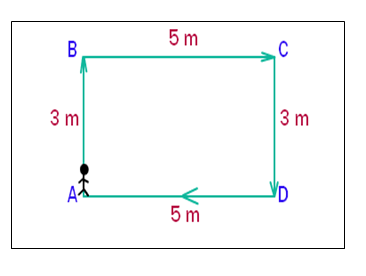
Electrical energy to chemical energy

c)

Thermal energy to kinetic energy

d)

Kinetic energy to heat energy

14.
Which of the following energy transformations occur when a lamp that is plugged into a wall socket is functioning correctly?
a)
Chemical to light
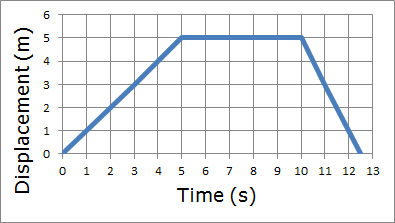
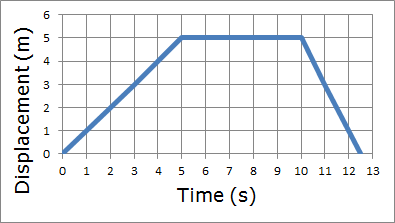
b)
Electrical to chemical
c)
Electrical to light
d)
Chemical to electrical
15.
What is the best example of electrical energy being transformed to thermal energy?
a)
A car driving down the road
b)
Turning on a lamp
c)
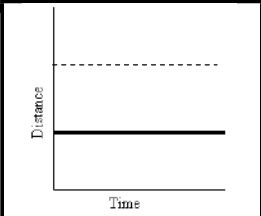
A person running
d)
Answering a cell phone
16.
What is the best example of electrical energy being transformed to thermal energy?
a)
A car driving down the road
b)
Turning on a lamp
c)
A person running
d)
Answering a cell phone
17.
Energy due to motion is ____________ energy. 
a)
Potential 
b)
Energy
c)
Kinetic
d)
Friction
18.
The faster an object moves, the ________ kinetic energy it has. 
a)
more
b)
less
c)
none of the above
d)
all of the above 
19.
__________ is stored energy. 
a)
Potential
b)
Kinetic
c)
None of the above 
d)
All of the above 
20.
When you stretch a rubber band, you are storing __________ energy. 
a)
kinetic 
b)
potential
c)
none of the above
d)
all of the above 
21.
At which point is potential energy greatest?
a)
W
b)
X
c)
Y
d)
Z
22.
What kind of energy is in a moving skateboard?
a)
Potential
b)
Kinetic
c)
Both potential and kinetic energy
d)
none of the above
23.
What kind of energy is in a rock at the edge of a cliff?
a)
Potential
b)
Kinetic
c)
Both potential and kinetic energy
d)
none of the above
24.
Which is the best example that something has kinetic energy?
a)
a. a car parked on a steep hill 
b)
b. a tennis ball rolling across the court
c)
c. a picture hanging on the wall 
d)
d. a piece of coal before it's burned 
25.
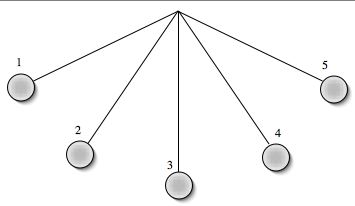
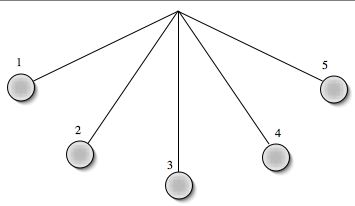
When a pendulum swings, at which point is kinetic energy highest?
a)
1
b)
2
c)
3
d)
4
26.
When a pendulum swings, at which point is potential energy at its greatest?
a)
1
b)
2
c)
3
d)
4
27.
Which is an example of potential energy?
a)
a roller coaster speeding down a hill
b)
the pulled back string on an archers's bow
c)
releasing the strings on a guitar
d)
an electric current lighting a light bulb
28.
At the top of a loop there is more of this type of energy?
a)
Potential
b)
Kinetic
29.
On a roller coaster, where is maximum potential energy?
a)
At the bottom of a big hill
b)
When going around a corner
c)
When going upside down
d)
At the top of a big hill
30.
On a roller coaster, where is maximum kinetic energy?
a)
At the bottom of a big hill
b)
When going around a corner
c)
When going upside down
d)
At the top of a big hill
31.
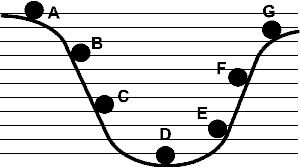
Which point has the most potential energy?
a)
G
b)
f
c)
b
d)
a
32.
Which 2 letters have the most kinetic energy
a)
W & Y
b)
X & Z
33.
How much potential energy is at the top of a hill on a rollar coaster ride
a)
100%
b)
50%
c)
0%
d)
20%
34.
At which point is potential energy greatest?
a)
W
b)
X
c)
Y
d)
Z
35.
At which point is kinetic energy greatest?
a)
W
b)
X
c)
Y
d)
Z
36.
What kind of energy is in an acorn hanging from an oak tree?
a)
Potential
b)
Kinetic
37.

What is energy?

a)

Energy doesn't exist

b)

It is the capacity to burn coal

c)

It is the ability to do work or to produce transformations

d)

It is a property of the matter used to measure forces

38.

__________ is a form of energy we can hear

a)

Heat

b)

Sound

c)

Kinetic

d)

Chemical

39.

The example of stored energy is _______

a)
b)
c)
d)
40.

What is kinetic energy?

a)

wind energy

b)

stored energy

c)

moving energy

d)

potential energy

41.

Identify the type of energy

a)

Sound energy

b)

Thermal energy

c)

Electrical Energy

d)

Mechanical energy

42.

Choose the source of energy

a)

Sun

b)

Wind

c)

Water

d)

Biomass

43.

The chemical is transformed into ________inside the battery.

a)

movement energy

b)

electrical energy

c)

heat energy

d)

light energy

44.

A baseball is being hit by a baseball bat is an example of ____ energy being converted into ______ energy

a)

stored energy - movement energy

b)

electrical energy - stored energy

c)

heat energy- light energy

d)

all incorrect

45.

A microwave has ________energy then its transfers to _____energy to ______ energy, to ______energy and ______ energy

a)

stored energy - movement energy - light energy - sound energy

b)

stored energy - chemical energy - light energy - sound energy

c)

stored energy - electrical energy - movement energy - light energy - heat energy

d)

stored energy - sound energy and light energy

46.

What form of transfer energy of candle ?

a)

sound energy to light energy

b)

light energy to heat energy

c)

kinestic energy to heat energy

d)

electrical energy to movement energy

47.

Mahmud went to gas station by his car, so its had _____energy. When the car was going to the gas station, so its transfered to ______ energy

a)

chemical energy - movement energy

b)

electrical energy - chemical energy

c)

chemical energy - stored energy

d)

stored energy - chemical energy

48.

What sound energy can be used for ?

a)

to play music and transport people

b)

to communicate and play music

c)

to make a warm and play music

d)

to dty cloth and melt metal

49.

From what source do plants receive energy?

a)

soil

b)

water

c)

insects

d)

sunlight

50.

Which of the following statement, is correct ?

a)

People running and skydriver falling are exmple of movement energy

b)

A lamp transfers from heat energy to chemical energy

c)

A roller coaster doesn't have energy

d)

Energy is kind of transportation

51.

Which is the correct example of transfering energy from stored to movement energy?

a)
b)
c)
d)
52.

Which of the following is true for sound waves?

a)

They require a medium.

b)

They are unrelated to vibrations.

c)

They cannot travel through liquids

d)

They can travel in a vacuum

53.

How do electromagnetic and mechanical waves compare?

a)

Mechanical waves can only travel through a vacuum, but electromagnetic waves can travel through a solid, liquid, or gas.

b)

Mechanical waves can travel through a solid, liquid, or gas, but electromagnetic waves can only travel through a gas.

c)

Mechanical waves can only travel through a solid, liquid, or gas, but electromagnetic waves can travel through a vacuum.

d)

Mechanical waves can travel through a solid, liquid, or gas, but electromagnetic waves can only travel through a solid.

54.

A student asks a series of questions about a wave. The answer to which question will allow the student to determine whether the wave is electromagnetic or mechanical?

a)

Does it require a medium in order to travel?

b)

Can it pass through air and water?

c)

Does it have a measurable speed?

d)

Does it have a measurable frequency?

55.

What is the term used to describe the maximum distance that a sound wave displaces air molecules from their original undisturbed position?

a)

Amplitude

b)

Speed

c)

Frequency

d)

Wavelength

56.

A student is measuring the distance between the crest and the rest position of both a mechanical wave and an electromagnetic wave. Which question is the student trying to answer?

a)

What is the speed of the waves?

b)

What is the amplitude of the waves?

c)

What is the wavelength of the waves?

d)

What is the frequency of the waves?

57.

Which distance represents the wavelength?

a)

W

b)

X

c)

Y

d)

Z

58.

Which distance represents the amplitude?

a)

W

b)

X

c)

Y

d)

Z

59.

What do radio waves, microwaves, X-rays, and gamma rays all have in common?

a)

They all have the same wavelength.

b)

They are electromagnetic waves.

c)

They are detected in the same way.

d)

They store the same amount of energy.

60.

How many wavelengths separate point A and point B?

a)

1.5

b)

2.0

c)

2.5

d)

3.0

61.

Point A represents what?

a)

Trough

b)

Midpoint

c)

Crest

d)

node

62.

คลื่นแม่เหล็กไฟฟ้า เขียนเป็นภาษาอังกฤษว่าอย่างไร

a)

Electric Wave

b)

Magnetic Wave

c)

Electromagnetic Wave

d)

Magnetoelectric Wave

63.

คลื่นแม่เหล็กไฟฟ้ามีลักษณะอย่างไร

a)

ไฟฟ้าทำให้แม่เหล็กเคลื่อนที่

b)

แม่เหล็กทำให้ไฟฟ้าเคลื่อนที่

c)

ต้องอาศัยตัวกลางในการเคลื่อนที่

d)

ไม่ต้องอาศัยตัวกลางในการเคลื่อนที่

64.

ข้อใดไม่ใช่คลื่นแม่เหล็กไฟฟ้า

a)

เสียง

b)

แสง

c)

คลื่นโทรทัศน์

d)

รังสีแกมมา

65.

ข้อใดเป็นองค์ประกอบของคลื่นแม่เหล็กไฟฟ้า

a)

สนามแม่เหล็ก

b)

สนามไฟฟ้า

c)

ถูกทั้ง 2 ข้อ

d)

ถูกทั้ง 2 ข้อ

66.

นักฟิสิกส์ที่ได้รับการยกย่องให้เป็นบิดาแห่งคลื่นแม่เหล็กไฟฟ้า คือใคร

a)

Albert Einstein

b)

James Clerk Maxwell

c)

Stephen Hawking

d)

Prayut Chan-o-cha

67.

คลื่น FM 100 MHz มีความยาวคลื่นเท่าใด

a)

1.5 เมตร

b)

3.0 เมตร

c)

4.5 เมตร

d)

6.0 เมตร

68.

เสาอากาศที่รับคลื่น FM 100 MHz มีความยาวเท่าใด

a)

1.5 เมตร

b)

3.0 เมตร

c)

4.5 เมตร

d)

6.0 เมตร

69.

สัญญาณ WIFI ส่งถ่ายข้อมูลโดยใช้คลื่นแม่เหล็กไฟฟ้าชนิดใด

a)

เสียง

b)

คลื่นไมโครเวฟ

c)

คลื่นวิทยุ

d)

คลื่นวิทยุ

70.

เนื้อหาฟิสิกส์หัวข้อใดที่ไม่ได้เรียนในเทอมนี้

a)

Fluid

b)

Electromagnetic Wave

c)

Nuclear Physics

d)

Atomic Physics

71.

เทอมนี้นักเรียนจะได้เกรดอะไร

a)

1

b)

2

c)

3

d)


4

72.

คลื่นแม่เหล็กไฟฟ้าทุกชนิดขณะเคลื่อนที่ในสุญญากาศจะมีสิ่งหนึ่งเท่ากันเสมอคืออะไร

a)

ความยาวคลื่น

b)

แอมปลิจูด

c)

ความถี่

d)

ความเร็ว

73.

ข้อใดมีลักษณะของสัญญาณ AM

a)

คลื่นพาหะมีแอมพลิจูดคงที่ ความถี่คงที่ และสะท้อนในบรรยากาศ

b)

คลื่นพาหะมีแอมพลิจูดไม่คงที่ความถี่ไม่คงที่ และสะท้อนในบรรยากาศ

c)

คลื่นพาหะมีแอมพลิจูดไม่คงที่ ความถี่ไม่คงที่ และไม่สะท้อนในบรรยากาศ

d)

คลื่นพาหะมีแอมพลิจูดคงที่ ความถี่คงที่ และไม่สะท้อนในบรรยากาศ

74.

การแผ่รังสีคลื่นแม่เหล็กไฟฟ้าต่อไปนี้ ข้อใดมีความยาวคลื่นสั้นที่สุด

a)

รังสีแกมมา

b)

แสงที่ตามองเห็น

c)

ไมโครเวฟ

d)

รังสีอุลตราไวโอเลต

75.

คลื่นแม่เหล็กไฟฟ้าสามารถเกิดได้จากข้อใด

a)

นิวตรอน

b)

อิเล็กตรอน

c)

สนามแม่เหล็ก

d)

สนามไฟฟ้า

76.

คลื่นวิทยุ F.M. มีช่วงความถี่เท่าใด

a)

88 - 108 kHz

b)

88 - 108 MHz

c)

530 - 1600 kHz

d)

530 - 1600 MHz

77.

This is an example of a -------- circuit.

a)

Series

b)

Parallel

c)

Combination

78.

This is an example of a -------- circuit.

a)

Series

b)

Parallel

c)

Combination

79.

In this circuit, the bulb(s) that light up are:

a)

1 only

b)

2 only

c)

1 and 2

d)

None of them

80.

In this circuit, the bulb(s) that light up are:

a)

1 only

b)

2 only

c)

1 and 2

d)

None of them

81.

The bulbs have the same resistance. The brightest bulb in this circuit is:

a)

1 only

b)

2 only

c)

Same brightness

d)

None of them

82.

The bulbs have the same resistance. The brightest bulb is:

a)

1 only

b)

2 only

c)

1 and 2

d)

None of them

83.

This circuit shows:

a)

Conventional flow

b)

Electron flow

c)

Electricity

d)

This diagram is incorrect

84.

This diagram shows:

a)

Conventional flow

b)

Electron flow

c)

Electricity

d)

This diagram is incorrect

85.

This circuit will work.

a)

Yes

b)

No

86.

The fault in this circuit is the:

a)

Ammeter

b)

Cell

c)

Bulb

d)

There is no fault.

87.

The fault in this circuit is the:

a)

Bulb

b)

Cell

c)

Voltmeter

d)

There is no fault.

88.

The bulbs in this circuit have the same resistance. The reading on A2 is:

a)

4A

b)

2A

c)

1A

d)

No reading

89.

The bulbs in this circuit have the same resistance. The reading on V2 is:

a)

6V

b)

3V

c)

9V

d)

No reading

90.

The bulbs in this circuit have the same resistance. The reading on V1 is:

a)

6V

b)

12V

c)

9V

d)

No reading

91.

The bulbs in this circuit have the same resistance. The reading on A2 is:

a)

4A

b)

8A

c)

2A

d)

No reading

92.
How do you calculate voltage?
a)
Current X Resistance
b)
Resistance ÷ Current
c)
Current ÷ Resistance
d)
Measure it with a ruler
93.
How do you calculate resistance?
a)
Voltage X Current
b)
Current ÷ Voltage
c)
Voltage ÷ Current
d)
Current X Amps
94.
What voltage is needed to cause a 2A current flow through a 10Ω resistor?
a)
5V
b)
0.2V
c)
20V
d)
200V
95.
What voltage is needed to cause a 50A current flow through a 10Ω resistor?
a)
15V
b)
500V
c)
500 kV
d)
0.2V
96.
What resistance is needed to cause a 50A current flow because of a 500V battery?
a)
10Ώ
b)
c)
2500Ώ
d)
550Ώ
97.
What word means how much energy is given to / removed from the electrons.
a)
Current
b)
Voltage
c)
Resistance
d)
Power
98.
What word means how hard it is for electrons to flow through.
a)
Current
b)
Voltage
c)
Resistance
d)
Power
99.
What word means how fast the electrons flow.
a)
Current
b)
Voltage
c)
Resistance
d)
Power
100.
If the battery produced 12.6 Volts and what would be the current flow be for a 6 Ohm resistor
a)
2.1 Amps
b)
2.4 Amps
c)
1.71 Amps
d)
15 Amps
101.
With the engine running the charging system produces 14.5 Volts what would the current flow be if a resistance of 6 Ohms was present
a)
2.41 Ohms
b)
2.52 Ohms
c)
2.1 Ohms
d)
0.3333 Ohms
102.
A magician pulls a tablecloth out from under dishes and glasses on a table without disturbing them.
a)
Newton's 1st Law
b)
Newton's 2nd Law
c)
Newton's 3rd Law
d)
None of them
103.
A person’s body is thrown outward as a car rounds a curve on a highway.
a)
Newton's 1st Law
b)
Newton's 2nd Law
c)
Newton's 3rd Law
d)
None of them
104.
Rockets are launched into space using jet propulsion where exhaust accelerates out from the rocket and the rocket accelerates in an opposite direction.
a)
Newton's 1st Law
b)
Newton's 2nd Law
c)
Newton's 3rd Law
d)
None of them
105.
A picture is hanging on a wall and does not move.
a)
Newton's 1st Law
b)
Newton's 2nd Law
c)
Newton's 3rd Law
d)
None of them
106.
A person not wearing a seatbelt flies through a car window when someone slams on the breaks because the person’s body wants to remain in continuous motion even when the car stops.
a)
Newton's 1st Law
b)
Newton's 2nd Law
c)
Newton's 3rd Law
d)
None of them
107.
Pushing a child on a swing is easier than pushing an adult on the same swing, because the adult has more inertia.
a)
Newton's 1st Law
b)
Newton's 2nd Law
c)
Newton's 3rd Law
d)
None of them
108.
Pushing a child on a swing is easier than pushing an adult on the same swing, because the adult has more inertia.
a)
Newton's 1st Law
b)
Newton's 2nd Law
c)
Newton's 3rd Law
d)
None of them
109.
Acceleration is produced when a force acts on a mass. The greater the mass (of the object being accelerated) the greater the amount of force needed (to accelerate the object).
a)
Newton's 1st Law
b)
Newton's 2nd Law
c)
Newton's 3rd Law
d)
None of them
110.
An object at rest will remain at rest unless acted on by an unbalanced force. An object in motion continues in motion with the same speed and in the same direction unless acted upon by an unbalanced force.
a)
Newton's 1st Law
b)
Newton's 2nd Law
c)
Newton's 3rd Law
d)
None of them
111.
This law is often called "the law of inertia."
a)
Newton's 1st Law
b)
Newton's 2nd Law
c)
Newton's 3rd Law
d)
None of them
112.
A soccer ball accelerates more than a bowling ball when thrown with the same force.
a)
Newton's 1st Law
b)
Newton's 2nd Law
c)
Newton's 3rd Law
d)
None of them
113.
A student leaves a pencil on a desk and the pencil stays in the same spot until another student picks it up.
a)
Newton's 1st Law
b)
Newton's 2nd Law
c)
Newton's 3rd Law
d)
None of them
114.
Two students are in a baseball game. The first student hits a ball very hard and it has a greater acceleration than the second student who bunts the ball lightly.
a)
Newton's 1st Law
b)
Newton's 2nd Law
c)
Newton's 3rd Law
d)
None of them
115.
For every action there is an equal and opposite reaction.
a)
Newton's 1st Law
b)
Newton's 2nd Law
c)
Newton's 3rd Law
d)
None of them
116.
The swimmer moves her hand down and to the left and her body goes forward to the right.
a)
Newton's 1st Law
b)
Newton's 2nd Law
c)
Newton's 3rd Law
117.
A rocket is sent into space.  When the power dies out, the rocket will just keep floating and moving in space forever (unless an unbalanced force, such as a meteor, runs into it).
a)
Newton's 1st Law
b)
Newton's 2nd Law
c)
Newton's 3rd Law
d)
None of them
118.
 Jermaine runs exactly 2 laps around a 400 meter track. What is the displacement?
a)
800
b)
400
c)
0
d)
200
119.
Bill runs 400 meters to Andy's house, turns around, and runs 400 meters back home.  What is Bill's distance?
a)
0 meters
b)
400 meters
c)
800 meters
d)
1600 meters
120.
Bill runs 400 meters to Andy's house, turns around, and runs 400 meters back home.  What is Bill's displacement?
a)
0 meters
b)
400 meters
c)
800 meters
d)
1600 meters
121.

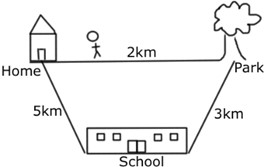
Jerry walked from home to school, then from the school to the park. What is his total distance?

a)

2 km

b)

5 km

c)

8 km

d)

10 km

122.

Jerry walked from home to school, then from the school to the park. What is his total displacement?

a)

2 km

b)

5 km

c)

8 km

d)

10 km

123.
A car drives 84 meters forward.  It's displacement and distance would be the same.
a)
True
b)
False
124.
Sara walks from Point A to Point B. Which is true?
a)
Distance and displacement are EQUAL
b)
Distance is less than displacement
125.
Find the distance Sara walks from A to B,  B to C then C to D?
a)
11m
b)
3m
c)
5m
126.
After completing one trip on a roller coaster, the roller coaster's ________ is zero.
a)
displacement
b)
reference point
c)
length
d)
distance
127.

The shortest distance between 2 points is a straight line.

a)

true

b)

false

128.
What is speed?
a)
how far you go
b)
how much distance is covered over a period of time
c)
how fast you accelerate
d)
the change in the location of a object
129.
A runner races in the 100 meter dash.  It takes her 10 seconds to finish.  What is her average speed?
a)
10 m/s
b)
1000 m/s
c)
100 seconds
d)
10 seconds
130.
Total distance divided by total time is
a)
average speed
b)
constant speed
c)
instantaneous speed
d)
acceleration
131.
What does this graph represent?
a)
Constant Speed
b)
Acceleration
c)
Not moving
132.
Which runner won the race?
a)
A
b)
B
c)
C
d)
It was a tie
133.
According to the graph how far does the person travel in the first 5 seconds?
a)
2 m
b)
10 m
c)
0 m
d)
5 m
134.
What is the person doing from 5 seconds to 10 seconds?
a)
Walking 
b)
Running
c)
Standing Still 
d)
Walking Fast
135.
Velocity is both ____ and _____. 
a)
speed , direction 
b)
direction, mass
c)
volume, density 
d)
direction, magnitude 
136.
Which of the following represents a velocity?
a)
40 m
b)
40 m north
c)
40 m/s
d)
40 m/s north
137.
When you look at the speedometer of your car, it tells you your....
a)
Average speed
b)
Instantaneous speed
138.

What is the speed of a cheetah that travels 112.0 m in 4.0 s?

a)

0.0357 m/s

b)

30 m/s

c)

0.036 m/s

d)

28.0 m/s

139.
Two horses are running in a field.  The gray horse runs 12 m/s north.  The black horse runs 12 m/s east.  
Which is true about their motions?
a)
Equal speeds.
b)
Equal velocities.
c)
Equal distances.
d)
Equal displacements.
140.

Which statement is true about velocity?

a)

Must have measurement of speed.

b)

Must have a measurement of speed and direction.

c)

Must have only direction.

d)

Has neither a measurement of speed or direction.

141.
How do you calculate velocity?
a)
Distance divided by time.
b)
Displacement divided by time.
c)
Speed multiplied by time.
d)
Displacement divided by velocity.
142.
How do you calculate distance?
a)
Distance divided by time.
b)
Displacement divided by time.
c)
Speed multiplied by time.
d)
Displacement divided by velocity.
143.
A car moves a distance of 1000 m with an average speed of 28 m/s.   Calculate the time.
a)
36 seconds
b)
28,000 seconds
c)
28 seconds
d)
972 seconds
144.
A cheetah runs with an average speed of 32 m/s for 30 seconds.  How far did the cheetah run?
a)
960 m
b)
1.07 m
c)
0.94 m
d)
62 m
145.
In which of the following graphs (click the image) are both runners moving at the same speed (note that graph c is the bottom right graph, and graph d is the bottom left graph)? 
a)
Graph A
b)
Graph B
c)
Graph C
d)
Graph D
146.
What does this graph represent?
a)
Constant speed
b)
Acceleration
c)
Not moving
147.
What is the speed of the red line?  
a)
4 m/s 
b)
16 m/s 
c)
32 m/s 
d)
2 m/s