
 Worksheets
Earth and Space Science 1st Semester Exam Study Guide
Total questions: 90
Worksheet time: 4hrs 23mins

The Geosphere is...
All liquid water on Earth
A 100km thick layer of gases
frozen water on earth
Earths entire solid body
The lithosphere combines what two layers?
Athenosphere & Crust
Crust & Upper Mantle
Mantel & Asthenosphere
What is Geology?
The study of geography.
The study of rocks.
The study of weather.
The study of the solid Earth.
What are the 5 main branches of Earth Science?
Biology, Paleontology, Entomology, Chemistry, and Physics
Astronomy, Meteorology, Hydrology, Geology, and Ecology
Psychology, Sociology, Hematology, Pathology, and Mycology
Cardiology, Epidemiology, Herpetology, Oceanology, and Neurology
What are the 4 main spheres of Earth?
Hemisphere, Lithosphere, Troposphere, and Ionosphere
Exosphere, Stratosphere, Mesosphere,and Ozonosphere
Hydrosphere, Atmosphere, Biosphere, and Geosphere
Thermosphere, Atmosphere, Hemisphere, and Ionosphere
WHich is the innermost layer of the Earth?
Crust
Mantle
Outer Core
Inner Core
Which layer of the earth is completely liquid?
Crust
Mantle
Outer Core
Inner Core
The action in which sediments are dumped or dropped into a new location.
Weathering
Erosion
Deposition
The process by which rock materials are broken down by the action of mechanical (physical) and chemical processes.
Weathering
Erosion
Deposition
The process by which wind, water, ice or gravity transport soil, rocks, and sediments from one location to another.
Weathering
Erosion
Deposition
A mudslide flowing down a steep hill
Weathering
Erosion
Deposition
Flood waters pounding against a canyon wall and wearing/breaking it down.
Weathering
Erosion
Deposition
Caves being formed by acid rain dissolving (breaking down) underground limestone
Weathering
Erosion
Deposition
Glaciers dropped rock and sand to form terminal moraines (mounds).
Weathering
Erosion
Deposition
Muddy water being carried away by a fast moving river
Weathering
Erosion
Deposition
Water getting into cracks, freezing, and breaking the rocks or pavement
Weathering
Erosion
Deposition
Ponds filling up with sediments because they have been deposited after heavy rains
Weathering
Erosion
Deposition
Sediments settling (stopping) at the base of a cliff
Weathering
Erosion
Deposition
Waves taking/moving sand away after they crashed on the shore line.
Weathering
Erosion
Deposition
Waves taking/moving sand away after they crashed on the shore line.
Weathering
Erosion
Deposition
The series of processes in which rock forms, changes from one type to another, is destroyed, and forms again by geological processes
rock cycle
carbon cycle
Bowen's reaction series
mineral cycle
Rock that forms when magma cools and solidifies
igneous rock
sedimentary rock
metamorphic rock
mineral
Rock formed from the cooling and solidification of magma beneath Earth's surface
extrusive igneous rock
intrusive igneous rock
sedimentary rock
metamorphic rock
Rock formed from the cooling and solidification of lava at Earth's surface
extrusive igneous rock
intrusive igneous rock
mineral
metamorphic rock
Sedimentary rock that forms from the remains of plants or animals
chemical sedimentary rock
organic sedimentary rock
intrusive sedimentary rock
extrusive sedimentary rock
Which of these statements best describes the relationship difference between minerals and rocks?
Most minerals are made of rocks.
Most rocks are made of minerals.
Rocks are solid, but minerals are not.
Rocks are found on Earth’s surface, but minerals are not.
Extrusive Rocks Are Formed By...
Frying Pans
Lava
Grilling
Baking
Which type of rock is granite?
igneous
sedimentary
metamorphic
mineral
If a mineral breaks along flat surfaces, it demonstrates this property.
color
luster
streak
cleavage
This mineral identification property is most easily observed, but the least reliable.
color
streak
luster
cleavage
What types of weathering are there?
Mental & Astronomical
The rainy type
Sedimentary & Metamorphic
Chemical & Mechanical
What is a sediment?
chemical reaction
pollution
tiny pieces of weathered rock

What type of weathering is it when acid rain breaks down and changes the rock.
Chemical weathering
Mechanical weathering
Astronomical weathering
Physiological weathering

Freezing water is expanding, causing the crack in the rock to widen (frost action). What kind of weathering is this?
Chemical weathering
Mechanical weathering
How does freezing water cause the weathering of rocks? The freezing water—
keeps the rocks in place
expands cracks and breaks rocks
makes the rocks last longer
causes rocks to fall in landslides
(a) is the process of breaking down rocks into sediments.
(a) is the laying down of sediment carried by wind, water, or ice.
(a) is the process of moving away sediments at the Earth's surface. 4 agents move sediment: Water, Wind, Glaciers, and Mass Wasting (gravity).

The natural wearing down of objects by elements in the environment is known as...
Weathering
Erosion
Deposition

The deposit of sediment to a new location is known as...
Weathering
Deposition
Erosion

Which of the following are agents of erosion? (Select all that apply.)
Wind
Water
Ice
Gravity
This type of weathering in which rock is physically broken into smaller pieces.
Chemical weathering
Erosion
Mechanical weathering
Deposition
What do we call the process in which rock is broken down by changes in its chemical makeup.
Chemical weathering
Mechanical weathering
Erosion
Deposition
The grinding/scratching away of rock by other rock particles carried in water, ice, or wind
Frost wedging
Exfoliation
Oxidation
Abrasion
What is the difference between weathering and erosion?
Erosion breaks down the rocks, and weathering carries the broken pieces away.
Erosion carries broken pieces away, and weathering builds the pieces back up into another land mass.
Weathering carries broken pieces away, and erosion builds the pieces back up into another land mass.
Weathering breaks down rocks, and erosion carries the broken pieces away.

_____________ is the dropping off/ depositing of rocks.
Metamorphosis
Deposition
Weathering
Erosion
Which of the following agents is the usually responsible for the formation of canyons?
Gravity pulling
Wind blowing
Flowing water
Glaciers moving

The image above depicts the effects of chemical weathering breaking down limestone. Which type of chemical weathering causes this reaction?
Acid rain
Oxidation
Exfoliation
Abrasion
Which is a cause of weathering?
Water
Waves
Wind
All of the above
The weathering of rock caused by frost freezing in the rocks cracks
gravity
frost (ice) wedging
abrasion
tree root wedging
Frost/Ice wedging causes mechanical weathering of rock by means of
heating and cooling
plant growth
animal action
freezing and thawing of water


When water goes into cracks in rocks, freezes, expands, thaws and repeats the process it is called _____________________.
Ice or frost wedging
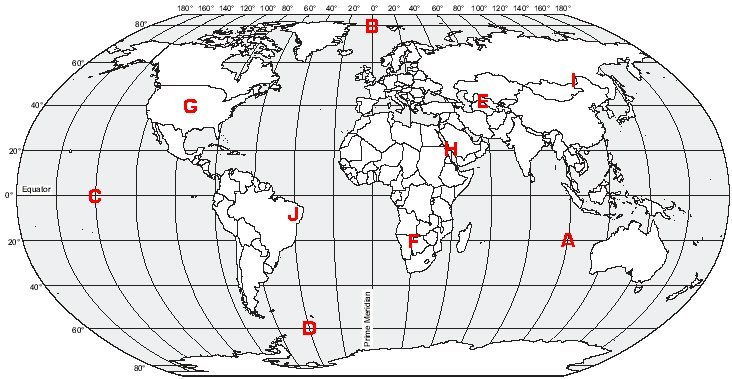
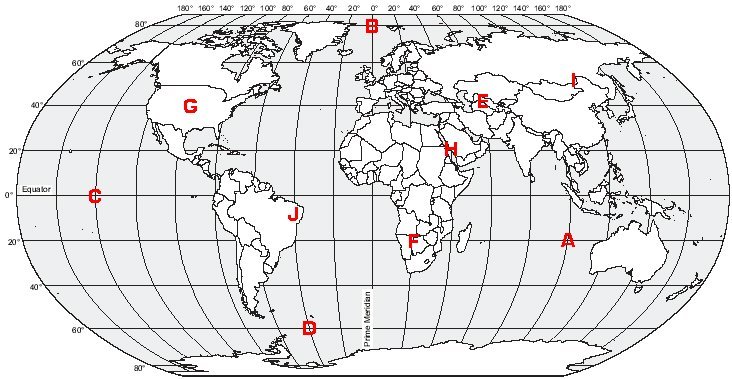


120°W, 45°N

105°W, 47°N

