Wayground logo

Free Printable Worksheets

Font size

S
M
L
XL
Worksheets

Exam study pt 1

Total questions: 61

Worksheet time: 43mins

Name
Class
Date
1.
What is the mass of a neutron?
a)
1 amu
b)
0 amu
c)
same as electron
d)
doesn't have any mass
2.
What is the charge of the neutron?
a)
Negative
b)
Positive
c)
electrical charge
d)
Neutral (no charge)
3.
An atom with 19 protons, and 19 electrons and a mass of 39 has how many neutrons?
a)
19
b)
39
c)
20
d)
58
4.
Sodium has an atomic number of 11, how many protons does this atom have?
a)
22
b)
11
c)
12
d)
2
5.
Where is the proton located?
a)
In the very dense nucleus
b)
Floating around in the negative electron cloud
c)
the loose nucleus
d)
the positive electron cloud
6.
What number on the element key tells you how many protons an element has?
a)
Atomic Mass
b)
Element name
c)
Atomic number
d)
Element Symbol
7.
Which description about the proton is accurate?
a)
Positively charged particle with a mass less than 0 amu
b)
A neutrally charged particle with a mass less than 0 amu
c)
Positively charged particle with a mass of 1 amu
d)
A neutrally charge particle with a mass of 1 amu
8.
Elements can have the same number of protons?
a)
True
b)
False
9.
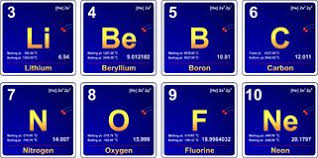
What is the atomic mass of Neon?
a)
10
b)
20.18
c)
10.18
d)
20.18
10.
How many electrons does an Iodine atom have?
a)
53
b)
126
c)
73
d)
179
11.
How many electrons are in a gold atom?
a)
79
b)
196
c)
117
d)
275
12.
How many electrons does an atom of Krypton have?
a)
36
b)
83.80
c)
47.80
d)
119.80
13.
Which two particles make up the nucleus of an atom?
a)
Protons and Electrons
b)
Protons and Neutrons
c)
Molecules and Compounds
d)
Neutrons and Electrons
14.
What's a valence electron?
a)
electrons in the second energy level
b)
electrons in the outermost energy level
c)
the atomic number
d)
electrons in the first level
15.
How many valence electrons?
a)
2
b)
3
c)
5
d)
10
16.

What was the name of the experiment that Ernest Rutherford conducted?

a)

Bohr Model

b)

Light Model

c)

Tin Can Experiment

d)

Gold Foil Experiment

17.
Who stated that atoms cannot be divided?
a)
Democritus
b)
Dalton
c)
Thomson
d)
Bohr
18.
In an atom, electrons move in definite orbits around the nucleus.
a)
Thomson
b)
Rutherford
c)
Bohr
d)
Democritus
19.
Atoms are made up of three basic parts, which are -
a)
Protons, neutrons, electrons
b)
neutrinos, protons, neutrons
c)
quarks, protons, electrons
d)
electrons, neutrons, and quarks
20.
Rutherford’s experiment determined that the nucleus of an atom is tiny, dense and  ______ charged. 
a)
neutrally
b)
negatively
c)
positively
21.

Subatomic particles with a negative charge

a)

Electrons

b)

Neutrons

c)

Protons

d)

Quarks

22.
Where electrons are likely to be found as they travel around the nucleus
a)
Nucleus
b)
Electron Cloud
c)
Within a Proton
d)
Within a Neutron
23.
Isotopes are atoms of the same element that have the same number of __________ but different number of __________ . Therefore, isotopes of the same element have different masses. 
a)
protons, neutrons
b)
protons, electrons
c)
neutrons, protons
d)
electrons, protons
24.

What charge does an atom have when it GAINS electrons?

a)

Positive

b)

Negative

c)

Neutral

25.

What does the mass number of an element represent?

a)

The number of protons in an atom

b)

the number of neutrons in an atom

c)

the number of electrons in an atom

d)

the number of protons and neutrons in an atom

26.
An atom is electrically neutral when
a)
protons and neutrons are the same
b)
protons and electrons are the same
c)
neutrons and electrons are the same
d)
neutrons balance the protons and electrons
27.

If a proton is added or removed from an atom, what happens?

a)

It becomes a different element.

b)

It becomes a different isotope.

c)

Nothing happens.

28.

Different isotopes of an element contain different numbers of ___.

a)

protons

b)

neutrons

c)

electrons

d)

elements

29.

The periodic table is organized in horizontal rows called...

a)

Groups

b)

Periods

c)

Families

d)

Chemical Symbols

30.

The vertical columns of the periodic table are called...

a)

Periods

b)

Families

c)

Chemical Symbols

d)

Groups

31.

The letter, C, is a ... of carbon.

a)

Name

b)

Nickname

c)

Chemical Symbol

d)

Pseudonym

32.

Which of the following are physical properties of metal?

a)

Luster

b)

Conductivity

c)

Malleability

d)

Ductility

33.

Name this group: These metals are the most reactive.

a)
b)
c)
d)
34.

Which of the following could be properties of nonmetals?

a)

Poor electrical conductivity

b)

Poor thermal conductivity

c)

Dullness

d)

Brittleness

35.

Name this group: These elements, also known as inert gases, tend to be nonreactive.

a)

Halogen family

b)

Noble gases

c)

Carbon family

d)

Nitrogen family

36.
The Modern Periodic Table of Elements is arranged by
a)
atomic mass
b)
atomic number
c)
valence electrons
d)
number of isotopes
37.
Which is an alkali metal?
a)
Magnesium
b)
Iron
c)
Sodium
d)
Europium
38.
Which is a halogen?
a)
Helium
b)
Chlorine
c)
Oxygen
d)
Neptune
39.
Elements in a ..................have similar chemical properties.  
a)
period
b)
group
c)
row
40.

The elements on the left side of the periodic table of elements are mainly:

a)

metals

b)

nonmetals

c)

metalloids

41.

The elements on the right side of the periodic table of elements are mainly:

a)

metals

b)

nonmetals

c)

metalloids

42.

Helium (He) belongs to the ______ family.

a)

alkali metal

b)

halogen

c)

noble gas

43.

Which elements would react similarly to Chlorine? (Cl)

a)

Oxygen (G)

b)

Fluorine (F)

c)

Neon (Ne)

d)

Bromine (Br)

44.

Which element would react similarly to Gold (Au)?

a)

Silver (Ag)

b)

Mercury (Hg)

c)

Iron (Fe)

45.

Which elements have 5 valence electrons?

a)

period 5

b)

group 5

c)

period 15

d)

group 15

46.

Which elements have 7 valence electrons?

a)

period 7

b)

group 17

c)

period 17

d)

group 7

47.

Which elements have a full set of valence electrons?

a)

period 1

b)

group 1

c)

period 18

d)

group 18

48.
a)
energy levels
b)
valence electrons
c)
protons
d)
neutrons
49.

How many VALENCE ELECTRONS does Lithium have?

a)

3

b)

1

c)

2

50.

Which is a CORRECT electron dot diagram for Beryllium?

a)
b)
51.

Which is a CORRECT electron dot diagram for Oxygen?

a)
b)
c)
52.

This is a correct electron dot diagram for which element?

(a)  

53.

This is a correct electron dot diagram for which element?

(a)  

54.
This could be the dot diagram of
a)
P
b)
Ar
c)
Na
d)
B
55.
How do positive ions form?
a)
by gaining electrons
b)
getting compliments
c)
by losing electrons
d)
gaining more protons
56.
This could be the dot diagram of 
a)
Ne
b)
Si
c)
Al
d)
Be
57.
a)
2
b)
8
c)
3
d)
13
58.

USE THE PERIODIC TABLE

How many dots would an electron dot diagram for Calcium (Ca) have?

(Click on image to enlarge it or use your own periodic table.)

a)

20

b)

2

c)

40

d)

4

59.

Which of the following is a correct electron dot structure for the element Beryllium (Be)? Use your Periodic table to help.

a)
b)
c)
d)
60.

This could be the dot diagram of

a)

Mg

b)

Cl

c)

C

d)

O

61.

How many valence electrons should Magnesium have in its electron dot diagram?

a)

1

b)

2

c)

3

d)

4