Wayground logo

Free Printable Worksheets

Font size

S
M
L
XL
Worksheets

Physical Science Semester 1 Study Guide

Total questions: 90

Worksheet time: 1hrs 13mins

Name
Class
Date
1.

Using your senses to gather information about the world around you is known as...

a)

inferring

b)

observing

c)

measuring

d)

researching

2.

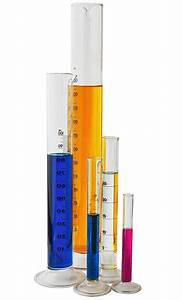
What trait does this scientific tool measure?

a)

length

b)

mass

c)

volume

d)

temperature

3.
What is a factor that can change in an experiment?
a)
Claim
b)
Variable
c)
Scientific Inquiry
d)
Hypothesis
4.
What is a hypothesis?
a)
An observation
b)
A bar graph
c)
Facts
d)
A prediction of what will happen 
5.
The _________ is a set of specific steps that help scientists solve problems. 
a)
Design Process
b)
Scientific Method
c)
Dictionary
d)
Bar graph
6.
Scientists may use different methods depending on the question their solving.
a)
True
b)
False
7.
Scientists' questions MUST be ________________!
a)
Great
b)
Testable
c)
Difficult
d)
About science
8.
What is a representation of another object?
a)
Variable
b)
Model
c)
Inference
d)
Data
9.

Perform a test to support or disprove a hypothesis

a)

Infer

b)

Variable

c)

Experiment

10.

Use information that has been gathered to answer questions or sove a problem

a)

Experiment

b)

Interpret Data

c)

Observing

11.

To read or study the data on a graph is to _____________ the data.

a)

data

b)

analyze

c)

scale

d)

line plot

12.
Matter is a composition that is always the same is...
a)
Mixture
b)
Atom
c)
Matter
d)
Substance
13.
Substance that consists of one type of atom.  It is a pure substance. Found on the Periodic Table. 
a)
Element
b)
Compound
c)
Mixture
d)
I don't know
14.
A type of substance containing atoms of two or more elements chemically bonded together is a mixture.
a)
Ture
b)
False
15.
Combinations of 2 or more substances (elements and compounds) that are physically blended together. 
a)
Compound
b)
Mixture
c)
Element
d)
Substance
16.
Salad is an example of...
a)
a mixutre
b)
an element
c)
a compound
17.
An example of ...
a)
A mixture
b)
A compound
c)
An element 
18.
Combination of two or more substances that are not chemically combined.
a)
mixture
b)
solution
c)
solvent
d)
solute
19.
If a mixture has components you can see it is a...
a)
solution
b)
compound
c)
homogeneous mixture
d)
heterogeneous mixture
20.
You are about to open an iced coffee, and notice the label says to "shake well", the drink must be a...
a)
solution
b)
colloid
c)
suspension
d)
compound
21.
Which list has the types of mixtures ordered from largest particle size to smallest?
a)
suspension, colloid, and solution
b)
solution, suspension, and colloid
c)
colloid, solution, and suspension
d)
solution, colloid, and suspension
22.

Which elements are to the right of the zig zag?

a)

metals

b)

nonmetals

c)

metalloids

23.

ductile means...

a)

can be made into wire

b)

can be bent or hammered

c)

can light up a light bulb

d)

it's shiny

24.

Substances that can be hammered into thin sheets are:

a)

metals

b)

nonmetals

c)

both metals and nonmetals

25.

Which elements are to the LEFT of the zigzag?

a)

metals

b)

nonmetals

c)

metalloids

26.
Which of the following is a physical characteristic of a metal?
a)
texture
b)
malleable
c)
brittle
d)
semi-conductor
27.
Which of the following atomic symbols for bromine is written correctly?
a)
bR
b)
BR
c)
Br
d)
br
28.
Can be found on the periodic table
a)
Element
b)
Compound
c)
MIxture
29.

any characteristic of matter that you can observe without changing the identity of the substances that make it up

a)

physical property

b)

chemical property

c)

periodic table

d)

conglomerate

30.

a characteristic of matter you observe as it reacts or changes into a different substance

a)

physical property

b)

chemical property

c)

periodic table

d)

conglomerate

31.

the amount of matter in an object

a)

mass

b)

weight

c)

volume

d)

density

32.

the ability of one material to dissolve in another

a)

solubility

b)

boiling point

c)

melting point

d)

state of matter

33.

the temperature at which a solid changes to a liquid

a)

solubility

b)

boiling point

c)

melting point

d)

state of matter

34.

the temperature at which a liquid changes to a gas

a)

solubility

b)

boiling point

c)

melting point

d)

state of matter

35.

What are the three states of matter?

a)

Solid

b)

Pretzel

c)

Phone

d)

Liquid

e)

Gas

36.

Put each state in order from particles closest together to particles farthest apart.

a)

Solid

b)

Liquid

c)

Gas

1)
2)
3)
37.

In which state of matter are the particles the moving the fastest?

a)

solid

b)

liquid

c)

gas

38.

Which process requires that more energy is added to a substance for the change to occur?

a)

melting

b)

freezing

c)

condensation

39.

Which process requires that energy is removed from a substance for the change to occur?

a)

melting

b)

freezing

c)

evaporation

40.

who discovered the electron

a)

Dalton

b)

J.J Thomson

c)

Lavoisier

d)

Rutherford

41.

What is the charge of a proton?

a)

Negative

b)

Positive

c)

Neutral

42.

What is the charge of a neutron?

a)

Negative

b)

Positive

c)

Neutral

43.

Which of the following is the best definition for matter?

a)

anything that has mass and volume

b)

the amount of space a substance occupies

c)

how much something weighs on earth

44.

True or False:

Atoms are the basic building blocks of most of the matter around you.

a)

true

b)

false

45.

Which of the following make up parts of an atom?

a)

neutron

b)

proton

c)

electron

d)

ultron

46.

Which of the following parts of an atom are positively charged?

a)

neutron

b)

proton

c)

electron

d)

nucleus

47.

Which of the following parts of an atom can absorb or release energy in the form of heat, light, etc?

a)

Proton

b)

Neutron

c)

Electron

48.

What measure does the Atomic Number show?

(a)  

49.

A charged atom is called a(n)...

a)

electron.

b)

ion.

c)

proton.

d)

acid.

50.

Which of the following best describes atomic mass?

a)

the total mass of protons, neutrons, and electrons in an atom

b)

the code used to represent an element

c)

matter that is made up of the same chemical compostition and cannot be separated into parts by physical means

51.

True or False:

A chemical symbol is a code used to represent each element.

a)

True

b)

False

52.

What is the smallest unit of matter? It is composed of protons and neutrons, held together in the nucleus, and electrons around the nucleus in different electron orbitals, which form an electron cloud.

a)

cell

b)

nucleus

c)

atom

d)

electron

53.

What is the center of an atom containing protons and neutrons?

a)

nucleus

b)

neutron

c)

proton

d)

electron cloud

54.
Which subatomic particles are found in the nucleus of an atom?
a)
Protons and Electrons
b)
Protons and Neutrons
c)
Neutrons and Electrons
d)
Protons, Neutrons and Electrons
55.
Which particle is negatively charged?
a)
proton
b)
atom
c)
neutron
d)
electron
56.
In order for an atom to be neutral what has to be true?
a)
The atom has more protons than neutrons
b)
The atom has more neutrons than protons
c)
The atom has the same number of protons and neutrons
d)
The atom has the same number of protons and electrons
57.

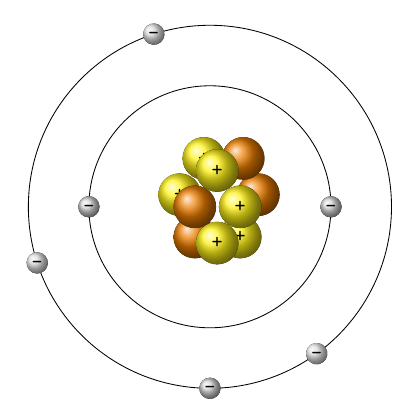
How many electrons does this atom have?

a)

2

b)

4

c)

6

d)

10

58.

Choose all the items that are elements.

a)

NaCl (table salt)

b)

Sulfur

c)

O2

d)

Water

e)

Air

59.

Choose all of the items that are compounds.

a)

NaCl (table salt)

b)

Sulfur

c)

O2

d)

Water

e)

Air

60.

Choose all of the items that are mixtures

a)

NaCl (table salt)

b)

Sulfur

c)

O2

d)

water

e)

Air

61.

Which element is similar to Li?

a)

Be

b)

K

62.

Which element is similar to Mg?

a)

Ca

b)

B

63.

Which element is similar to B?

a)

C

b)

Al

64.

Which element is the least reactive?

a)

Li

b)

Ne

c)

B

d)

C

65.

Which choice shows the elements in order from most reactive to least reactive. Sr, K, Cl, P

a)

Sr, K, Cl, P

b)

K, Cl, Sr, P

c)

K,P, Sr, Cl

d)

K, Sr, P, Cl

66.

Students in Mrs. Clark's science class are investigating a substance that has the following properties

-shiny

-bends easily

-hard, not easily broken


Based on these properties how would you classify the substance?

a)

metal

b)

nonmetal

c)

metalloid

67.

Groups run:

a)

up and down

b)

left to right

68.

Periods run:

a)

up and down

b)

left to right

69.

Metals are on the:

a)

Left side

b)

Right Side

c)

Stairstep

70.

Metalloids are on the:

a)

Left side

b)

Right Side

c)

Stairstep

71.

Nonmetals are on the:

a)

Left side

b)

Right Side

c)

Stairstep

72.

A student is studying a mystery substance. It breaks easily. It has a very dull luster. It doesn't conduct any electricity. What is the most likely substance this is?

a)

Metal

b)

Metalloid

c)

Nonmetal

73.
A _________________ is composed of symbols and subscripts indicating the number of atoms of an element in a compound.
a)
Chemical Equation
b)
Chemical Reaction
c)
Synthesis Reaction
d)
Chemical Notation
74.
Atoms form compounds when the compound is more ______________ than the separate atoms.  Noble gases are more _________than other elements because they have a complete outer energy level.
a)
reactive
b)
stable
c)
explosive
d)
toxic
75.
Atoms gain lose, gain, or ______electrons to get a stable outer energy level.
a)
share
b)
split
c)
create
d)
destroy
76.
A ____________is the force that holds atoms together in a compound.
a)
Chemical Formula
b)
Chemical Reaction
c)
Chemical Bond
d)
Synthesis Reaction
77.
A _______ is a charged particle because it has more or fewer electrons than protons.  When an atom _____ an electron, it becomes a positively charged ion.  When an atom ____an electron, it becomes a negatively charged ion.
a)
isotope, gains, loses
b)
isotope, loses, gains
c)
ion, loses, gains
d)
ion, gains, loses
78.
An ionic compound is held together by the _______--the force of attraction between opposite charges of the atoms.
a)
Covalent Bond
b)
Ionic Bond
c)
Synthetic Bond
d)
Molecular Bond
79.
__________are neutral particles formed as  result of sharing electrons.
a)
Protons
b)
Electrons
c)
Molecules
d)
Ions
80.
A ________is the force of attraction between atoms sharing electrons.
a)
Synthetic Bond
b)
Ionic Bond
c)
Molecular Bond
d)
Covalent Bond
81.

When a new substance forms as a result of a chemical reaction, what type of change has occurred?

a)

Chemical Change

b)

Physical Change

82.

Which is NOT an indication of a chemical change?

a)

Temperature Change

b)

Shape Change

c)

Formation of a precipitate

d)

Production of light

83.

What is the left part of a chemical equation called?

2H2 + O2 --> 2H2O

a)

Reactants

b)

Yields

c)

Products

d)

Chemical Equation

84.

What is the right part of a chemical equation called...

2H2 + O2 --> 2H2O

a)

Reactants

b)

Yields

c)

Products

d)

Chemical Equation

85.

True or False

In a chemical reaction, no new atoms are created, and no atoms are destroyed.

a)

TRUE

b)

FALSE

86.

Which statement is not a description of a chemical reaction?

a)

A solid is dropped into a beaker of liquid and a gas is released.

b)

A solid is dropped into a beaker of liquid and an explosion occurs.

c)

Two liquids are mixed in a beaker and a solid forms at the bottom of the beaker.

d)

A liquid is heated in the sun and half of it evaporates.

87.
An atom becomes _________ when it gains electrons.
a)
Positive
b)
Negative
c)
Neutral
d)
Invinsible
88.
An atom becomes _______ when it loses electrons.
a)
Positive
b)
Negative
c)
Neutral
d)
Invinsible
89.
Cations are...
a)
Positive
b)
Negative
c)
Neutral
d)
Purring
90.
Anions are...
a)
Positive
b)
Negative
c)
Neutral
d)
Crying