wayground logo

Free Printable Worksheets

Font size

S
M
L
XL
Worksheets

ESS - Semester 1 Test

Total questions: 100

Worksheet time: 50mins

Name
Class
Date
1.
What are the reasons for the season?
a)
Earth's tilt & rotation
b)
Earth's tilt & revolution
c)
Earth's rotation & rovolution
d)
Earth's tilt & resolution
2.

Observe the moon and determine if it is waxing or waning

a)

Waxing

b)

Waning

3.

Observe the moon and determine if it is waxing or waning

a)

Waxing

b)

Waning

4.

A lunar eclipse occurs at which moon phase?

a)

quarter moon

b)

new moon

c)

crescent moon

d)

full moon

5.

During a lunar eclipse

a)

Earth's shadow covers the moon

b)

the sun's shadow covers the moon

c)

the moon covers the sun

d)

Earth's shadow covers the sun

6.
What type of eclipse is occuring inthe diagram?
a)
solar
b)
lunar
7.
During a solar eclipse...
a)
The sun is blocked by the moon
b)
The Earth is blocked moon
c)
The moon is blocked by the sun
d)
You are blocked
8.
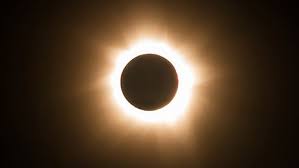
This image is an example of 
a)
Lunar Eclipse
b)
New Moon
c)
Solar Eclipse
d)
Full Moon
9.
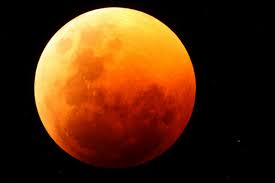
What type of eclipse is this?
a)
Solar Eclipse
b)
Lunar Eclipse
10.

Pushing the limits of engineering, JWST’s mirror is how massive?

a)

Same as Hubble’s mirror.

b)

21 ft in diameter

c)

The size of grain of sand

11.

Compared to the Hubble, JWST is designed to look further into what?

a)

History of the sun

b)

History of the sun

c)

Infrared part of the spectrum

12.
This instrument can be thought of as a large light bucket
a)
your eyes
b)
a lens
c)
a telescope
d)
a satellite dish
13.
What do modern professional-grade optical telescopes use as their objective?
a)
lenses
b)
mirrors
c)
electronic detectors
d)
photographic film
14.
Where the tidal force is strongest, we say it's _____
a)
low tide
b)
high tide
c)
neap tide
d)
no tide
15.
Where the tidal force is weakest, we say it's _____
a)
low tide
b)
high tide
c)
spring tide
d)
no tide
16.
There are two high tides and two low tides every _____
a)
hour
b)
day
c)
week
d)
month
17.
The group of inner planets are known as:
a)
The Terrestrial Planets
b)
The Gas Giants
c)
The Outer Planets
d)
The Hallow Planets
18.
The group of outer planets are known as:
a)
The Terrestrial Planets
b)
The Gas Giants
c)
The Inner Planets
d)
The Rocky Planets
19.
What can be thought of as "all the stuff held sway by the Sun’s gravity"?
a)
the Milky Way Galaxy
b)
our local group
c)
the Solar System
d)
the inner planets
20.
What percentage of the mass of the entire solar system is due to the Sun?
a)
27%
b)
54%
c)
77%
d)
98%
21.
How many Earths could fit inside the Sun?
a)
about 13 thousand
b)
about 130 thousand
c)
about 1.3 million
d)
about 13 million
22.
In the Sun's core, hydrogen atoms fuse together to form the heavier element _____
a)
sodium
b)
helium
c)
iron
d)
uranium
23.
What name is given to the stream of subatomic particles moving away from the Sun?
a)
solar wind
b)
aurora borealis
c)
cosmic dust
d)
stellar gust
24.
What is the term for a dark region on the surface of the Sun?
a)
a solar vortex
b)
a field flux
c)
a sunspot
d)
a stellar speck
25.
The best proposal for how the Moon was formed is called _____
a)
the Thalius Impact Conjecture
b)
the Giant Impact Hypothesis
c)
the Big Bang Explanation
d)
the Large Splash Postulate
26.
What forces synchronized the Moon's spin and orbital period?
a)
magnetic forces
b)
electric forces
c)
constant gravitational forces
d)
tidal forces
27.

What percent of our atmosphere is oxygen?

a)

35

b)

21

c)

15

d)

8

28.
"Heliocentrism" refers to a model where _____
a)
the Earth is the center the solar system
b)
the Sun is the center of the solar system
c)
the Moon, Sun and stars are affixed to crystal spheres
d)
the Earth's shape is a plane or
disk
29.
Where is the the asteroid belt located?
a)
between Earth and Mars
b)
between Mars and Jupiter
c)
between Jupiter and Saturn
d)
out beyond the orbit of Neptune
30.
What are "Kuiper Belt Objects"?
a)
rocky ice balls beyond Neptune
b)
planetoids in the main belt
c)
asteroids scattered around the solar system
d)
asteroids in between Mars and Jupiter
31.
What is Mercury's orbital period?
a)
22 days
b)
44 days
c)
66 days
d)
88 days
32.
Mercury's large core has a high proportion of _____
a)
nickel
b)
cobalt
c)
iron
d)
carbon
33.
How many naked-eye solar system objects are in the sky?
a)
five
b)
six
c)
seven
d)
eight
34.
In ancient times the planets were associated with _____
a)
gods
b)
countries
c)
elements
d)
months of the year
35.
Of the gods, Mercury was the _____
a)
Roman god of war
b)
Greek god of the sky
c)
Roman messenger god
d)
Greek fire god
36.
In Roman mythology, Venus is the goddess of _____
a)
love and beauty
b)
poetry and music
c)
fertility and healing
d)
dawn and childbirth
37.
Venus is the _____ brightest natural object in the sky
a)
fifth
b)
second
c)
third
d)
fourth
38.
Venus is highly reflective of the Sun's light, due to it's _____
a)
thick cloud layer
b)
thin cloud layer
c)
white dust surface
d)
volcanic activity
39.
The atmosphere on Venus is almost entirely composed of _____
a)
nitrogen
b)
carbon dioxide
c)
oxygen
d)
carbon monoxide
40.
In Roman mythology, Mars was _____
a)
the King of the Gods
b)
the God of War
c)
the God of the Seas
d)
the God of Wisdom
41.
Compared to Earth, Mars is _____
a)
smaller and colder
b)
larger and colder
c)
smaller and hotter
d)
larger and hotter
42.
In the diagram of the solar system, where is the big gap that bugged astronomers?
a)
between Mars and Jupiter
b)
between Jupiter and Saturn
c)
between Saturn and Uranus
d)
between Uranus and Neptune
43.
How many asteroids have been discovered to date?
a)
450
b)
thousands
c)
tens of thousands
d)
hundreds of thousands
44.
How many Earths could fit inside Jupiter?
a)
about 20
b)
about 100
c)
about 500
d)
about 1000
45.
Who discovered the four largest moons of Jupiter?
a)
Newton
b)
Hooke
c)
Galileo
d)
Copernicus
46.
The colossal hurricane on Jupiter is dubbed _____
a)
the Great Red Spot
b)
the Eye of the Storm
c)
the Vast Dark Spot
d)
the Hooke Squall
47.
Ganymede, the largest moon in our solar system, is even bigger than the planet _____
a)
Mercury
b)
Venus
c)
Mars
d)
Earth
48.
How many of Jupiter's moons are referred to as "Galilean moons"?
a)
two
b)
three
c)
four
d)
five
49.
Saturn spins really quickly, completing a day in just _____
a)
three hours
b)
five and a half hours
c)
eight  hours
d)
ten and a half hours
50.
Saturn is really oblate, or squished; it’s _____ through the Equator than through the poles
a)
5% narrower
b)
5% wider
c)
10% wider
d)
15% wider
51.
Saturn's rings are composed of _____
a)
solid rock
b)
water ice
c)
gas and dust
d)
methane gas
52.
On average, what is the thickness of Saturn's rings?
a)
about ten millimeters thick
b)
about ten centimeters thick
c)
about ten meters thick
d)
about ten kilometers thick
53.
Under ordinary conditions, how many planets can you see in the sky without a telescope?
a)
four
b)
five
c)
six
d)
seven
54.
Neptune is the only planet in the solar system found _____
a)
by accident
b)
via math
c)
via indirect observation
d)
by a space probe
55.
Which gas, in the atmosphere of Uranus, smells like rotten eggs?
a)
ammonia
b)
hydrogen sulfide
c)
methane
d)
carbon monoxide
56.
Nearly all the information we have about the universe comes in the form of ___
a)
light
b)
sound
c)
electricity
d)
fossils
57.
The spread of colors, or wavelengths of EM radiation, is called ___
a)
a wave-spread
b)
the bandwidth
c)
a spectrum
d)
the audible range
58.
Which philosopher calculated the size of the Earth using shadows, angles and wells?
a)
Aristotle
b)
Pythagoras
c)
Eratosthenes
d)
Socrates
59.
The distance from the Earth to the Sun is given the name ___
a)
the basic astronomical distance, or BAD
b)
the Sun-Earth distance, or SED
c)
the astronomical unit, or AU
d)
the light-year, or LY
60.
The shift in position of an object, viewed along two different lines of sight, is called ___
a)
paralyses
b)
triangulation
c)
parallax
d)
perspicacity
61.
A light-year is defined as ___
a)
the distance light travels in a year
b)
the time that light travels in a year
c)
the distance between the Earth and the Sun
d)
the time for Earth to orbit the Sun
62.
If you have two stars that are the same intrinsic brightness and one is twice as far as the other, it will be ___
a)
just as bright
b)
1/2 as bright
c)
1/4 as bright
d)
1/8 as bright
63.
Hotter stars put out more light at the blue end of the spectrum, while cooler ones peak ___
a)
in the red
b)
in the yellow
c)
in the green
d)
in the violet
64.
The luminosity of a star depends on ___
a)
its size and temperature
b)
its age and density
c)
its size and distance from us
d)
its age and distance from us
65.
A plot of a stars luminosity vs it's temperature is called ___
a)
an HR diagram, after Hertzsprung and Russell
b)
an HC diagram, after Hertzsprung and Cannon
c)
an CR diagram, after Cannon and Russell
d)
an HS diagram, after Hertzsprung and Saha 
66.
The surface around a black hole, where the escape velocity is the speed of light, is called ___
a)
the observable boundary
b)
the event horizon
c)
the progenitor surface
d)
The Chandrasekhar Limit
67.
To become a black hole,  the original star must have a mass of ___
a)
more than 1/4 of the Sun's mass
b)
more than 1.4 times the Sun's mass
c)
more than 4 times the Sun's mass
d)
more than 20 times the Sun's mass
68.
The black hole at the center of our own Milky Way galaxy has a mass of ___
a)
4.3 times the Sun's mass
b)
430 million times the Sun's mass
c)
4,300 times the Sun's mass
d)
4.3 million times the Sun's mass
69.
What we perceive as gravity is really just ___
a)
a dent in reality-fabric
b)
a warping of space-time
c)
 a bump in the stellar-textile
d)
a bending of the event horizon
70.
The expansion created by the heat of fusion is usually balanced by a star's gravity, creating ___
a)
an imbalance
b)
a conversion
c)
an inversion
d)
an equilibrium
71.
Objects with a mass range between the heaviest planets and the lightest stars became known as ___
a)
red gnomes
b)
brown gnomes
c)
red dwarfs
d)
brown dwarfs
72.
Very roughly speaking, we can divide stars into two groups: ___
a)
low mass stars, and high mass stars
b)
bright stars and dim stars
c)
dwarfs and giants
d)
low mass stars, and super-giants
73.
The dividing line between low mass stars and high mass stars lies around ___
a)
half the mass of the Sun
b)
twice the mass of the Sun
c)
eight times the mass of the Sun
d)
80 times the mass of the Sun
74.
For a star, the lower its mass, ___
a)
the larger its apparent magnitude
b)
the brighter it is
c)
the shorter it lives
d)
the longer it lives
75.
What are the two opposing forces that keep stars between collapsing and inflating?
a)
centripetal force and electron degeneracy force
b)
centripetal force and the pressure of hot gasses
c)
gravity and electron degeneracy force
d)
gravity and the pressure of hot gasses
76.
A star becomes a ticking time-bomb once silicon starts fusing into ___
a)
calcium
b)
cadmium
c)
iron
d)
lead
77.
Which bright star, in the constellation Orion, is a red super giant?
a)
Rigel
b)
Betelgeuse
c)
Bellatrix
d)
Saiph
78.
When the vast wave of neutrinos slams into the oncoming outer material, the explosion is called ___
a)
a supernova
b)
a super-aster
c)
a meganova
d)
a mega-aster
79.
The Sun, when its core has contracted to about the size of Earth, will be classified as ___
a)
a white dwarf
b)
a blue dwarf
c)
a white subgiant
d)
a blue subgiant
80.
An expanding, glowing shell of gas around an aging star is called ___
a)
a dwarf nebula
b)
a planetary nebula
c)
a dwarf nimbus
d)
a planetary nimbus
81.

Would the surface temperature of a red supergiant be higher or lower than a white dwarf?

a)

Higher

b)

Lower

82.

Most of the stars on the HR diagram are classified as which type of star?

a)

White Dwarfs

b)

Main Sequence

c)

Giants

d)

Supergiants

83.

Nebula

a)

Star left at the core of a planetary nebula

b)

a large cloud of gas or dust in space

c)

the earliest stage of a star's life

d)

red super giant explodes

84.

Protostar

a)

Star left at the core of a planetary nebula

b)

a large cloud of gas or dust in space

c)

the earliest stage of a star's life

d)

red super giant explodes

85.

Supernova

a)

Star left at the core of a planetary nebula

b)

a large cloud of gas or dust in space

c)

the earliest stage of a star's life

d)

red super giant explodes

86.

Black Hole

a)

The remains of a high mass star

b)

Exerts such a strong gravitational pull that no light escapes

c)

What a medium-mass star becomes at the end of its life

d)

The star left at the core of a planetary nebula

87.

Black Dwarf

a)

The remains of a high mass star

b)

Exerts such a strong gravitational pull that no light escapes

c)

What a medium-mass star becomes at the end of its life

d)

The star left at the core of a planetary nebula

88.

What is the force that acts on a nebula to cause the formation of a protostar?

a)

Inertia

b)

Nuclear Fusion

c)

Gravity

89.

At which point in its development does a star exit the protostar stage and become a main sequence star?

a)

When the nuclear fusion process begins

b)

When collisions in particles result in an increase of temperature

c)

When gravity squeezes it making it more dense

d)

When it gets bigger and gravity gets stronger causing it to collide more often

90.

Our Sun is considered slightly below average in mass. As it is a small to medium mass star, what would be the name of the phase that our Sun would enter after it exits the Main Sequence?

a)

Red Super Giant

b)

Yellow Super Giant

c)

White Giant

d)

Red Giant

91.

There are 2 points in the life cycle of a star that stars can take different paths. In each of these cases, it is the _______ of the star that determines the path it will take.

a)

Color

b)

Mass

c)

Temperature

d)

Brightness

92.

The only force acting on the nebulae is:

a)

thermal expansion

b)

singularities

c)

gravity

d)

microscopic adhesion

93.

Which quadrant has the hottest, dimmest stars?

a)

Quadrant 1

b)

Quadrant 2

c)

Quadrant 3

d)

Quadrant 4

94.

What is the name of the stars located in quadrant 2?

a)

Main Sequence

b)

White Dwarfs

c)

Red Giants

d)

Blue Giants

95.

Where would our sun be located?

a)

Quadrant 1

b)

Quadrant 2

c)

Quadrant 3

d)

Quadrant 4

96.

Where would blue giants be found?

a)

Quadrant 1

b)

Quadrant 2

c)

Quadrant 3

d)

Quadrant 4

97.

What section is considered the main sequence?

a)

Area M

b)

Area P

c)

Area X

d)

Area Z

98.

Where are red giants?

a)

Area M

b)

Area P

c)

Area X

d)

Area Z

99.

Where are white dwarfs?

a)

Area M

b)

Area P

c)

Area X

d)

Area Z

100.
Which star is the coldest?
a)
Yellow Star
b)
Red Star
c)
Orange Star
d)
Blue Star