wayground logo

Free Printable Worksheets

Font size

S
M
L
XL
Worksheets

Review

Total questions: 147

Worksheet time: 4hrs 23mins
Name
Class
Date
1.
All living things are made up of...
a)
cells
b)
cell tissues
c)
organ
d)
organ systems
2.
All cells come from___________ cells.
a)
pregnant
b)
pre-existing
c)
paternal
d)
pin size
3.

What is the basic structural and functional unit of all living things?

a)

atom

b)

cell

c)

bacteria

d)

animalcules

4.
Cells are often called "the ____ of life."
a)
bread
b)
road map
c)
building blocks
d)
meaning
5.

The 3 parts of the Cell Theory are...?

a)

All living things are composed of cells

Cells are the basic units of structure and function in living things

All cells are produced from other cells

b)

All living things are composed of cells

Cells are the basic units of dance and vibes in living things

All cells are destroyed from other aliens

c)

All living things are composed of Jell-O

Cells are the basic units of structure and function in living things

All cells are produced from factories in Canada

d)

All living things are composed of cells

Cells do karate and practice eating whole pies in their free time

All cells are produced from other cells

6.

What does it mean to say that a cell membrane is semipermeable?

a)

it allows some materials to pass through

b)

it allows nothing to enter the cell, only to leave

c)

It only allows things into the cell and not out

d)

it allows all materials to pass through

7.

What is the function of an organelle?

a)

to take up space

b)

to carry out a specific function in the cell

c)

to carry out all the functions of a cell

d)

to create new cells

8.

What organelle do many ribosomes connect themselves to?

a)

lysosome

b)

mitochondria

c)

endoplasmic reticulum

d)

golgi apparatus

9.

Which organelle uses enzymes to break down waste in a cell?

a)

Lysosome

b)

Ribosome

c)

Chloroplast

d)

Golgi Apparatus

10.

What is the function of the mitochondria?

a)

to capture energy from the sun and turn it to sugar

b)

to release usable energy for the cell

c)

to store energy for when the cell needs it

d)

to remove waste from the cell

11.

What organelle allows plants to create their glucose?

a)

Mitochondira

b)

Lysosome

c)

Ribosome

d)

Chloroplast

12.

Which of the following is not one of the 5 things all cells have?

a)

cell membrane

b)

cytoplasm

c)

DNA

d)

nucleus

13.

What is the difference the key difference between prokaryotic and eukaryotic cells?

a)

Prokaryotes have a nucleus, Eukaryotes do not

b)

Eukaryotes have a nucleus, Prokaryotes do not

c)

Prokaryotes have a cell membrane, Eukaryotes do not

d)

Eukaryotes have ribosomes, Prokaryotes do not

14.

Which of the following organelles do plants have that animals to not? (Select all that apply)

a)

Cell wall

b)

Golgi Apparatus

c)

Endoplasmic Reticulum

d)

Chloroplasts

e)

Ribosomes

15.

Which organelle provides structure and protection to plant cells?

a)

cell membrane

b)

ribosome

c)

golgi apparatus

d)

cell wall

16.

What is the name of the "packages" the golgi body creates?

a)

Vacuoles

b)

Lysosomes

c)

Vesicles

d)

Ribosomes

17.

Which of the following is not part of the nucleus?

a)

Chromatin

b)

Centrioles

c)

Nuclear Envelope

d)

Nuclear Pores

e)

Nucleolus

18.

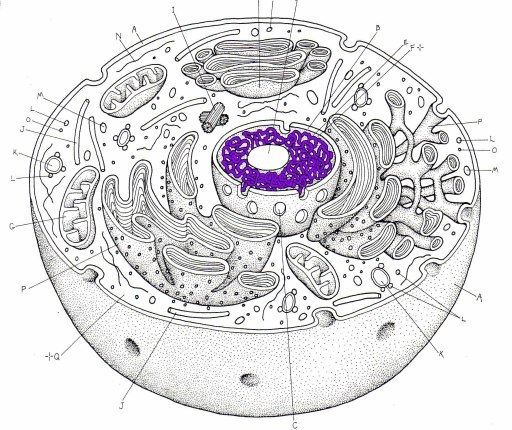
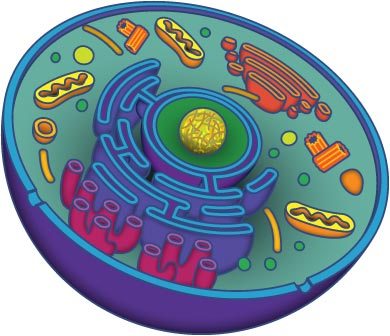
What type of cell is this?

a)

Plant

b)

Animal

c)

Prokaryote

19.

What type of cell is this?

a)

Plant

b)

Animal

c)

Prokaryote

20.

What type of cell is this?

a)

Plant

b)

Animal

c)

Prokaryote

21.
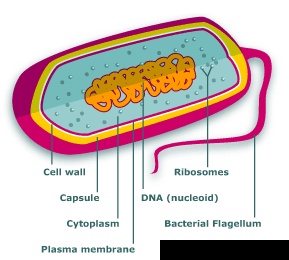
What characteristic defines this organism as prokaryotic?
a)
Ability to move
b)
Ability to respond
c)
Shape and size
d)
Lacking of membrane-bound organelles
22.

What type of cell is an animal cell?

a)

Prokaryotic

b)

Eukaryotic

23.

What type of cell is a bacterial cell?

a)

Prokaryotic

b)

Eukaryotic

24.
a rigid supporting layer that surrounds the cells of plants and some other organisms
a)
cell membrane
b)
cell wall
c)
 nucleus
d)
cytoplasm
25.
The part of the cell that makes protein.
a)
Vacuoles
b)
Ribosomes
c)
Golgi Apparatus
d)
Cytoplasm
26.
Provides support and protection for the cell, while also controlling the movement of materials in and out of the cell.
a)
Cellular Membrane
b)
Nucleus
c)
Ribosomes
d)
Vacuole
27.
This part of the cell that is used for storage.
a)
Nucleus
b)
Cell Membrane
c)
Mitochondria
d)
Vacuole
28.
This is the control center of the cell.
a)
Nucleus
b)
Nuclear Membrane
c)
Chloroplasts
d)
Golgi Aparatus
29.

a protective structure that encloses a cell and controls what enters and leaves the cell

a)

cell membrane

b)

cytoplasm

c)

cell wall

d)

mitochondria

30.

the substance that makes up the instructions for building a cell’s components and for carrying out its life functions

a)

DNA

b)

ribosome

c)

nucleus

d)

golgi body

31.
Which of the following, found ONLY in plant cells, provides structure?
a)
cell wall
b)
chloroplast
c)
mitochondria
d)
vacuole
32.
Which two organelles are not present in animal cells? Choose the best answer. 
a)
Vacuole and Nucleus
b)
Cell wall and Cell Membrane
c)
Cytoplasm and Mitochondria 
d)
Cell Wall and Chloroplast
33.

Muscle cells contain more mitochondria than skin cells, suggest why?

a)

Muscle cells need less energy

b)

they are smaller cells

c)

they are bigger cells

d)

Muscle cells need more energy

34.

is this a Animal or plant cell?

a)

Animal

b)

Plant

35.

the substance that makes up the instructions for building a cell’s components and for carrying out its life functions

a)

DNA

b)

ribosome

c)

nucleus

d)

golgi body

36.
An animal's brain controls many of the animal's activities. Which organelle has the same function in a cell?  
a)
the cell membrane
b)
a vacuole
c)
a mitochondrion
d)
the nucleus
37.
The picture illustrates a
a)
Prokaryotic Plant Cell
b)
Prokaryotic Animal Cell
c)
Eukaryotic Plant Cell
d)
Eukaryotic Animal Cell
38.
releases energy for cells to use, most common in animal cells
a)
mitochondria
b)
ribosomes
c)
lysosomes
d)
nucleolus
39.
Which viral life cycle allows viral genetic material to lay dormant while the host cell reproduces?
a)
lytic
b)
mitosis
c)
lysogenic
d)
S phase
40.
What do viruses need to reproduce?
a)
they need genetic material
b)
They need a host cell
c)
They need  bacteria
d)
They need insulin
41.
The projections on the surface of this virus allow the virus to —
a)
move inside a host cell
b)
 attach to a host cell
c)
control a host cell’s DNA
d)
signal other viruses to infect a host cell
42.
What part of a virus is the protein capsule that houses the genetic material (DNA/RNA)?
a)
tail
b)
nucleus
c)
capsid
d)
glycoprotein
43.
Which viral life cycle kills its host cell by lysing?
a)
lytic
b)
mitosis
c)
lysogenic
d)
S phase
44.
Which viral life cycle allows viral genetic material to lay dormant while the host cell reproduces?
a)
lytic
b)
mitosis
c)
lysogenic
d)
S phase
45.
Viruses are...
a)
prokaryotic
b)
eukaryotic
c)
non-living
d)
endospores
46.
What is an example of a prokaryotic cell?
a)
virus
b)
bacteria
c)
plant cell
d)
animal cell
47.
What kind of cell is this?
a)
Eukaryotic
b)
Prokaryotic
48.

What kind of cell is this?

a)

animal

b)

Plant

49.

Which type of cell is this?

a)

Prokaryotic

b)

Eukaryotic

50.

Prokaryotic cells are very simple (sencilla).

a)

true

b)

false

51.

Eukaryotic cells are larger ( mas grande) and more complex ( mas compleja).

a)

true

b)

false

52.

True or false? This cell has DNA.

a)

true

b)

false

53.

los glóbulos blancos matan las bacterias en nuestro cuerpo

True or false? White blood cells kill bacteria in our bodies.

a)

true

b)

false

54.

Bacteria are eukaryotic cells. True or false?

a)

True

b)

False

55.

Unicellular means

a)

single-celled

b)

multi-celled

56.

We view (see) cells with a ___________.

a)

balance

b)

telescope

c)

microscope

57.
Which type of cell is bigger?
a)
Prokaryotic
b)
Eukaryotic 
58.

True or false? This cell has a nucleus.

a)

true

b)

false

59.

This cell has a nucleus.

a)

yes

b)

no

60.
Viruses are cells. 
a)
True 
b)
False
61.

Virus or Bacteria?

a)

bacteria

b)

virus

62.

Which is bigger?

a)

bacteria

b)

virus

63.

Viruses are living. They do not have cells. (Ellas no tienen celulas)

a)

yes

b)

no

64.

Plant or animal cell?

a)

plant

b)

animal

65.

Is it a eukaryotic or prokaryotic cell?

a)

prokaryotic

b)

eukaryotic

66.
Viruses are...
a)
prokaryotic
b)
eukaryotic
c)
non-living
d)
endospores
67.
How does a virus cause a person to develop the common cold?
a)
invades the host cell to reproduce
b)
removes energy from the host cell
c)
produces toxins in the host cell
d)
protects the host cell from bacteria
68.
What do viruses have in common with living cells? They both...
a)
store genetic information
b)
have chloroplasts
c)
use glucose for cellular respiration
d)
have endoplasmic reticulum
69.
Antibiotics kill viruses
a)
True
b)
False
70.
How could you describe the size of a virus?
a)
Smaller than bacteria
b)
Larger than a parasite
c)
About the size of a dime
d)
Smaller than a proton
71.
What part of the virus is number 1?
a)
Capsid
b)
DNA
c)
Surface Markers
d)
Envelope
72.
What part of the virus is number 3?
a)
Capsid
b)
DNA
c)
Surface Markers
d)
Envelope
73.
What is the first step of the virus reproduction cycle?
a)
The viruses genetic material (DNA) starts to take over the functions of the cell
b)
The host cell bursts open, releasing the new viruses
c)
The virus injects its genetic material into the cell
d)
A virus attaches to the surface of a host cell
74.
Which of the following helps prevent the spread of infectious diseases?
a)
Surgery
b)
Medication
c)
Vaccines
75.

The flu is caused by a virus.

a)

true

b)

false

76.

Viruses can affect which types of organisms? SELECT ALL

a)

plants

b)

animals

c)

bacteria

d)

bricks

77.
What part of a virus is the protein capsule that houses the genetic material (DNA/RNA)?
a)
tail
b)
nucleus
c)
capsid
d)
glycoprotein
78.
What do viruses need to reproduce?
a)
they need genetic material
b)
They need a host cell
c)
They need  bacteria
d)
They need insulin
79.

Scientists can determine relatedness among organisms by comparing partial amino acid sequences. The table shows four partial amino acid sequences from four organisms.

a)

Organism 1

b)

Organism 2

c)

Organism 3

d)

Organism 4

80.

A student used a microscope to study four members of the phylum Ciliophora. Members of this phylum move when propelled by hundreds of tiny cilia.

a)

families

b)

species

c)

kingdoms

d)

orders

81.

The white cattail is a hybrid species of plant that is a result of the cross between the broad-leaved cattail and the narrow-leaved cattail. Over time, the white cattail has established itself in the wetlands of Midwestern states.


Which of these explains the success of the white cattail?

a)

Favorable genes from parental generations provide advantageous characteristics to the hybrid species.

b)

Hybridization produces offspring traits that allow different species to survive in extreme environments.

c)

Inherited traits passed on from parental generations make hybrid species more susceptible to disease.

d)

Hybrid species display more adaptations due to their reduced genetic diversity.

82.
Adaptations that result from natural selection are expected to increase the fitness of an organism. In terms of natural selection, which of the following best describes fitness?
a)
Being able to escape from predators
b)
Being among the strongest organisms in a population
c)
Being able to survive, find a mate, and produce offspring
d)
Being able to survive long enough to reach the adult stage
83.

The relationships among different orders of millipedes are shown in the cladogram.

a)

Stemmiulida is more closely related to Merocheta than Penicillata is to Merocheta.

b)

Spirostreptida is more closely related to Glomerida than Sphaerotheriida is to Glomerida

c)

Polyzoniida is more closely related to Glomeridesmida than Sphaerotheriida is to Glomeridesmida.

d)

Merocheta is more closely related to Glomeridesmida than Glomerida is to Glomeridesmida.

84.

The image shows part of the humerus bone in different genera of primates.

a)

The primates lived in similar environments.

b)

The primates shared a common ancestor.

c)

The primates interbreed with similar organisms in a population.

d)

The primates had diets that consisted of similar types of foods.

85.

A new predator of rabbits has been introduced within an ecosystem. This new predator runs faster than the native predators of rabbits.


Which statement describes what will most likely occur in the rabbit population due to the introduction of the predator?

a)

The rabbits will mutate their genes and express genes that increase their speed.

b)

Slower rabbits will develop stronger legs and pass this trait to their offspring.

c)

Rabbits will mate and produce offspring with a different species that has faster runners.

d)

Faster rabbits will survive and reproduce increasing the average speed of the rabbit population.

86.

A dichotomous key for identifying fish is shown.

a)

Glassy sweeper and squirrelfish

b)

Glasseye snapper and spotted eagle ray

c)

Spotted goatfish and bandtail puffer

d)

Peacock flounder and glassy sweeper

87.

The aye-aye lemur is a mammal that feeds mostly on insect larvae that live inside trees. The aye-aye lemur has a specialized middle finger that is long and thin. The aye-aye lemur moves along a tree branch and taps the branch with its specialized finger. When the aye-aye lemur hears a difference in the echo, it will tear open the bark with its teeth until the insect tunnel is exposed. The aye-aye lemur then uses its specialized finger to reach the insect larvae and remove it.

a)

Limited availability of water

b)

Competing for mates

c)

Large numbers of natural predators

d)

Food sources that are hard to find

88.
Many tree frog populations are threatened due to habitat loss. In an effort to promote conservation, tree frogs may be bred in captivity. A zoo acquired male and female tree frogs from two different populations. In the zoo, the tree frogs were able to successfully mate within their own population, but breeding attempts between the two populations were unsuccessful. Based on this information, which statement correctly describes the relationship between the two populations of tree frogs?
a)
They are in the same species but different kingdoms.
b)
They are in the same class but different phyla.
c)
They are in the same family but different orders.
d)
They are in the same genus but different species.
89.

This cladogram shows the evolutionary relationships among some mammals based on homologous structures.

a)

Hippopotamuses are more closely related to cows than to javelinas.

b)

Toothed whales are more closely related to mouse deer than to hippopotamuses.

c)

Javelinas and pigs are more closely related than baleen whales and toothed whales.

d)

Cows and mouse deer are more closely related than javelinas and pigs.

90.
The illustration provides a comparison of three different organisms during their embryological development.
At this stage, it can be concluded that the pig and human are more closely related to each other than they are to the fish by the presence of which of the following features?
a)
spine and tail
b)
gill slits and spine
c)
ears and limbs
d)
eyes and ears
91.
Below is the illustration of the bones of the forelimbs (wing or arm) of three animals. While only birds and bats have wings, the underlying skeletal structure is more similar in bats and humans.
What is the most reasonable conclusion one can draw from a comparison of these structures?
a)
Birds and bats are closely related to each other, while humans are unrelated to both.
b)
The common ancestor of birds and bats must have had wings and flown.
c)
Humans live in habitats very different from the habitats of both birds and bats.
d)
Humans and bats share a closer evolutionary history with each other than with birds.
92.
The diagram below represents a population of organisms and the variation in that population. Individuals vary in how well they can resist a certain disease and survive to reproduce. For several generations, this disease has killed off many individuals in the population.
Which of the following best shows what a sample of the population would look like after many years?
a)
A
b)
B
c)
C
d)
D
93.
A population of a certain kind of fish is introduced into a new habitat. These fish have variations in color from light to dark. Because of the lighting conditions and predators in this new habitat, light-colored fish survive better near the surface, and dark-colored fish survive better near the bottom.
Natural selection would most likely produce which change after many generations of these fish living in this environment?
a)
All the fish would become more similar in color—something exactly between light-colored and dark-colored.
b)
None of the fish would be able to survive because the new habitat is not suited to any of them.
c)
There would be two populations of fish: light-colored fish near the surface and dark-colored fish near the bottom.
d)
The fish would become smaller over time so that they can more easily defend themselves from predators.
94.
Below is a table showing examples of organisms from different groups.
According to this information, the house cat is most closely related to which animal?
a)
Wolf
b)
Mockingbird
c)
Butterfly
d)
Lynx
95.
An illustration of two insects is below.
Which of the paired statements could be used to distinguish the insects, using a dichotomous key?
a)
six legs, eight legs
b)
large hind legs, small hind legs
c)
two pairs of spots on wing cover, three pairs of spots on wing cover
d)
antennae absent, antennae present
96.
A dichotomous key for insects is shown below. To what order does an insect with two pairs of scaly wings belong?
a)
Coleoptera
b)
Diptera
c)
Heteroptera
d)
Lepidoptera
97.
The diagram provided shows a breakdown of the genomes of humans, mice, chickens, and zebra fish. The numbers in overlapping regions indicate homologous sequences, similar genes that indicate shared ancestry. The data in the diagram best supports which of the following conclusions?
a)
There are no gene sequences that are common to all these animals.
b)
The common ancestor of the mouse and the chicken lived very recently.
c)
The mouse and the zebrafish share the closest relationship of all animals shown.
d)
Humans are more closely related to zebrafish than to chickens.
98.
An analysis of DNA and RNA sequences can be used to classify organisms. A dendrogram/evolutionary tree, such as the one shown below, is based on molecular data. It can be used to represent evolutionary relationships within a group of organisms that are hypothesized to have descended from a common ancestor.
Which statement is best supported by the information in this dendrogram/evolutionary tree? 
a)
Lesser pandas are more genetically similar to giant pandas than they are to raccoons.
b)
Brown bears are more genetically similar to giant pandas than they are to sun bears.
c)
Lesser pandas are more genetically similar to raccoons than they are to giant pandas.
d)
The bear species are all more genetically similar to dogs than they are to giant pandas.
99.
Three species of lizards of the genus Gallotia are found on the Canary Islands, a chain of seven volcanic islands off the west coast of Africa. The easternmost island, Lanzarote, is the oldest, while the westernmost island, El Hierro, is the youngest. The distribution of lizard species is shown on the map below.
Which statement about the ancestry of the lizards from the genus Gallotia is best supported by this information? 
a)
The common ancestor of the lizards first colonized the island of El Hierro.
b)
The ancestors of each species came from different continents at different times.
c)
The common ancestor of the lizards probably came from Africa.
d)
The ancestors of each species evolved in Spain and were brought to the islands at the same time.
100.
The illustration provides a comparison of three different organisms during their embryological development.
At this stage, it can be concluded that the pig and human are more closely related to each other than they are to the fish by the presence of which of the following features?
a)
spine and tail
b)
gill slits and spine
c)
ears and limbs
d)
eyes and ears
101.
Below is the illustration of the bones of the forelimbs (wing or arm) of three animals. While only birds and bats have wings, the underlying skeletal structure is more similar in bats and humans.
What is the most reasonable conclusion one can draw from a comparison of these structures?
a)
Birds and bats are closely related to each other, while humans are unrelated to both.
b)
The common ancestor of birds and bats must have had wings and flown.
c)
Humans live in habitats very different from the habitats of both birds and bats.
d)
Humans and bats share a closer evolutionary history with each other than with birds.
102.
The diagram below represents a population of organisms and the variation in that population. Individuals vary in how well they can resist a certain disease and survive to reproduce. For several generations, this disease has killed off many individuals in the population.
Which of the following best shows what a sample of the population would look like after many years?
a)
A
b)
B
c)
C
d)
D
103.
A population of a certain kind of fish is introduced into a new habitat. These fish have variations in color from light to dark. Because of the lighting conditions and predators in this new habitat, light-colored fish survive better near the surface, and dark-colored fish survive better near the bottom.
Natural selection would most likely produce which change after many generations of these fish living in this environment?
a)
All the fish would become more similar in color—something exactly between light-colored and dark-colored.
b)
None of the fish would be able to survive because the new habitat is not suited to any of them.
c)
There would be two populations of fish: light-colored fish near the surface and dark-colored fish near the bottom.
d)
The fish would become smaller over time so that they can more easily defend themselves from predators.
104.
Below is a table showing examples of organisms from different groups.
According to this information, the house cat is most closely related to which animal?
a)
Wolf
b)
Mockingbird
c)
Butterfly
d)
Lynx
105.
An illustration of two insects is below.
Which of the paired statements could be used to distinguish the insects, using a dichotomous key?
a)
six legs, eight legs
b)
large hind legs, small hind legs
c)
two pairs of spots on wing cover, three pairs of spots on wing cover
d)
antennae absent, antennae present
106.
A dichotomous key for insects is shown below. To what order does an insect with two pairs of scaly wings belong?
a)
Coleoptera
b)
Diptera
c)
Heteroptera
d)
Lepidoptera
107.
The diagram provided shows a breakdown of the genomes of humans, mice, chickens, and zebra fish. The numbers in overlapping regions indicate homologous sequences, similar genes that indicate shared ancestry. The data in the diagram best supports which of the following conclusions?
a)
There are no gene sequences that are common to all these animals.
b)
The common ancestor of the mouse and the chicken lived very recently.
c)
The mouse and the zebrafish share the closest relationship of all animals shown.
d)
Humans are more closely related to zebrafish than to chickens.
108.
An analysis of DNA and RNA sequences can be used to classify organisms. A dendrogram/evolutionary tree, such as the one shown below, is based on molecular data. It can be used to represent evolutionary relationships within a group of organisms that are hypothesized to have descended from a common ancestor.
Which statement is best supported by the information in this dendrogram/evolutionary tree? 
a)
Lesser pandas are more genetically similar to giant pandas than they are to raccoons.
b)
Brown bears are more genetically similar to giant pandas than they are to sun bears.
c)
Lesser pandas are more genetically similar to raccoons than they are to giant pandas.
d)
The bear species are all more genetically similar to dogs than they are to giant pandas.
109.
Three species of lizards of the genus Gallotia are found on the Canary Islands, a chain of seven volcanic islands off the west coast of Africa. The easternmost island, Lanzarote, is the oldest, while the westernmost island, El Hierro, is the youngest. The distribution of lizard species is shown on the map below.
Which statement about the ancestry of the lizards from the genus Gallotia is best supported by this information? 
a)
The common ancestor of the lizards first colonized the island of El Hierro.
b)
The ancestors of each species came from different continents at different times.
c)
The common ancestor of the lizards probably came from Africa.
d)
The ancestors of each species evolved in Spain and were brought to the islands at the same time.
110.
The diagram above shows a model of species divergence among some primates. If this model is correct, the greatest genetic differences would be found in the DNA sequences of which two species?
a)
Tarsius bancanus and Cebus albifrons
b)
Macaca sylvanus and Macaca mulatta
c)
Hylobates lar and Pongo pygmaeus
d)
Pan troglodytes and Lemur catta
111.
Zoogeographic regions are characterized by the presence of specific groups of animals. These regions are determined by the taxonomic or phylogenetic relationships of animals. The map shows the zoogeographic regions proposed by the naturalist Alfred Russel Wallace in 1876.
The similarities of organisms in which two areas numbered above provide the best evidence for common ancestry between the organisms in both locations?
a)
1 and 2
b)
3 and 4
c)
5 and 6
d)
7 and 8
112.
The limbs of several organisms are shown in the illustrations below. Scientists sometimes compare the limbs of these organisms to look for evidence of common ancestry.

These limbs provide evidence of common ancestry because they —
a)
have the same basic structure
b)
perform the same function
c)
are the same size
d)
are parts of mammals
113.
The opossum, which is native to North America, and the kangaroo, which is native to Australia, are marsupials.

The fact that both these mammals incubate their immature offspring in a pouch provides evidence that they —
a)
belong to the same species
b)
must range great distances to eat
c)
have very similar skeletal structures
d)
are descended from a common ancestor
114.
Genome maps provide the DNA sequences of chromosomes. Some scientists have compared the genome maps of a hedgehog and a sloth. What do these genome maps allow the scientists to determine?
a)
The color patterns of the offspring of each species
b)
How much the size ranges of the two species differ
c)
The methods of protein synthesis that each species uses
d)
How closely related the two species are to each other
115.
An analysis of DNA and RNA sequences can be used to classify organisms. A dendrogram, such as the one shown below, is based on molecular data. It can be used to represent evolutionary relationships within a group of organisms that are hypothesized to have descended from a common ancestor.

Which statement is best supported by the information in this dendrogram?
a)
Lesser pandas are more genetically similar to giant pandas than they are to raccoons.
b)
Brown bears are more genetically similar to giant pandas than they are to sun bears.
c)
Lesser pandas are more genetically similar to raccoons than they are to giant pandas.
d)
The bear species are all more genetically similar to dogs than they are to giant pandas.
116.
Three species of lizards of the genus Gallotia are found on the Canary Islands, a chain of seven volcanic islands off the west coast of Africa. The easternmost island, Lanzarote, is the oldest, while the westernmost island, El Hierro, is the youngest. The distribution of lizard species is shown on the map below.

Which statement about the ancestry of the lizards from the genus Gallotia is best supported by this information?
a)
The common ancestor of the lizards first colonized the island of El Hierro
b)
The ancestors of each species came from different continents at different times
c)
The common ancestor of the lizards probably came from Africa
d)
The ancestors of each species evolved in Spain and were brought to the islands at the same time
117.

The gray squirrel, Eastern fox squirrel and red squirrel are all different species of squirrels. Why is having a scientific name for each species of an organism important?

a)

To prevent existing named organisms from having their names changed as they become extinct

b)

To keep the classification system from being altered as new organisms are discovered

c)

To allow organisms to be placed in many classification levels at the same time

d)

To standardize the naming and organization of organisms to avoid confusion

118.
a)

The standardized name differentiates mountain lions from pumas

b)

The standardized name is less descriptive of the animal that has been observed

c)

Communication with other scientists about mountain lions will be reduced

d)

All scientists will be using the same name for mountain lions

119.

a)

Stemmiulida is more closely related to Merocheta than Penicillata is to Merocheta

b)

Spirostreptida is more closely related to Glomerida than Sphaerotheriida is to Glomerida

c)

Polizoniida is more closely related to Glomeridesmida than Sphaerotheriida is to Glomeridesmida.

d)

Merocheta is more closely related to Glomeridesmida than Glomerida is to Glomeridesmida

120.

a)

Needle-like straight leaves that are mostly over 25cm long and found in clusters of three; no thorns on cones

b)

Flattened and scale-like leaves that are mostly over 25cm long; soft and leathery cones

c)

Needle-like straight leaves with a length of 25cm that are mostly found in clusters of 5; thorny cone

d)

Leaves with a length of 25cm that are found in clusters of more than 5; no thorns on cones

121.

a)
b)
c)
d)
122.

a)

Fur

b)

Claws or nails

c)

Lungs

d)

Jaws

123.

a)

Organisms 1 and 2

b)

Organisms 3 and 4

c)

Organisms 1 and 4

d)

Organisms 2 and 3

124.

a)

Anthropoda

b)

Annelida

c)

Mollusca

d)

Platyhelminthes

125.

a)
b)
c)
d)
126.

a)

Heterotrophic

b)

Mobile

c)

Prokaryotic

d)

Multicellular

127.

a)
b)
c)
d)
128.

Having a standard taxonomic system benefits the scientific community by allowing scientists

from all over the world to do which of the following?

a)

Have a common system for the classification of locations containing fossils

b)

Use a similar system to classify the impact of removing species from ecosystems

c)

Have a common understanding in the classification of organisms

d)

Understand how other scientists classify predator–prey relationships

129.

Some organisms have genes that improve their ability to survive and reproduce. If the genes

also help their offspring survive and reproduce, then which of the following will most likely

increase?

a)

The frequency of the genes in one individual

b)

The frequency of the genes in the population

c)

The number of genes in one chromosome

d)

The number of genes in the species

130.

The concept of gene flow is demonstrated when a cow is driven off from its herd, joins

another herd, and reproduces. When the cow contributes to the gene pool of the new herd,

which of these most likely increases?

a)

Natural selection

b)

Genetic variation

c)

Environmental fitness

d)

Reproductive mutations

131.

Zoogeographic regions are characterized by the presence of specific groups of animals. These

regions are determined by the taxonomic or phylogenetic relationships of animals. The map

shows the zoogeographic regions proposed by the naturalist Alfred Russel Wallace in 1876.The similarities of organisms in which two areas numbered above provide the best evidence

for common ancestry between the organisms in both locations?

a)

1 and 2

b)

3 and 4

c)

5 and 6

d)

7 and 8

132.

Arthropods are joint-legged animals. Spiders, crabs, pill bugs, centipedes, and millipedes

are examples of the many types of arthropods. Which of these arthropods are most closely

related?

a)

Arthropods of the same family

b)

Arthropods of the same class

c)

Arthropods of the same genus

d)

Arthropods of the same species

133.

Bactrian camels, dromedaries, llamas, and alpacas are all members of the same taxonomic family, Camelidae. Members of this family all have two toes, no hooves, true canine teeth, and a split upper lip. The family Camelidae originated in North America. The physical features of animals in this family and the family’s geographical origin provide evidence that all these animals —

a)

live in the same type of ecosystem

b)

have slowly evolved to become herbivores

c)

have a common ancestor

d)

exchanged DNA at some point in the past

134.

A prey population consists of individuals with a variety of running speeds. The adaptation that allows some of these animals to run fast would be an example of natural selection if it helps them —

a)

survive and undergo mutations in their DNA

b)

lower the mortality rates of the population

c)

produce offspring that run at average speeds

d)

reproduce and increase the frequency of their genes in the population

135.

Scientists can determine relatedness among organisms by comparing partial amino acid

sequences. The table shows four partial amino acid sequences from four organisms.Which organism is the LEAST related to the other three organisms?

a)

Organism 1

b)

Organism 2

c)

Organism 3

d)

Organism 4

136.

A student used a microscope to study four members of the phylum Ciliophora. Members of

this phylum move when propelled by hundreds of tiny cilia.Although these organisms belong to the same phylum, they are classified as different —

a)

families

b)

species

c)

kingdoms

d)

orders

137.

The gray squirrel, Eastern fox squirrel, and red squirrel are all different species of squirrels.

Why is having a scientific name for each species of an organism important?

a)

To prevent existing named organisms from having their names changed as they become

extinct

b)

To keep the classification system from being altered as new organisms are discovered

c)

To allow organisms to be placed in many classification levels at the same time

d)

To standardize the naming and organization of organisms to avoid confusion

138.

The diagram shows light- and dark-colored beetles that live on a tree.Which result is most likely to occur to the beetle population due to predation over time?

a)

The number of light-colored beetles in the population will increase.

b)

There will be more dark-colored beetles than light-colored beetles.

c)

The number of light-colored beetles will decrease.

d)

The dark-colored beetles will move to a different type of tree.

139.

Niles Eldredge and Stephen Jay Gould researched the lenses of the eyes of fossil trilobites of

different species. In 1972 they published a paper in which they described the tendency of a

species to remain the same until a sudden change in the environment causes a new related

species to appear.

Which hypothesis was most challenged by the work of Eldredge and Gould?

a)

Redi’s hypothesis that spontaneous generation does not occur

b)

Haeckel’s hypothesis that embryological development mimics the evolution of species

c)

Wallace’s hypothesis that geography affects the distribution of species

d)

Darwin’s hypothesis that the development of species is a slow, gradual process

140.

The relationships among different orders of millipedes are shown in the cladogram.Based on this cladogram, which statement best describes relationships among millipede

orders?

a)

Stemmiulida is more closely related to Merocheta than Penicillata is to Merocheta.

b)

Spirostreptida is more closely related to Glomerida than Sphaerotheriida is to Glomerida.

c)

Polyzoniida is more closely related to Glomeridesmida than Sphaerotheriida is to

Glomeridesmida.

d)

Merocheta is more closely related to Glomeridesmida than Glomerida is to

Glomeridesmida.

141.

What would the scientific name of this organism be?

Kingdom: Animalia

Phylum: Chordata

Class: Mammalia

Order: Carnivora

Family:Canidae

Genus: Canis

species: mesomelas

a)

Mammalia carnivora

b)

Canidae mesomelas

c)

Canis mesomelas

d)

Animalia chordata

142.

What would the scientific name of this organism be?

Kingdom: Animalia

Phylum: Chordata

Class: Reptilia

Order: Crocodila

Family: Alligatoridae

Genus: Alligator

species: mississippiensis

a)

alligator Mississippiensis

b)

Crocodila chordata

c)

Alligator mississippiensis

d)

Reptilia crocodila

143.

What kingdom would a human belong to?

a)

Plant

b)

Animalia

c)

Protist

d)

Fungi

144.

Which taxon comes next? Domain... Kingdom... Phylum

a)

Order

b)

Genus

c)

Class

d)

Family

145.

Why is the most specific taxonomy category?

a)

Kingdom

b)

Domain

c)

Species

d)

Order

146.

The smallest classification group consists of:

a)

Organisms that are very different

b)

Organisms that do not look the same

c)

Organisms that are very similar

147.

Binomial Nomenclature takes which two taxons to name a species?

a)

Genus and Kingdom

b)

Phylum and Class

c)

Family and class

d)

Genus and species