
 Worksheets
7th Grade Science Exam
Total questions: 50
Worksheet time: 50mins
Biomes are:
Ecosystems linked up to form larger areas with similar characteristics.
Larger parts of land and water to make an ecosystem.
Ecosystems linked up to form larger areas with different characteristics.
Desert, Rain Forest and Prairie are examples of:
Biomes
Ecosystems
Environments
An organism that can make its own food is called a
consumer
producer
decomposer
scavenger
In which process do producers use carbon from carbon dioxide to produce other carbon-containing molecules?
nitrogen cycle
precipitation
water cycle
photosynthesis
A group of land ecosystems with similar climates and organisms is called a(n)
energy pyramid
climate
biome
food web
Ponds and rivers are two types of
marine ecosystems
freshwater ecosystems
rainforest biomes
estuary ecosystems
Which biome is extremely cold and dry?
desert
tundra
grasslands
mountains
Bacteria and fungi are known as ____________________ because they break down the remains of organisms.
producers
first-level consumers
second-level consumers
decomposers
Certain bacteria change nitrogen gas into a usable form in a process called _________________________.
carbon cycle
nitrogen cycle
nitrogen fixation
photosynthesis
Which biome is typically populated by many grasses, along with a few shrubs and trees?
rainforest
grassland
tundra
desert
What do we call the organisms that capture the energy of sunlight to make food
producers
consumers
decomposers
scavengers

Which number represents a group of organisms that break down the wastes and remains of other organisms?
1
3
5
7

Use the organisms listed from this ecosystem to construct a food chain. Begin your food chain with the producer.
bear < fish < insect < grass
grass > insect > fish > bear
bear > fish > insect > grass
grass < insect < fish < bear
Consumers that only eat other consumers
carnivores
omnivores
herbivores
tropovores
Consumers that eat producers and consumers
omnivores
detritivores
herbivores
carnivores
The beginning level of any food chain or energy pyramid is the
producers
decomposers
scavengers
primary consumers
Which biome is Mississippi a part of?
deciduous forest
boreal forest
temperate rain forest
coniferous forest
NItrogen-fixing ___________ help convert nitrogen gas found in the atmosphere into useful forms for plants.
bacteria
pathogens
phagocytes
antibodies
What is an ecosystem?
A large area of land
A community of living things in an area
A community of living and non-living things in an area
A system used to improve the economy

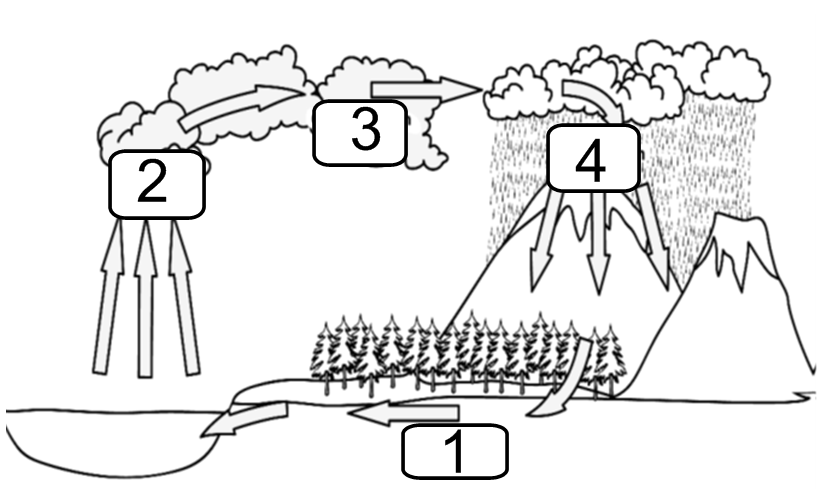

What would happen if the Sun is removed from the water cycle?
The water cycle would not include precipitation but would continue with groundwater flow.
The water cycle would no longer occur because the Sun provides the energy for evaporation and transpiration.
The water cycle would no longer occur because the Sun provides energy for the formation of clouds.
The water cycle would not include evaporation and transpiration but would continue with condensation.
Organisms that need nitrogen to survive.
only plants
only animals
only bacteria
all living things
How is nitrogen "fixed" into a usable form for plants?
Through action of bacteria only
Through lightning only
Through action of bacteria and lightning
Through photosynthesis
What process occurs when dead plant and animal matter decomposes and nitrogen is released back into the atmosphere?
Assimilation
Fixation
Ammonification
Denitrification
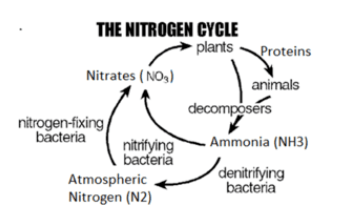
According to this diagram, plants use nitrogen to make _________________________
bacteria
animals
proteins
decomposers
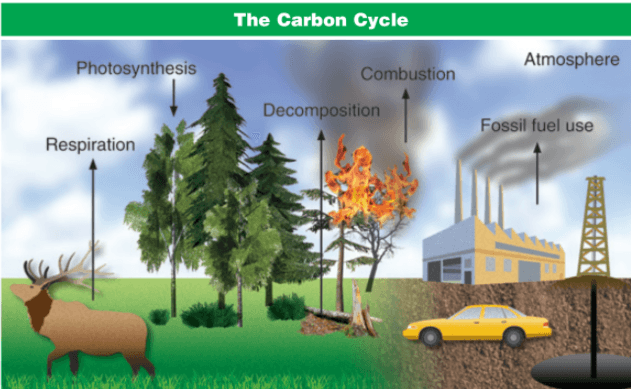
If the plant population decreased, the amount of carbon in the atmosphere would _________.
Stay the same
Increase
Decrease
oxygen is a gas produced by _____ and used by ________
plants and animals
photosynthesis and carbon dioxide
animals and plants
carbon dioxide and photosynthesis
Which gas do plants release, that humans depend on for survival?
Water
Carbon Dioxide
Oxygen
Sugar


What are the characteristics of a alto-cumulus cloud?
small, white and puffy, middle level cloud
low, puffy, produce rain
high, looks like cotton balls bunched together
fluffy clouds, flat on the bottom

