wayground logo

Free Printable Worksheets

NEW

Font size

S
M
L
XL
Worksheets

Chemistry of Biology (Topic 2-2022)

Total questions: 35

Worksheet time: 1hrs 10mins

Name
Class
Date
1.
Enzymes are considered to be 
a)
Lipids
b)
Carbohydrate
c)
Protein
d)
Nucleic Acid
2.
What is the purpose  of an enzyme?
a)
give permission for the reaction
b)
raise activation energy
c)
speed up reactions
d)
control how many reactions occur
3.
Where do substrates bind on an enzyme?
a)
voltage-gated channels
b)
surface receptor
c)
calcium channels
d)
active site
4.
What is structure A?
a)
Substrate
b)
Active site
c)
Enzyme
d)
Products
5.
What is a substance called if it speeds up a chemical reaction?
a)
reusable
b)
catalyst
c)
specific
d)
fragile
6.
What is the name for the mechanism of enzyme activity?
a)
Lock and key
b)
jigsaw puzzle
c)
hammer and nail
d)
two hands pattern
7.
The "lock and key hypothesis" attempts to explain the mechanism of?
a)
Vacuole formation
b)
Pinocytosis
c)
Sharing of electrons
d)
Enzyme specificity 
8.
The graph shows how enzymes affect reactions in cells. Which statement best summarizes the information shown in the graph?
a)
Enzymes increase the energy of the reactants.
b)
Enzymes decrease the energy level of the products.
c)
Enzyme decrease the activation energy of the reaction.
d)
Enzymes reverse the direction of the reaction.
9.
Which substrate would this enzyme catalyze?
a)
Δ
b)
σ
c)
d)
μ
10.

When people eat foods high in proteins, such as meat, eggs and cheese, the body breaks down the proteins into smaller monomers. What is the monomer of proteins?

a)

amino acids

b)

nucleic acids

c)

phospholipids

d)

carbohydrates

11.
What are the four main types of molecules found in the cells of living things?
a)
carbohydrates, lipids, nucleic acids, and proteins
b)
lipids, nutrients, nucleic acids, and carbon dioxide
c)
carbon dioxide, hydrogen, oxygen, and various salts
d)
atoms, molecules, chemical compounds, and carbohydrates
12.

What type of molecule provides immediate energy for cells?

a)

lipids

b)

proteins

c)

carbohydrates

d)

nucleic acids

13.

Animal cells have four main molecules that keep the body healthy. What type of molecule provides the instructions for making proteins and stores genetic material?

a)

lipids

b)

proteins

c)

nucleic acids

d)

carbohydrates

14.

The building blocks of nucleic acids are ____?

a)

amino acids

b)

sugars

c)

fatty acids

d)

nucleotides

15.
Which is NOT an example of a carbohydrate?
a)
bread
b)
pasta
c)
milk
d)
chicken
16.

What is the monomer of a carbohydrate?

a)

Monosaccharide

b)

Phospholipid

c)

Nucleotide

d)

Amino acids

17.

Which of the following is NOT an example of a food containing lipids?

a)

Banana

b)

Olive oil

c)

Margarine

d)

Peanut Butter

18.
What is an example of a protein?
a)
Strawberries
b)
Bread
c)
Pasta
d)
Steak
19.

A ______________ is a large molecule.

a)

Micromolecule

b)

Polymer

c)

Amino Acid

d)

Macromolecule

20.

Which macromolecule stores energy?

a)

Carbohydrates

b)

Proteins

c)

Lipids/Fats

d)

Nucleic Acids

21.

An avocado is an example of a which macromolecule?

a)

Carbohydrate

b)

Lipid/Fat

c)

Protein

d)

Nucleic Acid

22.
Nucleotides are monomers of
a)
Carbohydrates
b)
Lipids
c)
Proteins
d)
Nucleic Acids
23.
Waxes, oils and fats are examples of
a)
Carbohydrates
b)
Lipids
c)
Proteins
d)
Nucleic Acids
24.

Molecules that stick to the same type of molecules.

a)

cohesion

b)

adhesion

c)

hydrophilic

d)

hydrophobic

25.

Which of the following makes up a molecule of water?

a)

one atom of oxygen, two atoms of hydrogen

b)

one atom of hydrogen, two atoms of oxygen

c)

one atom of chlorine, one atom of sodium

d)

one atom of hydrogen, one atom of oxygen

26.

Capillary action is....

a)

adhesion

b)

cohesion

c)

change in matter (heat of fusion)

d)

both adhesion and cohesion

27.

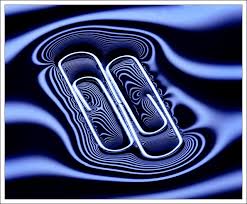
What property of water is in this picture?

a)

high specific heat

b)

surface tension

c)

greatest density at 4oC

d)

capillary action

28.
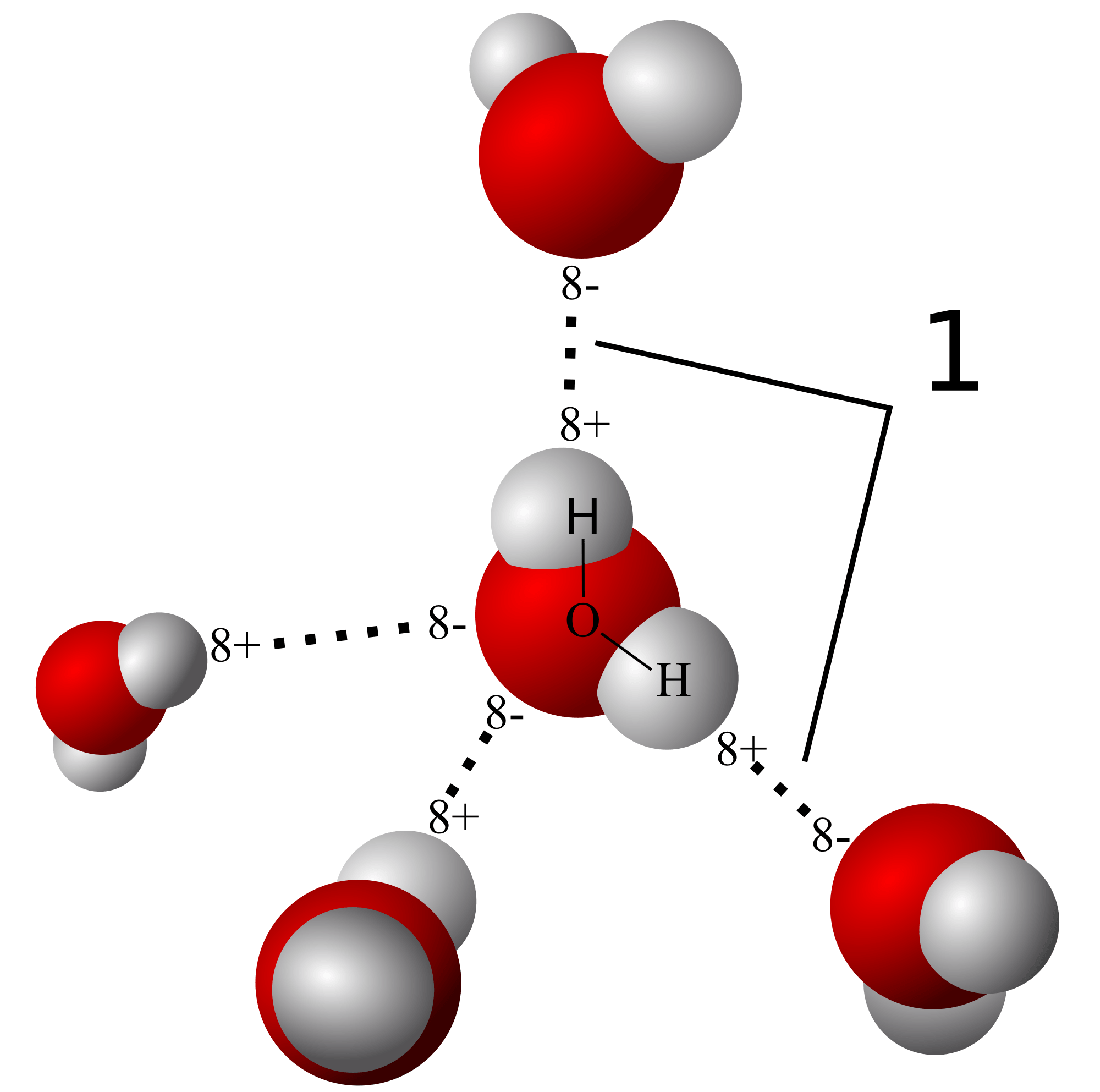
Attractions between water molecules are called
a)
Covalent bonds
b)
Ionic bonds
c)
Polar bonds
d)
Hydrogen bonds
29.

The ability of water molecules to stick to each other, creating surface tension is called:

a)

Cohesion

b)

Adhesion

c)

Insulation

d)

Ph

30.

The fact that water can stick to other substances is called:

a)

Ph

b)

Adhesion

c)

Cohesion

d)

Insulation

31.
The tightness across the surface of water that enables paper clips to float is ____________.
a)
adhesion
b)
capillary action
c)
surface tension
d)
polarity
32.

Water has + and - ends, this makes water

a)

polar

b)

nonpolar

c)

ionic

33.

If you needed to make rain shoes you would want to choose material that is

a)

hydrophilic

b)

hydrophobic

34.

When Na (+) is dissolved in water, which part of the water surrounds the ion?

a)

O

b)

H

c)

random

35.

Which of the following macromolecules is hydrophobic?

a)

proteins

b)

carbohydrates

c)

lipids

d)

nucleic acids