
Font size
 Worksheets
Chemistry Semester 1 Review
Total questions: 84
Worksheet time: 1hrs 3mins
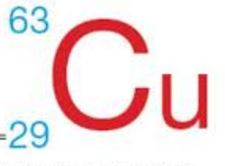

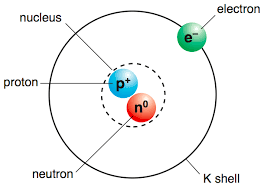

Do electrons contribute to the atomic mass of an atom?
YES of course, they are there for a reason
NO, they are useless to the atom
No, their mass is too small to contribute to the mass
YES, silly, they are the superstars of the atom

The nucleus of an atom contains which subatomic particles?
protons and electrons
protons and neutrons
electrons and neutrons
protons, electrons, and neutrons

which explanation of this notation is correct?
12 is proton #
6 tells you there are 6 neutrons
6 tells you there are 6 protons
12 is not a mass # here

An ion is
Also a compound
An atom that has gained or lost an electron
An atom that has only gained electrons
An atom where the number of protons=electrons
Cations
Gain electrons, has an overall positive charge
Lose electrons, has an overall positive charge
Lose electrons, has an overall negative charge
Gain electrons, has an overall negative charge
Anions
Gain electrons, has an overall positive charge
Lose electrons, has an overall positive charge
Lose electrons, has an overall negative charge
Gain electrons, has an overall negative charge
A Beryllium atom that has lost 2 electrons would look like
Be2+
B2-
B2+
Be2-
The cation Rb+ has
Had nothing happen to it
Gained 1 electron
Lost 1 electron
Become negative
Describe the anion S2-
Silicon that gained 2 electrons
Sulfide that gained 2 electrons
Sulfur that gained 2 electrons
Strontium that gained 2 electrons
Which of the following is true of 1 mole of Carbon and 1 mole of Oxygen?
Their molar masses are equal
They have the same atomic mass
They have the same number of subatomic particles
They contain the same number of atoms
The name of FeCl₂ is
iron chloride
iron (II) chloride
iron (I) chloride
iron dichloride
LiBr is called
lithium bromine
lithium (I) bromine
lithium bromide
lithuim (I) bromide
Name the ionic compound SnSe2
Tin diselenide
Tin (IV) Selenide
Tin selenide
Tin (II) triselenide
Which of these combinations is an ionic compound made of?
Metal and Metal
Nonmetal and Nonmetal
Metal and Nonmetal
Cation and Cation
Name the following ionic compound: BeCl2
beryllium chlorine
beryllium II chloride
beryllium chloride
beryllium dichloride
Name the following ionic compound: Cs2S
cesium sulfide
cesium sulfate
cesium II sulfate
cesium II sulfide
Which of the following combinations would need roman numerals in the name?
potassium + fluorine
beryllium + oxygen
boron + iodine
gold + oxygen
When naming ionic compounds with transition metals you need to include roman numerals to show the
Charge of the nonmetal
mass number
Charge of the metal
ionization energy of the metal
When naming a compound, which of these is written first?
Metal
Nonmetal
Anion
Cation
When naming a compound, what must the last part be?
the element with "ide" at the end
the element with the ending "ite"
the name of the element
the element with "ide" at the end, unless its a polyatomic ion
What is the name of the compound Na2(SO4)?
Sodium sulfate
Sodium sulfide
Sodium sulfite
Sodium sulfuroxide
What is the name of the compound Sc(OH)3?
Scandium (III) hydroxide
Scandium (I) hydroxide
Scandium (II) hydroxide
Scandium hydroxide
The name of the compound Ca3(PO4)2
calcium phosphate
tricalcium diphosphate
calcium phosphorus oxide
calcium phosphide
The number that tells you if an ion has lost or gained electrons
atomic number
oxidation number
mass number
electron number
If I gain electrons I become
Positive because I've added to my atom
negative because I've added electrons
same because i'm balanced
equal because now I have electrons
By looking at the formula of an ionic compound, we can determine the charge (oxidation state) of a transition metal.
True
False
The overall charge of an ionic compound ...
depends on the elements that are combined
is always positive
is always neutral
is always negative
The sharing of electrons
The sharing of protons
Which structure consists of a giant crystal lattice of cations and anions held together by strong electrostatic forces of attraction?
ionic bonding
covalent bonding
Which of the following types of bonding results in materials which have the lowest melting and boiling points?
ionic bonding
covalent bonding
An atom shares an electron with another atom in a
covalent bond
ionic bond
If a molecule is said to be "polar," that means it
has a charge (positive end and negative end)
has no charge
is a white bear

Which two statements are correct about the figure shown?
It is a covalent bond.
Hydrogen atoms loss electrons and Carbon gains the atoms.
It happens on metal and on another non-metal.
The valence electrons are shared by both atoms.
Check two general properties of a covalent bond.
Hard
Brittle/Soft
Low melting point
poor conductor of electricity when in solid state.
Covalent bonds are formed between
metals
non-metals
metal and non-metal
metalloids
When dissolved in water, the solution is a good conductor of electricity.
ionic compounds
molecular compounds
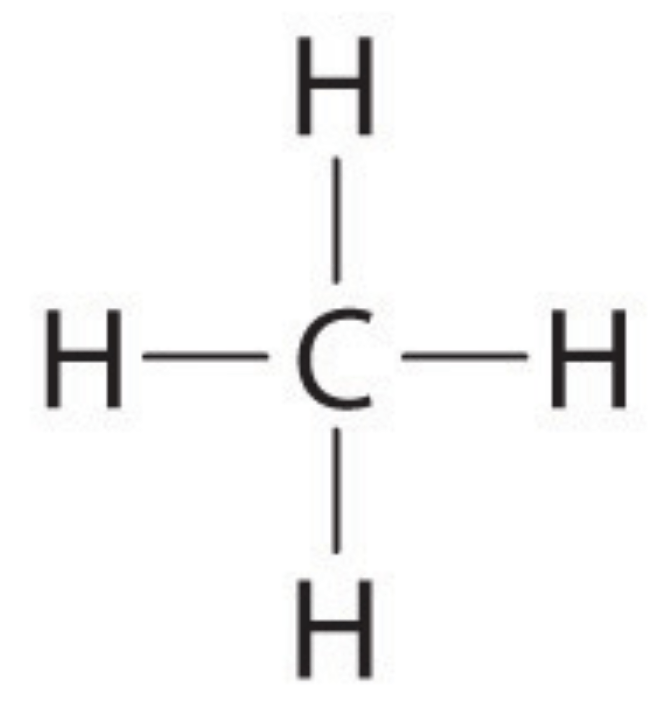
Classify the following molecule.
polar
nonpolar

Classify the following molecule.
polar
nonpolar
Zn + 2HCl --> ZnCl2 + H2
2C3H7OH +9O2 -> 6CO2 + 8H2O
2H2 + O2 --> 2H2O
Which of the following would provide the evidence that the number of atoms present before a chemical reaction is equal to the number of atoms present after the chemical reaction?
2H2O2 →2 H2O + O2
_Al +_HCl --> _H2 +_AlCl3
AgNO3 + NaCl → AgCl + NaNO3
Fe + O2 -> Fe2O3
True or false - the number of moles should be the same on the reactants and products side.
True
False
Which of these are subatomic particles
Proton
Neutron
Electron
Cell
Organelle
Identify which subatomic particles have a (non-neutral) charge
Proton
Neutron
Electron
None of these
Identify which subatomic particles have a mass of 1 amu
Proton
Neutron
Electron
None of these
Identify which subatomic particles would be found in the center/nucleus of the atom
Proton
Neutron
Electron
None of these
Identify which subatomic particle determines an atom's identity
Proton
Neutron
Electron
None of these
Identify which subatomic particle determines an atom's stability
Proton
Neutron
Electron
None of these
Identify which subatomic particle determines an atom's reactivity
Proton
Neutron
Electron
None of these
Identify which subatomic particle differs between isotopes of the same atom
Protons
Neutrons
Electrons
None of these
Identify which subatomic particle differs between ions of the same atom
Protons
Neutrons
Electrons
None of these

Identify which of the following is represented by 1.00794 in the symbol to the right
Element Name
Atomic number
Atomic mass
Atomic symbol


Match the following
Atoms of the Same Element with a different charge
Ion
A positively charged atom
Cation
A negatively charged atom
Anion
Atoms of the same element with a different mass
Isotope
If I have questions
I ask
In Element Notation the element name is written followed by the...
Atomic Number
Mass Number
Number of Electrons
Charge

In Symbol Notation the number on the top left of the symbol is the...
Atomic Number
Mass Number
Number of Electrons
Charge
In Symbol Notation the number on the bottom left of the symbol is the...
Atomic Number
Mass Number
Number of Neutrons
Charge
The mass of Atoms of the same element will always be the same
True
False
The Number of Protons and Electrons will always be the same as the atomic number
True
False
The Number of Protons and Electrons will always be the same as the atomic number in a Neutral atom
True
False
Match the following
Determines the identify of the atom
Proton
Determines the reactivity of the atom
Electron
Determines the stability of the atom
Neutron

