
 Worksheets
AP Physics 2 Midterm Review
Total questions: 88
Worksheet time: 22hrs 0mins
A system absorbs 100 J of heat and does 200 J of work on a piston. What is the change in internal energy?
-100 J
-300 J
100 J
300 J
Which of these units is the equivalent of a Pascal?
N*m2
N/m2
N+m2
N-m2
A gas at 20Pa expands a container from 10m3 to 20m3. How much work is done by the gas?
-400 J
350 J
600 kJ
-200 J
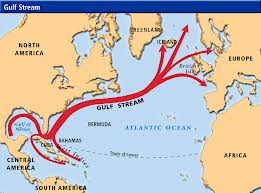
The Gulf Stream is a current that brings warm ocean water from the south to the north is which form of thermal transfer?
conduction
convection
radiation
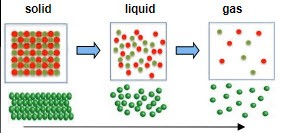
Entropy increases from solid, liquid, to gas. Why?
Molecular disorder increases
Molecular randomness decreases
Molecules are more energetic
Molecules are more reactive

When thermal energy is added to a substance, the substance's particles move:
More rapidly at an increased distance from each other.
More rapidly with less distance between each other.
More slowly with a greater distance between each other.
More slowly with a reduced distance between each other.

One mole of an ideal gas is taken through a closed cycle represented by this PV diagram. If going from point 1 to 2 is isothermal, what is true about the change in internal energy and heat going from point 2 to 3?
ΔU = 0, Q > 0
ΔU > 0, Q > 0
ΔU < 0, Q < 0
ΔU < 0, Q > 0

The change of state of an ideal gas is represented on the PV diagram shown here. What is true about the work done for each section? Choose all that are correct!
The work is equal for all cycles
Work for 1→2 = Work for 2→3
No work is done for 1→2 or 3→4
Work for 2→3 is 3 times larger than 4→1
Find the temperaure of 2 moles of an ideal gas which is at a pressure of 10 kPa and has a volume of 0.5 m3.
300 K
90 K
300 ºC
600 K

What is the thermodynamic cycle from point 3→1 in the diagram above?
isobaric
isothermal
isochoric
isometric

The PV graph for one mole of an ideal gas is shown. Find the temperature at point A.
100 K
4000 K
2,500,000 K
481 K

The PV graph for 1 mole of an ideal gas is shown. Find the total work done in a complete cycle (A→B→C→A).
0 J
1500 J
6000 J
3000 J

The PV Graph for 1 mole of an ideal gas is shown. During which cycle must heat be added to the gas (+Q)?
A→B
B→C
C→A
none of the above
What is the change in internal energy of a gas whose temperature has not changed?
0 J
1000 J
depend on the heat added and work done
none of the above
Which of the following statements is incorrect?
Two objects with the same type of charge repel each other.
Two objects with opposite types of charge attract each other.
Two objects made of different materials rubbed against each other acquire the same type of charge.
All of these statements are correct.
Two pieces of transparent tape are pulled off a wooden tabletop. When they are brought near each other, they:
Attract each other because they were prepared the same way.
Repel each other because they were prepared the same way.
Have no interaction.
When uncharged bits of paper are brought near a charged comb:
There is no interaction because the paper is not charged.
There is no interaction because the paper is too heavy to move.
There is attraction because the paper is a dielectric.
There is repulsion because the paper is a dielectric.
Polarization occurs when:
Electrons move within an atom.
Free electrons move within a solid.
Both answers.
None of the answers.
The angle of deflection of an electroscope needle indicates:
If a positive charge is present.
If a negative charge is present.
How much charge is present.
None of the answers.

An electron having charge e and mass m starts from the lower plate of two metallic plates separated by a distance d. If the potential difference between the plates is V, the time taken by the electron to reach the upper plate is given by


Charges -q, Q, and -q are placed at an equal distance on a straight line. If the total potential energy of the system of three charges is zero, then find the ratio Q/q
1/2
1/4
2/3
3/4
As a proton moves in the direction the electric field lines...
it is moving from low potential to high potential and gaining electric potential energy.
it is moving from low potential to high potential and losing electric potential energy.
it is moving from high potential to low potential and gaining electric potential energy.
it is moving from high potential to low potential and losing electric potential energy.
Two negative point charges are a distance 𝑥 apart
and have potential energy 𝑈. If the distance between
the point charges increases to 3𝑥, what is their new
potential energy?
9𝑈
3𝑈
𝑈
𝑈/3
𝑈/9

The point with higher potential is
I
II

The highest electric field is at the point
A
B
C
D

Two positive charges of magnitude q are each a distance d from the origin A of a coordinate system as shown above. At which of the following points is the electric potential greatest in magnitude?
A
B
C
D

Kirchhoff's First Law states
the sum of the currents entering any junction in an electric circuit must equal the sum of the currents leaving that junction
the sum of the charges entering any junction in an electric circuit must equal the sum of the charges leaving that junction
the sum of the emfs entering any junction in an electric circuit must equal the sum of the pds leaving that junction
none of these
Two capacitors of capacitance C1 and C2 are connected in parallel. What is the effective
capacitance?
C1C2
C1+C2
C11+C21
C1+C2C1C2

In the circuit shown, capacitor C is initially uncharged. At time t = 0, the switch S is closed.
Which of the following statements is correct regarding the charging of the capacitor?
Immediately after S is closed, the current in the circuit rise slowly until a maximum
value.
Immediately after S is closed, the current in the circuit is a maximum, the current then
decreases.
The capacitor is fully charged after a time t = CR
The current in the circuit at any time only depends on the resistance R and is
independent of the capacitance C.

Ignore the green line farthest to the right. Rank the voltages across the capacitors.
V1>V2>V3>Vtot
V1<V2<V3<V4<Vtot
V1=V2=V3=Vtot
An uncharged capacitor of capacitance 8.0 μF is connected to a battery of e.m.f. V and negligible internal resistance. If the charge on each plate of the capacitor is 24 μC , what is the value of V?
3.0 V
6.0 V
10 V
14 V
An ideal gas is made up of N diatomic molecules, each of mass M. All of the following statements about this gas are true EXCEPT:
The temperature of the gas is proportional to the average translational kinetic energy of the molecules.
All of the molecules have the same speed.
The molecules make elastic collisions with each other and with the walls of the container.
The average number of collisions per unit time that the molecules make with the walls of the container depends on the temperature of the gas.
An ideal gas confined in a box initially has pressure p. If the absolute temperature of the gas is doubled and the volume of the box is quadrupled, the pressure is
p/8
p/4
p/2
2p

An electric stove top works primarily through
thermal conduction
thermal convection
thermal radiation
Which statement is true about the ENTROPY?
Entropy refers to DISORDER, the unusable energy that escapes a system.
Entropy refers to the balance of temperature among two or more systems.
Entropy refers to the average kinetic energy of the molecules.
Entropy refers to the inability to destroy or create energy.

The picture shows two completely identical mason jars. They're both filled with the same gas, only one of them has more in it (more molecules). What can you say about the pressures of both jars?
P1 > P2 (greater pressure in jar 1)
P1< P2 (greater pressure in jar 2)
P1 = P2 (same pressure in both)
There's not enough info to tell

Rank the following samples from greatest kinetic energy of the molecules to least kinetic energy of the molecules:
A > B > C > D
B > A > C > D
B > A > D > C
D > C > B > A

Name the thermodynamic process
isobaric
isovolumetric/isochoric
isothermal
adiabatic

Name the thermodynamic process
isobaric
isovolumetric/isochoric
isothermal
adiabatic

Name the thermodynamic process
isobaric
isovolumetric/isochoric
isothermal
adiabatic
If three identical samples of an ideal gas are taken from initial state I to final state F along the paths IAF, IF, and IBF as shown in the pV-diagram above, which of the following must be true?
The heat absorbed by the gas is the same for all three paths.
The change in internal energy of the gas is the same for all three paths.
The expansion along path IF is adiabatic.
The expansion along path IF is isothermal.

A certain quantity of an ideal gas initially at temperature T0, pressure p0, and volume V0 is compressed to one-half its initial volume. As shown above, the process may be adiabatic (process 1), isothermal (process 2), or isobaric (process 3).
Which of the following is true of the mechanical work done on the gas?
It is greatest for process 1.
It is greatest for process 2.
It is greatest for process 3.
It is the same for all three processes.
A gas is enclosed in a cylindrical piston. When the gas is heated from 0ºC to 100ºC, the piston is allowed to move to maintain a constant pressure. According to the Kinetic-Molecular Theory of Matter
the molecules continue to strike the sides of the container with the same energy
the number of molecules of gas must increase
the size of the individual molecules has increased
the average speed of the molecules has increased

Two moles of a monatomic ideal gas undergoes the process from A to B, shown in the diagram above by the solid line. Using the sign convention that work is positive when surroundings do work on the system, how much work is done in the process AB?
5000 J
1200 J
–1200 J
–5000 J

Consider the electric field lines shown in the diagram below. From the diagram, it is apparent that object A is ____ and object B is ____.
+,+
+,-
-,+
-,-
Two isolated charges, + 3q and - 3q, are 6 cm apart. If 3F is the magnitude of the force acting on charge - 3q, what is the magnitude and direction of the force acting on charge + 3q?
4F, Toward charge - 3q
3F, Toward charge - 3q
5F, Away from charge
8F, Away from charge - 3q
Two identical conducting spheres are separated by a distance. Sphere A has a net charge of 5 µC and sphere B has a net charge of 1 µC. If the spheres touch and are moved apart, the net charge on Sphere A will be:
10 µC
3 µC
–6 µC
–5 µC

MULTICORRECT (Choose 2): As shown on the right, a positively charged sphere, Q1 = 3Q is separated from a negatively charged sphere, Q2 = -10Q by a distance r. The spheres briefly touch each other and move to the original distance r. Which of the following is true about the new charge on the spheres and the new force between the spheres?
The new charge on each sphere is
6.5Q.
The new force between the spheres
is repulsive
The new charge on each sphere is
–3.5Q.
The new force between the spheres
is attractive
A positive electric charge is moved at a constant speed between two locations in an electric field, with no work done by or against the field at any time during the motion. This situation can occur only if the
charge is moved in the direction of the field
charge is moved opposite to the direction of the field
charge is moved perpendicular to an equipotential line
charge is moved along an equipotential line
electric field is uniform
A proton moving along the positive x-axis enters an electric field that is directed along the positive y-axis. What is the direction of the electric force acting on the proton after it enters the electric field?
along the negative z-axis
along the positive z-axis
along the negative y-axis
along the positive y-axis
The direction cannot be determined since the magnitude of the electric field is not known

Two small spheres are arranged along a line and carry charges of +4Q and –3Q, as shown in the figure above. The vertical lines are equally spaced.
At which of the labeled points does the electric field point toward the right with the smallest magnitude?
A
B
C
D
E

A battery or batteries connected to two parallel plates produce the equipotential lines between the plates shown above.
The force on an electron located on the 0-volt potential line is
0 N
1 N, directed to the right
1 N, directed to the left
directed to the right, but its magnitude cannot be determined without knowing the the distance between the lines
directed to the left, but its magnitude cannot be determined without knowing the distance between the lines
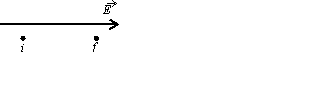


Two protons and an electron are assembled along a line, as shown below. The distance between the electron and each proton is 𝑎. What is the work done by an external force in assembling this configuration of charges?
−𝑘𝑒2/𝑎
−3𝑘𝑒2/2𝑎
−𝑘𝑒2/2𝑎
𝑘𝑒2/2𝑎

Three particles each with charge positive Q are placed on three corners of a square, as shown below. The sides of the square have length s. Point C is at the center of the square.
What is the direction of the electric field at point C?
↘
↙
→
←

What direction is the resultant net force on the grey test charge in this figure?


Four charges are placed on the corners of a rectangle as shown. If a positive charge is placed exactly at the center of the rectangle, what would happen to it?
It will move upward.
It will not move.
It will move diagonally to the lower right corner.
It will move to the right.
Two charges are near each other. The magnitude of both charges is doubled. By what factor will the Coulomb force change?
2
4
1/2
1/4

As shown in the figure, the charge Q is midway between two other charges. If Q= -7.5 nC what must be the charge q1 so that charge q2 remains stationary as Q and q1 are held in place?
30 nC
15nC
7.5nC
60nC

As shown above, two particles, each of charge +Q, are fixed at opposite corners of a square that lies in the plane of the page. A positive test charge +q is placed at a third corner. What is the direction of the net force on the test charge due to the other two charges?


A sample of an ideal monatomic gas is confined in a rigid 0.008 m3 container. If 40 joules of heat energy were added to the sample, how much would the pressure increase?
320 Pa
1,600 Pa
3,333 Pa
5,000 Pa
A circuit contains a length of tungsten wire with resistance R. An increase in the resistance would result if which of the following could be decreased?
The resistivity of the tungsten
The cross-sectional area of the wire
The length of the wire
The temperature of the wire
The current in the wire

Once the switch is flipped, which circuit will have the brighter bulb?
A
B

Five wires are made of the same material. Which wire would give the least resistance?
A
B
C
D
E

A variable resistor is one that can change resistance, like a dimmer switch. As the resistance increases, which graph best shows the current through the lamp?
a
b
c
d
Compared to a 3-Ohm resistor, a 6-Ohm resistor has
1/4 the power
1/2 the power
2 times the power
4 times the power

Which circuit has the largest power rating?
a
b
c
d
e

Which two resistors must have the same current? Select two.
1-Ohm
2-Ohm
3-Ohm
4-Ohm
6-Ohm
Which two resistors must have the same voltage? Select two.
12-Ohm
6-Ohm
4-Ohm
3-Ohm
1-Ohm

Which is true?
I1 + I2 = I3
I2 + I3 = I1
I3 + I1 = I2
I1 = I2 = I3

Which combination will yield the smallest equivalent resistance?
S1 and S2 closed
S1 and S2 open
S1 open and S2 closed
S1 closed and S2 open

The equivalent capacitance of this circuit is
greater than C1
equal to C1
less than C1
depends on the ratio of C1 to C2

The figure shows three identical lightbulbs connected to a battery having a constant voltage across its terminals. What happens to the brightness of lightbulb 1 when the switch S is closed?
The brightness will increase momentarily then return to its previous level.
The brightness increases permanently.
The brightness will decrease momentarily then return to its previous level.
The brightness remains the same as before the switch is closed.
The brightness decreases permanently.

A light bulb is connected in the circuit shown in the figure with the switch S open. All the connecting leads have no appreciable resistance and the battery has no internal resistance. When we close the switch, which statements below accurately describe the behavior of the circuit? (There may be more than one correct choice.)
The brightness of the bulb will increase.
The brightness of the bulb will decrease.
The brightness of the bulb will not change.
The potential drop across R2 will decrease.
The potential drop across R2 will not change.

A light bulb is connected in the circuit shown in the figure with the switch S open and the capacitor uncharged. The battery has no appreciable internal resistance. Which one of the following graphs best describes the brightness B of the bulb as a function of time t after closing the switch?


Three resistors connected in parallel have individual values of 4.0, 6.0 and 10.0 ohm, respectively. If this combination is connected in series with a 12-V battery and a 2.0-ohm resistor, what is the current in the 10-ohm resistor?
0.59 A
1.0 A
11 A
16 A

Which resistor is in series with resistor R?
R1
R2
R3
R4

In the circuit shown in the figure, all the lightbulbs are identical. Which of the following is the correct ranking of the brightness of the bulbs?
B =C > A
A>B>C
A =B>C
A>B=C
A=B=C
What is the second law of thermodynamics primarily concerned with?
Conservation of energy
Efficiency of heat engines
Increase in entropy
Conservation of momentum
According to the Second Law of Thermodynamics, in which direction does heat flow spontaneously?
From colder to hotter objects
From hotter to colder objects
Heat does not flow spontaneously
When an object gains electrons it becomes __________
Neutral
Positively charged
Negatively charged
After grounding, how will objects interact?
Both will have the same charge, so they attract one another
Both will be neutral, so they will attract one another
Botn will be neutral, so they will repel one another
Both will be neutral, so they will not attract nor repel
Shuffling your feet across the carpet to collect electrons is charging by
friction
conduction
induction
polarization

