
 Worksheets
grade 11 revsion
Total questions: 64
Worksheet time: 58mins
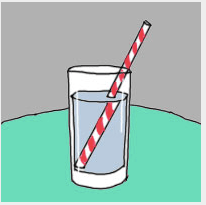
Why does the straw appear to be bent?
light is reflected
light is absorbed
light is turned
light is refracted
What do we call a material that light can travel through?
air
water
medium
pathway
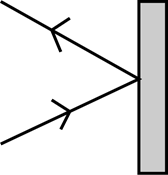
In the illustration, the light ray striking the object is-
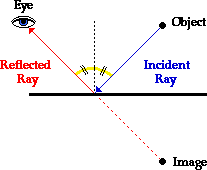
What is the angle of reflection equal to?
The angle of refraction
The angle of incidence
The angle of absorption
The angle of light

What might explain why light travels in a straight line?
If there is nothing to interfere with light waves, they should travel in a straight line.
Light waves will always travel in a straight line, even if they come into contact with another object.
Light waves don't travel in a straight line.
Light waves travel in a straight line because sound waves travel in a straight line.
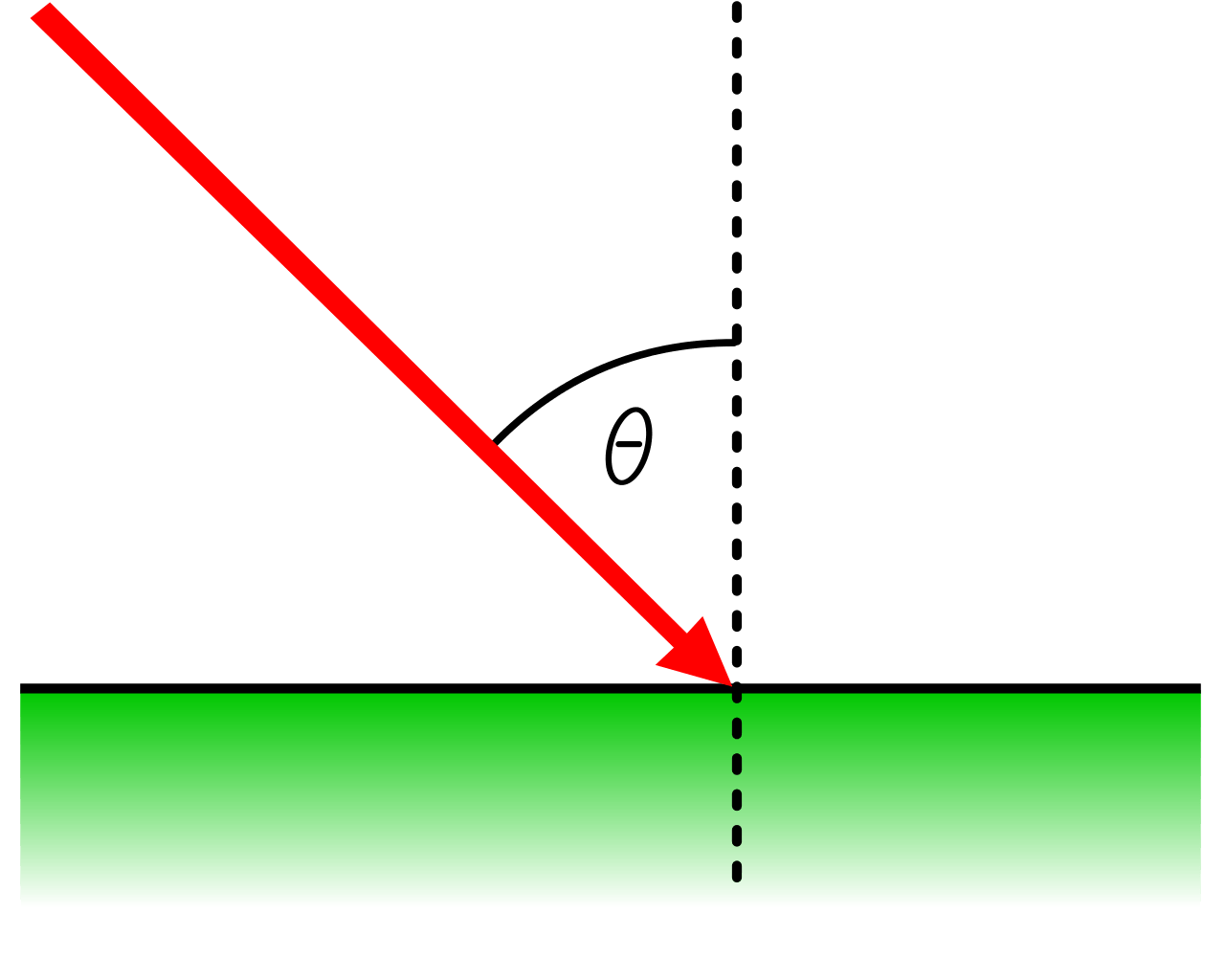

What is the angle of reflection (θr) in the image?
56o
90o
124o
34o
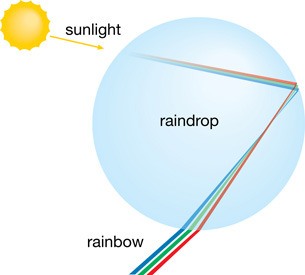
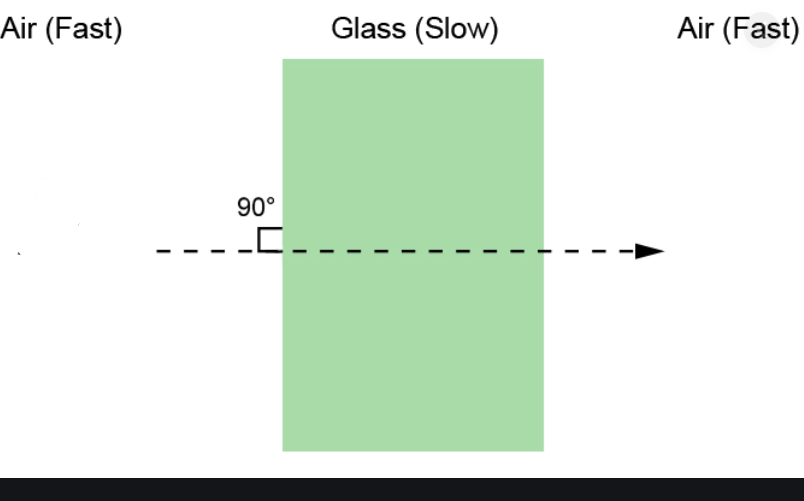
The line 90 degress through the refracting or reflecting surface is called?
Medium
Normal
Incidence
Reflection

Which one of these describes a lens that causes light to come to together at a single point?
concave
opaque
convex
translucent
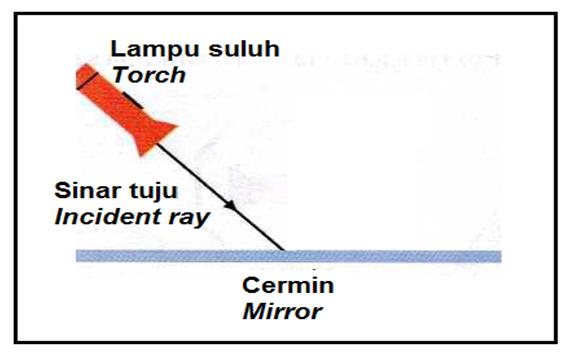
The following diagram shows the ray diagram when a torch light is torched towards a mirror. Which of the following is the correct reflected ray?
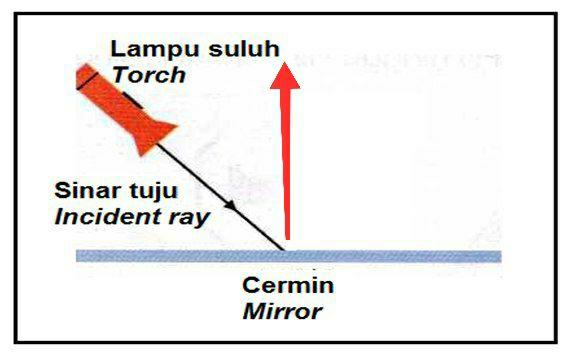
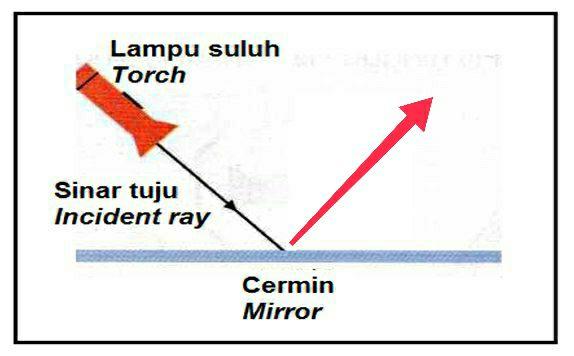
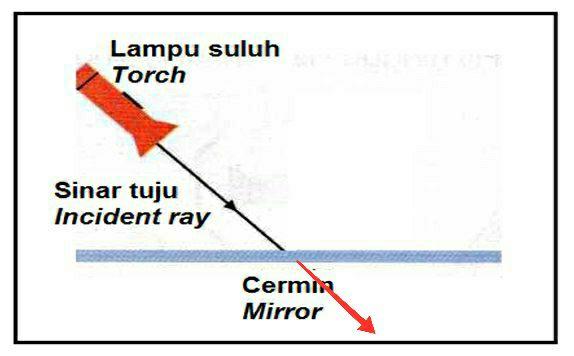
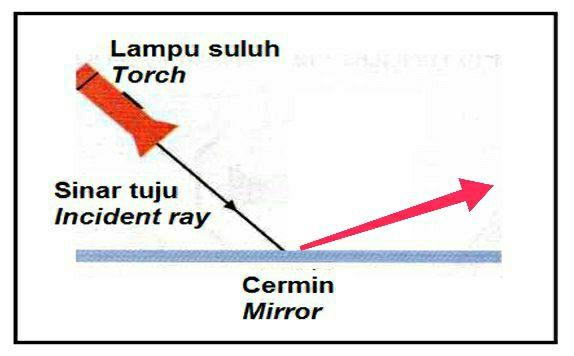
When light passes through a convex lens, it does this.....
Diverge, or spread apart
Converge, or come together
Reflect, or bounce off
Create a rainbow

Images in a plane mirror are
real
larger
same size
smaller

The distance from the vertex of the mirror to the center of curvature is also known as the
focal length.
radius of curvature.
object distance.
image distance.

Identify the mirror
Plane mirror
Convex mirror
concave mirror
None of the above
Which of the following best relates R and f ?
R=f/2
R=2f
R=4f
R=f/4
The distance from the pole to the focus of the spherical mirror is called--------
Radius of curvature
centre of curvature
Focus
Focal length
The ray parallel to the principal axis, after reflection from a concave mirror will----------
pass through C
pass through P
pass through F
retrace its path
The radius of curvature of a spherical mirror is 20 cm, What is its focal length?
20 cm
10 cm
40 cm
1/20 cm
Name the mirror that can give an erect and enlarged image of an object.
Convex mirror
Concave mirror
Plane mirror
Name a mirror that can give an erect and diminished image of an object.
Convex mirror
Concave mirror
Plane mirror
-------------mirror is used as rear view mirrors in vehicles.
Convex
Concave
Plane
A ray directed towards the principal focus of a convex mirror, after reflection , will emerge-----------
parallel to the principal axis
perpendicular to the principal axis
through the focus
through the pole.
What is the mid point of a spherical mirror called?
Focus
Pole
Centre of curvature
Radius of curvature

Type of mirror used as a side mirror on a vehicle to provide a wide angle view...
Plane
Convex
Concave

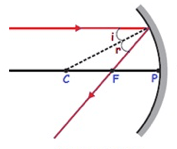
This ray diagram is for which mirror?
concave
convex
plane
window
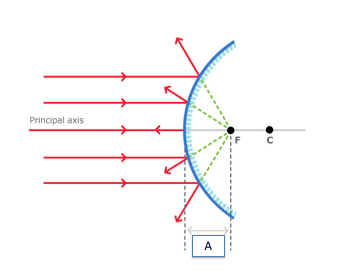
In the image, all the rays meet at F, What is F
focal length
focal point
center of curvature
reflection

In the given figure, which of the following holds TRUE?
The angle of incidence is 10°.
The angle of incidence is 80°.
The angle of reflection is 10°.
The angle of reflection is 90°.

Type of mirror used by a dentist to get magnified view of a patient's teeth...
Plane
Convex
Concave

Type of mirror found in a bathroom...
Plane
Convex
Concave

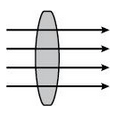
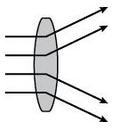
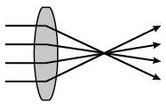
Which lens represents the path light takes through a diverging lens?


Which figure represents the path light takes through a converging lens?
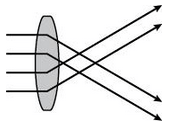
Which of the following are uses for convex lenses? (Choose all that are correct)
Camera lens
Telescope lens
Microscope lens
Magnify glass
an object situated at distance 20 cm from convex lens of focal length 30 cm , find the postion of the image formed by it ?
15
-15
12
-12
the image of an object placed inftont of convex mirror of focal length 16 cm is formed at a point which is 10 cm more distance from the mirror the the objetc. find the magnification of the image ?
-6
26
-26
6
a device that converts electric energy into thermal energy
heating appliance
thermostat
refrigerator
heat engine
a device that is not efficient
heating appliance
thermostat
refrigerator
heat engine
Which sentence best explains how heat transfers?
Heat always flows from hot to cold.
Heat sometimes flows from hot to cold, and sometimes from cold to hot.
Heat always flows from cold to hot.
During a cyclic process, a heat engine absorbs 500 J of heat from a hot reservoir, does work and ejects an amount of heat 300 J into the surroundings (cold reservoir). Calculate the efficiency of the heat engine
40%
0.4
60%
0.6
A steam engine boiler is maintained at 250°C and water is converted into steam. This steam is used to do work and heat is ejected to the surrounding air at temperature 300K. Calculate the maximum efficiency it can have?
43%
57%
0.43
0.57
There are two Carnot engines A and B operating in two different temperature regions. For Engine A the temperatures of the two reservoirs are 150°C and 100°C. For engine B the temperatures of the reservoirs are 350°C and 300°C. Which engine has lesser efficiency?
A
B
equal
no aswer is right
An object is placed at a distance of 10 cm from a convex lens of focal length 12 cm .Find the position and nature of the image.
-60
60
40
-40
______________ ______________ is produced when fuels containing sulfur are burned in the presence of oxygen.
Carbon dioxide
Sulfur dioxide
Carbon monoxide
Greenhouse gas
Source of carbon monoxide
Incomplete combustion of fossil fuels
Combustion of fossil fuels
Decomposition of plant and animal matters
Photochemical reaction of CO2
A type of pollution found both indoors and outdoors, which includes pollen, dander, soot, carbon, and dust.
Water droplets
Allergens
Particulate matter
Combustibles
This primary pollutant creates a reddish brown gas creating photochemical smog and tropospheric ozone.
sulfuric acid
VOC
nitrogen dioxide
particulate matter
Which of the following is an example of a primary pollutant?
Acid rain
Ozone
Carbon monoxide
Asbestos
What is the major cause for air pollution?
deforestation
oil spills
transportation
cigarretes
there is no engine with 100% efficiency ?
ture
false
sometimes
it can be found if we use expansive material to make it
413.15 K to C =
-686.3
-140
140
686.3

