
 Worksheets
Magnetic materials & Nanomaterials
Total questions: 40
Worksheet time: 23mins
Magnetism in a material arises due to
spin motion of electron
both orbital and spin motion of electron
orbital motion of electron
nuclear magnetism

This figure represents
CVD
Sol-gel
Ball Milling
None of these
Magnetic moment of an electron is
4πmeh
2πmeh
2πmeh2
4πmeh2
Magnetic susceptibility is
Magnetization created by unit electric field
Magnetization created by unit magnetic field
Magnetization created by unit electromagnetic field
poliarzaiton created by unit electromagnetic field
Hysteresys lopp implies
loss of electromagnetic waves
loss of magnetic energy
loss of electrical energy
loss of electrostatic energy
Hard magnets have
high retentivity and high coercivity
low retentivity and high coercivity
low retentivity and low coercivity
high retentivity and low coercivity
Hard materials are used for
data storage
read-write device
memory deivce
magnetic ckt
The presence of parallel alignment of magnetic dipole moment is given by which materials?
Diamagnetic
Ferromagnetic
Paramagnetic
For which of the following is magnetic susceptibility negative?
Paramagnetic Materials only
Ferromagnetic Materials only
Diamagnetic Materials
Which of the following is the unit of magnetic flux density?
Newton/ampere-metre
Tesla
All of the above
True or false? A magnet can change its polarity if placed in a strong enough magnetic field.
True
False
If a bar magnet is broken into two pieces,
both pieces will also be magnets
neither piece will be a magnet
only the original north piece will be a magnet
only the original south piece will be a magnet
The Magnetic moment per unit volume of the material is called as
Magnetic flux density
Intensity of Magnetization
Magnetic flux
Magnetic permeability
Weber is the unit of
Magnetic field strength
Magnetic induction
Magnetic flux
Magnetic permeability
Gold, Germanium, Silicon are examples of
Diamagnetic materials
Ferromagnetic materials
Ferrites
Paramagnetic materials
“Tesla” is same as
Weber-metre
Weber/metre
Weber/metre2
Weber-metre2

Bloch walls (Domain Walls) are in the _______________ material.
Ferrimagnetic
Antiferromagnetic
Ferrites
Ferromagnetic
The soft magnetic materials are having
low coercivity
low permeability
high coercivity
high hysteresis loss
The B/H curve can be used to determine?
Iron loss
Hysteresis loss
Voltage loss
Eddy current loss
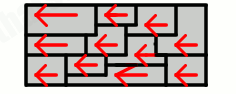

What is the shape of a magnetic field around a wire?
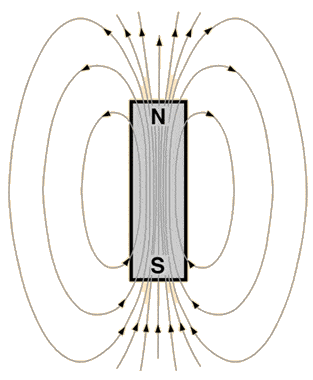
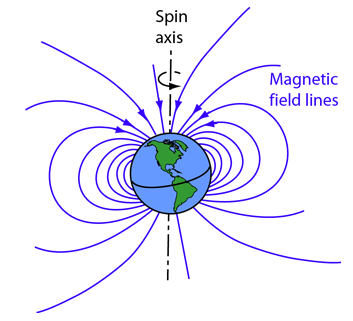
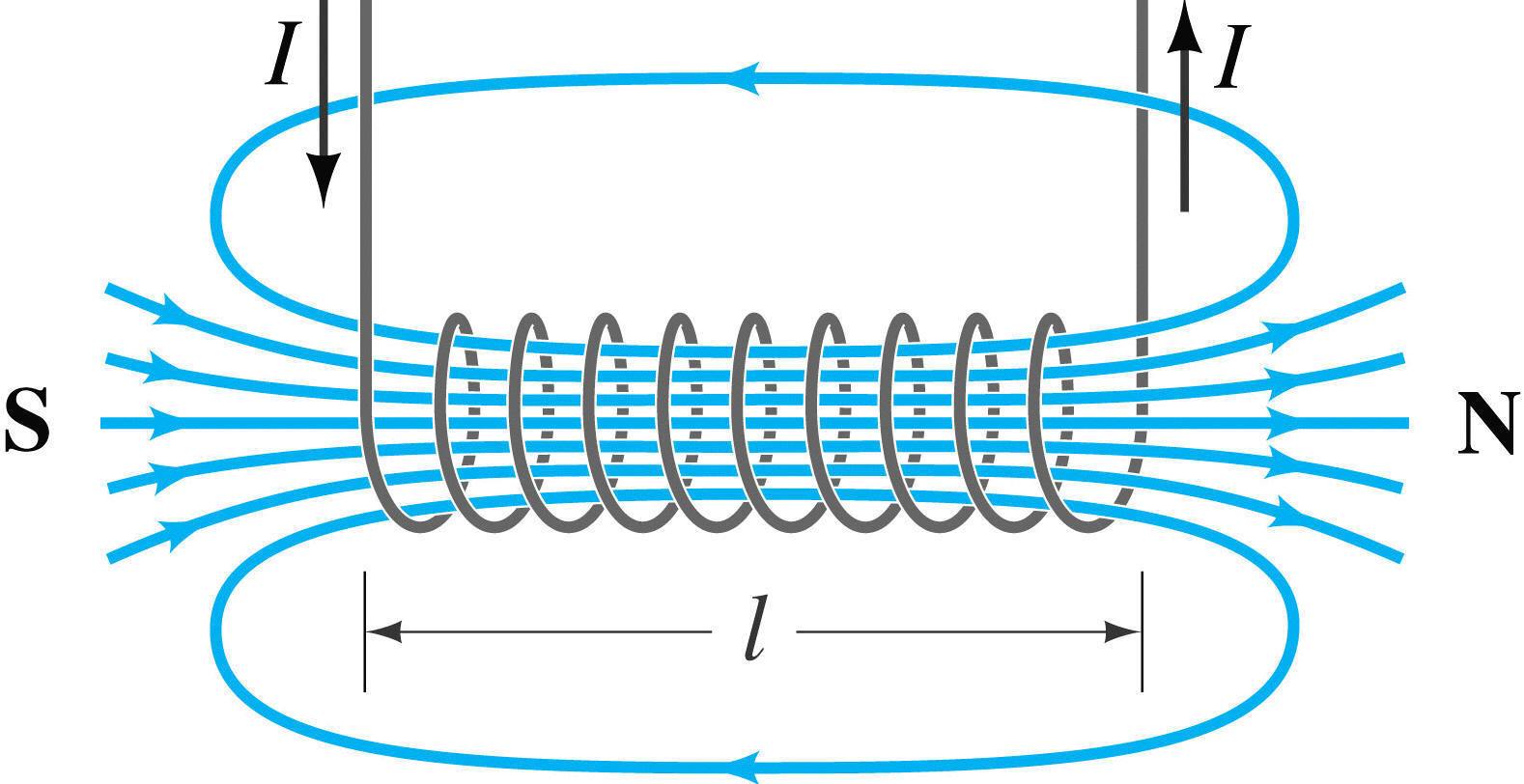
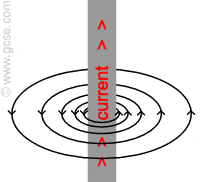
What is the shape of a magnetic field around a solenoid?
What is the shape of a magnetic field around the Earth?
What is the shape of a magnetic field around a bar magnet?
Why the properties of nanomaterials are different significantly compared to bulk materials?
Increased relative surface area
Decreased relative surface area
Increased lattice parameters
Lower down the melting temperature
The process of reduction of the size of the solid is
Quantum physics
Quantum effect
Quantum confinement
Nano meter is
10^ -6 meter
10^ -9 meter
10^ -3 meter
10^ -2 meter
Sol-gel method is ________ approach.
Bottom up
Up bottom
Top down
Down top
The sol-gel is a __________ of solid particle.
Sublimation
Melting
Colloidal suspension
Cool down
Monosized nanoparticles are possible in
Sol-Gel
Ball milling
CVD
All of these
Sol-gel method is ________ chemical process.
Dry
Wet
Semi liquid
Semi solid
What are the two Basic Approaches to Nanomanufacturing?
CLUSTER & ATOMS
ATOMIC SCALE & MOLECULAR SCALE
TOPDOWN & BOTTOM UP
BULK & FRAGMENTS
The following is an example of top down method.
Electrodeposition method
Chemical vapour deposition method
Ball milling
Precipitation method
CVD stands for ____________
Carbon vapour density
Chemical vapour density
Chemical vapour deposition
Carbon vapour deposition

This image explains the process of
CVD
Sol-Gel
Ball Milling
None of these

This image indicates the working of
CVD
Sol-gel
Ball-milling
None of these

Which property is changing with size of Shell
Optical
Chemical
Electronic
Magnetic

