
 Worksheets
Gr.7 Final Revision Term 2
Total questions: 64
Worksheet time: 1hrs 28mins


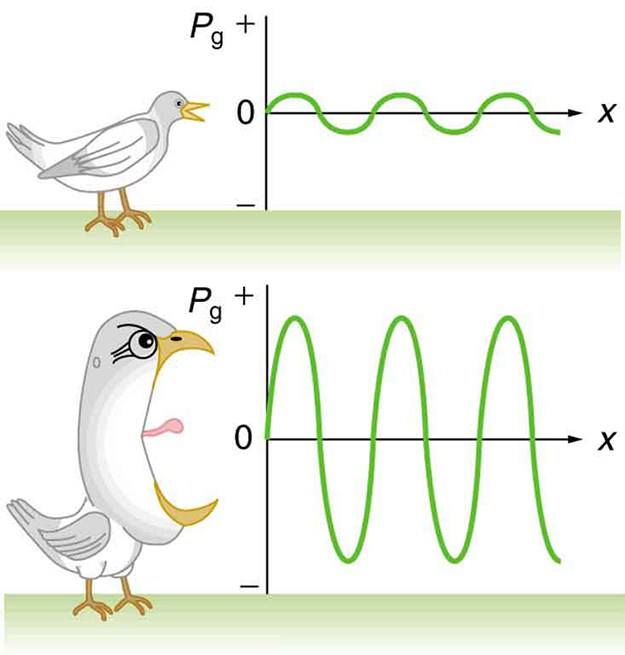
When an ambulance moves TOWARD you it sounds ________ pitched.
high
low
medium
Identify which end of the electromagnetic spectrum has the Longest Wavelength and Shortest Wavelength.
Longest- Gamma; Shortest- Radio
Shortest - Microwaves; Longest - Ultraviolet
Shortest - Gamma; Longest - Radio
X-rays carry relatively high amounts of energy, which allows them to penetrate through your skin. Which of the following types of electromagnetic radiation also penetrate your skin?
radio waves
gamma
visible light

What type of interference is represented in this diagram?
Constructive
Destructive
Which lens represents the path light takes through a concave lens?


Would the bridge have broken if the wind's frequency was different than the bridge's natural frequency?
No, the vibrations amplitude would continue increasing.
Yes the vibrations amplitude would continue increasing
No, the vibrations amplitude would decrease saving the bridge
Yes, the vibrations amplitude would decrease saving the bridge
It is the change in wave frequency caused by a moving wave source.
Pitch
Intensity
Timbre
Doppler effect
Definition: When one object vibrating at the same natural frequency of a second object forces that second object into vibrational motion.
Reflection
Refraction
Diffraction
Resonance
Packet of light energy
Photon
Photoelectric Effect
Microwaves
Polarized Light
Polarized light is...
the light that passes through a polarizing filter
the light that is stopped by the polarizing filter
the many different directions in which light travels
How would a tomato look under blue light?
The tomato would seem to disappear
The tomato would still appear red
The tomato would appear black
The tomato would appear white

If a sound wavelength gets smaller what do you hear?
A louder sound
A quieter sound
A higher pitch sound
A lower pitch sound
If a sound Amplitude gets smaller what do you hear?
A louder sound
A quieter sound
A higher pitch sound
A lower pitch sound


What is resonance?
(a)
What is natural frequency?
The frequency at which a system normally vibrates without outside influence.
The frequence at which a system vibrates with the addition of outstide influence.
The distance between consecutive corresponding points of the same phase on the wave.
The number of times it goes through a cycle in one second.
A pattern of vibration that looks like a wave that is standing still is called
a) Standing wave
b) Constructive interference
c) Ultrasound
d) Resonance
How is loudness measured?
decibels
HZ
joules

___________ are factors affecting how fast or slow sound waves travel through different media.
Temperature
stiffness & compressibility
Frequency
density
wave length


Which of the following waves on the EM spectrum have the greatest amount of energy?
infrared waves
ultraviolet waves
microwaves
visible light
light shines on metal and knocks some electrons off the metal
Amplitude
Frequency
Photoelectric Effect
Rarefactions
The image formed by a concave mirror will ______________.
always be real
always be virtual
be either real or virtual
will always be magnified
_____ lenses refract light rays toward the optical axis. When this lens is held close to your eye, the image is magnified, virtual, and upright.
Concave
Convex
Prismatic
Refractive
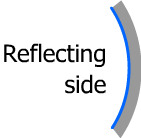
The following is a picture of what type of mirror?
Convex Mirror
Concave Mirror
Plane Mirror
Flat Mirror

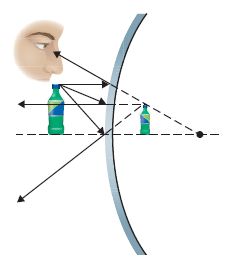
The following is a picture of what type of mirror?
Convex mirror
Concave mirror
Plane Mirror
Flat Mirror
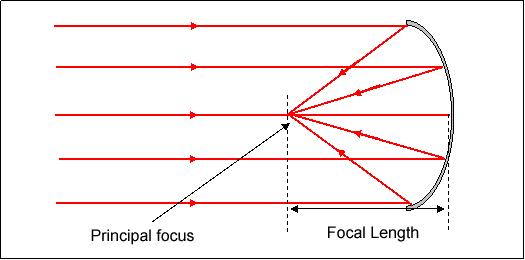


A person standing in front of a lens creates an image that is both smaller than the original and closer to the lens. Classify the image formed in this scenario.
real, inverted
real, upright
virtual, inverted
virtual, upright

Classify the image formed in this scenario.
real, inverted, larger than original
real, inverted, smaller than original
virtual, upright, larger than original
virtual, upright, smaller than original

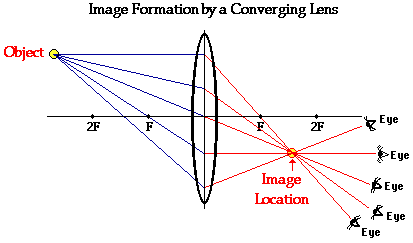
Classify the image formed in the magnifying glass.
real
virtual
larger than original
smaller than original

Classify the image formed in the droplet. Check two.
real
virtual
inverted
upright
The bowl of a shiny spoon forms an enlarged, upright image similar to that of a ____ mirror.
wide-angle
convex
concave
refracting
What does the amplitude of a sound wave depend on?
loudness
frequency
wavelength
pitch
In which of the following substances does a beam of light travel the fastest?
air
glass
plastic
water
Why does an orange look orange?
It absorbs orange light and reflects other colors.
It reflects red and yellow light, only.
It reflects orange light and absorbs other colors.
It absorbs red and yellow light, only.



Mechanical Waves
consist of Transverse, Surface and Electromagnetic.
do not require a medium to pass through.
require a medium to pass through.
Sound Waves
are Longitudinal waves.
are Surface Waves.
are Transverse Waves
move in a circular motion.
A guitar string vibrates with a frequency of 320 hz. If the wavelength of the vibration is 0.23 meters what is the speed of the wave?
320.23 m/s
1391.3 hz
73.6 m/hz
73.6 m/s

