
 Worksheets
Reproductive System Review
Total questions: 44
Worksheet time: 25mins

A fertilized egg undergoes several stages before it is successfully implanted. The diagram below
shows these stages as the fertilized egg travels through the female human reproductive system. In which of the following structures of the female human reproductive system is the blastocyst implanted during normal human development?
Ovary
Uterus
Vagina
Amniotic Sack

Which structure is represented by the letter E?
vas deferens
testes
prostate gland
epididymis
Which of the following describes fertilization?
cell differentiation to form a blastula
a sperm joining an egg to form a zygote
formation of germ layers in a deuterostome
sperm and egg production
How can a blockage in a fallopian tube prevent pregnancy?
It prevents the ovary from releasing the egg
If prevents the egg from reaching the uterus
It prevents sperm from using flagella to move
It prevents sperm from passing through the cervix
Which structure in the body of the female mammal is the site for implantation of a fertilized egg?
endometrium
cervix
ovaries
uterus
The male gametes of the human reproductive system are called sperm cells. Where are sperm cells STORED after they are produced?
Prostate
epididymis
vas deferens
seminal vesicle
In the male reproductive system, gametes are produced in the testicles. Which of the following structures of the female reproductive system has the same function as the testicles?
Cervix
Uterus
Ovaries
Fallopian Tubes
A blastocyst is associated with which stage of the reproductive cycle?
puberty in the offspring
the second trimester of pregnancy
the first trimester of pregnancy
the third trimester of pregnancy
What is the human embryo called after the eighth week of development?
An infant
A zygote
An embryo
A fetus
Fertilization occurs in the
Uterus
Cervix
Vagina
Fallopian Tube

Which structure in male reproductive system produce sperm?
Scrotum
Testis
Urethra
Seminal Vesicle

Where are sperms produced?
9
10
11
12
Which number shows the vas deferens?
12
11
9
7

The diagram shows the male reproductive system.
What is part the urethra?
A
B
C
D

Structure 4 is the
uterus
vagina
ovary
oviduct
Structure 1 is the
uterus
vagina
ovary
oviduct
Structure 7 is the
uterus
vagina
ovary
oviduct
Structure 5 is the
uterus
vagina
ovary
oviduct
Structure number 12 is ..
penis
scrotum
testes
urethra

True or False: A zygote has 23 chromosomes in total.
True
False

What does a fertilized egg attach to after it is fertilized?
vagina
cervix
uterus
fallopian tubes
The fallopian tubes are a part of the ______________ reproductive system.
male
female
Sexual reproduction is vital to the propagation of the Human race. Which of the following sequences represents the correct order of events in the formation of a human fetus?
Zygote → Blastocyst → Embryo → Fertilization
Fertilization → Zygote → Blastocyst → Embryo
Blastocyst → Embryo → Differentiation → Zygote
Fertilization → Growth → Differentiation → Zygote
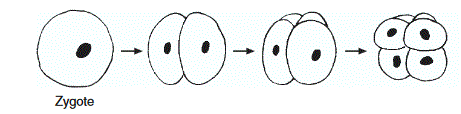
The diagram below represents some stages of early embryonic development. Which process is represented by the arrows in the diagram?
meiosis
Mitosis
Fertilization
Evolution
How many trimesters are there in a pregnancy?
2
3
5
9


The egg is _____________ than the sperm
larger
smaller

