wayground logo

Free Printable Worksheets

Font size

S
M
L
XL
Worksheets

Child Development 2 - Unit 2

Total questions: 23

Worksheet time: 6hrs 45mins

Name
Class
Date
1.
The ability to produce language forms and express thoughts to others verbally or in writing.
a)

Passive voice

b)

Emotional Language

c)

Expressive language

d)

Articulation

2.
period from ages 6 to 12 years
a)

Preschooler

b)

School-aged child

3.
Grows as the children are exposed to new words or known words used in new ways.
a)

Receptive language

b)

Passive voice

c)

Emotional development

d)

Expressive language

4.
Vocabulary describing emotions
a)

Passive voice

b)

Expressive language

c)

Emotional Language

d)

Rote counting

5.
A characteristic of people that means that they believe everyone else sees, thinks, and feels like they do.
a)

Egocentric

b)

Articulation

c)

gender roles

d)

Rote counting

6.
3-6 years
a)

School-aged child

b)

Preschooler

7.
reciting numbers in their proper order
a)

Rote counting

b)

Egocentric

c)

Emotional development

d)

Physical development

8.
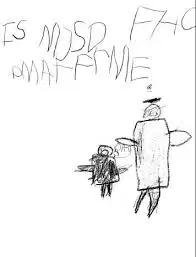
The beginning of writing when children make vertical, circular, and wavy lines.
a)

Passive voice

b)

Egocentric

c)

mock writing

d)

Rote counting

9.
Sentence structure in which the object of the sentence is placed before the subject
a)

Passive voice

b)

Expressive language

c)

gender roles

d)

Articulation

10.
the ability to speak in clearly pronounced sounds
a)

Stuttering

b)

Egocentric

c)

Rote counting

d)

Articulation

11.
domain of lifespan development that examines growth and changes in the body and brain, the senses, motor skills, and health and wellness
a)

Stuttering

b)

self-concept

c)

gender roles

d)

Physical development

12.
Speech disorder that is often characterized by repetition, hesitation, and prolongation.
a)

Articulation

b)

mock writing

c)

Stuttering

d)

Rote counting

13.
a developmental process that refers to the way people relate to others around them
a)

Social development

b)

self-concept

c)

gender roles

d)

Emotional development

14.
The process of learning to recognize and express feelings and establish a unique personal identity
a)

Social development

b)

mock writing

c)

Emotional development

d)

Articulation

15.
The ability of three-year-olds to absorb the meaning of a new word after hearing it just once or twice in a conversation.
a)

Stuttering

b)

Fast Mapping

c)

Emotional development

d)

Articulation

16.
behaviors that are expected of girls or boys
a)

Stuttering

b)

self-concept

c)

Egocentric

d)

gender roles

17.
a developmental process that refers to the growth of the brain and the use of mental skills
a)

Intellectual development

b)

Egocentric

c)

Emotional development

d)

gender roles

18.
a person's understanding of language
a)

mock writing

b)

language comprehension

c)

gender roles

d)

Rote counting

19.
qualities a child believes they possess; result of beliefs, feelings, and perceptions a child has of themself as part of the world
a)

mock writing

b)

self-concept

c)

Egocentric

d)

Rote counting

20.
Avoids touching hot objects, like a stove, when you warn her. This is an example of:
a)

Emotional Development

b)

Social Development

c)

Physical Development

d)

Intellectual Development

21.
Pretends to be something else during play. This is an example of:
a)

Emotional Development

b)

Social Development

c)

Physical Development

d)

Intellectual Development

22.
Buttons some buttons. This is an example of:
a)

Emotional Development

b)

Social Development

c)

Physical Development

d)

Intellectual Development

23.
Calms down within 10 minutes after you leave her, like at a childcare drop off . This is an example of:
a)

Emotional Development

b)

Social Development

c)

Physical Development

d)

Intellectual Development