
Font size
 Worksheets
Dynamic Earth's Surface
Total questions: 60
Worksheet time: 1hrs 2mins

Deposition does what?
breaks down rock
carries rock pieces away
lays down sediment
builds up landforms

If the temperature on Earth increases, what is likely the result.
there will likely be more evaporation and water vapor in the atmosphere
there will likely be less evaporation and water vapor in the atmosphere
it will not affect Earth

Which landform is shown in the image above?
Glacial Moraine
River Delta
Canyon
Island
A river starts as a steep channel in the mountains. It then leaves the mountains and enters a flatter area of land. It meanders across a plain and then enters the ocean. Which of the following actions causes the deposition of sand at the delta?
river water slowing as it enters the ocean
salt water and fresh water mixing together
ocean waves transporting sand toward land
ocean water slowing as it reaches the coast
What can cause granite to break down into soil over time?
rain and wind
sand deposition
heat from magma
pressure underground
Which of the following is the source of humus found in soil?
bedrock
B horizon
parent rock
plants and animals
How would a V-Shaped valley look after a glacier moved through it and how?
U-shaped profile because glaciers cause erosion & breaking up of rock& carry the rock & sediment, pushing it to the sides to create a U-shaped valley from a v-shaped valley.
A bowl shaped profile because rock and erosion break under the weight of the glacier.

Erosion is...
the process of carrying away weathered bits of rock.
the process of breaking down rocks into smaller pieces.
the process that forms minerals.
the process that causes rust on some metals.
Which of the following is an example of chemical weathering?
ice wedging
root wedging
acid rain

The Grand Canyon was created by...
water erosion.
Bob the Builder.
a volcano.
The Mid Atlantic Ridge

As it moves, a ___________ picks up rocks in its path
erupt
glacier
volcano
weathering

process that breaks down rocks into smaller pieces
mechanical weathering
chemical weathering
erosion
deposition

continous friction and impact by wind, water, or waves
ice wedging
abrasion
decomposition
deposition
process that breaks down rocks and changes the composition
chemical weathering
mechanical weathering
erosion
deposition

What causes the greatest erosion effect on our beaches?
Waves
Gravity
Glaciers
Wind
The process of depositing rocks in a new location.
weathering
erosion
deposition

a bend or curve in the river
Delta
Horn
Meander
Stalactite

Sand dunes are created by . . .
wind
water
waves
gravity

Soil is formed by . . .
weathering
erosion
deposition
What is weathering?
Breaking rock into smaller pieces
Moving material around the Earth's surface
The build up of land
Features on the surface of the Earth
What is erosion?
Breaking rock into smaller pieces
Moving broken pieces of rock around the Earth's surface
The build up of land
Features on the surface of the Earth
What is deposition?
Breaking rock into smaller pieces
Moving broken pieces of rock around the Earth's surface
The build up of land
Features on the Earth's surface
What is a canyon?
A triangle shaped landform at the mouth of a river
A deep gorge with steep sides that can be formed by moving water
The build up of land by depositing soil
The movement of weathered material around the Earth's surface
What is a glacier?
Wind erosion carving out rock
A block of snow on top of water
A moving block of ice on top of land
Water weathering breaking down rock


The slowest form of mass movement
Mudflow
Landslide
Bog burst
Soil creep


acidic ground water eats away limestone in caves
chemical weathering
mechanical weathering
The build up of land by depositing of soil and sediment in a new location.
Weathering
Erosion
Deposition
Destruction
Small bits of weathered rock
Weatherbits
Sediments
Deposited
Erosion
________Dissolves minerals in rock
Acid
water
chemicals
none
In short, the process of oxidation in chemical weathering, is the formation or what?
rocks
minerals
rust
dirt

A (a) is created by the slowing down of sediment that is deposited at the mouths of rivers.

This picture is an alluvial fan. It is a result of
(a) .
Match the following landform with their definition.
A hill of sand created by wind
depositing sand-sized sediments.
Sand Dune
A low area between cliffs that is formed slowly when a river weathers rock and erodes the sediment.
Canyon
A wide, u-shaped low area with a rounded bottom and steep sides created when a glacier scraped against it weathering
rock and eroding sediment.
U-Shape Valley
A fan-shaped landform that is formed at the mouth of a river when flowing water slows and
deposits sediment.
Delta
Cave features that formed slowly when dripping water deposited minerals.
Stalagmites and
Stalactites


A fan-shaped area where a river meets the ocean is called a ____________. This is formed when sediment and rock is deposited at the end of the river.
dune
delta
weathering
sediment

A ______________ is a hill of sand created by the wind.
dune
delta
sediment
Sediment is deposited in a river delta because the
speed of the river decreases
force of gravity decreases
volume of the river increases
angle of the river increases
Why are sinkholes common in Florida?
Florida is a peninsula. Sinkholes are commonly formed on peninsulas because a peninsula is surrounded by water.
Florida has a lot of swamps with animals that burrow into the sandy soil making holes and tunnels that collapse.
Florida's underlying rock is limestone. Limestone dissolves easily, forming caverns which can then collapse and form a sinkhole.
Florida has a lot of oil underground. When the oil is removed, there is nothing left to hold up the soil

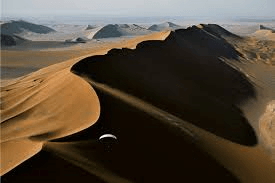

Floods and storm surges can erode the land. Which landform can protect inland areas from floods and storm surges?
deltas
dunes
plateaus
rivers

What process is responsible for sinkholes?
chemical weathering
earthquakes
volcanoes

This landform is formed by
water erosion
weathering
deposition of sediments
glaciers

