wayground logo

Free Printable Worksheets

Font size

S
M
L
XL
Worksheets

DNA - Cancer

Total questions: 91

Worksheet time: 5hrs 33mins

Name
Class
Date
1.
Name the phase:
a)
Anaphase
b)
Telophase
c)
Metaphase
d)
Prophase
2.
a)
Cytokinesis
b)
Interphase
c)
Anaphase
d)
Metaphase
3.
a)
Cytokinesis
b)
Anaphase
c)
Telophase
d)
Prophase
4.
Which is Metaphase?
a)
A
b)
E
c)
C
d)
F
5.
The phase in mitosis where chromosomes move away and are pulled apart by spindles to opposite sides of the cell.
a)
prophase
b)
anaphase
c)
metaphase
d)
telephase
6.
Why would it be important to replicate DNA before a cell divides in mitosis or meiosis?
a)
In order for genetic information to be transferred into daughter cells.
b)
In order for the cell to be able to increase in size.
c)
In order for the DNA to be contained in the nucleus.
d)
In order for the cell to re-order the DNA sequencing in the new cells.
7.
Failure of this stage prior to mitosis would result in daughter cells without sufficient DNA
a)
S-phase
b)
Gap 1
c)
cytokinesis
d)
anaphase
8.
In mitosis, the two resulting cells are
a)
different from the starting cell and identical to each other.
b)
different from the starting cell and different from each other.
c)
identical to the starting cell and different from each other.
d)
identical to the starting cell and identical to each other.
9.

What is the correct order of mitosis?

a)

C, E, F, A, D, B

b)

C, E, A, F, D, B

c)

C, E, A, F, B, D

d)

C, E, F, A, B, D

10.

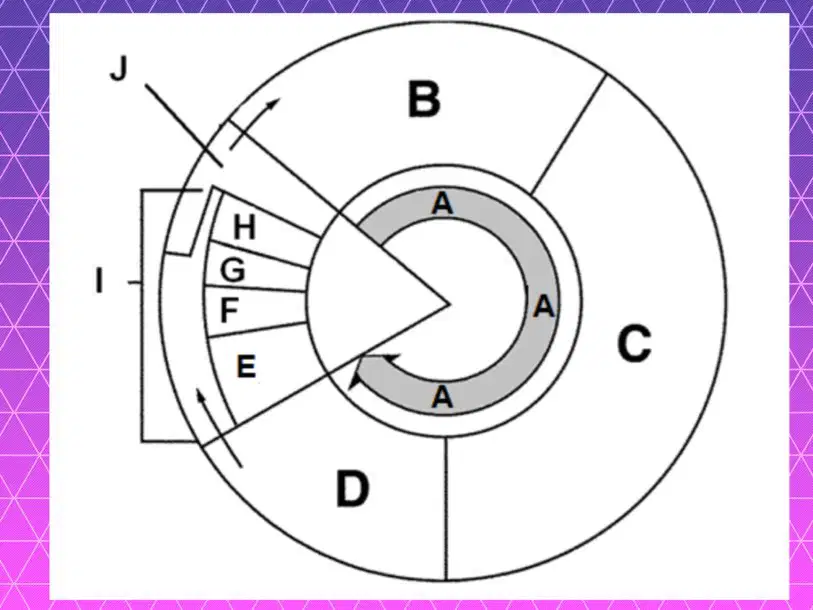
5A This model of the cell cycle includes two arrows that each represent a process in the cycle. What do the two arrows represent?

a)

Arrow 1 represents prophase, and Arrow 2 represents interphase.

b)

Arrow 1 represents mitosis, and Arrow 2 represents meiosis.

c)

Arrow 1 represents interphase, and Arrow 2 represents mitosis.

d)

Arrow 1 represents meiosis, and Arrow 2 represents prophase.

11.
What is cancer?
a)
The heart does not receive enough blood.
b)
Sudden disruption of blood flow to part of the brain.
c)
Blood filled weak spot.
d)
Uncontrolled growth and spread of abnormal cells.
12.
What correctly describes the DNA content in the G1 phase?
a)
normal amount
b)
double amount
c)
increasing
d)
decreasing
13.
The time between cell divisions in the life cycle of the cell is called
a)
anaphase
b)
interphase
c)
prophase
d)
metaphase
14.
The cell spends most of it's life in ________________.
a)
Mitosis
b)
Cytokinesis
c)
Interphase
d)
None of the above
15.

How many chromosomes are in each human body cell?

a)

46

b)

23

c)

1

d)

48

16.
Fruit fly body cells have 8 chromosomes. After mitosis, you would expect a resulting fruit fly daughter cell to have ...
a)
16 chromosomes.
b)
46 chromosomes.
c)
8 chromosomes.
d)
4 chromosomes.
17.

Why do cells go through mitosis?

a)

to make food from sunlight

b)

to create proteins

c)

to get air into the cells

d)

to reproduce, grow and repair/replace

18.
Which of the following phases is not included in interphase?
a)
G1
b)
S
c)
G2
d)
M
19.
True or False:
Normal cells grow and divide continuously.
a)
True
b)
False
20.

When cells go through mitosis repeatedly without entering interphase, this results

a)

arthritis

b)

cancer

c)

mutation

d)

diabetes

21.

What is the purpose the the cell cycle checkpoints?

a)

To repair damaged cells before they enter cell division.

b)

To stop cells in an organism from entering cell division too soon.

c)

To make sure no cells tried to bring contraband items to the event.

22.
A process where one cell forms two identical daughter cells is called...
a)
cell cycle
b)
cell division (mitosis)
c)
interphase
d)
cytokinesis
23.
Which of these lists presents the stages of the cell cycle in the correct order?
a)
interphase, mitosis, cytokinesis
b)
cytokinesis, mitosis, interphase
c)
mitosis, interphase, cytokinesis
d)
interphase, cytokinesis, mitosis
24.
What is the result of mitosis?
a)
1 cell
b)
2 genetically identical cells
c)
2 genetically different cells
d)
4 genetically identical cells
25.
Where are proteins made?
a)
Golgi body
b)
Mitoichondrion
c)
Chromosomes
d)
Ribosomes
26.
What form are chromosomes in during most of the life of the cell?
a)
DNA
b)
Chromatin
c)
Mitosis
d)
Nucleus
27.

Undifferentiated cells that can become one or more specialized types of cell are called_________

a)

Stem Cells

b)

Somatic Cells

c)

Body Cells

d)

Zygotes

28.

Arrange the following levels of hierarchy from LARGEST to SMALLEST

a)

Organism, Organ, Tissue, Cell

b)

Cell, Tissue, Organ, Organism

c)

Organism, Cell, Tissue, Organ

d)

Tissue, Cell, Organ, Organism

29.

What is produced at the end of Interphase

a)

2 daughter cells

b)

2 full sets of chromosomes

c)

2 sister chromatids

d)

2 identical cells

30.

Two identical chromatids are called...

a)

Daughter Chromatids

b)

Sister Chromatids

c)

Brother Chromatids

d)

Twin Chromatids

31.

Why do cells remain small in size? (Select ALL that apply)

a)

Maintain high surface area to volume ratio

b)

More energy efficient

c)

Easier to destroy if something goes wrong

d)

Smaller cells divide quicker

32.
____ means cancerous.
a)
Malignant
b)
Metastesis
c)
Mitosis
d)
Replication
33.
Cancer spreading to another tissue is called
a)
Malignant
b)
Metastesis
c)
Mitosis
d)
Replication
34.
Cancer tumors result from
a)
rapid cell division
b)
rapid DNA replication
c)
slow cell division
d)
long interphase
35.
Tumor cells grow because of 
a)
errors in M Phase.
b)
incomplete DNA replication.
c)
slow S phase.
d)
long G2 Phase.
36.

What type of cells are these? They are responsible for sending messages and communication!!

a)

neurons (nerves)

b)

blood

c)

bone

d)

skin

37.

What type of cells are these? They are part of the OUTER LAYER of your body!

a)

Lung

b)

Skin

c)

Stomach

d)

Bone

38.
Organs working together form a(n) ______
a)
Cell
b)
Tissue
c)
Organ
d)
Organ System
39.
The maintenance of an organism’s internal environment is called:
a)
compensating
b)
homeostasis
c)
balancing
d)
routine
40.
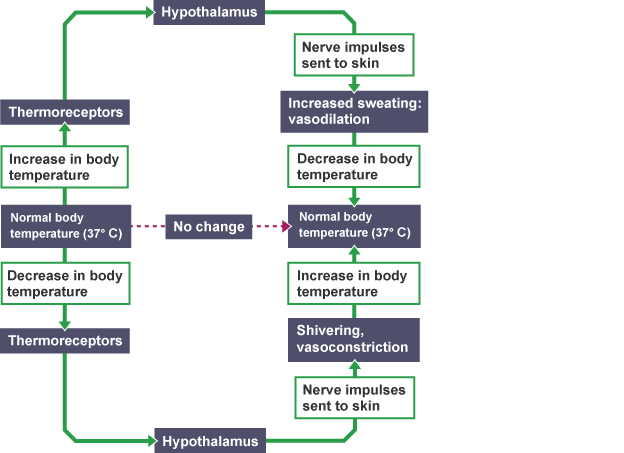
What type of feedback loop is shown?
a)
Positive
b)
Neutral
c)
Negative
41.
Name the levels of organization in the human body in order from smallest to largest:
a)
Tissue, organ, organ system
b)
Organ system, tissue, organs, cells
c)
Cells, tissue, organs, organ system
d)
Cells , organs, tissue, organ system
42.

What is the point of a feedback loop?

a)

To provide the body with more energy

b)

To provide the body with more food

c)

To make sure the conditions in the body are always changing

d)

To make sure the conditions in the body remain stable

43.

The "cause" for something to happen is called...

a)

response

b)

effector

c)

control center

d)

stimulus

44.

Which part of the feedback loop is a body part that makes a change to bring the system back to homeostasis?

a)

Effector

b)

control center

c)

response

d)

receptor

45.
Negative Feedback Loops:
a)
amplify processes
b)
prevent small changes from getting larger
c)
are initiated during childbirth
d)
are found only in plants
46.
Failure to maintain homeostasis could result in:
a)
lack of internal balance
b)
eventual death
c)
difficulty carrying on metabolism 
d)
all three
47.

The body part that senses the change inside the organism ...

a)

receptor

b)

control center

c)

effector

d)

response

48.

What detects a signal from another body part that the system is outside of homeostasis and adjustments need to be made?

a)

effector

b)

response

c)

control center

d)

stimulus

49.
If the environment gets cold, we will often shiver in order to:
a)
keep body temperature the same as the external temperature
b)
decrease body temperature
c)
increase body temperature
d)
regulate blood pressure
50.
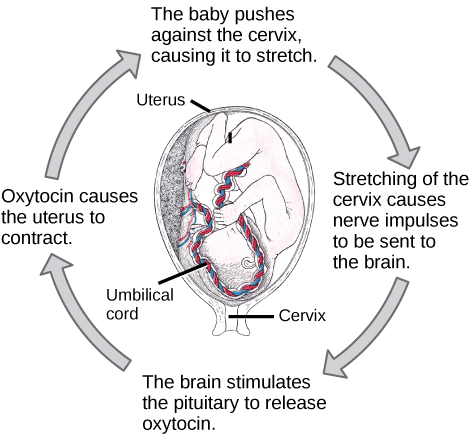
What type of feedback loop is shown?
a)
negative
b)
neutral 
c)
positive
51.
Maintaining body temperature is an example of a:
a)
negative feedback loop
b)
positive feedback loop
52.
When you get cut, your skin cells release hormones that signal platelets to come and stop the bleeding. Platelets then release more hormones that signal even more platelets to help stop bleeding. The hormone signals continue until the cut is closed.
a)
Positive Feedback Response
b)
Negative Feedback Loop 
53.

Which type of feedback system is more common in maintaining homeostasis?

a)

positive

b)

negative

c)

neutral

d)

balanced

54.

What type of feedback system is more dangerous to an organism?

a)

positive

b)

negative

c)

neutral

d)

balanced

55.

This feedback system amplifies a change until a desired outcome is reached.

a)

positive feedback system

b)

negative feedback system

c)

neutral feedback system

d)

self-monitoring feedback system

56.

This is the term used to describe the normal range of a variable in an organism

a)

control center

b)

effector

c)

stimulus

d)

set point

57.

What type of feedback system does the model represent?

a)

positive

b)

negative

c)

neutral

d)

glyogen

58.

What is the control center in the model above?

a)

Hypothalamus

b)

muscles

c)

thermoreceptors

d)

Blood vessels

59.

What is an effector in the model above?

a)

Hypothalamus

b)

sweat glands

c)

thermoreceptors

d)

sweating

60.

What is a response (not the result) in the model above?

a)

body temperature increasing

b)

sweat glands

c)

thermoreceptors

d)

sweating

61.

Why is the sensation of thirst important to maintaining homeostasis?

a)

Water removed by the kidneys must be replaced

b)

Oxygen cannot diffuse into cells if a person is dehydrated

c)

Water molecules are needed to carry carbon dioxide waste to the kidneys

62.

Why does pulse rate increase during exercise?

a)

Oxygen and carbon dioxide must be removed from the body ASAP

b)

Gas exchange must happen more quickly than when a person is at rest

c)

Oxygen must be moved to the lungs and carbon dioxide must be moved to cells more quickly

d)

Carbon dioxide must be moved to the kidneys to be excreted

63.

The group of organisms that use the process of homeostasis includes

a)

mammals, only

b)

animals, only

c)

plants and animals

d)

all living things

64.

If a person's blood cells shrivel (shrink) their blood is likely

a)

isotonic

b)

hypotonic

c)

hypertonic

65.

Which of the following is most likely to cause a person's blood cells to burst?

a)

eating many salty foods

b)

eating many greasy foods

c)

drinking small amounts of water

d)

drinking very large amounts of water

66.
 What is the main function of the respiratory system?
a)
take in oxygen and exhale waste like carbon dioxide
b)
move nutrients throughout the body
c)
take in carbon dioxide and exhale oxygen
67.
Where does digestion start?
a)
stomach
b)
mouth
c)
esophagus
68.
The smallest units or parts of living things; the body's building blocks.
a)
cells
b)
organs
c)
tissues
d)
system
69.
A collection of the same kinds of cells working together to do the same job.
a)
cells
b)
tissues
c)
organs
d)
systems
70.
Your body systems work separately and do not effect each other.
a)
true
b)
false
71.
When blood is used by the body it must pass through which of the following organs before it is pumped back out to the body?
a)
Lungs
b)
Brain
c)
Stomach
d)
Skin
72.
Which representation would show the organization of life from simplest to the most complex?
a)
Heart muscle tissue, cardiovascular system, heart muscle tissue
b)
cardiovascular system, heart muscle cells, heart muscle tissue
c)
cardiovascular system, heart tissue, heart cells
d)
Heart muscle cells - heart muscle tisse, heart, cardiovascular system
73.
Which characteristic do single-celled organisms and multicellular organisms have in common?
a)
Both have cells with specialized functions for each life process.
b)
Both perform all life processes within one cell.
c)
Both have a way to get rid of waste materials.
d)
Both are able to make food from sunlight.
74.
Which body system sends electrical signals to all other body systems?
a)
circulatory system
b)
nervous system
c)
digestive system
d)
skeletal system
75.
Which two human body systems are most responsible for getting oxygen to cells?
a)
digestive and skeletal
b)
skeletal and circulatory
c)
circulatory and respiratory
d)
respiratory and digestive
76.
Which best explains why both cats and humans are multicellular organisms?
a)
They get energy from many food sources.
b)
They get energy from a single food source
c)
They need only one cell to meet their basic needs.
d)
They need many cells working together to meet their basic needs.
77.
Which body systems work together to allow the body to move?
a)
nervous and skeletal
b)
muscular and skeletal
c)
nervous and circulatory
d)
muscular and circulatory
78.

What is the function of the endocrine system?

a)

to filter and eliminate the waste from the blood

b)

to secrete hormones into the bloodstream to regulate body activities

c)

to provide structure and support for the body

d)

to defend the body against pathogens

79.
What are some major organs of the Endocrine system?
a)
Heart and blood vessels
b)
Mouth, Lungs, Bronchi, and Trachea
c)
Esophagus, Stomach, Small and large instestine
d)
Pineal gland, Thyroid gland, Adrenal gland, and pancreas
80.

A hormone is

a)

a chemical substance produced by a gland and carried by the lymph.

b)

an enzyme produced by a gland and carried by the blood.

c)

a chemical substance produced by an organ and carried by the blood.

d)

a chemical substance produced by a gland and carried by the blood.

81.

Which one here is a hormone to control blood glucose levels?

a)

Glycogen

b)

Glycerol

c)

Glucagon

d)

Glucose

82.

The diagram shows the mechanisms that control the concentration of glucose in the blood.


Which row identifies the glands and hormones labelled W, X, Y and Z?

a)

adrenal gland, adrenaline, adrenal gland, glucagon

b)

adrenal gland, adrenaline, pancreas, insulin

c)

pancreas, glucagon, adrenal gland, insulin

d)

pancreas, insulin, pancreas, glucagon

83.

Identify AND describe each step in the Cell Cycle

4 lines
84.
Stem cells are
a)
cells that grow uncontrollably
b)
undifferentiated and can be any type of cell
c)
never go through cell division
d)
only found in embryos
85.
Stem cells can be obtained from
a)
embryos
b)
some adult tissues
c)
umbilical cord blood
d)
all of the above
86.
What does "pluripotent" mean?
a)
able to divide and make many different types of cells
b)
not able to divide
c)
can only divide and make one cell type 
d)
if it divides, it will make a cancerous tumor
87.
What is the difference between embryonic stem cells and adult stem cells?
a)
Embryonic stem cells can differentiate into more cell types than adult stem cells
b)
Adult stem cells are pluripotent, just like embryonic stem cells
c)
Adult stem cells can differentiate into more cell types than embryonic stem cells
d)
Adult stem cells grow bigger than embryonic stem cells
88.
Which is true about embryonic stem cells?
a)
They no longer divide, their cell type is set and cannot change.
b)
They can develop into only one type of cell.
c)
They can become any cell type in the body.
d)
They are found in adults.
89.
What is cell differentiation?
a)
Process by which cells produce more cells
b)
Process by which cells become specialized
c)
Process by which cells become unspecialized
d)
Process by which cells die
90.
What is one goal of cellular differentiation/specialization?
a)
To create specialized cells to help organism maintain homeostasis.
b)
To many cells.
c)
To make stem cells
d)
to make single celled organisms
91.
What is the importance of apoptosis?
a)
To eliminate damaged or unnecessary cells
b)
To create specialized cells
c)
To produce two identical cells
d)
To cause uncontrolled cell growth