
 Worksheets
Q3 Exam Review
Total questions: 48
Worksheet time: 31mins
The respiratory system works closely with the cardiovascular system to provide your cells, tissues, and organs with important elements. Which is NOT a function of the upper respiratory system?
Guide transportation of air, food, and liquid
Air movement (ventilation)
Gas exchange with the blood
Produce sound/voice
Filtering and humidifying air
The respiratory system works closely with the cardiovascular system to provide your cells, tissues, and organs with important elements. Which is the main function of the lower respiratory system?
Filtering and humidifying air
Diverting air to lungs and food to stomach
Temperature control of air
Gas exchange with the blood
Assist the immune system in protecting lungs
Which best describes the process of gas exchange by the respiratory system?
CO2 in,
O2 out
O2 in,
CO2 out
O2 in,
Na+ out
CO2 in,
H2O out
O2 in,
CO+ out
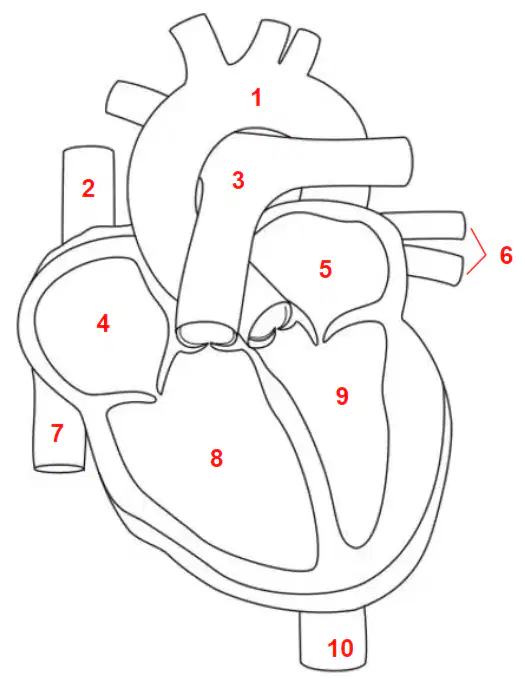
Which number corresponds to the superior vena cava?
(a)
Which number corresponds to the right atrium?
(a)
Which number corresponds to the right ventricle?
(a)
Which number corresponds to the pulmonary artery?
(a)
Which number corresponds to the pulmonary vein?
(a)
Which number corresponds to the left atrium?
(a)
Which number corresponds to the left ventricle?
(a)
Which number corresponds to the aorta?
(a)
Which number corresponds to the inferior vena cava?
(a)
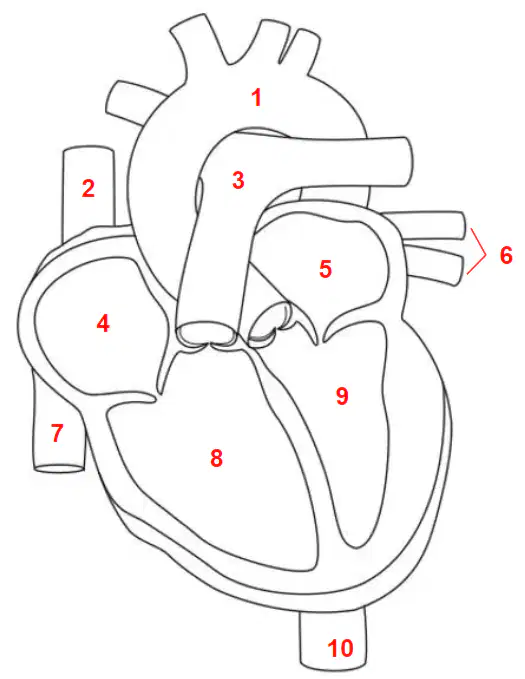
What does the blood vessel labeled with #10 represent?
Cardiac vein taking blood away from the ventricles
Coronary artery sending blood into the ventricles
Abdominal aorta taking blood to the body's organs
Pulmonary vein bringing blood to the lungs
Thoracic stump of the vena cava
Which number corresponds to the vessel taking unoxygenated blood into the heart?
(a)
Which number corresponds to the vessel taking unoxygenated blood to the lungs?
(a)
Which number corresponds to the vessel taking oxygenated blood to the heart?
(a)
Which number corresponds to the vessel taking oxygenated blood to the body?
(a)
What is the main purpose of cardiac valves?
To keep blood flowing in one direction
To separate chambers of the heart
To produce rhythmic contractions of a heartbeat
Amplify the electrical signal of the heart's pacemaker
Move blood back and forth between the chambers and blood vessels
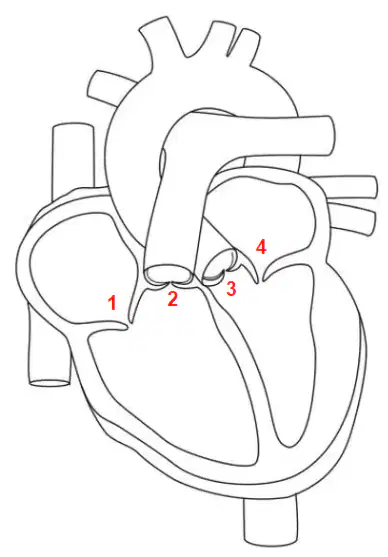
Which heart valve does #1 correspond to?
Tricuspid
(right AV valve)
Bicuspid
(left AV valve)
Pulmonary
semilunar valve
Aortic semilunar valve
Abdominal vascular valve
Which heart valve does #2 correspond to?
Tricuspid
(right AV valve)
Bicuspid
(left AV valve)
Pulmonary
semilunar valve
Aortic semilunar valve
Abdominal vascular valve
Which heart valve does #3 correspond to?
Tricuspid
(right AV valve)
Bicuspid
(left AV valve)
Pulmonary
semilunar valve
Aortic semilunar valve
Abdominal vascular valve
Which heart valve does #4 correspond to?
Tricuspid
(right AV valve)
Bicuspid
(left AV valve)
Pulmonary
semilunar valve
Aortic semilunar valve
Abdominal vascular valve
Which picture correctly represents the direction of blood flow through the heart?


Which parts of the heart interact with deoxygenated blood?
Atria only
Ventricles only
Left chambers
Right chambers
All chambers
Which parts of the heart interact with oxygenated blood?
Atria only
Ventricles only
Left chambers
Right chambers
All chambers
Which types of vessels bring blood towards the heart?
Arteries
Capillaries
Veins
Lymphatic vessels
Purkinje fibers
Which types of vessels take blood away from the heart?
Arteries
Capillaries
Veins
Lymphatic vessels
Purkinje fibers
Which vessels are responsible for providing the heart tissues with oxygenated blood?
Pulmonary arteries
Systemic venules
Abdominal aorta
Lymphatic nodules
Coronary arteries
What is the lubricating sac that surrounds the heart?
Epicardium
Myocardium
Pericardium
Endocardium
Pleura
What is the name of the cardiac tissue commonly called the "pacemaker"?
AV node
Bundle of His
Purkinje fibers
SA node
Bachmann's bundle
Which part of the cardiac conduction system stimulates the ventricles to contract?
AV node
Bundle of His
Purkinje fibers
SA node
Bachmann's bundle
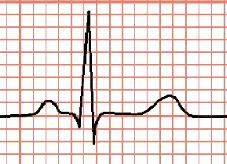
What does an EKG measure?
Electrical impulses through the heart
Blood pressure in the cardiac arteries
Pulse rate
Oxygen saturation of the blood
Strength of muscle contraction
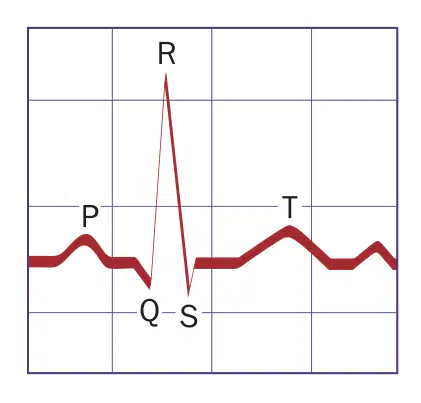
What does the P wave in an EKG reading represent?
Relaxation of the heart & refilling of the chambers
Pacemaker firing & atrial contraction
AV node receiving signal & amplification
Purkinje fibers firing & ventricular contraction
Bundle of His sends signal through cardiac septum
What does the QRS wave in an EKG reading represent?
Relaxation of the heart & refilling of the chambers
Pacemaker firing & atrial contraction
AV node receiving signal & amplification
Purkinje fibers firing & ventricular contraction
Bundle of His sends signal through cardiac septum
What does the T wave in an EKG reading represent?
Relaxation of the heart & refilling of the chambers
Pacemaker firing & atrial contraction
AV node receiving signal & amplification
Purkinje fibers firing & ventricular contraction
Bundle of His sends signal through cardiac septum
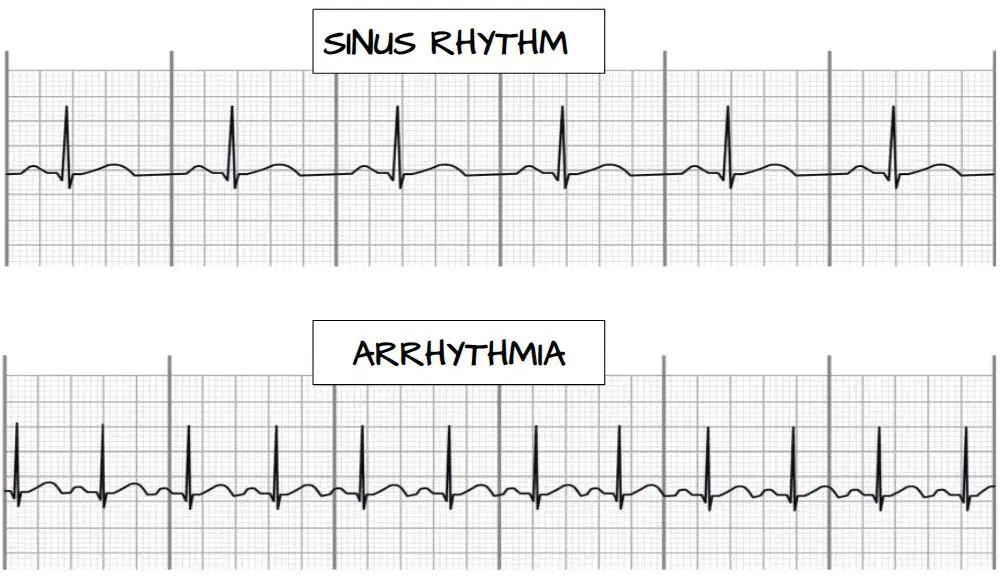
Identify the arrhythmia in the bottom EKG reading.
Sinus bradycardia
Atrial fibrillation
Sinus tachycardia
Ventricular fibrillation
Premature Ventricular Contractions (PVCs)
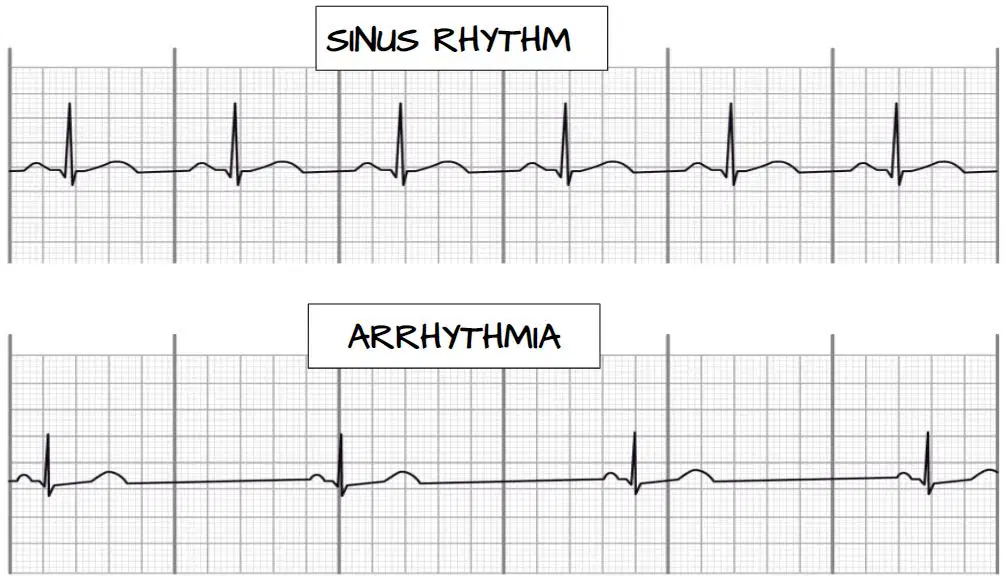
Identify the arrhythmia in the bottom EKG reading.
Sinus bradycardia
Atrial fibrillation
Sinus tachycardia
Ventricular fibrillation
Premature Ventricular Contractions (PVCs)
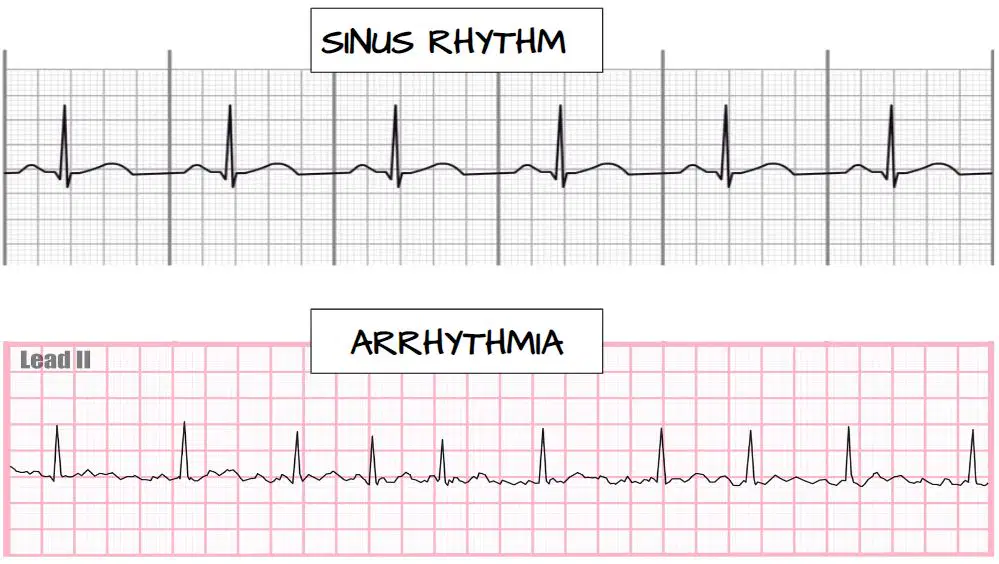
Identify the arrhythmia in the bottom EKG reading.
Sinus bradycardia
Atrial fibrillation
Sinus tachycardia
Ventricular fibrillation
Premature Ventricular Contractions (PVCs)
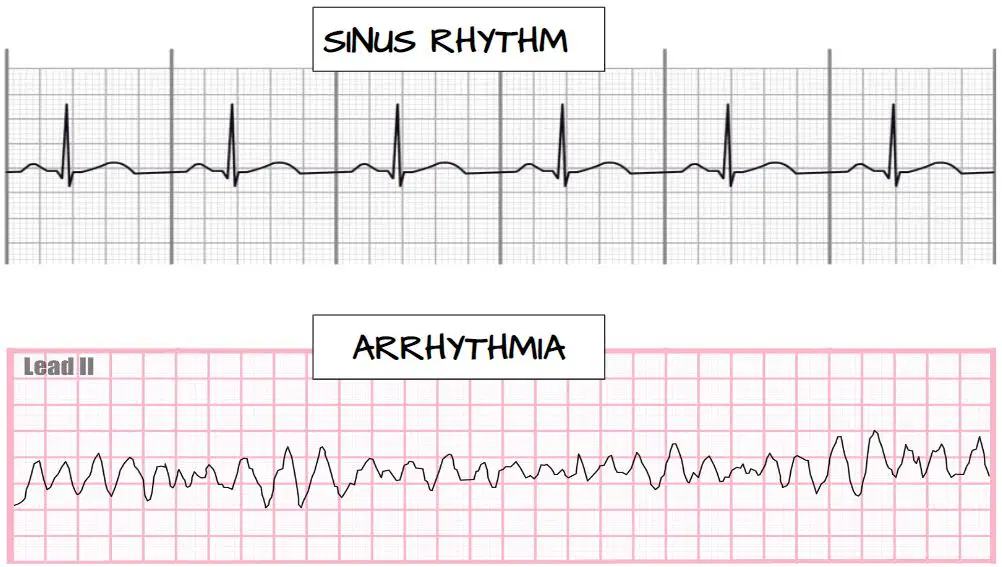
Identify the arrhythmia in the bottom EKG reading.
Sinus bradycardia
Atrial fibrillation
Sinus tachycardia
Ventricular fibrillation
Premature Ventricular Contractions (PVCs)
Which of the following cardiac pathologies describes a common disorder where the heart valves do not close properly?
Aneurysm
Myocardial Infarction
Heart murmur
Coronary artery disease
Cerebral Vascular Accident
Which of the following cardiac pathologies describes a stroke, or when blood flow to the brain stops?
Aneurysm
Myocardial Infarction
Heart murmur
Coronary artery disease
Cerebral Vascular Accident
Which of the following cardiac pathologies describes the ballooning of a blood vessel, with the potential to burst?
Aneurysm
Myocardial Infarction
Heart murmur
Coronary artery disease
Cerebral Vascular Accident
Which of the following cardiac pathologies describes the complete blockage of a blood vessel feeding the heart, also called a heart attack?
Aneurysm
Myocardial Infarction
Heart murmur
Coronary artery disease
Cerebral Vascular Accident
Which of the following cardiac pathologies describes the narrowing of cardiac blood vessels due to plaque buildup?
Aneurysm
Myocardial Infarction
Heart murmur
Coronary artery disease
Cerebral Vascular Accident
Which immune cells release destroyer proteins called perforins to kill cells infected with a virus or cancer?
T cells
NK cells
B cells
Phagocytes
Complement protein system
Which defense mechanism involves the assembly of cooperative proteins that form a large hole in a cell?
Phagocytosis
Inflammation
Interferons
Fever
Compliment protein system complex
Histamines released from immune cells initiate which defensive action of the body?
Fever
Apoptosis
Phagocytosis
Inflammation
Compliment protein complex
Which defense mechanism happens when immune cells activate the release of pyrogens?
Inflammation
Phagocytosis
Compliment protein complex
Fever
Apoptosis

