
 Worksheets
untitled
Total questions: 60
Worksheet time: 1hrs 1mins
Which term describes when a substance is changed from a liquid to a gas?
Condensation
Evaporation
Filtration
Precipitation
A mixture of sand, salt, and iron fillings is stirred into a beaker of water. The mixture is then allowed to settle.
What will separate the iron fillings from the mixture?
Magnetism
Filtration
Flotation
Sifting
Colton and his brothers put some raisins, hazelnuts, almonds, and peanuts in a bowl to make a snack for their movie. What does this snack represent?
a solution
a new element
a new compound
a mixture
Which is NOT a method used for separating mixtures?
sifting
flotation
filtration
dissolving

Lisa was at the fair and noticed people walking around with these 8 differently shaped balloons filled with helium gas.
Which is the best conclusion Lisa could make about gases after she observed these balloons?
Gases take the shape and size of their containers
Gases have definite shapes and sizes
Gases have definite shapes and volumes
Gases' sizes and shapes do not change

A scientist uses an instrument to study the small particles in a piece of matter. The diagram shows what the scientist sees.
What state of matter is the scientist most likely observing?
gas
solid
liquid
vapor

A scientist uses an instrument to study the small particles in a piece of matter. The diagram shows what the scientist sees.
What state of matter is the scientist most likely observing?
gas
solid
liquid
vapor

A scientist uses an instrument to study the small particles in a piece of matter. The diagram shows what the scientist sees.
What state of matter is the scientist most likely observing?
gas
solid
liquid
plasma


Q1: Which of the following is made of only one material?
pencil
paper clip
pair of sneakers
car
Q5: When a piece of candy is broken into smaller pieces, what changes?
the color and texture
the size and shape
the state of matter
The size and luster
Which state of matter has NO definite volume and NO definite shape?
Solid
Liquid
Gas

Michael is describing the physical properties of candy corn. Name at least two physical properties that he can observe without using any measurement tools.
hardness and shape
texture and temperature
color and volume
mass and odor
Which of the following properties of matter can you NOT measure?
Volume
Taste
Weight
Size

Anything that has weight and takes up space is called
(a)
The air we breathe is a state of matter called
(a)
What is the study of matter and how matter changes?
Physical Science
Chemistry
Biology
Matterology
What is the definition of matter?
Anything that has mass and takes up space
A substance that is liquid, solid, or gas
Anything that is pure
Anything that you can see or hold
What is the study of matter and how matter changes?
Physical Science
Chemistry
Biology
Matterology
What term means "take up space"
Volume
Matter
Mass
Substance
What term refers to a single kind of matter that is pure?
Solution
Mixture
Substance
Matter
What term refers to "two or more substances combined physically, but are still able to be separated?"
Mixture
Solution
Matter
Combination
Which of the following is NOT an example of matter?
Sunlight
Air
Tree trunk
Sponge
Which of the following is NOT a mixture?
Salsa
Guacamole
Egg Salad
Bleach
What is the difference between a mixture and a solution?
A mixture retains its properties, a solution creates new ones
A mixture and solution are the same
A solution cannot be separated into it's individual components
A mixture is chemically bonded, a solution is not.
Which of the following is NOT a solution?
Lemonade
Salt water
Soda
Lemon Juice
Which term refers to "two substances that have bonded together to form a new substance"
Mixture
Solution
Substance
Matter
What term refers to a single kind of matter that is pure?
Solution
Mixture
Substance
Matter
What term refers to "two or more substances combined physically, but are still able to be separated?"
Mixture
Solution
Matter
Combination

A mixture in which the composition is NOT uniform throughout is called a _____ mixture.
Heterogeneous
Homogeneous
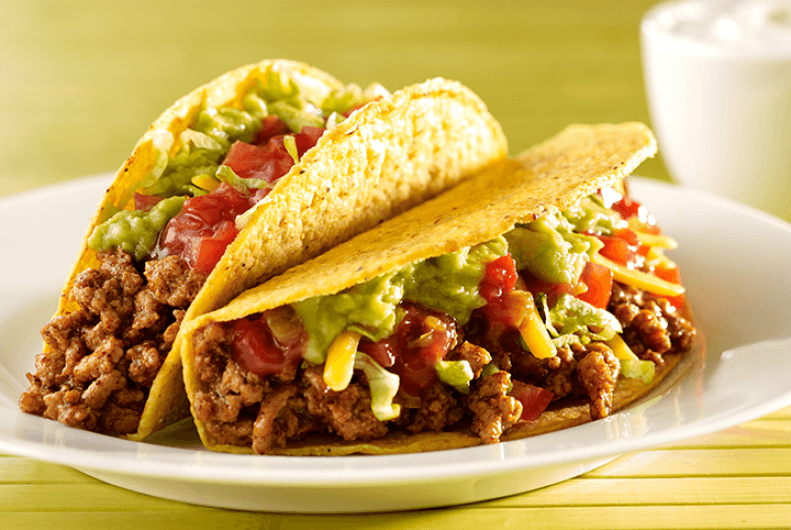
A Taco is an example of a
Homogeneous Mixture
Heterogeneous Mixture
Which of the following is NOT a property?
Color
Shape
Liquid
Size
Amy has a small sample of an unknown element that she is trying to identify. Amy divides the mass of the sample by its volume.
Which property of matter is Amy using to identify the element?
Weight
Density
Texture
Freezing point
Sand and salt are placed in the bottom of a beaker filled with water. The beaker is heated, and the water is stirred.
What will happen to the salt and sand?
The sand and salt will settle to the bottom.
The sand and salt will dissolve in the water
The salt will dissolve, and the sand will settle
The sand will evaporate, and the salt will dissolve.
Length measures __________________
The distance between to points
The weight of an object
The height of an object

