
Font size
 Worksheets
Earth sun moon practice test
Total questions: 94
Worksheet time: 2hrs 44mins
True
Sometimes
False
Never
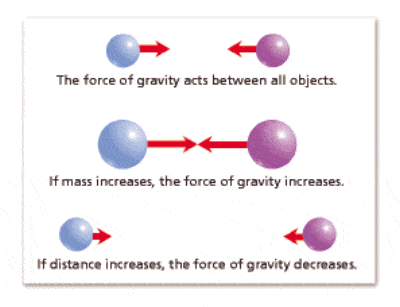
Increase because gravitational force increases
decrease because gravitational force decreases
decrease because gravitational force increases
nothing, weight is not affected by gravitational force

The seasons are caused by the ________ of the axis and the Earth's _____________ around the sun.
tilt, revolution
tilt, rotation
curve, revolution
curve, rotation

In this diagram, what season will the northern hemisphere be in? (HINT: Look at the direction of the axis)
Spring
Winter
Summer
Fall
What is the best reason for the summer days in Toronto (north of the equator) tend to be warmer than winter days there?
The Sun gets hotter during the summer.
Earth’s southern axis directly towards the Sun.
Earth is closer to the Sun during the summer.
Earth’s northern axis tilts closer to the Sun.
None of the answers are correct
Fill in the blank. The Earth orbits the _____.
moon
Earth
Sun
Fill in the blank. The moon orbits the ______.
Earth
Sun
the Solar System

T/F. The picture shows an example of Rotation.
True
False
How long does it take Earth to make one complete rotation around this axis?
1 Hour
24 hours 50 Minutes
24 Hours
28 hours
The seasons change on Earth due to its predictable patterns. Which statement below is true?
Different places on Earth get different amounts of direct sunlight.
The temperature of the sun dramatically changes everyday
The amount of heat give off by the sun changes with the seasons.
None of the above
Day and night are caused by...
Earth's revolution
Earth's rotation
Tilt of the Earth
Gravity from the moon

What is the Sun?
An aestroid
A star
A planet

The motion of a body that travels around another body in space is called
Orbit
Revolution
Rotaion
Rotunda
A body that orbits a larger body is called a:
Planet
Moon
Satellite
Gravity
What would happen if the time it took for Earth to make one rotation around its axis increased?
A day would be longer.
A year would be longer.

What season would be experienced in the Northern Hemisphere?
Summer
Winter
Spring
Fall
What effect would the season in the Northern Hemisphere have on the length of daytime?
Longer daytime
Shorter daytime
Equal daytime and nightime
Double daytime
What season would be experienced in the Southern Hemisphere?
Summer
Winter
Spring
Fall
What effect would the season in the Southern Hemisphere have on the length of daytime?
Longer daytime
Shorter daytime
Equal daytime and nightime
Double daytime

What season would be experienced in the Southern Hemisphere?
Summer
Winter
Spring
Fall
What would happen to the length of daytime and nighttime during an equinox?
Equal daytime and nighttime
Greater daytime and lesser nighttime
Lesser daytime and greater nighttime
Unequal daytime and nighttime
During the equinox, what direction does the tilting of the earth face?
Both north and south poles are tilted away from the sun
Both north and south poles are tilted towards the sun
Only the north pole is tilted toward the sun
Only the south pole is tiltled toward the sun
Why do we experience the changing of the season on the earth?
distance from the sun
rotation of the earth
change in solar output
tilt of the earth's axis


This image represents the Earth's....
rotation
revolution
spinning
rolling

This image shows that the northern hemisphere is receiving...
less sunlight than the southern hemisphere
more sunlight than the southern hemisphere
an even amount of sunlight as the southern hemisphere
the same amount of sunlight as the southern hemisphere
What would happen to the length of daytime and nighttime during an equinox?
Equal daytime and nighttime
Greater daytime and lesser nighttime
Lesser daytime and greater nighttime
Unequal daytime and nighttime

Which planets have shorter year, or orbit around the sun, than Earth?
Mars and Jupiter
Mercury and Venus
Saturn and Uranus
Neptune only
Around June 22nd we have the greatest amount of day time hours. This day is also known as the
Summer Equinox
Summer Solstice
Summer Hemisphere
Direct Summer
During an equinox the sun is directly over the
North Pole
South Pole
Equator
United States
True or False: The Earth is closer to the sun during the summer months.
True
False
The sun rises on the ____________
North
South
East
West


All of the following are true about equinox events except
the length of day and night are equal
the sun's rays reach their highest point above the equator
the sun's rays shine most directly on the equator
they occur in March and September

What happens as the moon revolves around the earth?
The shadow gets darker and darker.
The illuminated (lit) side gets lighter and lighter.
The shadow slowly disappears until it's fully lit, then the lit part slowly disappears until it's completely dark.
What causes moon phases? (SELECT TWO ANSWERS)
The earth's shadow
The moon revolving around the earth
The moon reflects light from the sun
The rotation of the moon

What is the result of the moon's orbit being tilted?
A lunar eclipse EVERY month
A lunar eclipse every few years
True or False: One side of the moon is always facing the sun.
True
False


As the moon moves from a new moon to a full moon, you see...
The moon appearing increasingly lighter.
The amount of light the moon is receiving is decreasing.
The amount of light the moon gets stays constant.
More light and then less light.

Based on the data, what day and approximate time experienced the highest tide?
July 12 at 8:30 am
July 12 at 9:10 pm
July 13 at 3:10 am
July 13 at 9:20 am

The Moon has a greater effect on the Earth's ocean tides than the Sun has because the
Moon is closer to the Earth than the Sun is
Sun has a higher density than the Moon
Sun has a higher temperature than the Moon
Moon has a greater mass than the Sun

Approximately how many days occur between the first-quarter phase and last-quarter phase?
7 days
15 days
29.5 days
365.25 days


If today is a full moon, which phase would we have observed two days ago?
waxing gibbous
waning gibbous
waxing crescent
waning crescent


Use the diagram to answer the question below:
Because Leticia’s diagram is showing that the half of the Moon that is facing the sun is lit by the sun, and the other half is dark.
Because the Moon has some lighter-colored rock and some darker-colored rock, and Leticia’s diagram is showing that the half of the Moon with the lighter-colored rock has rotated to the left.
Because there is a shadow from Earth falling on half of the Moon, and Leticia’s diagram is showing that shadow on the right half of the Moon.
Because Leticia has made the diagram incorrectly - all of the moon should be the same brightness because the Earth provides light to the Moon.


Where would the moon need to be for a lunar eclipse to occur?
1
2
3
4
Which moon is a first quarter moon?
1
2
3
4
What causes tides?
The phases of the moon
The tilt of the Earth
The moon's gravity
The angle of the sun
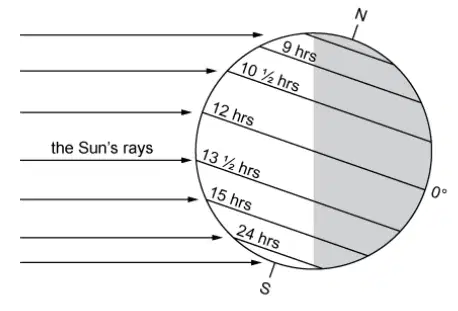
Use the information and diagram to answer the following question.
The diagram shows the Sun's rays lighting Earth's surface. Which area of Earth is receiving the MOST heat from the Sun's rays?
the North Pole
north of the equator
the South Pole
south of the equator

The table shows the average temperatures for Atlanta, Georgia, recorded for 12 months. Why do the temperatures change over the months?
Because the Moon is tilted on its axis, it reflects more sunlight on Earth during different times of Earth's yearly orbit.
Because Earth is tilted on its axis, the stars reflect more light during different times of the Earth's yearly orbit.
Because the Sun is tilted on its axis, parts of Earth get more sunlight during different times of Earth's yearly orbit.
Because Earth is tilted on its axis, parts of Earth get more hours of sunlight during different times of Earth's yearly orbit.
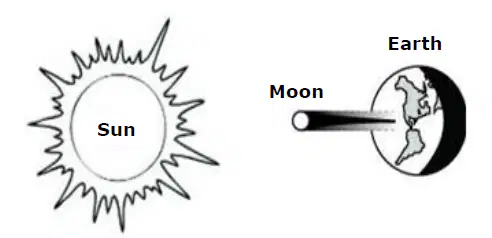
Use the information and diagram to answer the following question.
The diagram is of the Sun, the Moon, and Earth. What event is shown in the diagram?
lunar eclipse
solar eclipse
crescent moon
full moon
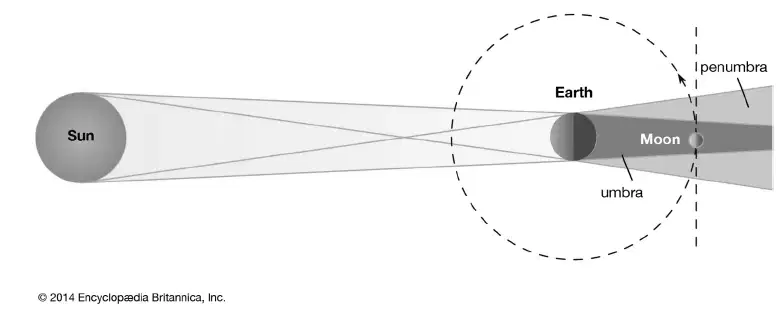
Use the diagram to answer the following question. Which explanation BEST describes the event in the diagram?
A lunar rotation occurs the moon orbits the Earth once every 27 days for the moon to rotate once on its axis.
A solar eclipse occurs when the Moon passes in front of the Sun causing a shadow to fall on certain portions of the Earth.
A solar alignment occurs when the Sun, the Moon, and the Earth all appear in the same part of the sky.
A lunar eclipse occurs when the Moon moves into Earth's shadow.
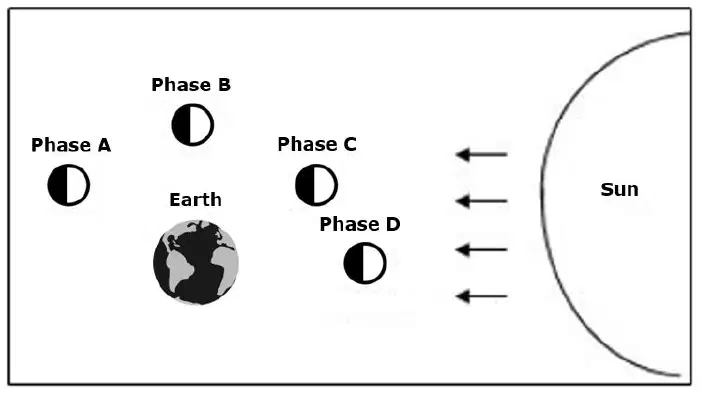
Use the model to answer the following question.
The model shows different positions of the moon relative to Earth and the sun. In which phase of the model will an observer on Earth see a waxing crescent?
Phase B
Phase C
Phase D
Phase A
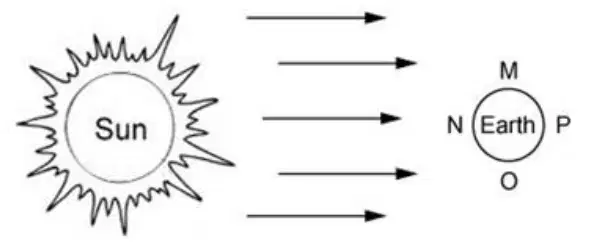
Use the diagram to answer the following question. Which letter indicates where the moon would be located during a lunar eclipse?
Position O
Position P
Position N
Position M

Use the information and model to answer the following question.
The model shows the Moon at four different positions as it revolves around the Earth. Position A occurred on April 1, 2017. Which statement BEST describes the moon’s position in 14 days and why?
Position B, a 3rd Quarter moon, because the moon revolves around Earth about once every 7 days.
Position A, a 1st Quarter moon, because the moon revolves around Earth about once every 28 days.
Position D, a new moon, because the moon revolves around Earth about once every 7 days.
Position C, a full moon, because the moon revolves around Earth about once every 28 days.
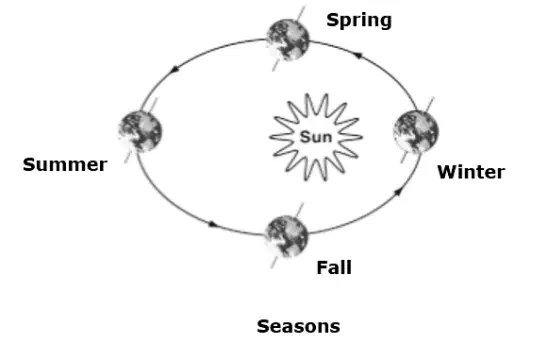
Use the information to answer the following question. Summer is warmer than Winter in Northern Hemisphere because during Summer the Northern Hemisphere gets more direct sunlight. Which explanation explains why the Northern Hemisphere gets more direct sunlight in the Summer?
The Southern Hemisphere is tilted toward the Sun during the Summer.
The Northern Hemisphere is tilted away from the Sun so the days are longer
The Southern Hemisphere is tilted away from the Sun so the days are shorter.
The Northern Hemisphere is tilted toward the Sun during the Summer.
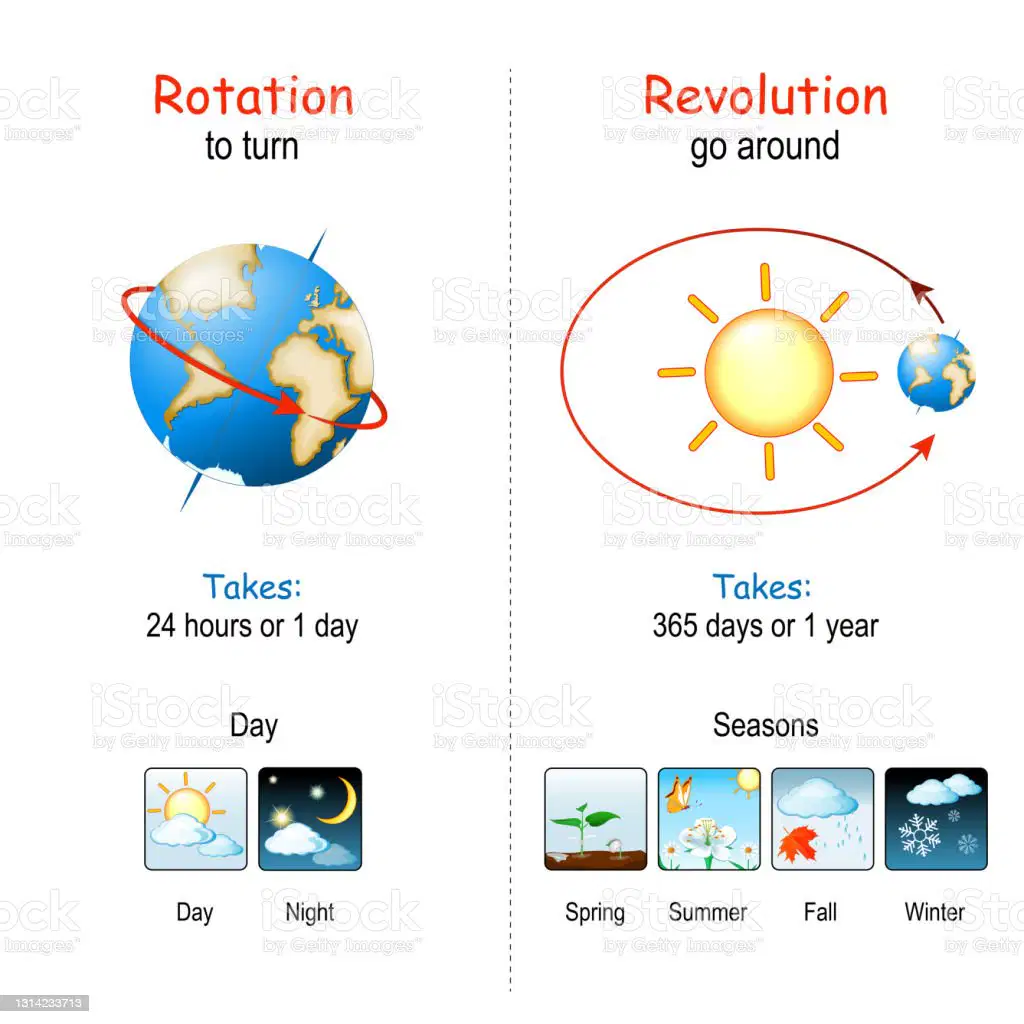
Which of the following BEST explains the differences between
rotation and the revolution of a planet?
Rotation is a planet’s movement around the Sun causing four seasons to occur. Revolution is the spinning of the planet on its axis causing Earth to experience day and night.
Revolution is a planet’s movement around the Sun causing four seasons to occur. Rotation is the spinning of the planet on its axis causing day and night.
Revolution is a planet's movement around the Sun causing day and night to occur. Rotation is the spinning of a planet on its axis causing seasons.
Rotation is the planet's movement around the Sun causing four seasons to occur. Revolution is the spinning of the planet on its axis causing it to experience only daylight.

