
Font size
 Worksheets
Science P6
Total questions: 227
Worksheet time: 4hrs 56mins

Which planet is closest to Earth in size?
Mercury
Uranus
Venus
Mars

Which is NOT a rocky planet?
Earth
Neptune
Mercury
Mars

Which is NOT true about Mercury?
it has no moons
it has no atmosphere
it is 1/2 the size of Earth
it is closest to the sun

Hamea, Makemake, Ceres, and Eris are all
dwarf planets
meteoroids
asteroids
comets

Which is the smallest celestial body in our Solar System?
meteoroid
planet
dwarf planet
asteroid

Which is the largest celestial body in our Solar System?
Jupiter
Sun
Saturn
Mars

Which celestial body turns on its side?
Neptune
Mars
Jupiter
Uranus

The asteroid belt is found between
The Sun and Mercury
Neptune and Uranus
Venus and Earth
Mars and Jupiter

What gas causes Uranus and Neptune to look blue?
carbon dioxide
methane
sulfuric acid
nitrogen

Which planet is 4x bigger than Earth?
Mars
Neptune
Saturn
Jupiter

What is true about Jupiter, Saturn, Uranus, and Neptune?
they all have many moons
they all have a solid surface
they all are smaller than Earth
they all have liquid water on the surface

How does Mars size compare to Earth?
it's 2x bigger
it's 3x bigger
it's 1/2 the size
it's 1/3 the size

How many moons does Mars have?
0
1
2
3

How many moons does Mercury have?
0
1
2
3

About how much of Earth's atmosphere is oxygen?
20%
40%
60%
80%

Which is true about Mercury, Venus, Earth, and Mars
they all have an atmosphere
they all have many moons
they all have rings made of rocks and ice
they all have a rocky surface

What is the hottest planet?
Mercury
Venus
Mars
Jupiter

Which planet is closest to Neptune in size?
Earth
Venus
Uranus
Mars

What are comets made of?
sulfuric acid
ice
helium and hydrogen
carbon dioxide

What gases make the Sun so hot and bright?
carbon dioxide & sulfuric acid
nitrogen & oxygen
helium & hydrogen
methane & helium
How long does Earth's orbit around the sun take?
365 and 1/4 days
360 days
24 hours
2 years
Our sun is a medium-sized star compared to other stars.
True
False
The HOTTEST stars are usually what color
yellow
orange
blue
pink
What causes day and night here on our Earth?
The different moon phases
Asteroids
The rotation of Earth
Stars
What causes our seasons here on Earth?
Stars in our universe
Our revolution around the moon
Earth's tilted axis and our rotation
The revolution of Earth around the sun and Earth's tilted axis
This is the first planet from the Sun; it is very hot in the day and very cold in the night.
Mercury
Neptune
Earth
Jupiter
What are large chunks of rocks and metal in space?
Earth
comet
asteroids
gibbous
The fourth planet from the Sun; also known as the "red planet."
Neptune
Mercury
Earth
Mars
The sixth planet from the Sun; known for its large rings.
Saturn
Mercury
Earth
Mars
The fifth planet from the Sun; this is the LARGESTplanet in the Solar System.
Jupiter
Mercury
Earth
Neptune
This is the eighth (last) planet from the Sun; it is deep dark blue in color.
Earth
Neptune
Mercury
Jupiter
These are the 4 planets closest to the sun (Mercury, Venus, Earth, Mars).
inner planets
outer planets
dwarf planets
solar planets
This is the nearest star to Earth.
the moon
the planet of Mars
the asteroid belt
the sun
These are the four planets FARTHEST from the Sun; Jupiter, Saturn, Uranus, and Neptune.
inner planets
outer planets
solar planets
the best planets
A group of stars that make a pattern in the night sky.
planets
comets
asteroids
constellation
Where is the Asteroid Belt located in the Solar System?
near Neptune
between Mercury and Venus
between Mars and Jupiter
around the Sun
This is the phase of the moon when the moon looks like a thin sliver (less than half of the moon's nearside is sunlit).
crescent
gibbous
full
new
This is the phase of the moon where NONE of the moon's nearside is sunlit.
crescent
gibbous
full moon
new moon
This is the phase of the moon that looks ALMOST full.
crescent
gibbous
full moon
new moon
Stars DO NOT twinkle in the sky; only planets twinkle in the sky.
True
False
Which is the correct order of planets from the sun?
Mercury Venus Earth Mars Jupiter Neptune Uranus Saturn
Neptune Uranus Saturn Jupiter Mars Earth Venus Mercury
Mercury Venus Earth Mars Jupiter Saturn Uranus Neptune
Mars Venus Earth Mercury Jupiter Saturn Uranus Neptune
The ___ of a planet determines its day.
ellipse
revolution
orbit
rotation
The ___ of a planet determines its year.
rotation
ellipse
revolution
axis
All inner planets have the following in common except:
signs of volcanic activity
layers of core, mantle, crust
ice on their surfaces
solid, rocky surface
Besides Venus, which inner planet has more than 90% carbon dioxide in its atmosphere?
Mercury
Venus
Earth
Mars
Which inner planet has a day about the same length as Mars?
Mercury
Venus
Earth
Mars
Which inner planet has the tallest mountain in the solar system?
Mercury
Venus
Earth
Mars
Which inner planet has clouds of acid (sulfuric acid)?
Mercury
Venus
Earth
Mars
Besides Venus, which inner planet has no moons?
Mercury
Venus
Earth
Mars
Which inner planet has a day that is longer than its year? Its day is 244 Earth days; its year is 225 Earth days?
Mercury
Venus
Earth
Mars
Which inner planet has one moon?
Mercury
Venus
Earth
Mars
Which inner planet rotates the opposite direction of the other inner planets?
Mercury
Venus
Earth
Mars
Which inner planet has the shortest year?
Mercury
Venus
Earth
Mars
Which inner planet has the longest year?
Mercury
Venus
Earth
Mars
Besides Earth, which inner planet has a greenhouse effect which causes it to be the hottest planet?
Mercury
Venus
Earth
Mars
Which inner planet has red soil with a high content of iron oxide?
Mercury
Venus
Earth
Mars
Which outer planet is the largest in the solar system?
Jupiter
Saturn
Uranus
Neptune
Which outer planet has a density less than water's density and would float in water?
Jupiter
Saturn
Uranus
Neptune
Which outer planet rotates on its axis from top to bottom as if it is a rolling ball?
Jupiter
Saturn
Uranus
Neptune
Which outer planet has the longest year, about 165 Earth years?
Jupiter
Saturn
Uranus
Neptune
Which outer planet has the shortest year, about 12 Earth years?
Jupiter
Saturn
Uranus
Neptune
Which outer planet has the most complex and largest system of rings?
Jupiter
Saturn
Uranus
Neptune
Which outer planet has the shortest day, rotating around its axis in less than 10 hours?
Jupiter
Saturn
Uranus
Neptune
Which outer planet has a dark blue spot that resembles Earth's hurricanes?
Jupiter
Saturn
Uranus
Neptune
Besides Neptune, which outer planet has methane in its atmosphere which causes both planets to be blue?
Jupiter
Saturn
Uranus
Neptune
Besides the Sun, all other stars appear to be points of light. Why do the other stars appear so small?
These stars are not as hot as the Sun.
These stars are not as large as the Sun.
These stars are farther away than the Sun.
These stars are a different color than the Sun.
Scientists now accept eight planets as being part of our Solar System. What property do all of these planets share that makes them part of the Solar System?
They are all the same size.
They all orbit the Sun like Earth does.
They are all covered mostly by oceans.
They all have plant and animals living on them.
Mrs. Garcia's class is studying galaxies. She asked a student to describe a galaxy. Which statement is the best description of a galaxy?
gas, dust, billions of stars, and planets
a star, planets that orbit the star, gas, and dust
a planet, moons that orbit the planet, gas, and dust
a group of planets, moons that orbit planets, gas, and dust
What is the Milky Way?
A. our solar system
B. our home galaxy
C. our constellation
D. our universe
Which statement accurately compares our galaxy to our Solar System?
A. Our galaxy is very small compared to our Solar System.
B. Our Solar System includes the Moon, but our galaxy does not.
C. Our galaxy has more stars than our Solar System has planets.
D. Our Solar System has only the planet Earth, but our galaxy includes many planets.
Which of these can be made of gases, dust, and hundreds of billions of stars?
A. a galaxy
B. a planet
C. a solar system
D. a constellation
Astronomers often discover new planets. Which of the following best describes a planet?
A. a rock fragment in space.
B. a large round object in space.
C. a large object in space that revolves around a star in its own orbit.
D. a large object in space that is composed of gases and gives off light.
Which features do the outer planets have in common?
A. They have no moons.
B. They have rocky surfaces.
C. They have extremely high temperatures.
D. They have atmospheres of hydrogen and helium gases.
Which of the following correctly compares the inner planets of the Solar System to the outer planets?
A. The inner planets have rings, while the outer planets do not have rings.
B. The inner planets have few or no moons, while the outer planets have many moons.
C. The inner planets have longer year lengths, while the outer planets have shorter year lengths.
D. The inner planets are composed mostly of gas, while the outer planets are composed mostly of solids.
Which features do all inner planets have in common?
A. They have rings.
B. They have moons.
C. They have rocky surfaces.
D. They have thick atmospheres.
The planets of our solar system are divided into inner planets and outer planets. Which statement describes how inner planets are different from outer planets?
A. Inner planets are large, gaseous planets, and outer planets are small, rocky planets.
B. Inner planets are small and rocky planets, and outer planets are large and gaseous.
C. Inner planets are cold, gaseous planets, and outer planets are hot, rocky planets.
D. Inner planets are large and rocky, and outer planets are small and gaseous.
Which statement about the Sun is correct
A. The Sun is the closest star to Earth.
B. The Sun is smaller than most planets.
C. The Sun is made of rock, minerals, and hot gases.
D. The Sun has a surface temperature similar to Jupiter.
Which statement best describes an asteroid?
A. An asteroid has an icy tail.
B. An asteroid has an atmosphere.
C. An asteroid is a ball of gas that orbits a planet.
D. An asteroid is a rocky object that orbits the Sun.
Which statement best compares the Sun to Earth?
A. They are similar in size, and Earth revolves around the Sun.
B. They are similar in size, and the Sun revolves around Earth.
C. The Sun is much larger, and Earth revolves around the Sun.
D. The Sun is much larger, and the Sun revolves around Earth
Which statement best describes comets?
A. Comets rotate on an axis.
B. Comets have thick atmospheres.
C. Comets can sometimes have moons.
D. Comets are composed of ice, rock, and gas.
What is at the center of our Solar System and also the largest object in it?
Earth
Jupiter
The Sun
The Moon
What four planets are gas planets?
Mercury, Venus, Earth, Mars
Mercury, Venus, Jupiter, Saturn
Neptune, Uranus, Earth, Jupiter
Jupiter, Saturn, Uranus, Neptune
What is the order of the planets from the Sun?
Venus, Mercury, Earth, Mars, Saturn, Jupiter, Uranus, Neptune
Mercury, Venus, Earth, Mars, Neptune, Uranus, Saturn, Jupiter
Neptune, Uranus, Saturn, Jupiter, Mars, Earth, Venus, Mercury
Mercury, Venus, Earth, Mars, Jupiter, Saturn, Uranus, Neptune
How many planets are there in our Solar System?
7
8
6
9
The belt between Mars and Jupiter
Comets
Asteroid
Meteors
Stars


What is the Solar System?
The Solar System refers to the Sun, Stars, Galaxies, and the objects in space that move around the Sun.
The Solar System refers to the stars, galaxies, and objects in space that move around the Moon.
The Solar System refers to the Sun and the objects in space that move around the Sun.
The Solar System refers to the Sun and the objects in space that move around the Earth.
What is at the center of our Solar System and also the largest object in it?
Earth
Jupiter
The Sun
The Moon

What Makes Up the Solar System?
The Sun
The Moons
The Planets
The Asteroids
The Comets
The Meteors
The Sun
The Moons
The Planets
The Asteroids
The Comets
The stars
The sun is a _______.
star
planet
satellite
meteor

All stars, including our Sun, are mostly made of these 2 gases
hydrogen and helium
hydrogen and oxygen
iron and nickel
vibranium and adamantium
True or false: The moon has no air.
True
False
True or False: The moon has no gravity.
True
False
The moon gets its light from
the sun
the Earth
itself
aliens

(a) are objects in space that orbit other larger objects.
(use only one word)

What are the types of satellites?
artificial & homemade
natural & organic
natural & artificial

What do natural and artificial satellites have in common?
They don't have anything in common
they orbit celestial bodies (objects in space)
they send information to the Earth
the float outer space with no direction

What's the name of the Earth's natural satellite?
(use only one word)
(a)

Artificial satellites are used to study the Earth and other planets.
True
False

Natural satellites are smaller celestial bodies (objects in space) that orbit other celestial bodies (objects in space).
True
False

(a) (Artificial / Natural) satellites help us communicate and even observe the distant Universe.
(use only one word from the words in bracket above)
Which 2 planets in our Solar System don't have any natural satellites?
Jupiter & Pluto
Neptune & Mars
Mercury & Venus
Earth & Saturn

Artificial satellites are launched into space on rockets.
True
False
How does a satellite look like?


The earth is tilted on its _____
line
equator
axis
core
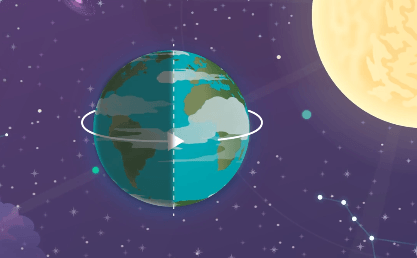
What is Earth's daily motion on its axis called?
Rotation
Revolution

Which of the following would be the best example to explain Earth's rotation?
funnel
merry-go round
doorknob
swing
Many cultures have different methods to determine the time of day. Which of the following is an ancient tool invented to determine the time of day?
watch
clock
sundial
compass
What direction does the sun appear to move across the sky?
west to east
north to south
east to west
south to north
which statement correctly describes the sun's apparent movement across the sky?
as earth spins on its axis, it makes the sun appear to move across the sky?
as the sun spins around earth, it moves across the sky
earth rotates 24 hrs, making the sun appear move across the sky.
the sun rotates around the earth every 12 hours, making the sun appear to move across the sky
Earth revolves around the sun, but it also makes one complete rotation. How long does it take Earth to make one complete rotation on its axis?
365 days
1 month
1 day
1 week

How long does it take for the Earth to complete one full rotation around it's axis?
24 hours
12 hours
6 hours
Choose ALL the correct statements from the list below. There may be more than one.
It takes 365 days for the Earth to revolve once around the sun.
The Earth completes a rotation on its axis every 12 hours.
The Earth's axis is tilted.
The Sun orbits the Earth in a clockwise direction.
The rotation of the Earth makes it appear as if the Sun is moving across the sky.
If Earth was not tilted, what statement would be correct?
The seasons are unaffected.
The seasons are reversed.
There are no seasons.
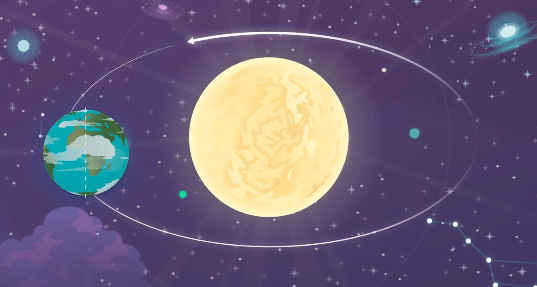
How long does it take the Earth to do the revolution movement?
365 days
24 hours
24 hours + 6 hours
28 days
What happens to our day and night hours on December 21st (Winter Solstice)?
Days are longer and nights are shorter.
Days and nights are 12 hours.
We probably have eclipses.
Days are shorter and nights are longer.
What happens to our day and night hours on June 21st (Summer Solstice)?
Days are shorter and nights are longer.
Days and nights are 12 hours.
We probably have eclipses.
Days are longer and nights are shorter.
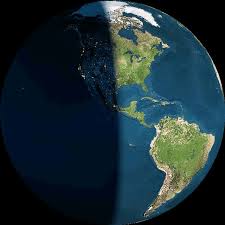

As a calendar year only has 365 days, there is a _____________ every four years. We add an extra day to the month of February.
Leap year
Equinoxes
Solstices
Month year

Day and night are caused by movement of...
The Sun
The Earth

The seasons are...
Winter, summer, autumn and hotter
Summer, spring, tuna and snow
Spring, summer, autumn and winter

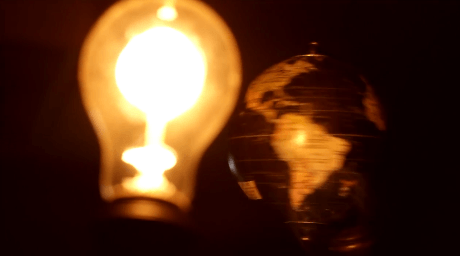
The Night happens because one side of the Earth is facing away from the Sun.
True
False

How long does the Earth take to complete an orbit around the Sun?
1 year
24 hours

What are the consequences of revolution and the tilt of our planet?
Day and de night
Seasons
Shadows

The Earth’s rotation and revolution happen at the same time.
True
False

All the planets take the same time to complete an orbit around the Sun.
True
False

The summer happens when…
the hemisphere is tilted toward the Sun.
the hemisphere is tilted away from the Sun.
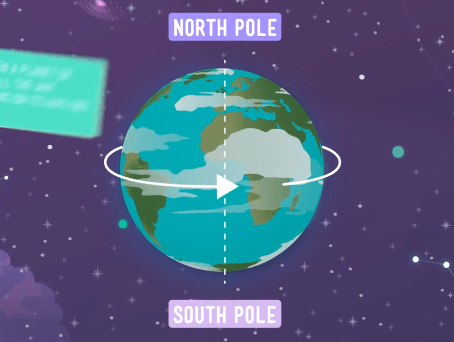
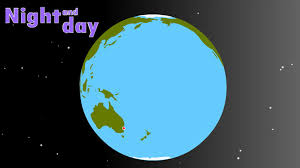
The star at the center of our solar system is called
the Moon
the Sun
the Andromeda
Beetlejuice


Which phase of the moon is shown in the picture?
New Moon
Crescent
Full Moon
Gibbous

Which phase of the moon is this?
Full Moon
New Moon
Crescent
Gibbous

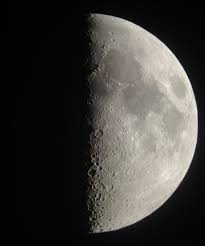
Name the moon phase.
First Quarter
Third Quarter
New Moon
Full Moon

What does this diagram show?
solar eclipse
lunar eclipse

Solar eclipses happen when ...
the sun blocks the moon's light.
the sun blocks Earth's light.
the moon blocks the sun's light.
the Earth blocks the sun's light.
Lampung is 17:30 WIB
What time is it in Maluku?
(a)
Bali is 04:45 WITA
What time is it in Bogor?
(a)
What time is it in Aceh if it is 13:26 WIT in Merauke?
(a)
The differences between solar and lunar calendar are .... and ....
Solar consist of 365/366 days
Solar consist of 354 days
Lunar based on the phases of the moon
Lunar based on the revolution of earth
Write 2 effects of revolution of the moon!
Effects of the revolution of the earth are ....
(more than 1 answer)
Conselation
Seasons
Different length of days
Time difference
Night and day
Effects of the rotation of the earth are ....
(more than 1 answer)
Conselation
Seasons
Different length of days
Time difference
Night and day

What phase of the moon is labeled 4?
waning crescent
waxing crescent
waxing gibbous
waning gibbous

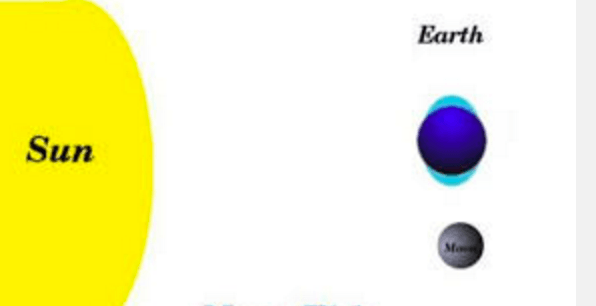
Which moon phase is shown in this diagram?
new moon
1st quarter
full moon
3rd quarter

Which moon phase is shown in this diagram?
new moon
first quarter
full moon
3rd quarter

Why is there no erosion on the moon?
there is no wind or water to move around material
The moon DOES have erosion and movement
The atmosphere on the moon is not dense enough
The craters prevent erosion


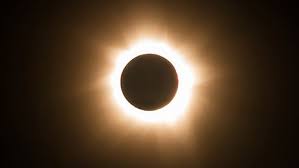

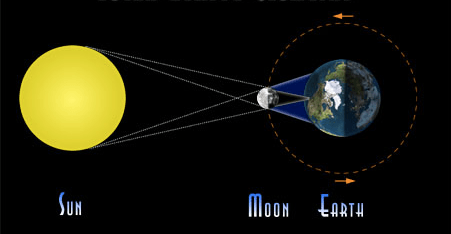
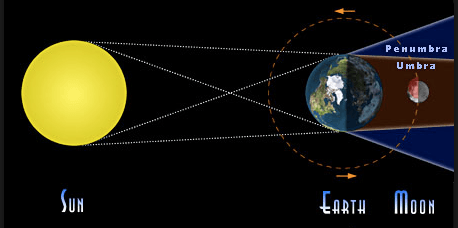

We do NOT have a lunar eclipse each month because...
The tilt of the moon's orbit is at 5 degrees
The moon is too small
The moon's orbital distance changes
All choices
What factor limits the number of eclipses per year?
Distance between the moon and the earth
Tilt of the moon's orbit around the earth
Distance between the earth and the sun
Tilt of the earth's axis of rotation
A lunar eclipse occurs when:
The sun passes between the earth and the moon.
The sun passes between the earth and the moon.
The moon passes through the earth's shadow.
The sun passes through the moon's shadow.
The gravitational pull from the moon and sun causes
moon phases
eclipses
tides
When the northern hemisphere is tilted away from the sun, it is
Winter
Summer
Fall
Spring
Which is most likely caused by the tilt of Earth on its axis as it revolves around the sun?
lunar eclipse
phases of the moon
two high tides and two low tides each day
opposite seasons in the Northern and Southern Hemispheres
When the bright part of the moon gets bigger (light move right to left),
the moon is waxing.
the moon is waning.
the tides are changing.
the moon is a new moon.
What occurs because of the revolution of Earth around the sun and the tilt of the Earth's axis?
different seasons
night and day
lunar eclipses
moon phases
Different angles of the moon's lit surface as the moon revolves around Earth cause
cycles.
moon phases.
eclipses.
tides.
Why are people on Earth unable to see the moon during the new moon phase?
The lit side of the moon is not facing Earth.
The sunlight is being reflected off the moon.
The location of Earth is between the moon and the sun.
The tilt of Earth is causing the moon to be blocked by the sun.
During the summer solstice,
the Northern Hemisphere receives most sunlight; longest day of year.
the sun is directly above the equator.
Northern Hemisphere receives less sunlight; shortest day of year.
sunlight doesn't change.
Moon phases happen every month. Which statement explains why we see the moon changing from night to night.
The Earth revolves around the moon.
The Sun revolves around the Earth.
The moon revolves around the Earth.
The moon stays in place as the sun moves.
What force keeps all of the planets in orbit around the sun?
Electricity
Magnetism
Friction
Gravity

Lunar eclipse
solar eclipse

What type of eclipse is this?
Solar eclipse
Lunar eclipsee

What phase is number 4?
Waning crescent
Waning gibbous
Waxing crescent
Waxing gibbous

What phase is this?
Waning gibbous
Full
Last quarter
Waxing crescent
What does "waning" mean?
Staying the same
Having one side illuminated
Getting bigger and brighter
Getting smaller and darker
What 2 tides produce the highest of high tides and the lowest of low tides?
Neap tides
Fall tides
Spring tides
Gibbous tides

