
Font size
S
M
L
XL
 Worksheets
TEST REVIEW "IONIC BONDING"
Total questions: 53
Worksheet time: 27mins
Name
Class
Date
1.
Last Name
4 lines
2.
First Name
4 lines
3.
Class Hour
a)
1
b)
2
c)
3
d)
5
e)
6
4.
1) The only elements on the periodic table that are already stable as atoms are in this family ___.
a)
Transition metals
b)
Alkali metals
c)
Noble gases
d)
Halogens
5.
2) An atom forms an ion is by___.
a)
gaining electrons, only
b)
losing electrons, only
c)
gaining or losing electrons
d)
adding or losing protons
6.
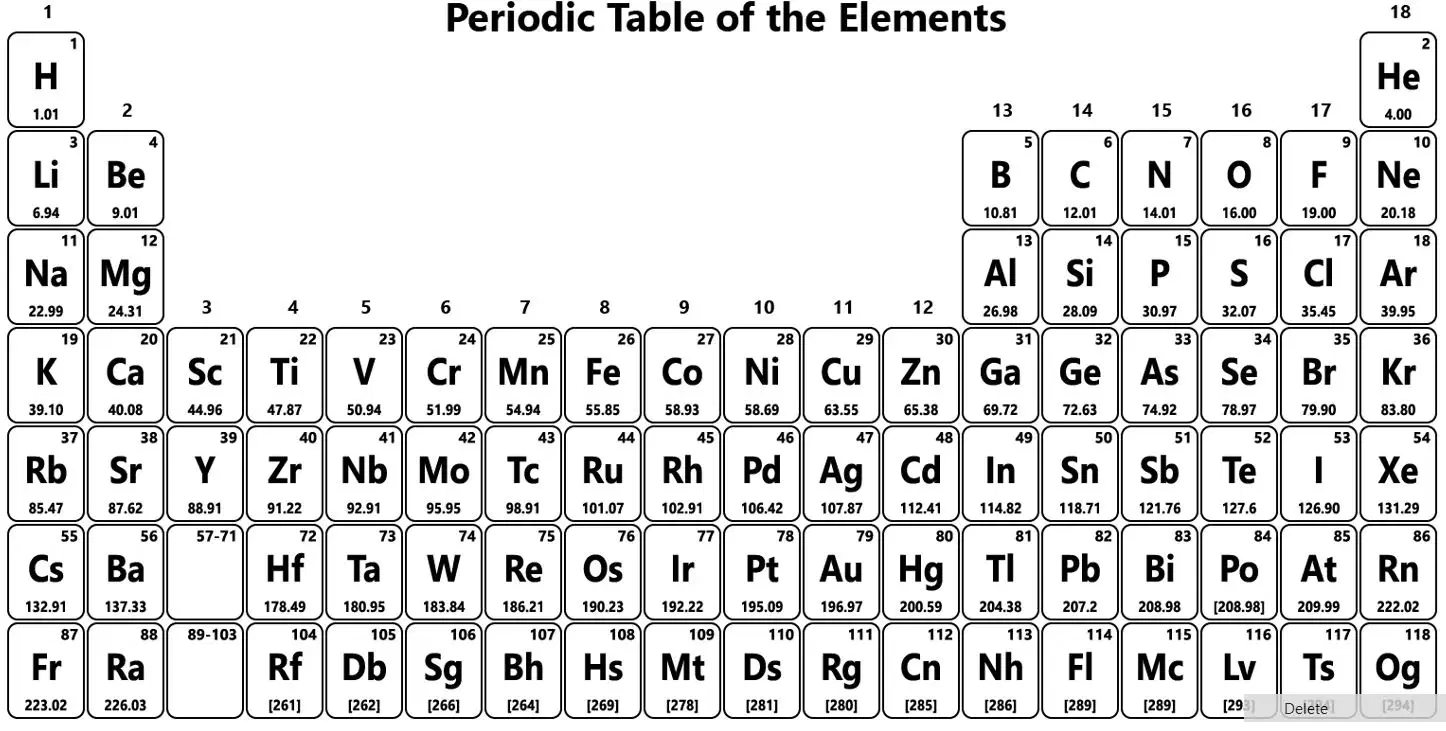
3) The compound formed between potassium and nitrogen would be ___.
a)
K₃N
b)
P₃N
c)
PN₃
d)
PN
e)
KN
7.
4) The oxygen family elements have ___ valence electrons, and their oxidation number is ___.
a)
-6, +2
b)
6, -2
c)
+2, -6
d)
-2, +6
8.
5) Group 13 elements have ___ valence electrons and their oxidation number is ___.
a)
+5, 5
b)
+3, 3
c)
5, +5
d)
3, +3
9.
6) Ionic compounds are electrical conductors only when they are ___.
a)
in solution or melted
b)
crystallized
c)
solids
d)
only as gases
10.
7) Cations are ___.
a)
negative ions
b)
positive ions
c)
isotopes
d)
combinations of ions
11.
8) Cations have more ___.
a)
electrons than protons
b)
more neutrons than protons
c)
electrons than neutrons
d)
more protons than electrons
12.
9) Ionic compounds are made of a repeating pattern or ions usually called a(n) ___.
a)
covalent crystal
b)
valence ladder
c)
crystal lattice
d)
checkerboard
13.
10) The compounds, SO₂, SO₃ and N₂O₅, cannot be ionic compounds because they are composed entirely of ___.
a)
solids
b)
metals
c)
metalloids
d)
nonmetals
14.
11) Anions have ___.
a)
more protons than electrons
b)
more electrons than protons
c)
positive charges
d)
equal number of protons and electrons
15.
12) The first energy level will hold a maximum of ___ electrons.
a)
8
b)
2
c)
18
d)
6
16.
13) An atom that has gained or lost electrons and is no longer neutral has become a/an ___.
a)
isomer
b)
ion
c)
allotrope
d)
isotope
17.
14) Ionic bonds are bonds between
a)
metals
b)
cations and anions
c)
the nucleus and the electron cloud
d)
the nonmetals, only
18.
15) Ionic compounds are usually formed when _____ donate electrons to ______.
a)
metals, nonmetals
b)
nonmetals, metals
c)
halogens, transition metals
d)
noble gases, metals
19.
16) Ionic compounds do not exist as individual, singular molecules.
a)
True
b)
False
20.
17) Ionic compounds have really high melting and boiling point temperatures because of their ______
a)
few, but strong ionic bonds
b)
many strong ionic bonds in crystal structures
c)
very large atoms with lots of weak charges attracting each other
d)
ability to exist as single molecules
21.
18) Ionic bonds form when valence electrons are ______.
a)
transferred
b)
shared
c)
like a sea of electrons moving around the outside of ionic compounds
d)
glued to each other by magnetic forces
22.
19) Anions are formed by ____ electrons.
a)
losing
b)
gaining
c)
doubling
d)
having no
23.
20) Ionic compounds are ____ at room temperature.
a)
solid
b)
liquid
c)
gas
d)
plasma
24.
21) Ionic compounds are___.
a)
malleable
b)
ductile
c)
insoluble in water
d)
brittle
25.

22) The ionic compound formed between beryllium and oxygen would be ___.
a)
Be₂O
b)
Be₂O₂
c)
BeO
d)
BeO₂
26.

23) The compound formed between P and Ca would be ___.
a)
CaP
b)
Ca₂P₃
c)
P₃Ca₂
d)
Ca₃P₂
e)
P₂Ca₃
27.
24) Na₃P would be called ____.
a)
sodium potassium
b)
sodium tripotassium
c)
sodium triphosphorus
d)
sodium phosphide
e)
trisodium phosphide
28.
25) Atoms form ions in order to ___.
a)
increase atomic radius
b)
achieve 8 valence electrons
c)
enlarge
d)
have a charge
29.
26) An atom will gain or lose valence electrons based on such factors as
a)
ionization energy required and electronegativity
b)
which period it's in
c)
which Noble gas it is closest to
d)
atomic mass
30.
27) The Alkaline Earth Metals form ions with this oxidation number.
a)
-2
b)
-1
c)
+1
d)
+2
e)
0
31.
28)The oxidation number of the Noble Gases is ___.
a)
-1
b)
+1
c)
8
d)
0
32.
29) The number two in this formula, CO₂, is called a/an ___.
a)
electron configuration
b)
valence shell
c)
subscript
d)
coefficient
33.
30) The radius of atoms decreases to the right on the periodic table because of an increase in ____ with no additional ____.
a)
shells, electrons
b)
numbers of energy levels, protons
c)
protons, electrons
d)
protons, shielding effect
34.

31) Boron and phosphorus form the ionic compound,
a)
BP
b)
B₃P₃
c)
BP₃
d)
B₃P
e)
boron and phosphorus cannot form an ionic compound because boron is a not a metal
35.
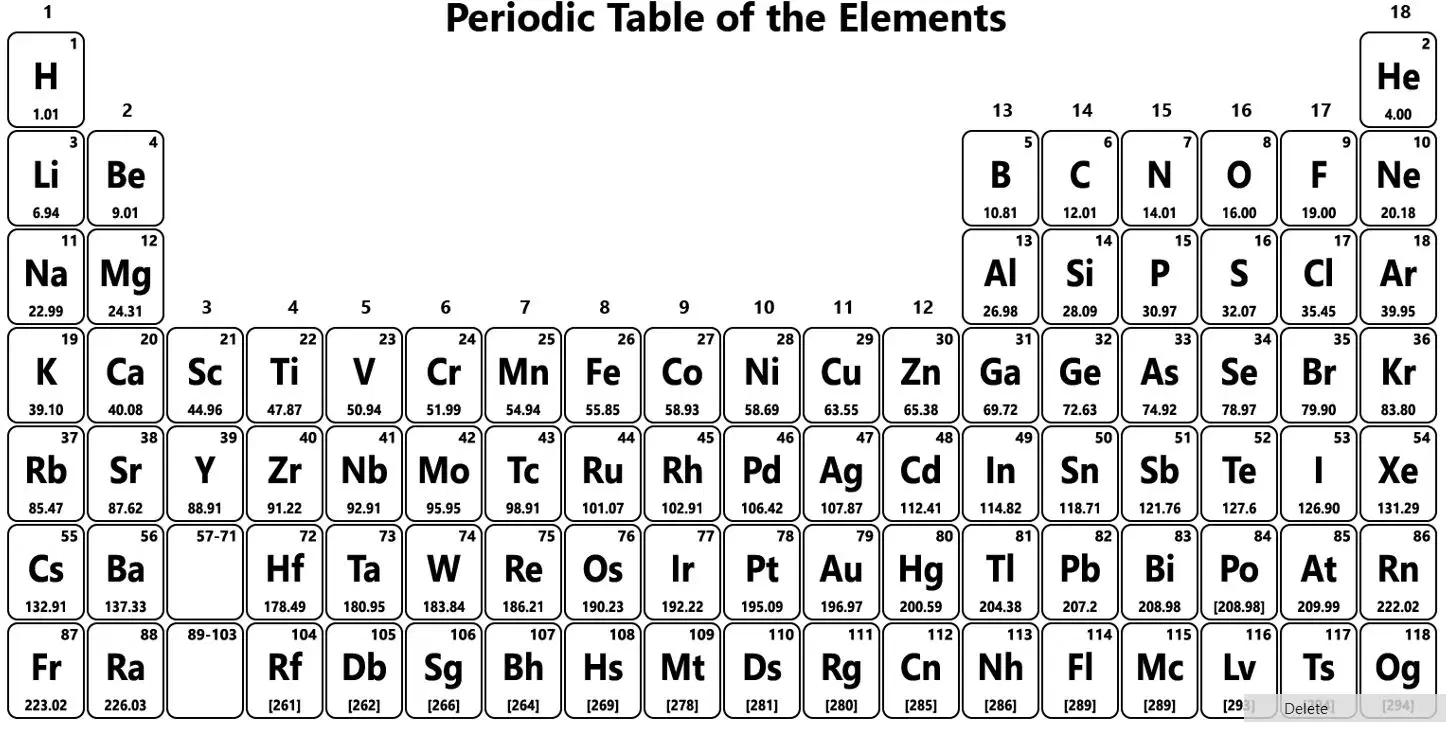
32) Compound formed between aluminum and nitrogen would be ___.
a)
AlN
b)
Al₃N
c)
AlN₃
d)
Al₃N₂
36.
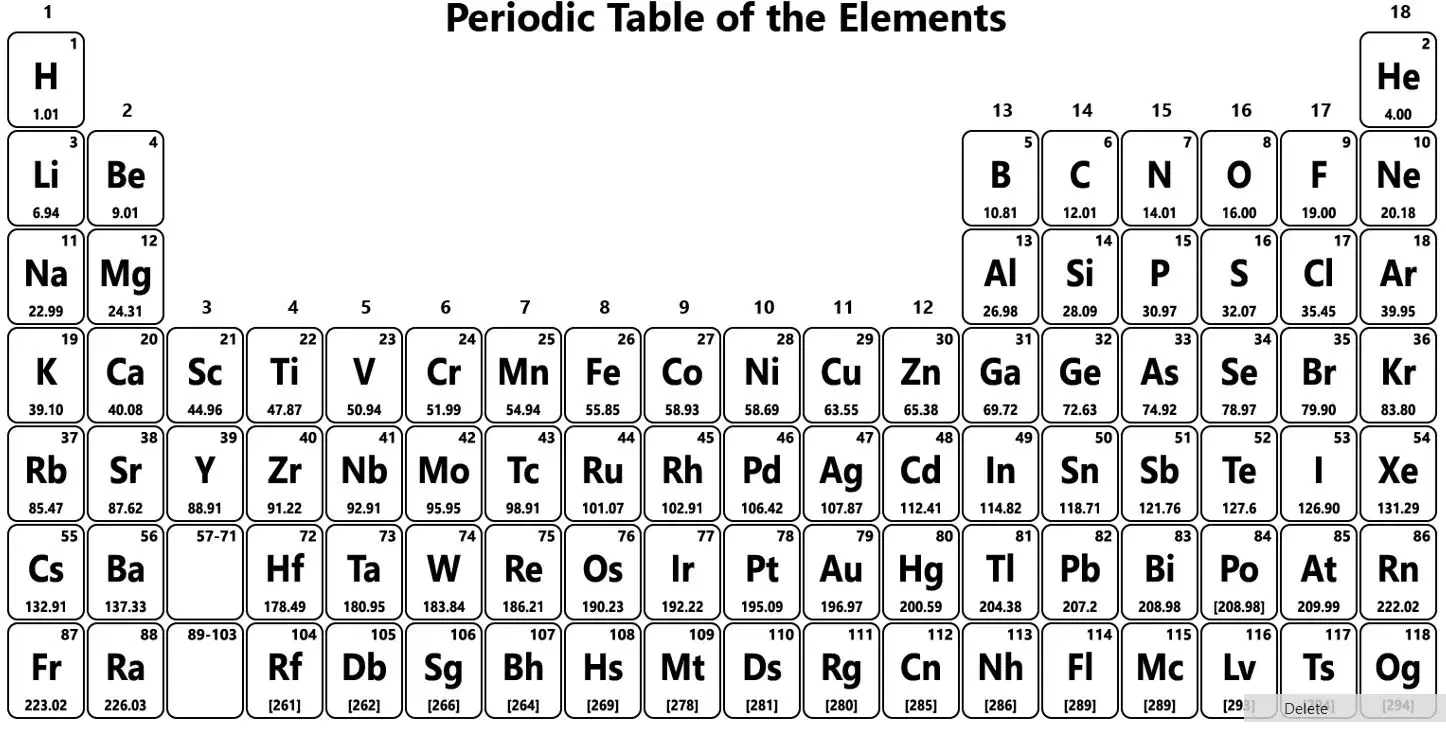
33) Compound formed between sodium and nitrogen would be called ____.
a)
trisodium nitride
b)
sodium nitride
c)
sodium trinitride
d)
sodium dinitride
37.
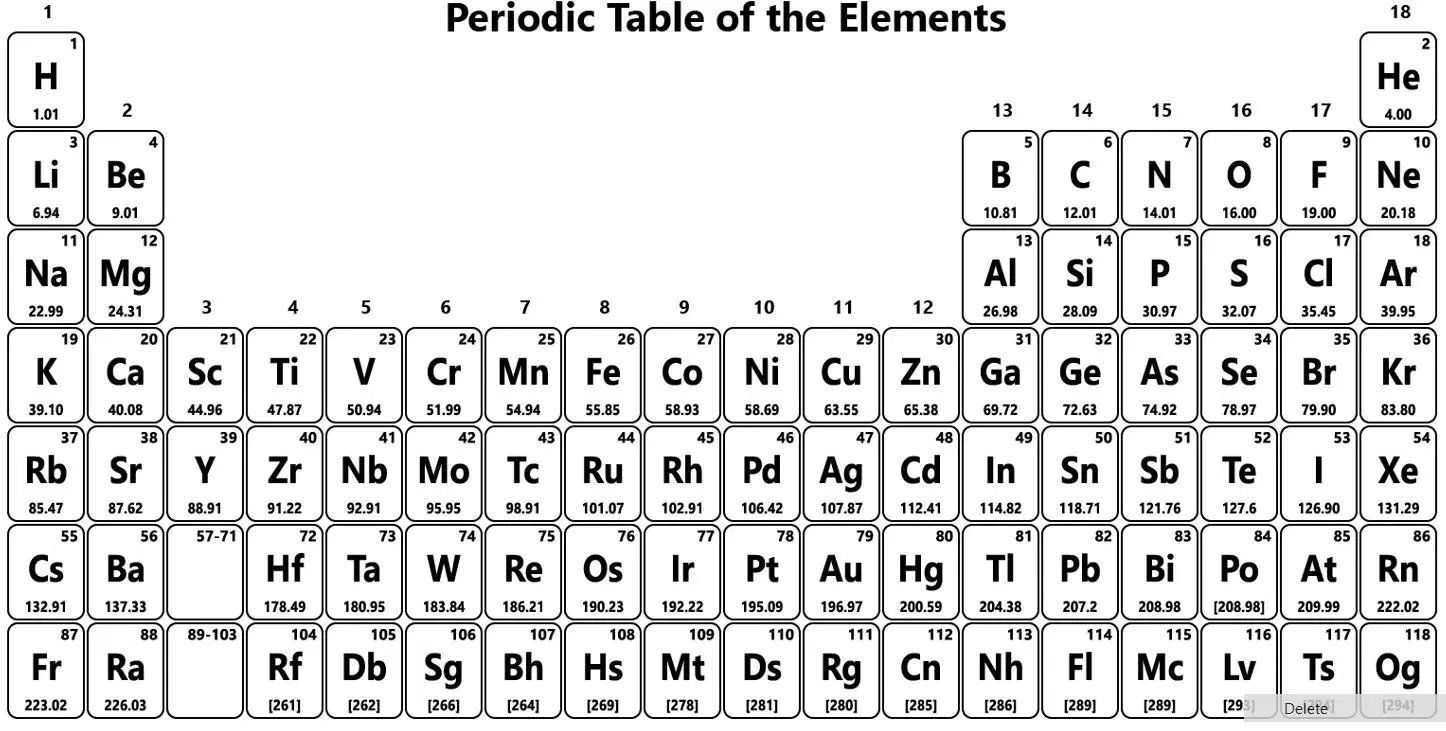
34) Francium would most easily loses its valence electron because it has ____ in the ____.
a)
seven in the first energy level
b)
one in the seventh shell
c)
seven valence electrons, total
d)
one valence electron in the first shell
38.

35) The oxidation number of Group 17 elements is ___.
a)
+1
b)
-1
c)
-7
d)
+7
39.
36) The overall charge of any compound is ___.
a)
neutral
b)
sometimes positive and sometimes negative
c)
negative
d)
postitive
40.
37) Metals tend to _______ valence electrons in forming ionic compounds.
a)
hold on to their
b)
lose
c)
gain
d)
double their
41.
38) ___ tend to gain electrons when forming ionic compounds.
a)
Transition metals
b)
Nonmetals
c)
Metals
d)
Metalloids
42.
39) This is what is done to the name of the cation in an ionic compound.
a)
It is changed to an 'ium' ending.
b)
The first syllable is dropped.
c)
Nothing
d)
The end is changed to 'ide'.
43.
40) The stable number of 8 valence electrons is called the ___.
a)
Noble Gas Law
b)
Octet Rule
c)
Periodic Law
d)
Law of Conservation of Mass
44.
41) Ionic compounds are held together by ___.
a)
metallic bonds
b)
covalent bonds
c)
ionic bonds
d)
hydrogen bonds
e)
nonmetallic bonds
45.
42) The compound MgF₂ would be called ___.
a)
magnesium difluoride
b)
magnesium fluoride
c)
magnesium fluorine
d)
magneside fluorinde
e)
monomagnesium difluoride
46.

43) Group 1 elements all ___ in becoming ___.
a)
lose 1 valence electron; anions
b)
gain 1 valence electron; cations
c)
gain 1 valence electron; anions
d)
lose 1 valence electron; cations
47.
44) An ionic bond is made/held together by this.
a)
attraction of opposite charges of ions
b)
repulsion of like charges
c)
attraction of nonmetals to each other
d)
repulsion of metals to each other
e)
overlapping valence shells
48.
45) Ionic bonds result from the _____ attraction (force) between oppositely charged ions
a)
electrostatic
b)
gravitational
c)
molecular
d)
magnetic
49.
46) Ionic bonds (in binary, two-element compounds) are formed between these.
a)
two metals
b)
a nonmetal and a noble gas
c)
a metal and a nonmetal
d)
two nonmetals, like in carbon dioxide
e)
lanthanides and metals
50.
47) The ______ is given an 'ide' ending in binary ionic compound names.
a)
cation
b)
anion
c)
polyatomic ion
d)
metal
51.

48) Aluminum and Sulfur will form this ionic compound.
a)
AlS
b)
Al₃S₂
c)
Al₂S₃
d)
Al₃S
52.

49) Hydrogen and Oxygen will make this ionic compound.
a)
H₂O
b)
Hydrogen is not a metal and will not make an ionic compound with oxygen
c)
HO₂
d)
HO
53.
50) Binary ionic compounds are made of _____
a)
2 molecules
b)
any two nonmetals
c)
two different elements
d)
at least two different metals
Reset

