
 Worksheets
Unit 8 APES Review
Total questions: 100
Worksheet time: 3580secs
The LD50 (mg/kg) or Vinegar is 2,000; Aspirin 1,000; Tylenol 1,400; Table spoon 4,000; Which one is more lethal?
Vinegar
Aspirin
Tylenol
Table spoon
The initial number of individuals is 30, the dose of pesticide is .4, the number of survivors is 18, calculate the percent mortality
40
50
44
32

What is the LD50?
A factory discharges a mercury-based waste into the local river. This is
point-source pollution
nonpoint-source pollution
not a problem, mercury is natural

Which answer choice zone would be the area that fish become stressed (lower range of tolerance) due to the pH levels?
A
B
C
D
E
Oxygen-depleted (hypoxia) zones of the oceans, such as the one at the mouth of the Mississippi River, are most likely caused by
large numbers of fish that are using up all the oxygen in the water
a reduction in the plant life in rivers that empty into the ocean near the dead zone
excessive fertilizers carried into the ocean, which cause algal blooms that lower the oxygen levels
thermal pollution in the ocean

Why does the DO bottom out at D?
D is where the waste entered the river
It’s a natural occurrence since the nutrients in a river fluctuates every mile
Bacteria feeding on the bacteria was putting O3 back into the water
Bacteria feeding on the wastes used up the oxygen in the water
So that recovery could start at E
Which is NOT a consequence of biomagnification?
incidences of human cancer associated with spraying crops with pesticides
suffocation of fish as a result of inert pesticide ingredients
thinning of egg shells
increasing concentrations of iron at higher levels of a food chain
Choose the zone in which populations of organisms with high oxygen requirements will most likely be absent.
A
B
C
D
E
Choose the zone in which the breakdown of degradable wastes by bacteria starts to deplete the dissolved oxygen.
A
B
C
D
E
As wastes are added to water, why does the pH levels drop (becoming more acidic)?
As bacteria feeding on the wastes increase, they take in O2 which causes more O2 to be available to bond with the decreased H+ ions.
As bacteria feeding on the wastes increases their CO2 output; it reduces the pH.
The “trash fish” releases ammonia into the water increasing the pH.
Dissolved oxygen and carbon dioxide has no affect on a river’s pH.
Salt applied to roads to melt ice and snow can damage vegetation and the aquatic ecosystem. This is
Nonpoint-source pollution
Point-source pollution
Salt is not a pollutant.
What is the difference between DO and BOD?
DO is how much O2 is present in the water whereas BOD is the number of organisms present.
DO is how much O2 is present in the water whereas BOD is the measure of oxygen used by organism for metabolic processes.
As BOD decreases dissolved O2 present in the water decreases.
As BOD decreases dissolved CO2 present in the water increases.
Which of the sources below would produce non-point source pollution?
The smoke stack of a factory
A volcano
A pipe leading into a river from a sewage treatment plant
A car’s exhaust pipe
A large area of farmland near a river
The massive and rapid algae growth that is stimulated by the addition of nitrogen and phosphorus by human activities to surface water bodies, such as a lake, is called
cultural eutrophication
eutrophicaton
oligotrophic
bioaccumulation
Why does the river correct itself for both pH and oxygen miles downstream?
The bacteria ate all of the wastes
The fish got tired of not being in sections of the river
Rivers move fast so wastes became diluted
There was nothing wrong with water to begin with
In a flowing stream, the breakdown of degradable wastes by bacteria deplete DO and creates an
oxygen sag curve
oxygen spike curve
oxygen rich atmosphere
increase in biodiversity
The oxygen sag curve shows a drop in
low oxygen demand organisms
high oxygen demand organisms
oxygen demand
dissolved oxygen
Dissolved oxygen content will ___ as pollution increases.
increase
decrease
stay the same
fluctuate
The BOD test is designed to directly measure
how much light can pass to the bottom of the stream
how rapidly the water is moving
the amounts of nitrites in the water
the rate at which oxygen is being consumed
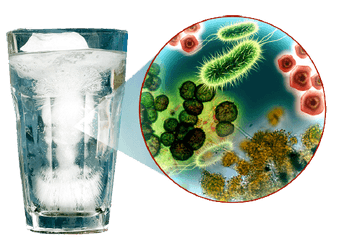
Presence of fecal coliform bacteria suggests that
a factory polluted the river
a nearby treatment plant added chlorine to the waste water
the water is safe for drinking
untreated animal waste contaminated the water
Requires maximum level of contaminants (MCLs) to meet safety regulations for community tap water supplies
Clean Water Act
Kyoto Protocol
Montreal Protocol
Safe Drinking Water Act
Requires maximum level of contaminants (MCLs) to meet safety regulations for community tap water supplies
Clean Water Act
Kyoto Protocol
Montreal Protocol
Safe Drinking Water Act
Presence of fecal coliform bacteria suggests that
a factory polluted the river
a nearby treatment plant added chlorine to the waste water
the water is safe for drinking
untreated animal waste contaminated the water
Which of the following describe the relationship between D.O. and B.O.D.?
When D.O. decreases, the B.O.D. decreases
When D.O. decreases, the B.O.D. increases
When B.O.D. decreases, the D.O. decreases
When B.O.D. increases, the D.O. decreases
Where does Point Source Pollution (PS) come from?
The source cannot be traced
The source can be inferred, but not confirmed with 100% accuracy
The exact source is known (ex: a pipe)
None of these
What is NPS pollution?
The source cannot be traced
The source can be inferred, but not confirmed with 100% accuracy
The exact source is known (ex: a pipe)
None of these
What is Nonpoint Source (NPS) pollution closely associated with?
Specific drain pipes
Unknown farmland
Specific underground storage tank
Stormwater and runoff
Which is an example of NPS? Click all that apply
Specific drain pipe
Farmland
Suburbs
Cities/underground storage tanks
Construction
NPS pollutants build up on land during what kind of weather?
Cold and snowy
Hot and rainy
Dry
Rainy and windy
NPS pollutants are washed off land during what kind of events?
Blizzard
High pressure system
High precipitation
Tornado
Where does stormwater runoff ultimately end up?
Lakes
Streams
Lakes and streams
None of these
What is one thing a farmer can do to reduce their NPS pollution?
Keep feedlots away from slopes/flood zones
Have farms in areas that get lots of rain
Remove plant buffer zones
Farmers cannot reduce their NPS pollution
Why are lakes more vulnerable to pollutants than streams?
They flow more than streams
Less dilution in lakes than streams
More dilution in lakes than streams
None of the
Can eutrophication happen naturally? If so, how?
No
Sometimes, but it is incredibly rare
Yes, when dead organisms and wastes decay
Yes, when there are too much rain
How do humans contribute to eutrophication?
NPS Pollution from runoff and sewage
Humans cannot contribute to eutrophication
Only animals can contribute to eutrophication
By throwing litter out of our cars
How can eutrophication be harmful to an aquatic system?
It is not harmful, more nutrients are good for an aquatic system
It is harmful because more nutrients cause plants to die
It is not harmful, nutrients allow more plants to grow, creating more food for fish
It is harmful because more nutrients cause more plants to grow, depleting the amount of dissolved oxygen in the water
What is one simple and effective way to prevent or remove eutrophic lakes?
Add more fertilizers to your lawn
Reduce the amount of fertilizer you put on your lawn
Remove plan buffer zones
None of the above
Which is an example of a source of groundwater pollution? Check all that apply.
Sealed landfill
Throwing litter out of your car
Septic tanks
Burning fossil fuels
What is the cheapest and easiest way to prevent groundwater pollution, but is still being developed?
Pump nanoparticles of inorganic compounds to remove pollutants
Remove all water, treat it, then pump it back underground
Pump macroparticles of organic compounds to add pollutants
All of the above
What is the largest issue with sewage treatment regarding federal standards?
Lawmakers do not prioritize water quality
Voters are not educated on the importance of water quality
Many cities fail to meet federal standards
Sewage treatment is highly regulated around the world and is not an issue
What is one way we (humans) can improve sewage treatment?
Work with nature to treat sewage
There is no need to improve, there are no issues
Pump a mixture of chemicals into treatment plants and test which are most effective
Use the restroom less often
I. Increased urbanization
II. Migration
III. Global travel
IV. Climate change


(2016 year tons - 2000 year tons)/2000 year tons
x 100 = ?%
The goal of the secondary stage of a septic treatment plant is to
remove the large solid material
make muddy water clear
remove chemicals such as DDT, PCBs, N2, and phosphates
lower the amount of organic material in the water
The goal of the tertiary stage of a septic treatment plant is to
remove the large solid material
make muddy water clear
remove chemicals such as DDT, PCBs, N2, and phosphates
lower the amount of organic material in the water
The Clean Water Act established all of the following guidelines except
set water quality standards for all contaminants in surface waters
made it unlawful for any person to discharge any pollutant from a point source into navigable waters
demanded that an environmental impact statement be prepared for any major development
funded the construction of sewage treatment plants
The majority of the oil pollution of the ocean comes from
blowouts (rupture of a borehole of an oil rig in the ocean)
taker accidents
runoff from land
normal operation of offshore well
The (a) enables the Environmental Protection Agency (EPA) to set the standards for tap water quality and oversees all of the states, localities, and water suppliers who implement these standards.
Which sewage treatment system removes chemicals such as pesticides?
1st filtering system
Primary Treatment
Secondary Treatment
Tertiary Treatment
Which indicates that a body of water is contaminated by human waste water?
low BOD and a fecal coliform bacteria count of zero
high levels of nutrients, such as nitrogen and phosphorus, an high BOD
low BOD and low levels of nutrients, such as nitrogen and phosphorus
low levels of nutrients, such as nitrogen and phosphorus, and a fecal coliform bacteria count of zero
Strategies used to clean up oil spills include all of the following EXCEPT:
Floating booms and boats to skim floating oil toward collectors
Addition of limestone to neutralize the acidic water
Skimmers to absorb oil from the water
Chemical dispersants that break up the oil and help it to sink.
What do untreated (raw) sewage and fertilizers have in common?
They encourage excessive growth of aquatic plants
They are eaten by animals in the water
They accumulate in the tissues of aquatic organisms
When oil gets into aquatic environments, it is a particular problem for wildlife because of all of the following EXCEPT
wildlife can be coated i oil
it may ill off local palnt life
it prevents oxygen from moving through the oxygen cycle
it causes the water temperature to drop significantly
Based on ecological impact and total recovery of affected area by the oil spill, which location is still experiencing severe ecological recovery years later?
Deepwater Horizon, Gulf of Mexico
Gulf War Oil Spill, Kuwait, Iraq, and the Persian Gulf
Ixtoc I, Gulf of Mexico
Exxon Valdez, Alaska, USA
What is/are the purpose(s) of SWIFT (Sustainable Water Initiative for Tomorrow) that has been developed and implemented by HRDS (Hampton Roads Sanitation District) for the treatment of waste water?
Create a sustainable source of groundwater by pumping wastewater into aquifers
Reduce salt water intrusion into the Potomac Aquifer
Reduce amount of nutrients from flowing into the Chesapeake Bay
To provide nutrient-rich released water to provide food and habitat for aquatic organisms to increase the local economy
Fight sea level rise by reducing land subsistence
Absorption of pollutants in living organisms is known as
Bioaccumulation
Biomagnification
POPs means
Persistent organic pollutants
Perfect organic pollutants
Proper inorganic chemicals
Improper organic presents
Chemicals that are soluble in water (not considered POPs) are less harmful that POPs that are soluble in fat.
True
False
Why do persistent organic pollutants not easily break down in the environment?
because they are synthetic
because they are carbon based
because they bioaccumulate
all of the above
Not every person will have POPs present in their fatty tissues.
True
False
What is the most common route for humans to be exposed to POPs?
direct contact
contaminated food
contaminated water
all of the above
What legislation led to a significant decrease in POP production?
The Clean Water Act
Montreal Protocol
Stockholm Convention
Reorganization Plan No. 3 of 1970
Which of the following best describes the action of an endocrine disruptor?
An endocrine disruptor attacks hormones that invade a body system and cause disease.
An endocrine disruptor blocks the receptor protein binding site of a hormone so that the cell cannot receive a signal.
An endocrine disruptor acts as an organic catalyst, produced by living things to regulate the rate of chemical reactions.
An endocrine disruptor helps to transport substances, such as pesticides, in an organism following exposure.
Endocrine disruptors directly affect which of the following in an organism?
White blood cells
Hormones
Hemoglobin
Oxygen
Which of the following is a way to potentially eliminate one of the greatest threats to the world's mangrove wetlands?
Increase desalination to reduce the effects of prolonged drought in mangroves.
Integrate ecologically sound shrimp aquacultural practices with mangrove management.
Answer B: Integrate ecologically sound shrimp aquacultural practices with mangrove management.
B
Construct dams in mangroves to increase sediment load and decrease pollution.
Employ irrigation methods to address potential desertification of mangrove habitats.

A beach community was recently negatively affected by a hurricane. Community leaders are looking for a potential solution to prevent damage from future hurricanes. Below is a list of their concerns as well as how important each issue is to the community.
Which of the following solutions would best address the issues of greatest concern in the community?
Construction of a seawall
Planting mangrove forests
Construction of an offshore breakwater
Adding large sand dunes

Long Island Sound is a body of water off the northeast coast of the United States. Over nine million people live in the small watershed area that feeds into the sound. To determine the effect of the population density on the watershed, scientists measured the oxygen content of bottom waters in the sound. The data from late summer 2013 are displayed in the map below.
Which of the following factors would most likely contribute to the conditions observed in the Long Island Sound?
Overfishing
Plastic pollution
Sewage treatment
Restricted Circulation

Based on the diagram, which of the following is an expected consequence of runoff and sewage in an aquatic environment?
Decreased oxygen levels in surface water as a result of a decrease in photosynthetic rates by algae
Increased oxygen levels in bottom water from increased rates of cellular respiration in decomposers
Decreased oxygen production by seaweed on the seafloor from an increase in turbidity
Increased oxygen production by decomposition of dead fish and other aquatic organisms

Based on the image, which of the following conclusions can best be drawn to describe the conditions in the Long Island Sound?
The sound has high levels of dissolved oxygen as a result of storm water runoff from urban areas.
The sound has high levels of phosphorus and nitrogen from an increase in the number of producers.
The sound has large numbers of phytoplankton blooms that are decomposing and consumed by respiring bacteria.
The sound has high numbers of respiring fish populations and very low turbidity.
Which of the following is most likely to result from destruction of wetlands surrounding a river?
An increased frequency of flooding of the river valley
An increased level of oxygen in the river
A decreased level of pollutants such as nitrates in the river
A decreased sediment load in the river
What is the first step of preliminary wastewater treatment, which removes large items such as plastic wrappers and sticks?
screening
sedimentation
aeration
disinfection
In which part of the wastewater treatment process are bacteria introduced to the wastewater to feed on organic particles, such as food and feces? (Select 2 choices)
sedimentation
aeration
disinfection
primary treatment
secondary treatment

