wayground logo

Free Printable Worksheets

Font size

S
M
L
XL
Worksheets

Physical Science Final Exam Fall 22

Total questions: 100

Worksheet time: 2hrs 1mins

Name
Class
Date
1.
Atomic number is equal to the number of _______ in the atom.  It is also the atoms' identity ---  it's the small number of the periodic table.
a)
neutrons
b)
isotopes
c)
protons
2.
_______________ is equal to the average mass of all the isotopes of a particular element.  It is the big number on the periodic table.
a)
Atomic Number
b)
Atomic Mass
c)
Atomic Exponent
3.
____________ is the same number of protons and different numbers of neutrons.
a)
Isotope
b)
Neutron
c)
Elemental Identity.
4.
__________ has a charge of POSITIVE and is located in the NUCLEUS of the atom.
a)
Neutron
b)
Electron
c)
Proton
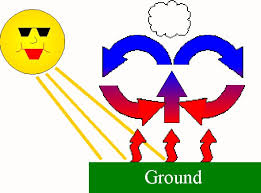
5.
____________ has  a charge of NEGATIVE and is located in the ELECTRON CLOUD of the atom.
a)
Electron
b)
Proton
c)
Neutron
6.
The electrons are located in this region of the atom
a)
electron cloud
b)
neuclus
c)
proton
7.
The electron cloud is divided in to energy levels or shells.  The first level will hold _____ electrons and the second level will hold ______ electrons.
a)
8, 2
b)
2,8
c)
1, 8
8.
The valence shell or valence level is the __________ of the atom.
a)
innermost
b)
middle
c)
outermost
9.
_____________ transfers electrons from a metal and a nonmetal
a)
Covalent bond
b)
Ionic Bond
10.
___________ shares electrons from nonmetals and nonmetals
a)
ionic bond
b)
convalent bond
c)
polar covalent
11.
______________ bond is between a nonmetal and a nonmetal on the periodic table, they are CO-Workers on the same side.
a)
Ionic
b)
Covalent
12.
What is the charge on a lithium atom that looses 1 electron?
a)
+1
b)
0
c)
-1
d)
-2
13.

What charge does an atom have when it GAINS electrons?

a)

Positive

b)

Negative

c)

Neutral

14.

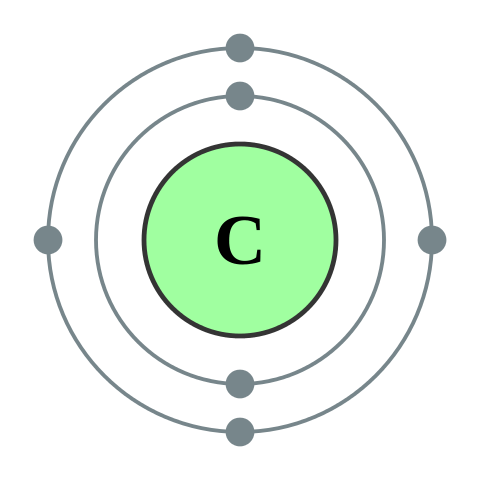
What type of atom is element C?

a)

Normal atom

b)

Positive Ion

c)

Isotope

d)

Negative Ion

15.

How many valence electrons does carbon have?

a)

4

b)

5

c)

6

d)

7

16.
Which of the following tables correctly lists the physical properties of metals and nonmetals?
a)
A
b)
B
c)
C
d)
D
17.
Atoms with similar properties are most likely located...
a)
in the same period.
b)
in the same group.
c)
in different periods.
d)
to the right and left of each other.
18.

In order for sulfur to reach an octet, sulfur will...

a)

Gain 2 electrons

b)

Lose 2 electrons

c)

Gain 1 electron

d)

Lose 1 electron

19.
What is the correct formula for this molecule?
a)
NH
b)
N3H
c)
NH3
d)
NH4
20.
Which is Chemical Equation is Balanced?
a)
CH₄+O₂------CO₂+2H₂O
b)
H₂+O₂-----2H₂O₄
c)
4Al+3O₂-----2Al₂O₃
21.
Students react baking soda & vinegar.
Which of the following would provide the evidence that the number of atoms present before a chemical reaction is equal to the number of atoms present after the chemical reaction?
a)
The mass of the plastic bag, baking soda, and vinegar before the reaction was equal to the mass after the reaction.
b)
Bubbles were produced during the reaction, which meant that a gas was being produced.
c)
The plastic bag did not change in any way, indicating that it was not involved in the reaction.
d)
The mass of the baking soda was exactly equal to the mass of the vinegar used to create the chemical reaction.
22.
How many oxygen atoms are in this chemical formula?
a)
6 oxygen atoms
b)
2 oxygen atoms
c)
3 oxygen atoms
d)
4 oxygen atoms
23.
What is a PUSH or PULL of an object?
a)
Motion
b)
Force
c)
Friction
d)
Gravity
24.
Which force produces a change in motion?
a)
unbalanced force
b)
balanced force
c)
gravitational force
d)
frictional force
25.
What happens when two forces act in the same direction?
a)
They cancel each other out.
b)
The stronger one prevails.
c)
Their strengths are added.
d)
Their sum divided by the two is the total force.
26.
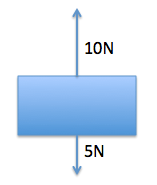
What is the net force on the block? (click on the words to view the picture)
a)
5 Newtons up
b)
5 Newtons down
c)
15 Newtons up
d)
15 Newtons down
27.
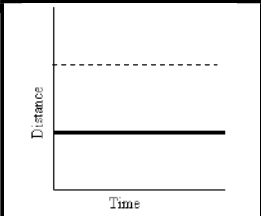
What does this graph represent?
a)
Constant speed
b)
Acceleration
c)
Not moving
28.
How is gravity affected by mass?
a)
the larger the mass of the object, the greater the gravity
b)
small objects have no gravity
c)
gravity is not affected by mass of objects, whether large or small
29.
What is the difference between mass and weight?
a)
mass is how much matter is in an object, and weight is the gravitational pull on that object
b)
mass and weight are the same
c)
weight affects how much mass is in an object
d)
weight is determined by how many atoms make up an object
30.
What is motion?
a)
It's like the ocean
b)
Any change in an animal or person's position.
c)
Motion is like acting
d)
Any change in an object or person's position.
31.
The picture of the position vs. time graph shows an object that is...
a)
accelerating/speeding up
b)
moving at a constant speed 
c)
not moving 
d)
accelerating/slowing down. 
32.
What pulls a ball back to earth?
a)
Gas
b)
Gravity
c)
Friction
d)
Molecules
33.
This graph shows
a)
An object stopped
b)
An object slowing down
c)
An object speeding up
d)
An object moving at constant speed
34.
This graph shows
a)
An object stopped
b)
An object slowing down
c)
An object speeding up
d)
An object moving at constant speed
35.
Speed is equal to 
a)
Distance/Time
b)
Time/Distance
c)
Time x Distance
d)
Acceleration
36.
This graph shows
a)
An object stopped
b)
An object slowing down
c)
An object speeding up
d)
An object moving at constant speed
37.
This graph shows
a)
An object  speeding up
b)
An object stopped
c)
An object speeding up
d)
An object slowing down
38.
Energy due to motion is ____________ energy. 
a)
Potential 
b)
Energy
c)
Kinetic
d)
Friction
39.
The faster an object moves, the ________ kinetic energy it has. 
a)
more
b)
less
c)
none of the above
d)
all of the above 
40.
__________ is stored energy. 
a)
Potential
b)
Kinetic
c)
None of the above 
d)
All of the above 
41.
Gravitational potential energy depends on the ________ and ________ of the object. 
a)
Height and mass
b)
Friction and movement
c)
Mass and Movement
d)
Height and Friction 
42.
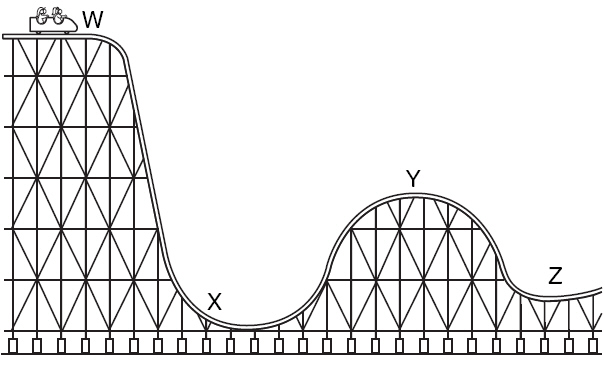
At which point is potential energy greatest?
a)
W
b)
X
c)
Y
d)
Z
43.
Energy can not be created or destroyed, only converted from one form to another.
a)
true
b)
false
44.
At which point is kinetic energy greatest? 
a)
W
b)
X
c)
Y
d)
Z
45.
What do we call a change from one form of energy to another?
a)
Energy form
b)
Energy transformation
c)
Kinetic energy
d)
Potential energy
46.
Getting a sunburn is an example of...
a)
condensation
b)
conduction
c)
convection
d)
radiation
47.
Which energy transformation below matches?
An electrical light?
a)
chemical to heat, sound, light, mechanical
b)
solar to heat, sound, light, mechanical
c)
electrical to heat, light, mechanical
d)
mechanical to light and heat
48.
Sugar water. 
a)
A. HOMOGENEOUS
b)
B. HETEROGENOUS
49.
Italian dressing
a)
A. HOMOGENEOUS
b)
B. HETEROGENEOUS
50.
Which of these is not an example of a molecule?
a)
CH4
b)
C
c)
C6H12O6
d)
H2O
51.
A substance that contains only one type of atom is a(n)
a)
compound
b)
element
c)
heterogeneous mixture
d)
homogeneous mixture
52.
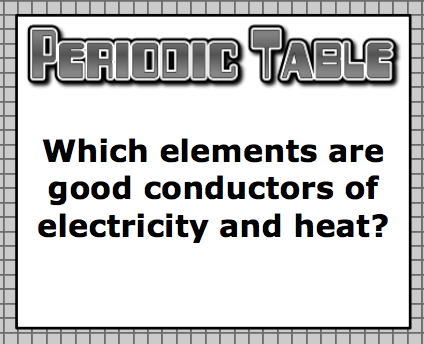
a)
Metals
b)
Nonmetals
c)
Metalloids
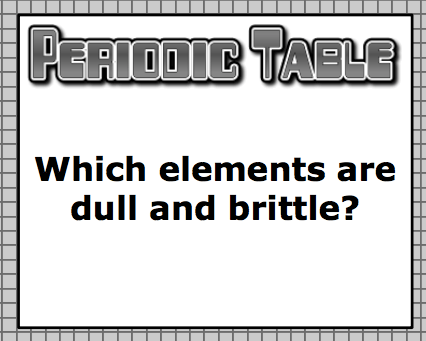
53.
a)
Metals
b)
Nonmetals
c)
Metalloids
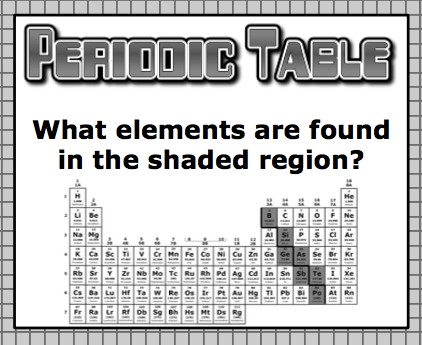
54.
a)
Metals
b)
Nonmetals
c)
Metalloids
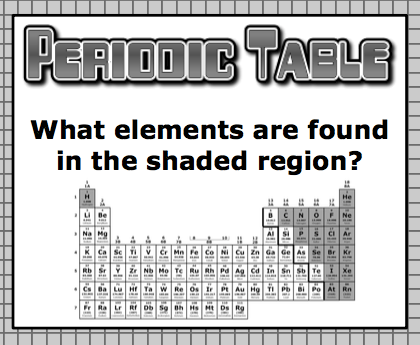
55.
a)
Metals
b)
Nonmetals
c)
Metalloids
56.
a)
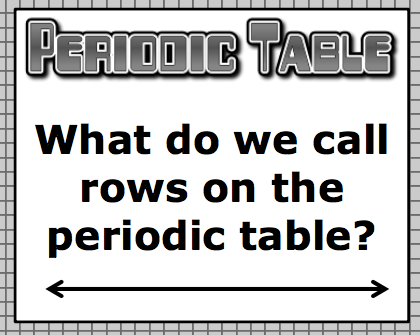
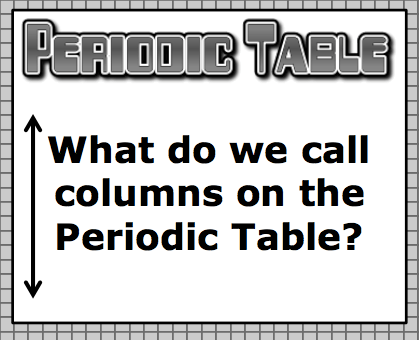
Periods
b)
Groups
57.
a)
Periods
b)
Groups
58.
An example of a physical change would be a change in...
a)
Color
b)
Shape
c)
Size
d)
All of the above 
59.
Define a Chemical Property
a)
A property which depends on the objects size or matter.
b)
A property of matter not involving in its manifestation a chemical change
c)
A property or behavior of a substance which undergoes a chemical change or reaction.
d)
A property which makes the object smell or taste different.
60.
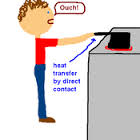
Johnny accidentally grabbed the handle of the hot pot.
a)
conduction
b)
convection
c)
radiation
61.
Warm air rises and the cool air sinks.
a)
conduction
b)
convection
c)
radiation
62.

Heat is the transfer of thermal energy from one object to another because of a difference in

a)

specific heat

b)

phase

c)

temperature

d)

waste heat

63.

The energy stored in gasoline is

a)

chemical energy.

b)

electromagnetic energy.

c)

mechanical energy.

d)

nuclear energy.

64.

Which of the following increases when an object becomes warmer?

a)

chemical energy

b)

elastic potential energy

c)

nuclear energy

d)

thermal energy

65.

What is the name of the element? (Periodic table will be needed)

a)

sodium

b)

magnesium

c)

vanadium

66.

How many valence electrons does the element have?

a)

1

b)

2

c)

3

d)

4

67.

In the equation, 146C --> 147N + 0-1B, the _______ decay of radioactive carbon-14 results in the creation of a new nitrogen-14 atom.

a)

Gamma

b)

Beta

c)

Alpha

68.
Solve this equation for alpha decay.
85209At = ___ + 24He
a)
83205Bi
b)
86209Rn
c)
81207Tl
d)
85208At
69.

What is the proper name for S2O2?

a)

Sulfur oxide

b)

Sulfur dioxide

c)

Sulfur (II) oxide

d)

Disulfur dioxide

70.
What are the correct coefficients when this equation is balanced?
KClO3  --> KCl  +  O2
a)
2,2,2
b)
2,2,3
c)
1,2,3
d)
3,3,3
71.

The solubility graph below shows the amounts of four substances that will dissolve in 100 grams of water at various water temperatures.


Which substance has 80 grams of solute dissolved in 100 grams of water at 50 C?

a)

Potassium Bromide

b)

Ammonium Chloride

c)

Potassium Chloride

d)

Lithium Hydroxide

72.
Which state of matter has particles that are tightly packed?
a)
liquid
b)
gas
c)
solid
73.
Using the picture, match the state of matter in glass B with its correct name.
a)
Gas
b)
Liquid
c)
Solid
d)
Plasma
74.
If the pH of a solution is 9, it is a....
a)
acid
b)
base
c)
both
d)
none
75.
Which is the stronger acid?
a)
pH 1
b)
pH 4
c)
pH 8
d)
pH 13
76.

A very fast snail can go 360 meters in 18 seconds. What is its average speed?

a)

20 m/s

b)

30m/s

c)

40m/s

d)

60m/s

77.
What is the net force in this picture?
a)
50 Newtons to the right
b)
950 Newtons to the right
c)
950 Newtons to the left
d)
50 Newtons to the left
78.
 Which element has the same number of valence electrons as krypton (Kr)? 
a)
neon (Ne)
b)
fluorine (F)
c)
chlorine (Cl) 
d)
selenium (Se) 
79.
Circulation of air or water
a)
conduction
b)
convection
c)
radiation
80.
A copper ornament has a mass of 0.0693 kg and changes from a temperature of 20.0°C to 27.4°C.  How much heat energy did it gain?  Cooper's Specific Heat is 390 J/k X 
°C.  °
Q=Mc∆T
a)
200 J
b)
400 J
c)
390 J
81.
What is the change called from a solid to a liquid?
a)
melting
b)
sublimation
c)
freezing
d)
evaporation
82.
What is the change called from a solid to a gas?
a)
melting
b)
sublimation
c)
freezing
d)
evaporation
83.
What is the change called from a liquid to a solid?
a)
melting
b)
sublimation
c)
freezing
d)
evaporation
84.
What is the change called from a liquid to a gas?
a)
melting
b)
sublimation
c)
freezing
d)
evaporation
85.
These reactions are __________ (or give off heat)
-- freezing
--depostion
-condensation
-getting colder
a)
exothermic
b)
endothermic
86.
An object has a mass of 12.8 kg and a velocity of 8.4 m s. What is the kinetic energy of the object? 
a)
53.8 J
b)
107.5 J
c)
451.6 J
d)
903.2 J
87.
How much potential energy does a 55-kg person gain when she walks to the top of a hill 20 m tall?
a)
75 J
b)
539 J
c)
1,100 J
d)
10,780 J
88.
What type of chemical reaction is represented by this equation? 2Li +  2H2O ---> 2LiOH  + H2   
a)
decomposition
b)
double replacement
c)
single replacement
d)
synthesis
89.
It takes 20 N of force to move a box a distance of 10 m. How much work is done on the box ?
a)
200 J
b)
20.0J
c)
2 J
d)
200 N
90.
The unit or label for work is
a)
netwons
b)
joules
c)
meters
d)
seconds
91.

What is Newton's First Law?

a)

Equal and Opposite...

b)

F = ma

c)

An object in motion will stay in motion and obect at rest will stay at rest - unless acted upon by an outside force.

d)

Don't park in a fire lane.

92.

What is Newton's Second Law?

a)

Force = Mass x Acceleration ( F = ma )

b)

Equal and Opposite

c)

The Law Of Inertia

d)

Everybody loves the beach in Summer.

93.

What is Newton's Third Law?

a)

F = ma

b)

For every action there is an equal and opposite reaction.

c)

Cheaters never prosper.

d)

Don't jaywalk.

94.

Acceleration is

a)

the rate at which velocity changes.

b)

the change in velocity

c)

the rate of change

d)

when you speed up only

95.

In science, acceleration refers to

a)

increasing speed

b)

decreasing speed

c)

changing direction

d)

increasing speed only

96.
A golf ball accelerates off a tee at 15m/s2, changing its velocity from 0m/s to 50 m/s down the fairway. How long did it take the golf ball to accelerate?
a)
750 seconds
b)
35 seconds
c)
0.3 seconds
d)
3.3 seconds
97.

Which of the following is not accelerating?

a)

a ball being juggled

b)

a woman walking at 2.5 m/s along a

straight road

c)

a satellite circling Earth

d)

a braking cyclist

98.
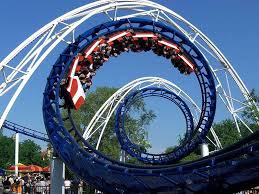
A roller coasters accelerates from an initial velocity of 6.0 m/s to a final velocity of 70 m/s over 4 seconds.  What's the acceleration?
a)
24 m/s2
b)
18 m/s2
c)
16 m/s2
d)
16 m/s
99.
What is the total distance of the object represented in this motion graph?
a)
0 meters
b)
10 meters
c)
11 meters
d)
20 meters
100.
What is the total displacement of the object represented in this motion graph?
a)
0 meters
b)
10 meters
c)
11 meters
d)
20 meters