
 Worksheets
IB SEHS - Topic 3 & Option D Test
Total questions: 50
Worksheet time: 25mins

Which combination categorizes macro- and micronutrients correctly?
*Make sure to look at the picture.
A
B
C
D
Which food is most likely to contain unsaturated fats?
Cashew Nuts
Beef burger
Coconut Oil
Dairy Yogurt
Which is one characteristic of non-essential amino acids?
They are not required for essential bodily processes.
They are required from a healthy diet.
They can recycle nitrogen from a healthy diet.
They can be synthesized by the human body.
Which process is represented by the breakdown of sugar in the absence of oxygen?
Anaerobic anabolism
Aerobic anabolism
Anaerobic catabolism
Aerobic catabolism
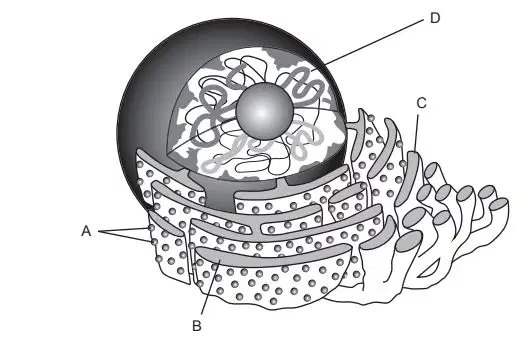
Which represents the rough endoplasmic reticulum?
*Make sure to look at the picture.
A
B
C
D
In percentage terms, which provides the greatest source of carbohydrate for an athlete?
Avocado
Chicken
Potato
Olives
Which is formed in a catabolic reaction
Glucose
Glycogen
Adipose tissue
Protein
Which process occures when blood glucose levels are decreased?
Glycolysis
Lipolysis
Glycogenolysis
Glycogenesis
Which represents the production of adenosine triphosphate (ATP) via the aerobic glycolysis system?
PC + ADP → 1ATP + C
glucose → pyruvate → 2 ATP + lactate + H+
glucose → pyruvate + O2
→ acetylCoA → Krebs cycle → electron transport chain →
38 ATP + H2
O + CO2
+ heat
ADP + P = ATP
What is the composition of triacylglycerol (triglyceride)?
Three glycerol and one fatty acid molecules
One glucose and three fatty acid molecules
One glycerol and three fatty acid molecules
Three glucose and one fatty acid molecules
What is a function of adrenaline?
Increases stimulation of the parasympathetic nervous system
Increases heart rate
Decreases glycogenolysis
Decreases heart rate
What is the definition of cell respiration?
The controlled release of energy in the form of adenosine triphosphate (ATP) from organic
compounds in cells
The controlled release of energy in the form of adenosine diphosphate (ADP) from organic
compounds in cells
The controlled release of energy in the form of glycogen from organic compounds in cells
The controlled release of energy in the form of carbon dioxide from organic compounds
in cells
Which energy system is the predominant contributor of ATP for a runner participating in a marathon?
ATP–PC system
Anaerobic system
Lactic acid system
Aerobic system
Where is glycogen primarily stored in the body?
The liver and brain
The liver and skeletal muscle
Cardiac muscle and the brain
Cardiac muscle and the liver
Which donates a phosphate group to adenosine diphosphate (ADP) during the initial stages of intense exercise to regenerate adenosine triphosphate (ATP)?
Glycogen
Glucose-6-phosphate
Amino acid
Creatine phosphate
Which is a condensation reaction?
Breaking of the bonds in glycogen and creation of a water molecule
Addition of two glucose molecules and creation of a water molecule
Breaking of the bonds in glycogen and absorption of a water molecule
Addition of two glucose molecules and absorption of a water molecule

An untrained individual with healthy BMI starts to train for a marathon. What change should they make to their diet?
*Make sure to look at the picture.
A
B
C
D
What is an anabolic reaction?
When small molecules are combined into larger molecules
When complex molecules are broken into smaller molecules
When there is a net release of energy
When no energy is used or released within the reaction

The diagram shows the ultrastructure of a generalized animal cell. What is the main function of the organelle labelled X?
*Make sure to look at the picture.
Protein synthesis
Digestion of macromolecules
Cellular respiration
DNA storage
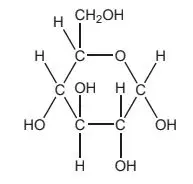
Which molecule is represented by the diagram below?
Glucose
Fat
Amino acid
Protein
What is the chemical composition of a protein molecule?
Glycerol and three fatty acids
Only carbon, hydrogen and oxygen
Only carbon and oxygen
Carbon, hydrogen, oxygen and nitrogen
What is the correct order (greatest to least) for the amount of energy contained in 100g of each body fuel?
Carbohydrate, protein, lipid
Lipid, carbohydrate, protein
Protein, carbohydrate, lipid
Lipid, protein, carbohydrate
What type of process is lipolysis?
Aerobic anabolism
Anaerobic anabolism
Aerobic catabolism
Anaerobic catabolism
The nutritional information from an energy gel packet shows equal amounts of fats, carbs, and protein. Which nutrient provides the most energy per serving?
Total fat
Total carbohydrate
Protein
The nutrients provide equal amounts of energy
What are the products of anaerobic glycolysis?
2 ATP per glucose molecule and lactic acid
2 ATP per glucose molecule and no lactic acid
34–36 ATP per glucose molecule and no lactic acid
34–36 ATP per glucose molecule and lactic acid
Where does salivary amylase break down food?
Mouth
Stomach
Small intestine
Large intestine
What is the typical pH range in the stomach?
1 - 4
4 - 5
5.5 - 7.5
6.0 - 8.0
Select the correct response for an enzyme
It is a lipid
They are non-specific (they target any molecules)
They work optimally under any pH environment
It is a catalyst that speeds up the breakdown of molecules
Which is correct for a simple negative feedback model?
Sensor - controller - effector - feedback (then repeat)
Sensor -feedback - controller - effector (then repeat)
Sensor - controller - feedback - effector (then repeat)
Which is not a method to monitor hydration status of athletes?
Urine colour (urinalysis)
Urine osmolarity (concentration of dissolved substances)
Variation in body mass
Using a biometer
Urine volume
Which of the following is incorrect in regards to the relationship of energy intake and expenditure?
Weight loss results from intake below the daily energy requirements
Weight loss results from a decrease in daily caloric intake and increase in energy expenditure
Weight gain results in a decrease of caloric intake
Weight gain results from maintaining a normal intake and decreasing energy expenditure
In regards to body composition, what do athletes want?
Increase fat mass to increase power to weight ratio
Increase fat mass to decrease power to weight ratio
Increase fat free mass to increase power to weight ratio
Increase fat free mass to decrease power to weight ratio
Which of the following are ways athletes manipulate their body composition?
Fad diets
Crash diets
Macronutrient exclusion or reduction
All answers
Which of the following contains low levels of glycogen?
Fast twitch IIa
Fast twitch IIb
Slow twitch I
Slow twitch II
Which is not a high GI food?
Baked potatoes
Water melon
White bread
Green leafy vegetables
Which of the following is an incorrect statement about GI foods?
For general health consume low to med GI foods
Pre exercise consume low GI foods
Post exercise consume high GI foods for 15mins to 2 hrs
Post exercise 2hrs plus consume high GI foods for 24 hrs
The recommended daily protein intake for non-athletes is
0.2 g/kg-1 body weight
0.8 g/kg-1 body weight
1.6 g/kg-1 body weight
> 2 g/kg-1 body weight
Which of the following is an incorrect statement regarding the harmful effects of protein intake?
Increase stress on the kidneys
Decrease risk of cancers
Increase water loss
Increase body weight
Where does mechanical digestion take place?
Mouth
Esophagus
Stomach
Mouth & stomach
Which enzyme is responsible for the digestion of protein in the stomach?
Pepsin
Trypsin
Bile
Lipase

Use the information above to calculate the BMR for a 44 year old woman who is lightly active. She is 1.57m tall and weighs 61kg.
1210
1876
1376
1610
T/F: A high body fat content in relation to fat free mass is related to lower body water content overall.
TRUE
FALSE
What term describes the minimum level of energy expenditure that is required to sustain the body's vital functions?
Homeostasis
Basal metabolic rate
Glycemic Index
Negative Feedback Loop
The ideal composition of fat mass (FM) to fat free mass (FFM) for athletes remains the same from sport to sport.
TRUE
FALSE
The majority of the human body mass consists of water (50-70%), the portion is greater the less body fat we have.
TRUE
FALSE
Which organ and gland helps regulate hydration within in the body?
Kidneys & Pituitary Gland
Bladder & Penal Gland
Kidneys & Adrenal Gland
Small Intestine & Pancreas
When you are rest, you are not burning any calories.
TRUE
FALSE
Which statements are true:
I. Athletes may consume carbohydrates before exercise to increase glycogen stores.
II. During exercise, athletes will consume carbs to spare their muscle glycogen.
III. After exercise, athletes will consume carbs to promote recovery of glycogen stores.
I & III
I only
I, II, & III
I & II
Proteins in the body are only present with a specific biological function, there is no store of protein unlike fat and carbohydrates.
TRUE
FALSE
Which is not an ergogenic aid that functions as an endurance enhancer?
Caffiene
Creatine
Bicarbonate
Sports drinks

