
Font size
 Worksheets
Earthquake and Volcano review
Total questions: 46
Worksheet time: 40mins
Volcanoes form
I. by eruptions of lava and ash
II. as rock build up from several eruptions over time.
I is CORRECT, II is INCORRECT.
I is INCORRECT, II is CORRECT.
BOTH statements are CORRECT.
BOTH statements are INCORRECT
It refers to a geological process which leads to the formation of volcanoes at convergent boundaries (ocean-continental)
(a)
How can we tell when a volcano will erupt?
Deformation of the ground surface
Detectable earthquakes
Changes in the temperature and chemistry of the groundwater and spring waters.
Occurrence of steam-blast eruptions
All of these.
Where is the ring of fire
around South America
around the Atlantic Ocean
around Africa
around the Pacific Ocean
Lava and Magma
are different types of volcanic rock
are the same but lava is out of the ground
are the same but magma is out of the ground
lava is denser than magma
The Hawaiian Islands were formed
above a divergent fault
above a convergent fault
above a strike-slip fault
above a hotspot in the middle of a plate

Which seismic wave is the first to reach a seismic station?
P Wave
S Wave
Q Wave
Surface Wave
Which type of seismic wave causes the most destruction to property?
P Wave
S Wave
Q Wave
Surface Wave
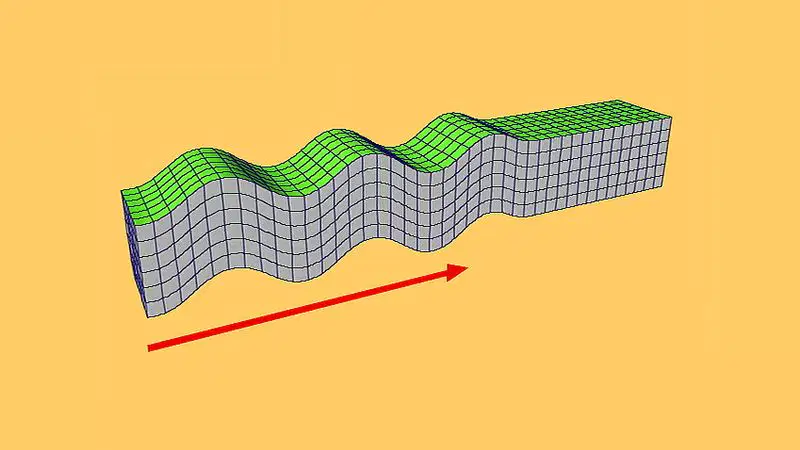
Which type of seismic wave can move through solid layers of the earth but not through the liquid outer core?
P wave
S wave
Q Wave
Surface Wave
Which seismic waves are call "push/pull" because they compress and extend as they move through the earth?
P Wave
S Wave
Q Wave
Surface Wave
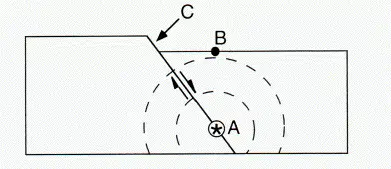
The point within the earth where the earthquake originates, labelled A in the picture.
Epicenter
Fault
Focus
Strike-Slip
The scale, which numbered 1-10, that measures the strength or magnitude of an earthquake.
pH scale
Richter Scale
Mercalli Scale
Hardness Scale
What instrument is used to measure seismic waves?
Seismophone
Seismogram
Seismologist
Seismograph

Match the stress on the rock with the type of fault.
Reverse
Normal
Strike Slip

Where is the epicenter of this earthquake?
Salt Lake
Los Angeles
San Francisco
Portland
vibrations in the earth caused by the sudden release of energy, usually as a result of the movement of rocks along a fault
earthquake
epicenter
focus
surface waves
building up; beneficial
constructive
destructive
causing damage or injury
constructive
destructive
a scientist who studies earthquakes
seimology
seismologist
seismogram
seismograph
the location where the rupture of an earthquake begins and energy is released
epicenter
focus
seismogram
energy release center
the point on the surface of the earth directly above the focus of an earthquake
focus
energy release center
surface wave
epicenter
Which type of seismic wave is the fastest?
P wave
an L wave
an S wave
a surface wave
The forces that move tectonic plates also move rock along the fault
true
false
Richter Scale measures
energy of the earthquake
liquefaction
landslides
none of the above
Mercalli Scale measures ____________________ in an earthquake.
liquefaction
earthquake tremors
damage to structures and people
all of the above
Main type of seismic waves that can only travel through the surface of the Earth.
seismic waves
surface waves
body waves
primary waves
It can travel through solids only
Love waves
Rayleigh waves
Primary waves
Secondary waves
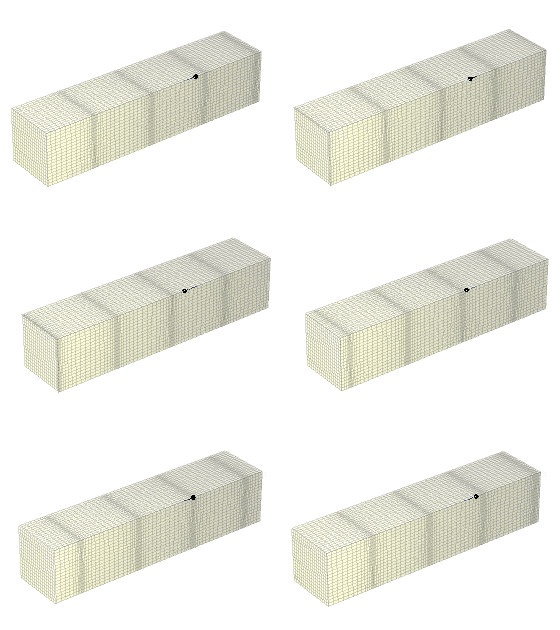
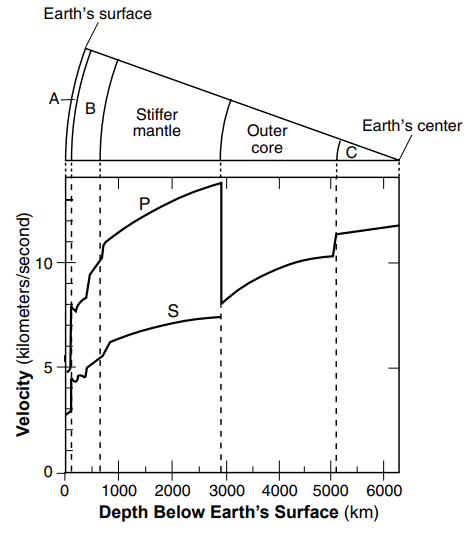
Primary (P) Waves can pass through...
solids only
liquids only
gases only
solids, liquids, and gases

Rank the seismic waves in order of appearance when an earthquake first occurs as measured by a seismograph.
S waves, P waves, then surface waves
P waves, S waves, then surface waves
S and P waves at the same time, then surface waves
Surface waves, then S and P waves at the same time
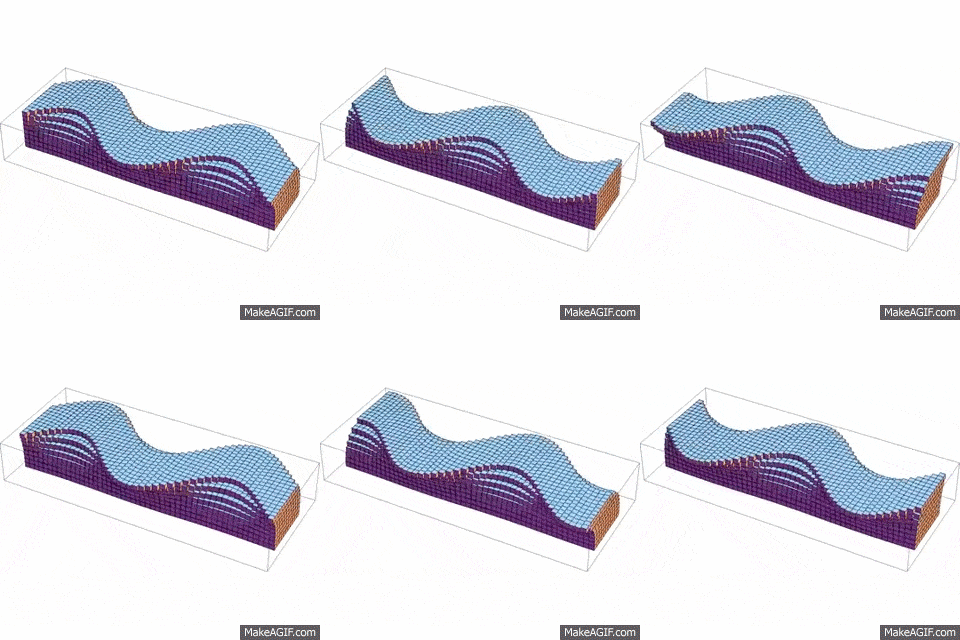
Which wave is pictured?
P-Wave
S-Wave
Rayleigh Wave
surface Wave

Which of the following statement correctly identifies the focus and epicenter of an earthquake in the given illustration?
Point A is the focus and Point B is the epicenter.
Point A is the epicenter and Point C is the focus
Point A is the epicenter and Point B is the focus.
Point A is the focus and Point C is the epicenter.
What type of volcano is wide and flat, created by layers of lava flow?
Shield
Cinder Cone
Composite
What type of volcano is Kilauea, which is located above a hot spot where layers of lava continuously flow?
Shield
Cinder Cone
Composite
What type of volcano is Mount St. Helens, a tall volcano composed of layers of lava and cinders?
Shield
Cinder Cone
Composite
If lava has low viscosity, which adjectives best describe it?
Runny, Smooth, Flows Easily
Thick, Jagged, Flows Slowly
If lava has high viscosity, which type of eruption will likely result?
Quiet
Explosive
If lava contains more silica, its viscosity...
increases.
decreases.


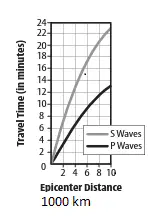
A p-wave traveled for 3000 km to reach a seismic station. How long had it traveled for?
00:01:60
00:04:50
00:10:40
00:05:30
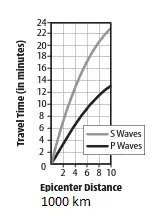
How long does it take for the P wave to travel 2000 km?
1900 km
4 minutes
7 minutes and 20 seconds
4000 km

