
NEW
Font size
 Worksheets
Sensation and Perception- AP Psych
Total questions: 60
Worksheet time: 31mins
In the human eye, rods are to _________, as cones are to ________.
light/color
lens/iris
color/light
dichromat/monochromat
What sense helps maintain balance?
Kinesthetic
Vestibular
olfaction
audition
Where is the basilar membrane located?
middle ear
auditory canal
semicircular canal
cochlea
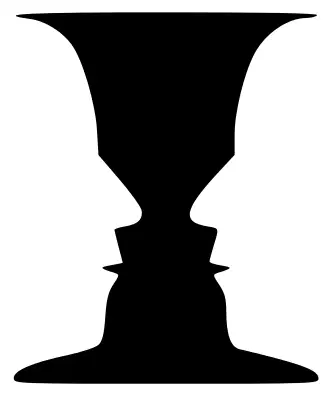
A reversible figure, such as the vase/face figure, makes use of which principle of perception?
depth perception
figure-ground relationship
visual cliff
grouping
Which is NOT a monocular cue?
interposition
relative size
linear perspective
convergence
What is the first part of the eye that light hits?
lens
cornea
pupil
iris
Which is NOT a Gestalt principle?
proximity
closure
navigation
continuation
Ellis turns around and around in a circle. When he stops, he feels like his head is still spinning. What is responsible for this sensation?
semicircular canals
cochlea
hair cells
middle ear
What is the blind spot?
Area where optic nerve leaves retina
The part in which your eye can’t see
The part of your rear view mirror on your car
The part of your eye that gives black and white vision
Bottom-up processing is based on?
prior experience/cognition
primarily on stimulus
senses
perceptions
A sensation may be combined with other sensations and past experiences to yield a…
constancy
Movement
Perception
Ratio
The sense of movement and body position
Kinesthesis
Sight
Hearing
Olfaction
Which of the following is true about rods and cones
There are more cones in the Retina than rods
Rods are photoreceptors, while cones are not
Rods are sensitive to lower levels of light than cones
Rods are similar to color film and cones are similar to black and white film
If we do not have cones in our eyes, then what would we not see?
Colors
Shapes
Sizes
Distant objects
Absolute threshold is…
The weakest amount of a stimulus that a person can detect half the time
filling in gaps in what our senses tell us
What occurs when a stimulus activates a receptor
Organization of sensory information
Which of the following is true about your sense of smell?
It is a physical sense rather than a chemical one
The human brain only processes about four different types of smells
Smell is strongly linked to memory due to being connected to the hippocampus and amygdala
Smell and taste cannot exist without one another
Which of the following statements is true about sound waves
The amplitude of a wave is how long the wave is
The amplitude of a wave determines the pitch of the sound
High amplitude waves produce deeper voices and sounds
The wavelength (frequency) of a wave determines the pitch of the sound
Julia turns the radio on in her car. When she presses the power button, no sound comes out. She turns the dial on the radio until she can hear her favorite radio station. Julia can hear the radio because the sound?
Has reached the difference threshold
Has indicated a just noticeable difference
has crossed the absolute threshold
has a very high frequency
Which of these contains the rods and cones in the human eye?
Cornea
Lens
Iris
Retina
The Gestalt principle of similarity states that humans group objects in what way?
According to how close they are
According to what shape they make when they are all put together
According to how alike they are
According to however they want (preference)
Which of the following is not one of the taste receptors on the human tounge?
Sour
Greasy
Sweet
Juicy
When your foot falls asleep or becomes numb, you are temporarily losing which of your senses in that area?
Sight
Vestibular sense
Touch
Kinesthetic sense
Depth cues that only require one eye are?
Binocular cues
Trinocular cue
Monocular cue
Single vision transparency
Which of the following is the correct term for the process by which light and sound waves are converted into a neural message for the brain?
Transduction
Transformer
Translation
Transformation
Which of the following is not one of the 4 types of sensations that touch receptors feel?
Cold
Hot
Itch
Pressure
Which Gestalt principle would you be using when you see shapes in the clouds?
Figure and Ground
Closure
Proximity
Similarity
Damage to the olfactory nerve might prevent a person from?
Seeing a tragic light change
Heating birds chirp
Smelling freshly baked bread
Feeling the texture of an animal
When Julia was waiting in line at a Starbucks, Julia was playing games on her phone and subsequently failed to see the customer in front of her rob the cashier. This is an example of?
Inattentional blindness
Place theory
Selective attention
Blind spot
Who studied Little Albert?
John Watson and Rosalie Raynor
Pavlov
B.F. Skinner
Edward Thorndike
Experiencing a green afterimage of a red object is lost easily explained by?
The Young-Helmholtz theory
The Opponent-process theory
Frequency theory
The gate-control theory
Enaya knew the red tulip was closer to her than the yellow tulip because the red one cast a larger retinal image than the yellow one. This illustrates the importance of the distance cue known as?
Relative size
Interposition
Proximity
Relative height
Nearsightedness is a condition in which the?
Lens has become inflexible
Lens is too thin
Eyeball is longer than normal
Eyeball is shorter than normal
Which of the following is an example of sensory interaction?
Finding the despite its delicious aroma, a weird-looking meal tastes awful
Finding out that food tastes bland when you have a bad cold
Finding it difficult to maintain your balance when you have an ear infection
All of the above
What is the correct order of the structures through which light passes after entering the eye?
Lens, pupil, cornea, retina
Pupil, cornea, lens, retina
Cornea, retina, pupil, lens
Cornea, pupil, lens, retina
____ processing refers to when we allow the stimulus itself to shape our perception, without any preconceived ideas
Top-down
Bottom-up
Sensation interpretation
Sensation perception
The inner ear contains receptors for?
Audition and kinesthesis
Kinesthesis and the vestibular sense
Audition and the vestibular sense
Audition, kinesthesis, and the vestibular sense
Being able to see a candle flame 30 miles away on a clear night is the?
Absolute threshold for human vision
Difference threshold for human vision
Perceived threshold for human vision
Interpretation threshold for human vision
The coiled, fluid filled tube in which sound waves trigger nerve impulses is called?
Retina
Rods and cones
Olfactory bulb
Cochlea
Who is associated with Trichromatic theory?
Carl Jung
Young-Hemholtz
Erik Erikson
Ernst Wedber
What is it called when an object is higher in our field of vision so it seems farther away?
Interposition
Relative height
Relative size
Linear perspective
When hearing, amplitude determines ____ and frequency determines _____.
Loudness - pitch
Pitch - loudness
Both determine loudenss
Both determine pitch
As we look at a flower, the intensity of the color we see is related to the light wave's:
hue
amplitude
length
placement on the spectrum
The place theory of pitch perception cannot account for how we hear:
High-pitched sounds
Low-pitched sounds
Middle-pitched sounds
Chords three or more pitches simultaneously

What does this picture show?
Closure
Similarity
Figure ground
Connectedness
What is the outermost part of the ear?
Cochlea
Eardrum
Pinna
Oval window
Where do sound waves first enter the ear?
Tympanic membrane
Origin of Corti
Pinna
Cochlea
Which of the following activities requires you to use the absolute threshold for sensation?
Detecting a tiny, faint light on a radar screen
Telling the difference between sweet and salty
Deciding if two glasses contain the same amount of water
telling if your guitar is in tune
The phenomenon of color constancy best demonstrates that...
The retina has three types of color receptors
color vision depends on pairs of opposing retinal processes
quivering eye movements help to maintain the perception of color
an object's perceived color is influenced by its surrounding objects
Gate-control theory is connected to....
Spinal cord
Cochlea
Fovea
Iris
Which is not a factor in controlling pain?
Placebo
Social exclusion
Endorphins
Distractions
What is the order of the ear?
Pinna, eardrum, ossicles, cochlea, basilar membrane
Eardrum, ossicles, pinna, cochlea, basilar membrane
Pinna, ossicles, eardrum, basilar membrane, cochlea
Eardrum, pinna, ossicles, basilar membrane, cochlea
Restored vision is...
shape, but no color or brightness discernment
shape and brightness, but no color discernment
color and shape, but no brightness discernment
color and brightness, but no shape discernment
Luisa has not bathed her dog in 6 months, but does not notice the foul smell. What is this an example of?
Selective attention
Change blindness
Sensory adaptaion
Inattentional blindness
2+ adjacent lights on and off= movement
Phi phenomenon
Stroboscopic movement
Constant brightness
Color constancy
Which of the following is a perception?
Viewing a decrease in brightness
noting a change in temperature
hearing an increase in volume
recognizing an object as a car
Perceptual set is...
A predisposition to perceive something in accordance with our expectations
Perceiving something in a way that is consistent with others
Failing to perceive something
Seeing something in a different way
Receiving messages below one's absolute threshold for conscious awareness
difference threshold
subliminal stimulation
Weber's law
McGurk effect
Although Linda was seated next to her friend, she was able to smell the burning popcorn a full minute earlier than her friend. Lina must have a lower _______ for smell
Absolute threshold
Adaptation level
Accommodation level
Gustatory saturation level
If you are expecting an important text message, you are much more likely to notice the sound as soon as the message arrives. This shows...
difference threshold
absolute threshold
signal detection theory
weber's law
Focusing conscious awareness on a particular stimulus.
Selective attention
Volley principle
Parallel processing
Change blindness

